• KGS/USD = 0.01144 0%
  • KZT/USD = 0.00191 -0%
  • TJS/USD = 0.10866 0.18%
  • UZS/USD = 0.00008 0%
  • TMT/USD = 0.28571 0%
  • KGS/USD = 0.01144 0%
  • KZT/USD = 0.00191 -0%
  • TJS/USD = 0.10866 0.18%
  • UZS/USD = 0.00008 0%
  • TMT/USD = 0.28571 0%
  • KGS/USD = 0.01144 0%
  • KZT/USD = 0.00191 -0%
  • TJS/USD = 0.10866 0.18%
  • UZS/USD = 0.00008 0%
  • TMT/USD = 0.28571 0%
  • KGS/USD = 0.01144 0%
  • KZT/USD = 0.00191 -0%
  • TJS/USD = 0.10866 0.18%
  • UZS/USD = 0.00008 0%
  • TMT/USD = 0.28571 0%
  • KGS/USD = 0.01144 0%
  • KZT/USD = 0.00191 -0%
  • TJS/USD = 0.10866 0.18%
  • UZS/USD = 0.00008 0%
  • TMT/USD = 0.28571 0%
  • KGS/USD = 0.01144 0%
  • KZT/USD = 0.00191 -0%
  • TJS/USD = 0.10866 0.18%
  • UZS/USD = 0.00008 0%
  • TMT/USD = 0.28571 0%
  • KGS/USD = 0.01144 0%
  • KZT/USD = 0.00191 -0%
  • TJS/USD = 0.10866 0.18%
  • UZS/USD = 0.00008 0%
  • TMT/USD = 0.28571 0%
  • KGS/USD = 0.01144 0%
  • KZT/USD = 0.00191 -0%
  • TJS/USD = 0.10866 0.18%
  • UZS/USD = 0.00008 0%
  • TMT/USD = 0.28571 0%
12 December 2025

More Than a Quarter of Tajikistan’s Population Lives Below the Poverty Line – World Bank Report

Tajikistan continues to make gradual progress in reducing poverty, but over 25% of the population still lives on less than $3.65 a day, according to the World Bank’s newly released Poverty, Prosperity, and Planet Report 2024.

Revised Poverty Line and Structural Vulnerabilities

The World Bank recently raised the extreme poverty threshold from $2.15 to $3.00 per day, adjusting for updated purchasing power parity. Under the international poverty line of $3.65 per day, approximately one in four Tajik citizens remains in poverty.

Globally, around 700 million people, 8.5% of the world’s population, live on less than $2.15 per day. The report highlights that economies reliant on remittances and imports are particularly vulnerable. Tajikistan fits this profile, with a large portion of its population employed in the informal sector, especially agriculture, and limited coverage by social assistance programs.

National statistics show a decline in the domestic poverty rate from 26.3% in 2022 to 23.5% in 2023, with forecasts indicating a possible drop to 21.3% this year. Nonetheless, the country’s poverty rate remains high by international standards.

Rural Poverty and Social Disparities

Poverty in Tajikistan disproportionately affects rural areas, where 80% of the poor reside. Around 70% of adults living in poverty lack vocational education. Vulnerable groups include women, large families, single-parent households, and children, many of whom require sustained, targeted social support.

In comparison with its neighbors, Kyrgyzstan has the region’s highest poverty rate by national standards at 29.8%, while Uzbekistan reports 11.2% and Kazakhstan 3.7%. Less than 5% of Kazakhstan’s population lives below the international poverty line. Turkmenistan continues to withhold poverty-related data.

Climate Change Adds to Economic Pressures

The report warns that climate change further exacerbates poverty risks. From 2000 to 2020, temperatures in Central Asia rose by an average of 1.23°C, and regional glaciers shrank by 30%. For Tajikistan, where glaciers are the primary source of freshwater, these developments pose a growing threat to agricultural sustainability and food security.

Nonetheless, the report acknowledges progress in adaptation efforts. Tajikistan is implementing precision farming technologies and modernizing water management practices, which have improved crop yields while reducing water usage in arid regions.

The World Bank emphasizes that without structural reforms, including quality job creation, expanded support systems, and sustainable income protection, millions in Tajikistan will remain at risk, despite the appearance of macroeconomic stability.

Kazakhstan Confronts Major Data Leak in High-Stakes Security Crackdown

A detective thriller worthy of a Hollywood script is quietly playing out in the daily lives of Kazakhstani citizens, one with implications for nearly every household. At its core lies the largest leak of personal data in Kazakhstan’s history, unfolding across Almaty and Astana. The incident touches on something deeply personal: data that could be weaponized by fraudsters for illicit gain.

Sixteen Million Records Exposed

In early June, the Telegram channel SecuriXy.kz, known for its cybersecurity reporting, revealed a massive breach of Kazakh citizens’ personal data. “A CSV file containing the personal data of Kazakh citizens, containing 16.3 million lines, has been discovered. The table contains the following fields: Last name, First name, Middle name, Gender, Date of birth, ID number, IIN [Bank Identification Number], Mobile phone number, Work phone number, Home phone number, Citizenship, Nationality, Address, Confirmed address, Start and end dates of residence,” the channel stated.

The analysis identified 16,302,107 records, 16.9 million unique phone numbers, and 15,851,699 unique individual identification numbers (IINs), the number of citizens whose information had been compromised.

“The ‘address’ field often contains the addresses of dental clinics, polyclinics, the Tax Committee, universities, and other organizations,” the channel noted. The leak included highly sensitive personal data such as contact details and IINs, which the channel warned could be used for: “Phishing, social engineering, document forgery, and telephone fraud.”

The data appears to have been compiled over a significant period. SecuriXy.kz reported that, “Most of the records were entered into the system after 2011,” with over two million added in 2022 alone. Data from 2023-2024 also appears, underscoring the leak’s relevance.

The revelation sparked swift reactions from officials. The Ministry of Digital Development, Innovation, and Aerospace Industry (MCIAI) released a statement confirming an investigation in collaboration with law enforcement and intelligence agencies. “It should be noted that the initial analysis indicates that the information may have originated from private information systems. No hacker attacks or leaks of personal data from state information systems have been recorded at this time. It is premature to draw final conclusions or confirm the accuracy of the information until the investigation is complete,” the ministry stated, adding that similar past incidents often involved outdated data compiled by service sector firms or microfinance institutions.

“The ministry is monitoring the situation,” the authorities concluded. “Additional information will be posted after the investigation is complete.”

Cybersecurity experts, however, were less dismissive. Enlik Satieva, vice president of the TSARKA Group, a cybersecurity firm affiliated with the government, stressed the seriousness of the breach. “These are not just names,” she stated. “The published database contains the most important personal data of citizens. In particular, it includes surnames, first names, patronymics, gender, dates of birth, IINs, citizenship, nationality, residential addresses, registration and residence periods, as well as mobile, home, and work phone numbers.”

Satieva suggested that some of the data may have been sourced from medical organizations, and that the leak might stem from a specific entity or multiple sources linked through IINs.

Criminal Case and Contradictions

On June 18, Digital Development Minister Zhaslan Madiyev reiterated to journalists in the Mazhilis that the leaked data was not current.

“This is not recent data; there has been no hacking of recent state databases. This is most likely ‘historical’ data that was previously leaked and is now available on the darknet. When it appears on any Telegram channels, we block it, and there have been minor updates to this data. This data dates back to May 1, 2024, and there have been no recent leaks,” he said.

One day later, Deputy Prosecutor General Galymzhan Koigeldiyev confirmed the opening of a criminal case.

Though officials have attempted to downplay the leak, enforcement agencies were already at work. On June 9, prior to the public revelation, Kazakhstan’s cybercrime department and the National Security Committee dismantled a network selling personal data online.

“The information was obtained from state databases and distributed through Telegram channels, including to individual debt collection companies. More than 140 people have been detained, including the owners of the company and the channel administrators. Five suspects were arrested. During searches of the debt collection companies, more than 400 items of computer and other electronic equipment were seized,” Zhandos Suinbay, head of the Interior Ministry’s cybercrime unit, stated.

High-Profile Arrests: The ‘Big Fish’

In a separate but potentially related case, the Financial Monitoring Agency announced the arrest of senior officials during the handover of a $75,000 bribe in Almaty. The detainees were identified as Ruslan Omarov, general director of First Credit Bureau LLP, Akmaidi Sarbasov, head of the Labor Resources Development Center, and former first deputy labor minister, and Daulet Argyndykov, former head of the same center and ex-deputy health and social development minister.

Journalist Mikhail Kozachkov, often a source for insider law enforcement information, linked the arrests to the data leak. According to Kozachkov, the Almaty Economic Investigation Department discovered that the state-owned Center for Labor Resources Development under the Ministry of Labor had long provided privileged access to citizens’ private information.

“This body collects data on Kazakh citizens, including financial information such as pension contributions, benefits, social status, and employment contracts,” Kozachkov wrote, alleging that Omarov’s company systematically bribed officials to gain early access to this data.

“That is why the prosecutor’s office agreed to charge the head of this company, Ruslan Omarov. He is suspected of systematically bribing the management of the Labor Resources Development Center. He was detained while transferring money,” Kozachkov stated. “The case mentions a sum of $80,000. In exchange for this money, the subsidiary of the Ministry of Labor provided the First Credit Bureau with the ability to quickly obtain all the necessary information about citizens’ finances in order to quickly compile credit files. To do this, the First Credit Bureau organized a clever connection via VPN, which allowed the private company to obtain all the relevant information before its competitors. The credit files that were subsequently created were sold to second-tier banks, which is how they made their money.”

A Calculated Information War?

Given the timing and coordination of arrests and disclosures, some analysts speculate that the leak may have served as cover for a broader operation.

The sudden rise in fraudulent activities following the data leak has stirred public concern. Meanwhile, the high-profile arrests occurred with minimal backlash, possibly because the government had already laid out a narrative justifying the crackdown. As the state seized control of the narrative, any resistance from powerful financial players appeared blunted.

Had the state failed to explain its actions in advance, albeit through unofficial channels, it risked losing control of the information war. Instead, it appears to have outmaneuvered both insiders and external critics by shaping the public discourse early.

Turkmenistan’s Diplomatic Moves Amid Iran-Israel Tensions

One of the elements most highlighted by the recent military confrontation between Israel and the U.S. on one side and Iran on the other is the geographical relevance of Central Asia to the situation. This is particularly true in the case of Turkmenistan, a country that shares a border of almost 1,200 kilometers with Iran. During the most intense days of the conflict, in a particularly unusual move, Turkmenistan opened its borders to foreign citizens seeking to escape from Iranian territory, which was under Israeli air strikes at the time.

On the diplomatic front, there have also been several high-level meetings and talks involving Turkmenistan; just after his meeting in Moscow with Russian President Vladimir Putin, the Iranian Foreign Minister, Abbas Araghchi, travelled to Ashgabat for a meeting with his Turkmen counterpart, Rashid Meredov. The day after, Meredov had a telephone conversation with U.S. Secretary of State Marco Rubio, and Russian Foreign Minister Sergey Lavrov arrived in Ashgabat for a meeting with the Turkmen leader, Serdar Berdimuhamedov.

Focusing primarily on the mutual isolation of Turkmenistan and Iran, Luca Anceschi, Professor of Eurasian Studies at the University of Glasgow, gave The Times of Central Asia his interpretation of these developments: “In my opinion, there is a fundamental issue, which is Turkmen isolation. When we see a small shift, we think that things are changing, but nothing changes. The second isolation is that of Iran, which in this case is not intentional. The reality we have seen in recent days is that Iran is isolated at the regional level. Russia has made it clear that Iran is expendable, and has not given reassuring answers. We see that there is an attempt to remedy this forced isolation on the part of Iran. To get out of these regional arrangements, they have tried to go everywhere, including Ashgabat.”

Operational agreements on the energy side are certainly weighing on Tehran’s desire to reassure Turkmenistan about the stability of the theocratic regime that rules Iran. These agreements are particularly useful to Iran in meeting the energy needs of the northern part of the country, which is remote and poorly connected to the south, where the country’s main natural gas fields are located. According to Temur Umarov, a Fellow at the Carnegie Russia Eurasia Center, “Since 2022, Turkmenistan’s visibility in Eurasian politics has certainly increased, and this is also the result of geopolitical changes that have taken place in the region in recent years,” Umarov told TCA. “What happened in Iran further increases Ashgabat’s visibility, but it was coincidental that Lavrov’s visit to Turkmenistan took place during the clash between Israel and Iran, as it was part of a wider tour of the region by the Russian Foreign Minister.”

Another aspect that should be considered is the change in tone on the part of Turkmen diplomacy, which at first glance appears much more assertive than in the past. A few weeks ago, Ashgabat issued a very harsh statement regarding Trump’s decision to include Turkmenistan among the countries subject to travel bans, and, at least according to Iranian media reports, during the meeting between Araghchi and Meredov, the latter referred to Israel as a “Zionist regime.”

Anceschi remains cautious on this point, too. “We are used to such low levels of diplomatic activism on the part of Turkmenistan that even the smallest reaction risks being overestimated,” he told TCA. “As for the reaction to the U.S. decision, cynically speaking, the fact that there is one less destination for Turkmenistan is to the regime’s advantage. With regard to Meredov’s definition of Israel, I think it is the Iranian regime that has used that term.”

This interpretation is also shared by Umarov. “I believe that Turkmenistan wants to maintain stable relations with Israel as well as with Iran,” he told TCA. “Ashgabat is therefore trying to balance its close relationship with Iran, especially on the commercial front, without breaking ties with Israel, with whom Turkmenistan has a stable relationship.”

Umarov also links Turkmenistan’s decision to open its border to allow the escape of some thousand foreign nationals, mainly from Central Asia, to its political proximity to Iran: “Many countries have asked Turkmenistan to facilitate the passage of people wishing to leave Iran, and Ashgabat has agreed both because of its cooperation with Tehran, and to seek international attention at a time when other Central Asian republics are receiving a lot of it.”

On this point, Anceschi favors a more pragmatic approach. “I think that the border between Iran and Turkmenistan is less impermeable than we generally think. We saw this with Covid, which most likely entered Turkmenistan from Iran, even though the Turkmen regime has always denied its presence in the country. I therefore think that Ashgabat’s decision is a matter of practical expediency, making official a border permeability that already exists in practice.”

In the case of Turkmenistan, it is always difficult to understand which dynamics are temporary and which represent long-term changes. This largely stems from the nature of the Turkmen regime, which has always relied on international isolation to maintain its internal stability. Given its proximity to an unstable Iran, however, this could slowly be starting to change.

Kyrgyzstan and Russia Reaffirm Strategic Partnership in Moscow Talks

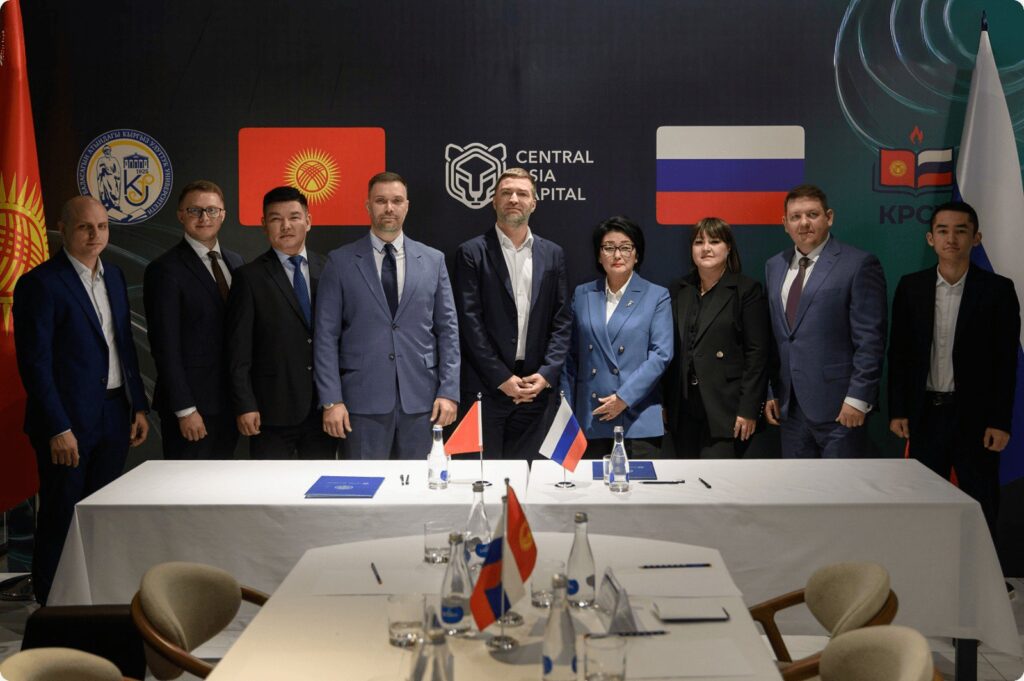
Kyrgyzstan and Russia have reaffirmed their commitment to deepening bilateral cooperation across diverse sectors following a high-level meeting between President Vladimir Putin and Kyrgyz President Sadyr Japarov at the Kremlin on July 2.

President Putin welcomed President Japarov to Moscow with praise for the positive trajectory of economic ties between the two countries.

“Last year, bilateral trade increased by over 11%, and in the first four months of this year, it grew by more than 17%,” Putin noted during the reception.

He emphasized that Russia remains one of Kyrgyzstan’s key trade and economic partners, highlighting the role of the Russian-Kyrgyz Development Fund, which continues to support industrial and agricultural initiatives in Kyrgyzstan. Putin also noted the expanding footprint of Russian businesses in the country.

Cultural and educational cooperation featured prominently in the discussions. Putin pointed out that approximately 200 Russian teachers are currently working in 43 schools across Kyrgyzstan.

“We have launched new school construction projects and plan to expand the number of Russian-language schools,” he said, expressing gratitude to Japarov for maintaining the official status of the Russian language in Kyrgyzstan.

Russian remains one of Kyrgyzstan’s official languages and continues to function as a key medium of communication in the country’s multi-ethnic society.

President Japarov echoed the strong political alignment between Bishkek and Moscow.

“There is full mutual understanding and trust between our countries. There are no political differences or contradictions,” he stated.

Japarov also highlighted the potential for further cooperation in sectors including energy, transport, industry, and agriculture, reinforcing the enduring strategic partnership between the two nations.

Tajik Security Forces Thwart Major Cross-Border Drug Smuggling Attempt from Afghanistan

Tajik authorities have disrupted an attempt by an Afghan drug trafficking group to smuggle a significant quantity of narcotics into the country, according to the State Committee for National Security (SCNS) of Tajikistan.

The operation unfolded in the Shamsiddin Shohin district of Khatlon region, where four Afghan nationals illegally crossed the border near the village of Kishty. The group, led by 50-year-old Azarkhon waladi Saidumar from Badakhshan province, aimed to transport narcotics into Tajik territory.

The SCNS reported that regional security officers, working with border guards from outpost No. 5 of the Hirmandjo unit, tracked the smugglers’ movements and launched a targeted operation. When authorities attempted to apprehend the group, the traffickers opened fire. In the ensuing clash, Azarkhon and another group member, 30-year-old Rozmuhammad Azizi, were killed. The remaining two suspects escaped back across the border into Afghanistan.

Security forces recovered two Kalashnikov rifles with 17 rounds of ammunition, a night vision device, a rubber boat, and three sacks containing 59 packages of narcotics. Forensic analysis confirmed the substances included over 57.5 kilograms of opium and 960 grams of methamphetamine, totaling 58.475 kilograms.

Criminal proceedings have been initiated under several articles of Tajikistan’s Criminal Code, and authorities are pursuing efforts to identify and apprehend the remaining suspects.

In a statement, the SCNS highlighted the critical importance of safeguarding the country’s borders and urged residents in border regions to assist law enforcement.

“Every citizen has a sacred duty to protect the homeland,” the SCNS said, warning that drug trafficking poses a direct threat to national health and security.

The government reaffirmed its commitment to combating drug trafficking, cross-border crime, terrorism, extremism, and the illegal arms trade.

As previously reported by The Times of Central Asia, beginning in 2026, the Collective Security Treaty Organization (CSTO) will begin delivering weapons and military equipment to its member states to strengthen the alliance’s southern frontier, with a particular focus on the Tajik-Afghan border.

Kyrgyzstan Rises to Third Place Globally in Gold Exports

Kyrgyzstan ranked third in the world for gold exports in the first quarter of 2025, selling 3.8 tons of the precious metal on the international market, according to data from the World Gold Council.

Despite this export success, Kyrgyzstan’s official gold reserves remain among the lowest in Central Asia. The country holds 34.2 tons of gold, compared to Kazakhstan’s 290 tons and Uzbekistan’s 367 tons. Uzbekistan led global gold exports during the same period with nearly 15 tons sold, while Kazakhstan opted to bolster its reserves, adding 6.5 tons in the first three months of the year.

However, figures from Kyrgyzstan’s National Bank tell a different story. In June 2025, National Bank Chairman Melis Turgunbaev told parliament that the country’s reserves had reached 52 tons. This suggests either a sharp two-month increase or a discrepancy between national and international reporting standards.

“Our analysts monitor gold prices and market conditions daily. We buy or sell gold as needed, just like currency, that’s one of the bank’s core functions,” Turgunbaev explained. “Last year, we achieved substantial income through effective reserve management. The first five months of this year have also yielded strong results.”

Members of parliament expressed satisfaction with the size of the country’s gold and foreign exchange reserves, which currently stand at an estimated $3.7 billion, exceeding Kyrgyzstan’s annual state budget.

Kyrgyz mining operations produce approximately 20 tons of gold annually. A significant share of this output is exported, leaving domestic jewelers with limited access to raw materials. Sales channels include the London Commodity Exchange and buyers in Switzerland. The National Bank also offers measured gold bars for public purchase at a modest premium.