• KGS/USD = 0.01144 0%
  • KZT/USD = 0.00212 0%
  • TJS/USD = 0.10456 0.19%
  • UZS/USD = 0.00008 0%
  • TMT/USD = 0.28490 0%
  • KGS/USD = 0.01144 0%
  • KZT/USD = 0.00212 0%
  • TJS/USD = 0.10456 0.19%
  • UZS/USD = 0.00008 0%
  • TMT/USD = 0.28490 0%
  • KGS/USD = 0.01144 0%
  • KZT/USD = 0.00212 0%
  • TJS/USD = 0.10456 0.19%
  • UZS/USD = 0.00008 0%
  • TMT/USD = 0.28490 0%
  • KGS/USD = 0.01144 0%
  • KZT/USD = 0.00212 0%
  • TJS/USD = 0.10456 0.19%
  • UZS/USD = 0.00008 0%
  • TMT/USD = 0.28490 0%
  • KGS/USD = 0.01144 0%
  • KZT/USD = 0.00212 0%
  • TJS/USD = 0.10456 0.19%
  • UZS/USD = 0.00008 0%
  • TMT/USD = 0.28490 0%
  • KGS/USD = 0.01144 0%
  • KZT/USD = 0.00212 0%
  • TJS/USD = 0.10456 0.19%
  • UZS/USD = 0.00008 0%
  • TMT/USD = 0.28490 0%
  • KGS/USD = 0.01144 0%
  • KZT/USD = 0.00212 0%
  • TJS/USD = 0.10456 0.19%
  • UZS/USD = 0.00008 0%
  • TMT/USD = 0.28490 0%
  • KGS/USD = 0.01144 0%
  • KZT/USD = 0.00212 0%
  • TJS/USD = 0.10456 0.19%
  • UZS/USD = 0.00008 0%
  • TMT/USD = 0.28490 0%

European Banks to Allocate up to $1 Billion for Kambarata-1 Hydropower Project in Kyrgyzstan

Kyrgyzstan’s Minister of Energy, Taalaibek Ibraev, has signed agreements with European financial institutions to advance the construction of the Kambarata-1 hydropower plant, a flagship regional energy project on the Naryn River. The deals were concluded in Brussels during the Global Gateway Forum, organized by the European Union to mobilize sustainable investment in partner countries.

According to an official EIB statement, the EU and the European Investment Bank (EIB) signed €900 million in memoranda of understanding with Kyrgyzstan, Kazakhstan, and Uzbekistan to support the project, which aims to strengthen regional energy security and accelerate the green transition in Central Asia. The European Bank for Reconstruction and Development (EBRD) also signed parallel agreements with the three governments and is assessing a financing package worth up to €1.3 billion.

At the Brussels forum, Ibraev met with his counterparts from Kazakhstan and Uzbekistan to discuss coordination on implementation, following last year’s intergovernmental agreement establishing the Kambarata-1 project as a trilateral initiative. Under that framework, the countries will cooperate on construction, power-sharing, and environmental safeguards, with additional technical support from the World Bank. The World Bank’s project brief describes Kambarata-1 as a key step toward integrated energy and water management in the region.

The 1,860-megawatt facility – one of the largest planned in Central Asia – will supply clean power domestically and to neighboring markets through regional transmission links. The EIB and EBRD agreements were signed by Minister Ibraev, EIB Global Director General Andrew McDowell, and EBRD Regional Director Hüseyin Özhan. It was reported that each institution has preliminarily earmarked up to $500 million in financing as part of its broader engagement.

European Commission President Ursula von der Leyen said during the forum that the EU’s Global Gateway initiative will mobilize more than €400 billion by 2027 to strengthen sustainable infrastructure worldwide, including renewable energy projects in Central Asia. “This is a great opportunity for Europe, and this year, together with our partners, we are turning this demand into real action,” she said.

Tourism at Kyrgyzstan’s Lake Issyk-Kul Shows Steady Growth

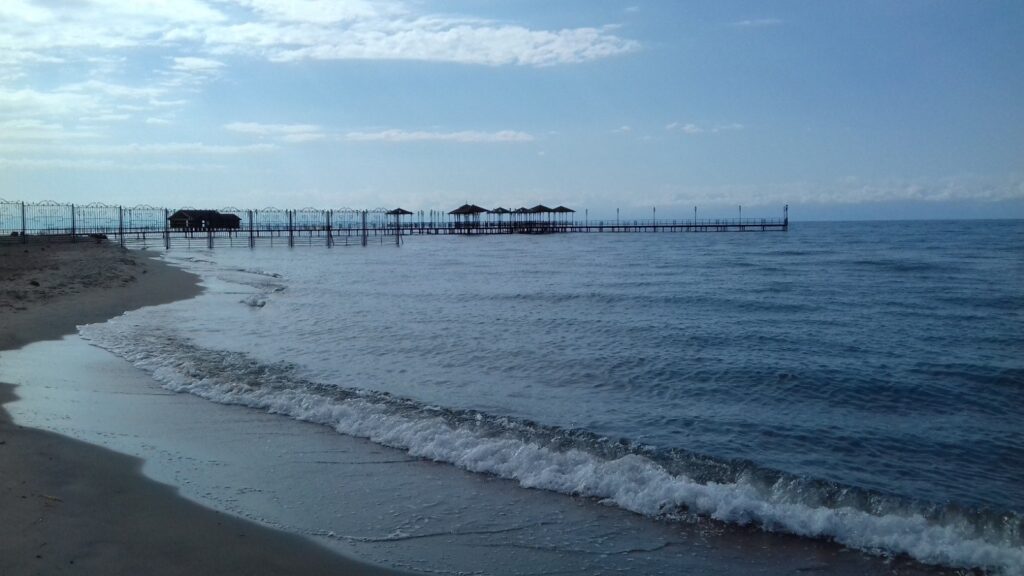
Tourism remains a vital sector of Kyrgyzstan’s economy, contributing significantly to regional development and employment. The Issyk-Kul region continues to serve as the country’s premier tourism hub, anchored by Lake Issyk-Kul, its most popular destination for both domestic and international visitors.

According to data from the Ministry of Economy and Commerce and the 2GIS mapping service, tourism activity in the Issyk-Kul region has tripled over the past six years. By the end of August 2025, which marked the close of the summer resort season, the volume of tourist services along the lake’s shores had increased threefold compared to 2019.

In 2019, the region hosted 627 hotels and guesthouses. By 2025, that number had grown to 1,833. The highest concentration of accommodations is found in Cholpon-Ata (377), the neighboring village of Bosteri (336), the regional capital Karakol (196), and Balykchy (27).

Food service establishments have seen similar growth. The number of cafes and restaurants has nearly tripled from 360 in 2019 to 963 in 2025. Karakol leads with 170 establishments, followed by Cholpon-Ata (157), Bosteri (142), and Balykchy (84).

Nationwide, Kyrgyzstan received over 3.7 million tourists in 2024, a 1.3-fold increase compared to 2023, according to the National Statistical Committee. Of these, 2.4 million were served by the organized tourism sector, including hotels and resorts, while 1.3 million stayed in the unorganized sector, such as guesthouses and private homes.

The Issyk-Kul region accounted for a substantial share of this total. In 2024, approximately 714,000 visitors were accommodated in the organized sector, and over 1.2 million in the unorganized one.

Tourism has become a key driver of small and medium-sized enterprises in the region, generating employment and enhancing the investment climate. In 2024, Kyrgyzstan’s tourism industry attracted more than $11 million in foreign direct investment, with Issyk-Kul playing a central role in that growth.

Women in Space: Kazakhstan Completes First All-Female SANA-1 Experiment

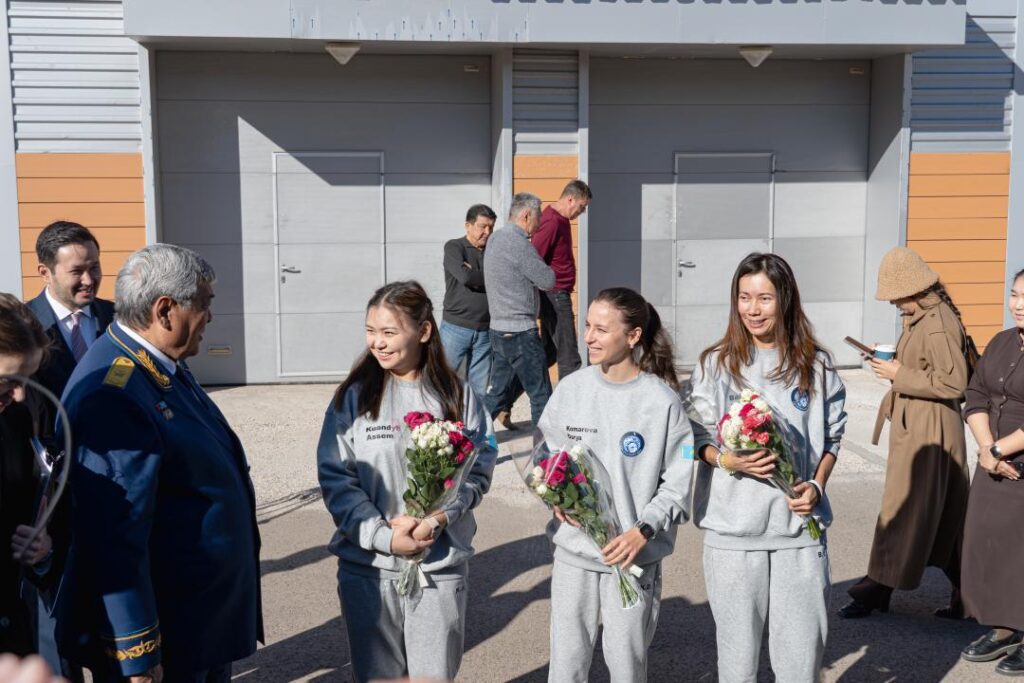
Kazakhstan has successfully completed its first space research experiment involving an all-female crew. Conducted over ten days in a specialized ground-based module simulating a spacecraft, the SANA-1 project marks a milestone in the country’s space program and underscores the expanding role of women in science and technology.

Kazakhstan’s First Female Crew

In Astana, the results of the SANA-1 scientific experiment, which focused on studying psychophysiological responses to isolation, were officially presented. It is the first time in Kazakhstan’s space research history that a mission was carried out exclusively by female engineers and scientists.

According to the project’s scientific director, Alina Gutoreva, the aim was to study “the cognitive, physiological, and emotional adaptation of humans in a confined space.”

“The crew underwent medical, physiological, and psychological assessments, conducted cognitive and behavioral studies, and tested the capsule’s engineering systems,” Gutoreva explained.

The experiment was timed to coincide with World Space Week (October 4-10), the 2025 theme of which was “Living in Space.”

What the Researchers Studied

The SANA-1 team examined the psychological and physiological effects of isolation, monotony, and stress on human behavior and team dynamics. The data collected is expected to inform the development of stress-resilience training and psychophysiological monitoring systems for future cosmonauts.

The results will feed into Kazakhstan’s national cosmonaut training program and will be presented at global platforms, including Space Days Kazakhstan and meetings of the UN Committee on the Peaceful Uses of Outer Space (COPUOS).

Researchers emphasized that female leadership, emotional intelligence, and empathy were critical factors in the crew’s resilience and performance. These findings are expected to contribute to future criteria for selecting and training participants in long-duration space missions, including to the Moon and Mars.

The closing ceremony of the experiment took place on October 10, exactly 34 years after Tokhtar Aubakirov, Kazakhstan’s first cosmonaut, completed his spaceflight. Speaking at the event, Air Force Major General Aubakirov stressed the psychological demands of space missions.

“The most important thing in space is belief in your own strength and responsibility to the team. Without this, it is impossible to complete any mission,” Aubakirov said.

Earlier this month, Danna Karagousova became the first Kazakh woman to travel to space, participating in a suborbital flight aboard Blue Origin’s New Shepard spacecraft. The rocket launched from a site in Texas, reaching an altitude of approximately 100 kilometers, the Kármán line, widely recognized as the boundary of space. The flight lasted around 10-12 minutes.

Uzbek Authorities Dismantle Major Telegram-Based Drug Trafficking Network

Uzbek customs officials have dismantled a large-scale regional drug trafficking network operating via the Telegram messaging app, revealing one of Central Asia’s most extensive online narcotics markets. Several key distributors were arrested in a series of coordinated operations carried out in August and September 2025, according to Uzbekistan’s customs service.

At the center of the investigation was a darknet drug marketplace known as “Deadpool,” which had been active since 2017 and maintained a following of around 4,000 subscribers. On August 31, a special operation in the Khodjaobod district of Andijan region led to the arrest of a suspect caught with 602 grams of alpha-PVP, a synthetic stimulant. The drugs had been smuggled from Kyrgyzstan. Investigators determined that the individual had been working with the Deadpool network since 2023 and was involved in distributing nearly 50 kilograms of synthetic drugs over a two-year period.

A second major operation was conducted on September 10 in the Zangiota district of Tashkent region, where two additional suspects were detained while receiving a package containing 492.2 grams of clephedrone. Authorities stated that both individuals had been affiliated with the network for at least six months and were responsible for distributing over 12,500 doses of synthetic drugs.

Each distributor reportedly managed a network of at least 10 “zakladchiki,” or low-level dealers, who placed drugs in public spaces such as parks and areas near educational institutions across multiple districts of Tashkent.

A criminal case has been opened, and investigations are ongoing.

The crackdown in Uzbekistan coincides with a broader regional effort to combat synthetic drug trafficking. In Kazakhstan, Interior Minister Yerzhan Sadenov reported that authorities seized 6.4 tons of narcotics during the first half of 2025. This included 570 kilograms of synthetic substances, nearly double the amount seized during the same period last year and led to the closure of 103 illegal drug laboratories.

Kazakhstan’s law enforcement also blocked more than 17,000 drug-related websites, detained 474 suspects, and disrupted 63 smuggling operations. Among those arrested were 28 administrators of similar Telegram drug distribution channels.

Kazakhstan Finds No Violations in Pavel Durov’s Swim in Protected Lake

Kazakhstan’s Ministry of Ecology has announced it will not fine Pavel Durov, the founder of the Russian messaging app Telegram, for swimming in Lake Kolsai, a specially protected natural area. According to the ministry, the video Durov posted from the lake serves to promote tourism in the country.

Durov arrived in Kazakhstan in early October to participate in the Digital Bridge 2025 forum in Astana. He later visited Almaty, where he published a video on his Telegram channel showing himself swimming in Lake Kolsai, located in a national park in the Almaty region. While the lake is part of a protected area where swimming is only permitted in designated zones, the video went viral and sparked public debate.

Following the publication, Kazakhstan’s Ministry of Internal Affairs opened an investigation and forwarded the case to the Ministry of Ecology for review.

According to Kazakh law, unauthorized activity in protected natural zones can result in fines of up to $72. However, the Ministry of Ecology stated there were no grounds to hold Durov liable.

“There were no warning signs prohibiting swimming at the site near Lake Kolsai-2. Therefore, no violation was found. The situation was unintentional and did not affect the ecological sustainability of the area,” the ministry said in an official statement.

The ministry also emphasized the importance of improving public awareness among tourists regarding regulations in national parks to help preserve natural ecosystems and promote eco-tourism.

“The video material posted on Pavel Durov’s personal channel, which has over 10 million subscribers, was promotional in nature and showcased the natural beauty of Kazakhstan to a global audience. Such exposure is a valuable contribution to enhancing the country’s tourism profile,” the ministry added.

During his visit, Durov also announced the launch of a new artificial intelligence laboratory, Telegram AI Lab, at the Alem.ai International Artificial Intelligence Center in Astana.

Kazakhstan’s Emerging Role in Global Rare-Earth Supply Chains

October 10 was one of the most consequential days for global trade policy and one of the most volatile for world markets since the U.S.–China tariff conflict first reignited. After China announced tighter export controls on rare earths, U.S. President Donald J. Trump first posted on Truth Social that “there seems to be no reason” anymore for him to meet with the Chinese leader Xi Jinping at the APEC summit in two weeks’ time.

Several hours later, the official White House account on X posted a message from Trump that he had learned that “effective November 1st, 2025, [China will] impose large-scale Export Controls [sic] on virtually every product they make, and some not even made by them.” He then followed with the declaration that the U.S. will impose a 100% tariff on Chinese imports starting November 1, “or sooner,” and launch export controls on critical software.

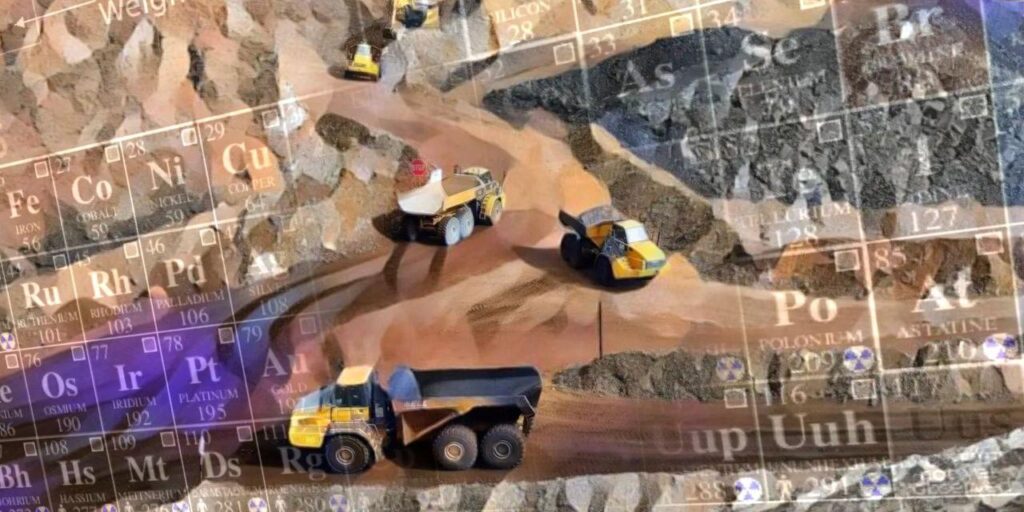
As Washington and Beijing escalate their economic confrontation, the scramble for stable rare-earth supply chains has broadened beyond East Asia. Attention is shifting to Central Asia, where mineral potential and trade corridors align with the broader effort to reduce dependence on China. Kazakhstan has drawn particular attention, not as a single solution, but as a state seeking to leverage its Soviet-era industrial base and access to the Caspian to help meet emerging supply chain needs.

Although Kazakhstan has made the most progress in translating its mineral reserves into a functioning mining industry, it remains part of a broader regional effort to diversify away from a single external partner, most notably China. Other Central Asian states are testing their own capabilities to meet global supply chain demands, though most remain constrained by infrastructure, financing, or lack of processing capability.

Kazakhstan’s Position in the Emerging Supply Realignment

On reserves, Kazakhstan’s rare-earth potential is rooted as much in continuity as it is in discovery. Decades of geological mapping under Soviet administration established its mineral profile, and recent joint surveys by Kazgeology and private firms have both confirmed and expanded those earlier findings. New delineated deposits in the east and center of the country, including the Zhana Kazakhstan site in Karagandy, have reinforced its status as a prospective non-Chinese source of critical materials, with verified concentrations of neodymium, praseodymium, dysprosium, terbium, and samarium. If current resource estimates are validated, the Zhana Kazakhstan deposit could rank among the largest rare-earth reserves in the world. These elements are essential inputs for high-efficiency magnets used in electric vehicles, wind turbines, and advanced defense systems.

The U.S. Department of Defense classifies these rare earths as “critical defense materials,” a designation that underscores their strategic relevance rather than any immediate shift in supply. Both the Pentagon and the Defense Logistics Agency have begun increasing stockpiles and exploring alternative processing sources, but for now, the question in Kazakhstan is not geological endowment, which is established, but the terms under which that endowment can be brought to market.

On processing capacity, Kazakhstan’s experience in large-scale mining of uranium, copper, and other critical minerals has created a base of industrial expertise relevant to rare-earth development.

Facilities such as the Stepnogorsk Chemical Plant and the Ulba Metallurgical Plant provide an inherited platform for potential adaptation, and the SARECO joint venture has already demonstrated the technical feasibility of recovering neodymium and dysprosium from uranium residues.

The identification of the Kuirektykol deposit, rich in magnet-critical elements, further consolidates the geological feedstock required for any expansion into refining or alloy production. The establishment of an internationally accredited rare-earth laboratory further underscores Astana’s commitment to aligning domestic analytical and processing capacity with global standards.

Despite its resource depth, most existing infrastructure remains geared toward uranium and base metals rather than to the precise tolerances of rare-earth processing.  The question for Kazakhstan is therefore not geological potential, but the pace at which processing capability can be scaled from demonstration to commercial output.

On the regulatory environment, Kazakhstan has moved to attract foreign participation in its minerals sector through legal reforms and clearer terms for ownership and capital entry. These measures are intended to shift activity beyond extraction toward value-added processing, and they have drawn interest from companies in Germany, Japan, and elsewhere. For investors, however, policy signals are only part of the calculation: long-term commitment will depend on the consistency of implementation and the viability of project financing across the full chain of production. Western mining companies have operated in Kazakhstan since the mid-1990s. Experience since the 2010 legislative revision – and especially its 2018 transformation into a Unified Code on Subsoil Use – has already brought another $40 billion of additional Western foreign investment into the sector.

Kazakhstan’s role in the critical minerals market rests on both geological endowment and structural dependency. Its appeal lies in the scale of its reserves and its relative openness, but also in its ability to convert that appeal into durable partnerships will be tested by the practical demands of refining, metallurgy, and transport to external markets.

Strategic Alignment and Regional Dynamics

Kazakhstan’s position reflects the pressures facing Central Asian states as they seek alternative economic channels in the context of Chinese proximity. While Beijing remains a primary market and transit partner, Kazakhstan’s Caspian access and integration into international capital markets offer it a somewhat broader set of options than its neighbors. Recent increases in Chinese port fees and volatility in commodity pricing have reinforced the incentive to diversify, not by abandoning existing ties, but by developing other routes and financial arrangements that reduce exposure to single-direction flows. Rather than a shift in alignment, this represents a readjustment of risk. Kazakhstan, like the rest of Central Asia, continues to trade extensively with China, but seeks additional partners as a hedge against future disruptions in access, pricing, or transit control.

The U.S.  position of dependence on Chinese rare-earth processing has long been acknowledged, but only recent trade escalations have moved the issue from awareness to policy consideration. In this context, Kazakhstan figures less as a one-stop-shop solution than as a potential component within broader diversification efforts. The United States cannot replicate China’s proximity or integrated transport corridors, but it can explore partnerships based on investment, processing capability, and technical cooperation. American firms already sourcing cobalt and lithium from outside China have begun to assess whether Kazakhstan’s mineral base could support future supply chains for magnet materials.

What the U.S. is doing is focused less on extraction than on the terms of processing and finance. The U.S. International Development Finance Corporation (DFC) has indicated interest in feasibility studies for refining capacity, subject to environmental and governance standards. Any prospective role would center on local alloy production and integration into wider manufacturing networks, rather than primary mining.

Recent engagement has shifted to working-level dialogue. At a C5+1 Secretariat meeting in Dushanbe on September 4, U.S. and Central Asian officials addressed critical minerals within a broader framework of economic diversification, signaling interest in how regional export initiatives might intersect with external supply-chain planning.

The way forward lies not in realignment, but in managing interdependence. Central Asian states, including Kazakhstan, retain extensive commercial and infrastructure ties with China, even as they probe supplementary partnerships. External engagement is more likely to take hold when it proceeds on commercial terms rather than as a counterweight, avoiding the appearance of strategic enlistment. Commercial ties tend to outlast political alignments, proving more resilient to shifts in both domestic leadership and international relations. Yet such engagement, unlike security alignments, provides no formal assurances; recent trade wars have underscored how vulnerable markets remain to political intervention.

Kazakhstan’s rare-earth trajectory is part of a broader pattern in which mid-sized economies use strategic materials to negotiate positional flexibility with multiple actors. For the United States and others, the relevance of that pattern will be defined less by declarations than by the feasibility of joint ventures, financing structures, and technical cooperation. Astana’s recent diplomatic signals suggest openness to such engagement, but on terms consistent with its broader diversification strategy.

The Road Ahead

Rare earth supply chains will continue to be unsettled by export controls and tariff escalation, and in that volatility, Kazakhstan has come into closer analytical view. Its reserves and industrial base give it the potential to contribute to diversification efforts, but that role will be defined by the pace at which processing capacity, financing, and transit arrangements can be consolidated into commercially viable routes. Rather than an alternative in itself, Kazakhstan represents a case of how resource holders seek leverage within an evolving supply landscape. Its engagement with external partners, including the United States, will proceed on terms shaped as much by infrastructure and market access as by diplomatic intent.