• KGS/USD = 0.01144 0%
  • KZT/USD = 0.00193 -0%
  • TJS/USD = 0.10851 0.28%
  • UZS/USD = 0.00008 0%
  • TMT/USD = 0.28490 0%
  • KGS/USD = 0.01144 0%
  • KZT/USD = 0.00193 -0%
  • TJS/USD = 0.10851 0.28%
  • UZS/USD = 0.00008 0%
  • TMT/USD = 0.28490 0%
  • KGS/USD = 0.01144 0%
  • KZT/USD = 0.00193 -0%
  • TJS/USD = 0.10851 0.28%
  • UZS/USD = 0.00008 0%
  • TMT/USD = 0.28490 0%
  • KGS/USD = 0.01144 0%
  • KZT/USD = 0.00193 -0%
  • TJS/USD = 0.10851 0.28%
  • UZS/USD = 0.00008 0%
  • TMT/USD = 0.28490 0%
  • KGS/USD = 0.01144 0%
  • KZT/USD = 0.00193 -0%
  • TJS/USD = 0.10851 0.28%
  • UZS/USD = 0.00008 0%
  • TMT/USD = 0.28490 0%
  • KGS/USD = 0.01144 0%
  • KZT/USD = 0.00193 -0%
  • TJS/USD = 0.10851 0.28%
  • UZS/USD = 0.00008 0%
  • TMT/USD = 0.28490 0%
  • KGS/USD = 0.01144 0%
  • KZT/USD = 0.00193 -0%
  • TJS/USD = 0.10851 0.28%
  • UZS/USD = 0.00008 0%
  • TMT/USD = 0.28490 0%
  • KGS/USD = 0.01144 0%
  • KZT/USD = 0.00193 -0%
  • TJS/USD = 0.10851 0.28%
  • UZS/USD = 0.00008 0%
  • TMT/USD = 0.28490 0%
19 December 2025

Opinion: The Engine of Turkic Integration – Why TURKPA Is No Longer “Just Talk”

On June 12, in Astana, the 14th Plenary Session of the Parliamentary Assembly of Turkic States (TURKPA) was held under the theme: TURKTIME: The Role of Parliamentary Diplomacy.

TURKPA has existed since 2008, but it is only now that the multifaceted activities of Turkic states are drawing close attention from external observers, first and foremost, from Russia. This is unsurprising since the driving forces behind Turkic initiatives are often Ankara and Astana. While Turkey promotes its national interests, Kazakhstan appears to play both of its powerful neighbors, Russia and China, against each other. Moscow, at times, does not hide its ire, hinting that its influence over Astana is diminishing in favor of Beijing. Kazakhstan’s President Kassym-Jomart Tokayev skillfully engages with China, securing benefits such as investments and a visa-free regime, which gives Kazakhstani carriers an advantage over their Russian and regional competitors.

TURKPA was officially founded a year before its ‘sister’ organization, the Organization of Turkic States, was established. The first proposal to create TURKPA was made by Kazakhstan’s President Nursultan Nazarbayev at the 8th Summit of Turkic Heads of States in November 2006.
Interestingly, TURKPA is also listed on the website of the Commonwealth of Independent States (CIS), although it includes Turkey, a country outside the CIS and a geopolitical rival to Russia, which dominates the organization.

Equally interesting is the composition of TURKPA and its governance structure. Its full members comprise Turkey, Kazakhstan, Azerbaijan, and Kyrgyzstan, whilst Hungary and Turkmenistan are observers. The day-to-day operations of the organization are managed by a Secretariat headquartered in Baku, and the Secretary General of TURKPA is always an Azerbaijani citizen. Strategic direction is provided through annual plenary sessions, which are presided over by the Speaker of Parliament of the country currently holding the Chair.

“The chairmanship rotates annually in alphabetical order according to the Latin alphabet,” explained Kazakh MP Aigul Kuspan.

This brings us to a curious contradiction that nobody focuses much upon. It is believed that Azerbaijan is Turkey’s proxy state in the South Caucasus and Central Asia. At the same time, Kazakhstan and Kyrgyzstan, to a lesser or greater degree, pursue a Russian policy in the region. As explained, in recent years Kazakhstan has also gravitated toward promoting Chinese interests. Thus, in practice, Turkey leads TURKPA through its own presidency and via Azerbaijan for two out of every four years, while Russia/China exert influence through Kazakh and Kyrgyz speakers in the other two.

In theory, this tug-of-war could have rendered both TURKPA and the OTS, where geopolitical tensions are similar, meaningless forums for routine summits. That was true until recently; however, now we observe a growing geopolitical subjectivity in Central Asia and a reorientation toward its own interests. Therefore, OTS summits and TURKPA plenaries have become more purposeful.

This is demonstrated by the words of President Kassym-Jomart Tokayev, who met with delegates of the 14th Plenary Session of the Parliamentary Assembly of Turkic States.

“Last year, Kazakhstan chaired the Organization of Turkic States. Under the motto ‘TURKTIME’, we implemented a number of important projects. About 100 events were organized that gave impetus to deepening Turkic integration. The 5th World Nomad Games were held in Astana, which introduced the world to the civilization of the Great Steppe. The approval of a single version of the Turkic alphabet can be called a historic event.”

Tokayev reminded everyone that, in addition to the official summits, OTS now also holds informal meetings, the first of which was held this year in Budapest, Hungary. Tokayev announced preparations for a second meeting and suggested Turkestan in Kazakhstan as its venue. Kazakhstan is clearly striving to maintain leadership in both the OTS and TURKPA and prevent Turkey from monopolizing Turkic diplomacy. Hungary, too, leans more toward Moscow than Ankara in its foreign policy.

So how are the OTS and TURKPA connected, apart from being ‘sister’ organizations? The structure is as follows: initiatives aimed at strengthening ties between Turkic countries are discussed and approved at OTS summits. There are six Turkic nations worldwide: Azerbaijan, Kazakhstan, Kyrgyzstan, Turkey, Turkmenistan, and Uzbekistan. Four of them are members of both OTS and TURKPA. Once initiatives are approved by OTS, TURKPA converts them into legislation by harmonizing the legal norms of Turkic states or by endorsing projects that bring these states closer together.

These initiatives cover a wide range of issues, from transport and logistics to culture and education. In the field of logistics and transport, the Middle Corridor or Trans-Caspian International Transport Route, a key link in China’s Belt and Road, comes back into focus. In culture and education, there are numerous initiatives, including a joint television platform, the promotion of Turkic cinema, and the unification of alphabets.

To an external observer, it is clear that centripetal processes are underway within the Turkic space, and Moscow is most likely worried that Turkey will become its center. But a view from the inside shows that all these processes started when the region became interesting to Beijing as a space for its new Silk Road. Without Chinese investment, both OTS and TurkPA would have remained platforms for “just talking.”


The views expressed in this article are those of the author and do not necessarily reflect the official policy or position of the publication, its affiliates, or any other organizations mentioned.


Uzbekistan Hosts Fourth Tashkent International Investment Forum, Seals $26.6 Billion in New Investment

From June 9-12, the Uzbek capital hosted the Fourth Tashkent International Investment Forum (TIIF), attracting more than 2,500 participants from 93 countries. Among the attendees were ministers, global corporate leaders, financial institutions, and economic experts. The forum served as a strategic platform for promoting Uzbekistan’s investment climate, advancing its reform agenda, and strengthening global partnerships.

Laziz Kudratov, Uzbekistan’s Minister of Investment, Industry and Trade, underscored the country’s progress as an emerging regional investment hub. “Over the last seven years, major reforms have been carried out to liberalize the economy, improve the business climate, and create favorable conditions for investors,” he stated. Uzbekistan has drawn more than $90 billion in foreign direct investment in recent years, contributing to a 6.5% GDP growth in 2024.

A Vision for 2030

The government’s “Uzbekistan 2030” development strategy aims to raise national GDP to $200 billion by the end of the decade. Foreign investment is central to achieving this target, and forums like TIIF are integral in showcasing Uzbekistan as a stable and attractive investment destination.

This year’s forum concluded with the signing of investment agreements worth $26.6 billion. Since TIIF’s inception in 2022, it has facilitated 357 investment deals valued at $44 billion. Of these, 57 projects have been completed, with 263 others in development.

Saudi Arabia led new investment commitments with $10.7 billion, followed by China ($7 billion), Russia ($5.5 billion), the UAE ($4.6 billion), Turkey ($3.6 billion), Germany ($3.4 billion), and France ($2 billion).

Rising Global Interest

Coinciding with the forum was the release of a new Investor Perception Report by Montfort Eurasia. The report highlights a threefold increase in interest from U.S. and UK investors in Central Asia and the Caucasus since 2023. Improved investor awareness and sectoral potential were cited as key drivers of this surge.

John Mann, Director at Montfort Eurasia, emphasized Uzbekistan’s potential: “One opportunity that stood out to me was mining. A new mining law passed earlier this year has created a solid framework for foreign companies, particularly those interested in critical minerals.”

Mann also identified pharmaceuticals, agriculture, and urban development as promising sectors, and stated that Uzbekistan’s geographic position is ideal for regional manufacturing hubs.

According to Montfort’s data, U.S. and UK investors now rate their understanding of the region at 7.36 out of 10, up from 4.92 in 2023. “There’s definitely been progress,” Mann noted. “More executives are showing interest in emerging markets, and there’s a better understanding of this region. However, concerns remain around investment security and political stability.”

Despite such concerns, 47% of surveyed investors expressed strong interest in Central Asia, up sharply from 15.5% last year. Leading sectors included industrial and manufacturing (63.5%), oil and gas (57.9%), and mining and natural resources (49.2%).

Regional Integration and Vision

In his address to the forum, President Shavkat Mirziyoyev highlighted that trade with neighboring countries has increased 3.5 times over the past eight years, reaching nearly $13 billion. To accelerate regional economic integration, he proposed developing a “Concept of an Integrated Region for Investment and Trade” in Central Asia.

“To our international partners, I say: it is time to create new financial tools to support regional projects,” Mirziyoyev said.

His proposal reflects a growing consensus among investors and policymakers: regional cooperation and infrastructure development are essential to sustaining long-term growth across Central Asia.

With its reform trajectory continuing and investor confidence growing, Uzbekistan appears poised to expand its role on the global investment map.

Colorado School of Mines to Open First International Campus in Kazakhstan

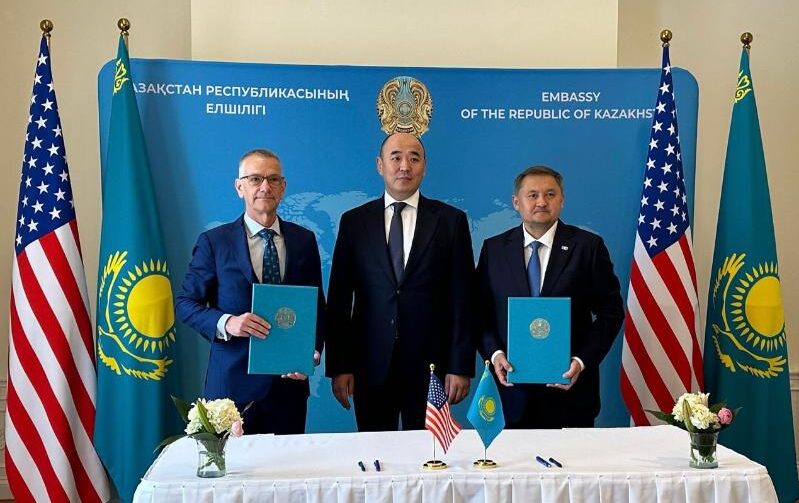
In 2026, the Colorado School of Mines will open its first international campus in Kazakhstan, marking a significant milestone in U.S.-Kazakhstan academic cooperation.

An agreement to establish the branch was signed between Kazakhstan’s Ministry of Science and Higher Education and the Colorado School of Mines, which currently ranks No. 1 globally in Mineral & Mining Engineering according to the QS World University Rankings 2025.

The new campus will be located in Zhezkazgan, the center of Kazakhstan’s geological industry, on the grounds of the newly established Ulytau Technical University. Instruction will be in English and will focus on four core bachelor’s degree programs: Mining, Geology and Geological Exploration; Geophysical Engineering; and Petroleum Engineering.

According to the Ministry, the project underscores Kazakhstan’s growing status as a destination for educational investment and knowledge transfer in technical fields.

“We have identified Kazakhstan as a priority country for partnership and development,” said John Bradford, Vice President of Global Initiatives at the Colorado School of Mines. “This agreement will allow us to elevate our collaboration and academic exchange.”

Earlier, the Colorado School of Mines signed a dual degree agreement with Kazakhstan’s Satbayev University in the fields of geology, petroleum engineering, and mining, which also includes joint research initiatives.

Once operational, the Zhezkazgan campus is expected to attract young professionals to the region, create new job opportunities, and train highly qualified specialists for both Kazakhstan’s domestic needs and the global labor market.

Russia Responds to Uzbekistan’s Concerns Over Police Treatment of Migrants

The Russian government has acknowledged Uzbekistan’s concerns regarding recent police actions targeting Uzbek nationals and is currently reviewing the matter, according to a statement by Russian Foreign Ministry spokesperson Maria Zakharova, as reported by state news agency TASS.

Zakharova confirmed that the Russian Foreign Ministry had received a formal diplomatic note from the Uzbek Embassy in Moscow, requesting explanations over reports of mistreatment during recent police operations. She said the contents of the note are being examined thoroughly and have been forwarded to the appropriate Russian authorities.

“We are studying the content of the note with full attention,” Zakharova said. “We maintain direct communication with our Uzbek partners, including through law enforcement channels. We are allies, and all such signals are taken seriously.”

Zakharova stated that Russia would provide Uzbekistan with verified and objective information following internal investigations. She also reaffirmed the strategic importance of bilateral ties. “Uzbekistan is our ally and strategic partner. We approach all issues in our bilateral relations with this in mind,” she said.

Tensions Over Police Conduct

The diplomatic exchange follows a statement earlier this week by Uzbek Foreign Ministry spokesperson Akhror Burkhanov, who expressed concern over the reported mistreatment of Uzbek citizens during recent police raids in Russia. In response, the Uzbek Embassy submitted a diplomatic note formally seeking clarification and legal assessment of the incidents.

The most prominent of these occurred on June 8 in the Strogino district of Moscow, where Russian law enforcement reportedly raided a dormitory housing migrants, including Uzbek nationals. Videos circulated by Russian media showed officers using force, with reports of beatings and verbal abuse. A similar incident was reported in St. Petersburg.

Uzbek officials emphasized that such conduct contradicts the “close and friendly” nature of Uzbek-Russian relations and called for a transparent review of law enforcement actions.

Uzbekistan’s Migration Agency stated that it is closely monitoring the situation. It confirmed that a small number of Uzbek citizens were detained due to documentation issues and are currently undergoing further checks.

Starlink Set to Launch Internet Services Nationwide in Kazakhstan

Starlink, a subsidiary of Elon Musk’s SpaceX, will officially begin offering satellite internet services in Kazakhstan in the third quarter of 2025. The Ministry of Digital Development, Innovation, and Aerospace Industry of the Republic of Kazakhstan announced that an agreement has been signed with Starlink, ensuring compliance with national laws on information security and telecommunications.

Expanding Internet Access to Remote Areas

With this agreement, Kazakhstani users can now legally purchase and connect Starlink satellite terminals. Until now, the service had operated only in pilot mode, providing internet access exclusively to schools.

“Starlink was not previously available to the public. Now, after reaching this agreement, the company has committed to fully comply with our legislation on information security and communications,” said Digital Development Minister Jaslan Madiev.

The initiative is part of President Kassym-Jomart Tokayev’s directive under the national project Accessible Internet, which aims to close the digital divide. The project focuses on underserved areas, such as mountain villages, remote pastures, schools, and healthcare facilities, where laying fiber-optic infrastructure is logistically or economically impractical.

Starlink’s technology uses a constellation of low-Earth orbit satellites, positioned approximately 550 kilometers above the Earth, to deliver high-speed broadband with low latency, even in rural and hard-to-reach locations.

Background: A Long Road to Starlink

Kazakhstan’s engagement with Starlink began in 2023 when the government, frustrated by the lack of progress from domestic telecom operators, initiated direct negotiations with SpaceX. Then-Minister Bagdat Musin announced a partnership to provide internet connectivity to 2,000 rural schools..

“Lauren Dreyer and I informed the President that in schools where students only receive 4 megabits per second through outdated satellite dishes, we would bridge the gap within six months. Lauren Dreyer, Vice President of SpaceX and Elon Musk’s deputy, confirmed Starlink’s commitment,” Musin said at the Digital Bridge forum.

By April 2024, 447 rural schools were connected via Starlink. By July, that number had risen to 1,729.

Attempted Ban and Backlash

Despite the rollout’s success, in December 2024, the Ministry of Digital Development, Innovation and Aerospace Industry (MDDIAI) proposed banning Starlink and similar services. Citing Article 23 of the National Security Law, the ministry argued that Kazakhstan should prohibit telecommunications networks operated from outside the country.

The draft regulation targeted four companies, Inmarsat, Iridium, Thuraya, and Starlink, and was published for public comment on the Open Regulations website. It immediately drew widespread criticism. In response to the backlash, the proposal was withdrawn for revision.

Kazakhstan Launches QR Code System for Foreign Visitors at Airports

Kazakhstan’s Ministry of Tourism and Sports, in collaboration with local authorities, has implemented a new QR code system at all international airports across the country. The initiative, announced by Minister of Tourism and Sports Yerbol Myrzabosynov, is designed to enhance the travel experience for foreign visitors by providing easy access to essential services.

According to the Ministry, the QR codes grant immediate access to:

  • Electronic SIM card services;
  • Licensed taxi operators;
  • Online hotel booking platforms;
  • Information regarding the registration of foreign citizens;
  • Details on major tourist attractions.

The primary goal of the system is to reduce the risk of fraud targeting tourists, particularly in areas such as transportation, mobile communications, and currency exchange, and to improve service quality throughout a visitor’s stay.

In 2024, Kazakhstan welcomed 15.3 million foreign nationals, of whom 10.4 million spent more than a day in the country and were officially classified as tourists.

The new digital system is part of broader efforts to create a safer, more convenient environment for international travelers, reinforcing Kazakhstan’s image as a tourist-friendly destination.

Kazakhstan currently offers visa-free entry to citizens of 87 countries, and an electronic visa application system is available to nationals of 107 countries.