• KGS/USD = 0.01144 0%
  • KZT/USD = 0.00212 0%
  • TJS/USD = 0.10456 0.19%
  • UZS/USD = 0.00008 0%
  • TMT/USD = 0.28490 0%
  • KGS/USD = 0.01144 0%
  • KZT/USD = 0.00212 0%
  • TJS/USD = 0.10456 0.19%
  • UZS/USD = 0.00008 0%
  • TMT/USD = 0.28490 0%
  • KGS/USD = 0.01144 0%
  • KZT/USD = 0.00212 0%
  • TJS/USD = 0.10456 0.19%
  • UZS/USD = 0.00008 0%
  • TMT/USD = 0.28490 0%
  • KGS/USD = 0.01144 0%
  • KZT/USD = 0.00212 0%
  • TJS/USD = 0.10456 0.19%
  • UZS/USD = 0.00008 0%
  • TMT/USD = 0.28490 0%
  • KGS/USD = 0.01144 0%
  • KZT/USD = 0.00212 0%
  • TJS/USD = 0.10456 0.19%
  • UZS/USD = 0.00008 0%
  • TMT/USD = 0.28490 0%
  • KGS/USD = 0.01144 0%
  • KZT/USD = 0.00212 0%
  • TJS/USD = 0.10456 0.19%
  • UZS/USD = 0.00008 0%
  • TMT/USD = 0.28490 0%
  • KGS/USD = 0.01144 0%
  • KZT/USD = 0.00212 0%
  • TJS/USD = 0.10456 0.19%
  • UZS/USD = 0.00008 0%
  • TMT/USD = 0.28490 0%
  • KGS/USD = 0.01144 0%
  • KZT/USD = 0.00212 0%
  • TJS/USD = 0.10456 0.19%
  • UZS/USD = 0.00008 0%
  • TMT/USD = 0.28490 0%

Kazakhstan Moves to Ban Electric Scooters from Sidewalks

Kazakhstan’s Ministry of Internal Affairs is preparing new legislation that would prohibit electric scooters from being used on sidewalks, Deputy Minister Igor Lepekha announced.

Initial restrictions on scooters were introduced in 2023, requiring riders to limit their speed to 6 km/h on sidewalks. However, compliance has been minimal, largely due to limited state enforcement and the failure of kick-sharing companies to implement speed-limiting technologies.

The issue resurfaced at the highest level on September 8, when President Kassym-Jomart Tokayev called for urgent measures to improve pedestrian safety.

Lepekha stated that previously rejected amendments to scooter regulations have now been redrafted. “These proposals to tighten control have already been submitted to parliament by the Ministry of Internal Affairs, but a number of them did not find support. In this regard, new amendments have been developed jointly with deputies, providing for a ban on the movement of electric scooters on sidewalks,” he said.

The Ministry also proposes new safety responsibilities for kick-sharing companies and wants to give local authorities the right to regulate scooter use within their jurisdictions. “The municipality could decide for itself on which streets and at what times they can be ridden and when they should be prohibited, thus defining zones,” Lepekha added.

Since the beginning of the year, Kazakhstan has recorded 361 traffic accidents involving electric scooters, resulting in 365 injuries and one death. According to a government report, authorities documented 29,000 traffic violations by scooter riders in 2025 alone, with 8,000 devices impounded.

As of August 29, the Ministry had recorded 213 accidents and 224 injuries, along with 24,000 violations and 2,500 scooters sent to impound lots. The figures indicate that in the two weeks following Tokayev’s directive, scooter-related violations increased by 5,000, and the number of impounded devices more than doubled.

As The Times of Central Asia previously reported, enforcement has intensified particularly in Almaty, where the highest number of violations has been reported.

Opinion: Turning Deserts Into Fields of Hope

Desertification is a global crisis threatening the livelihoods of 3.2 billion people worldwide. From China’s vast green belt along its largest desert to Central Asia’s unified efforts to halt land degradation on arid plains, the fight against encroaching sand continues. These initiatives offer hopeful examples of human endeavor in restoring degraded lands and safeguarding the future of our planet.

In the heart of southern Xinjiang lies the Taklamakan Desert, a vast expanse known as the “sea of death” for its extreme arid and inhospitable conditions. Covering 330,000 square kilometers – an area almost the size of Finland – it is China’s largest desert and the world’s second-largest shifting desert. Here, dunes stretch endlessly, and sandstorm days comprise one-third of the year.

For generations, the Taklamakan Desert has threatened surrounding villages, farmlands, and transportation routes, squeezing the living space of those who dwell on its edges. Nearly 80% of the desert sands are in constant motion, while seasonal floods from melting snow on the mountains add further instability, leaving homes and livelihoods at risk.

The danger is long-term: at one point, the Taklamakan risked merging with the nearby Kumtag Desert, placing even greater pressure on human settlements.

How To Contain The Sands

Faced with the challenge, China launched an ambitious initiative: building a shield of vegetation to encircle the Taklamakan Desert, planting desert-tolerant species such as desert poplar, red willow, saxaul, and even roses.

This massive project took more than 40 years to complete. By the end of 2023, 2,761 kilometers (about 1,716 miles) of the belt had been established. A year later, the final 285 kilometers – the most challenging section – was closed through the dedicated efforts of 600,000 people.

On November 28, 2024, in Yutian County on the desert’s southern edge, the last seedlings were planted into the sands, completing a 3,046-kilometer green belt. This vast ecological barrier stabilizes the Taklamakan Desert’s edge, prevents sandstorms, and protects the fragile ecology. In addition, the green belt provides wild animals in the desert with safe conditions for survival, breeding, and migration.

A Bold Green Strategy Against Desertification

The Taklamakan Desert control project is a part of China’s Three-North Shelterbelt Forest Program, or TSFP, the world’s largest afforestation program aimed at curbing desertification.

Launched in 1978, this ambitious program seeks to slow the progress of desertification and reduce the frequency of sandstorms by planting vast stretches of trees and resilient plant species across the arid and semi-arid regions in northern China, where sandstorms pose a constant threat to local farmlands and residents.

Official data shows that forest coverage in areas covered by the TSFP has risen from 5% in 1977 to 13.8% today. More than 60% of regions prone to soil erosion have been effectively controlled, and roughly 30 million hectares of farmland have been safeguarded from desert expansion.

Turning Lands of Despair into Fields of Hope: A Shared Mission

The challenges faced in northern China echo across the globe. From the Sahel in Africa to the Middle East and Central Asia, up to 40% of the planet’s land is degraded, threatening 3.2 billion people – almost half of the global population. The encouraging news is that projects such as the Three-North Shelterbelt Forest Program seem to demonstrate that humans have the know-how to turn degradation into restoration.

Central Asia faces some of the most pressing challenges. More than 20% of the region’s land is degraded – an area nearly four times the size of Kyrgyzstan. The Aral Sea, once the world’s fourth-largest inland lake, has shrunk by 90% since the 1960s, leaving behind a desert that has worsened soil erosion, dust storms, and agricultural loss.

In response, Central Asian nations are taking effective measures. Uzbekistan is planting native shrubs and trees across 500,000 hectares on the former bed of the Aral Sea to stabilize soil and reduce dust storms. Kazakhstan has committed to planting two billion trees by 2025 across 1.5 million hectares, including the dried-up seabed of the Aral Sea. Regionally, all five Central Asian nations have joined the UN’s Land Degradation Neutrality (LDN) program to halt and reverse land loss.

The “sea of death” may never entirely vanish – and it does not have to. Yet the efforts of China and Central Asian countries serve as a hopeful reminder that if roses can bloom on the desert’s edge, then even the land of despair can be transformed into fields of hope.


The views expressed in this article are those of the author and do not necessarily reflect the official policy or position of the publication, its affiliates, or any other organizations mentioned.

Kyrgyz Parliament Reveals Real Reasons for Its Possible Dissolution

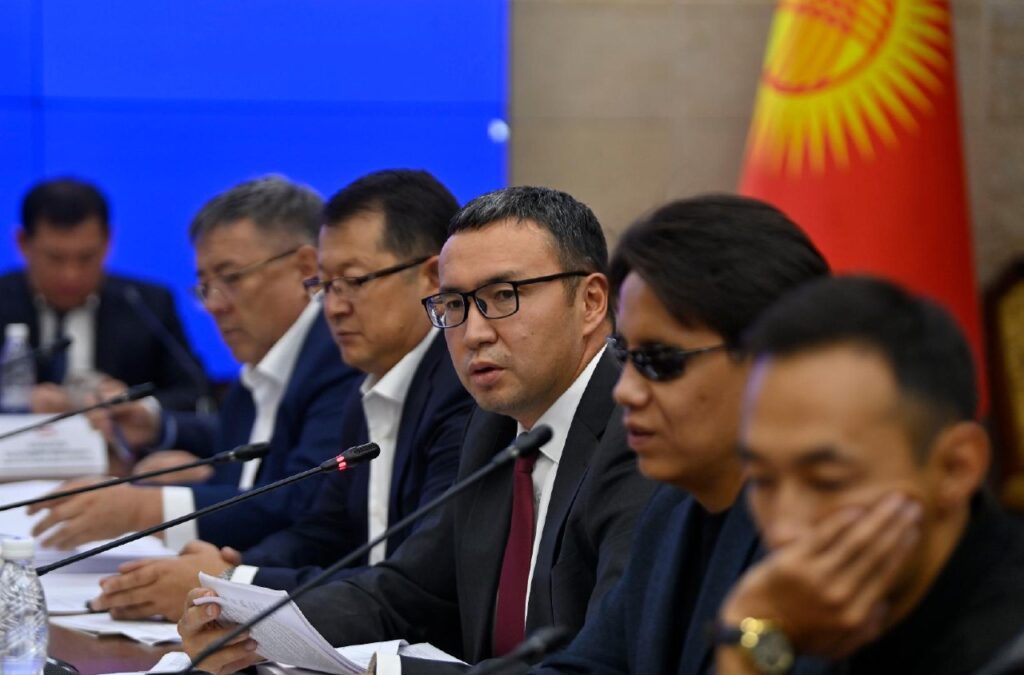
A group of deputies from Kyrgyzstan’s parliament, the Jogorku Kenesh, have announced that they are close to finalizing a decision on the parliament’s self-dissolution. According to the Constitution, if dissolution proceeds, early elections must be held within two months, meaning the vote could take place as early as November.

Deputy Dastan Bekeshev stated that although he did not sign the dissolution initiative himself, he estimates the likelihood at 99.7 percent. Sixty signatures, two-thirds of all members of parliament, are required for self-dissolution, and 30 signatures have already been collected. Despite the uncertainty, political headquarters are actively preparing: sociologists are conducting phone surveys, consultants are drafting programs and PR strategies, and Bekeshev has called on his supporters to volunteer as campaigners or election observers.

“This time, the election campaign will be shortened: 20 days of campaigning, and candidate registration will also be expedited. The parliamentary committee is already planning to discuss the procedure for donations to candidates’ election funds,” Bekeshev said.

He has also introduced a new bill addressing election finance. Under current rules, donations can only be made through accounts in a limited number of banks, which he argues creates obstacles for candidates. His proposal would expand banking options and allow campaign funds to be supplemented through the sale of political merchandise.

Some lawmakers suggest that the push for early elections reflects the interests of certain groups that want to bring in loyal candidates aligned with the speaker and the authorities. Bekeshev indirectly acknowledged this view, noting that restrictions on candidates’ access to additional resources, combined with the doubling of the maximum campaign fund from 10 to 20 million KGS, could turn parliament into what he called a “parliament for the rich,” limiting access for ordinary citizens.

The Central Election Commission has confirmed it is prepared to organize the vote and has urged deputies to inform citizens about new election rules. Under the revised system, three deputies will be elected from each constituency, but voters will only be able to cast a ballot for one candidate.

Urban Night Almaty: Creative Communities and the Future of Central Asia

Ecology, entrepreneurship, and innovation in urban life were the central themes of Urban Night Almaty, a one-day festival held last Saturday in Kazakhstan’s largest city.

The event sought to answer a key question: Can small-scale initiatives and grassroots communities meaningfully improve life in a metropolis? Organizers and attendees alike believe they can.

The festival drew together a wide array of participants, recycling advocates, artists, artisans, confectioners, cosmetics producers, startup founders, writers, journalists, students, sociologists, urbanists, architects, and entrepreneurs, each contributing to a shared vision of sustainable, inclusive urban development.

@Eduard Galeev

“Each of us lives in our own information bubble, and events like this push us to step outside of it. We’re all different, but we can achieve something together,” said ecologist Pakizat Sailaubekova. “Looking at the people who came to the festival and how moved they are, it’s inspiring.”

Discussion and Decision-Making

Urban Night Almaty was organized around several thematic zones. One area was dedicated to public discussions on technology, education, and ecology.

Bekežan Kaigaliev, founder of Food Recycling and Aquajem, presented on the use of fly larvae to process organic waste in large cities. Alexey Kupriakov, founder of the Green Workout movement, shared ideas on integrating eco-friendly practices into urban planning.

Zhuldyz Saulbekova, CEO of the Almaty Air Initiative, spoke about technological solutions for combatting air pollution and chronic smog.

@Eduard Galeev

Other panels focused on educational innovation. Journalist and PR expert Anuarbek Zhalel, alongside Nursultan Amirkhan, product manager at Daryn.online, discussed promoting startups and integrating new tools in learning environments.

A separate session brought together alumni of U.S. internship programs. Among them were athlete and IT specialist Aina Dosmakhambet, lawyer Zhibek Karamanova, and Yerzhan Nauruzbayev, a Forbes 30 Under 30 honoree with professional experience across three continents.

Practice and Inspiration

Beyond the panels, attendees participated in workshops and creative performances. Highlights included a sports-themed cleanup organized by Kupriakov and an urban exploration of Almaty led by the GoroZhanym project.

An eco-themed market showcased small-scale producers offering food, toys, jewelry, souvenirs, and hygiene products. Many entrepreneurs shared stories of how their ventures, though modest in scale, contribute to making Almaty cleaner and more future-oriented.

@Eduard Galeev

“We often speak in terms of global problems, but it’s essential to respect action at the micro level,” said political analyst Dosym Satpaev. “Thanks to social media, even the smallest project can gain traction. The more of these we have, the stronger our creative economy becomes. These are the foundations for national stability, development, and retaining talent.”

Satpaev also hosted a futurology session addressing the challenges and prospects artificial intelligence presents for Central Asia.

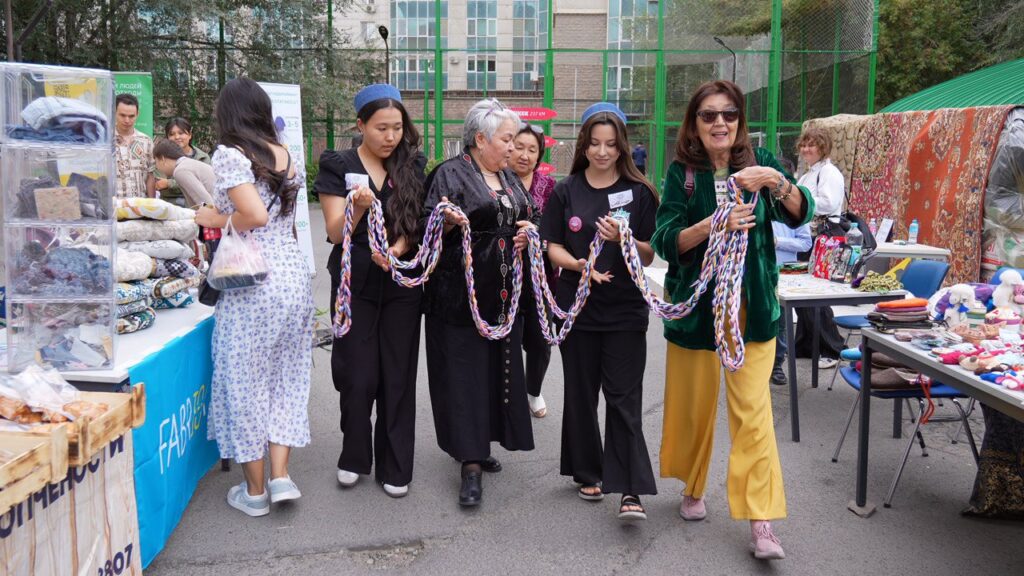
The festival concluded with a tұsaуkeser ceremony, a Kazakh tradition that involves cutting a symbolic cord representing a newborn’s first steps. The cords, handcrafted by members of the Niti Dobra movement (which supports premature infants), symbolized renewal and the strengthening of ties between citizens and their city.

@Eduard Galeev

Regional Reach

“Our goal is to create a platform uniting entrepreneurs, startups, and those committed to transforming cities for the better,” said Elmira Karmanova, the festival’s organizer. “Urban Night Almaty is just the beginning, next week, we’ll bring the festival to Bishkek, followed by Dushanbe, Samarkand, and Ashgabat.”

Urban Night Almaty was held as part of the Go Viral program with support from the U.S. diplomatic mission in Kazakhstan.

Kyrgyz Government Opens Islamic Academy to Strengthen Religious Education

On September 15, Kyrgyzstan inaugurated a state-funded Islamic Academy in the town of Tokmok, approximately 60 kilometers east of Bishkek. Established by presidential decree, the institution is designed to accommodate 400 students and aims to offer structured training in Islamic theology, as well as courses in Islamic finance and banking.

Speaking at the opening ceremony, President Sadyr Japarov emphasized that global threats of extremism and radicalism, including in Central Asia, underscore the need for “objective, scientifically grounded religious education aligned with traditional Islamic values”.  He stated that the academy would serve as a regional hub for training imams and promoting spiritual development.

Japarov also urged Kyrgyz youth to pursue religious education domestically, arguing that the academy removes the necessity of studying abroad.

The launch comes amid increasingly stringent state regulation of religious activity. In January 2025, Japarov signed amendments to the Law “On Freedom of Religion and Religious Associations,” introducing restrictions on face coverings in public offices, coercion in religious conversion, ceremonies in closed institutions, and political or foreign-funded religious activities.

As of 2024, Kyrgyzstan had 3,593 mosques and 220 registered religious schools, most of them located in the southern Osh region.

Shared Values, Shared Voices: An Interview With Spain’s Ambassador to Kazakhstan

In recent years, cultural cooperation between Spain and Kazakhstan has gained new momentum. Although the two countries are separated by a vast geographical distance, their cultural ties are growing closer through shared values. The Embassy of Spain in Kazakhstan has implemented a number of major projects in this regard. TCA spoke with the Ambassador of Spain to Kazakhstan, Luis Martínez Montes.

TCA: It’s been several months since you became the Ambassador to Kazakhstan. What aspects of our culture do you enjoy?

LMM: In fact, this is my second diplomatic posting to Kazakhstan. The first was from 1999 to 2002, when Spain opened its embassy in Almaty before moving to Astana. Twenty-five years later, I’ve returned as Ambassador to a country I consider my second home. There are so many things I love about Kazakhstan, including its nature and its gastronomy, that it’s hard to choose. But if I had to pick one, it would be the people, especially the younger generations.

I spend much of my time visiting schools and universities, where I see a tremendous energy and thirst for knowledge among Kazakh students. I organize weekly lectures, debate clubs, and informal lunches at my residence with students and Kazakh intellectuals. Their conversations enrich me and help me better understand the direction this country is taking.

TCA: You once mentioned that you visited the Mausoleum of Khoja Ahmed Yasawi. What impression did it leave on you?

LMM: I visited Turkistan in 1999, and I have a memorable anecdote from that trip. While visiting the mausoleum, the local guide found out I was from Spain and enthusiastically mentioned Ibn Arabi, the great Sufi poet from Al-Andalus [the name for Spain during its Islamic period]. She spoke of him as a near-contemporary of Ahmed Yasawi.

I’m grateful for that moment because it was through this cultivated Kazakh woman who could recite at length poems by both Sufi sages that I developed my lifelong admiration for Ibn Arabi. I found it truly fascinating that two poets, Ibn Arabi and Khoja Ahmed Yasawi, living at opposite ends of the Eurasian continent, could produce such profound and beautiful poetry, inspired by the same spiritual quest for God.

TCA: Abai Kunanbayuly, like Cervantes, elevated a nation’s literature and culture. We translated Cervantes into Kazakh many years ago, and Don Quixote has been reprinted many times. We also heard that Abai’s works have been translated into Spanish. How has the Spanish readership received him?

LMM: As you know, the late Pope Francis, who was from Argentina, quoted Abai more than a dozen times at the opening of the Seventh Congress of Leaders of World and Traditional Religions in 2022. Some works by Abai were translated into Spanish in 2020 by María Sánchez Puig, who received the Order of Dostyk for her work in bringing Kazakh literature closer to Spanish-speaking audiences. Another project is currently underway to translate selections from Abai’s Book of Words into Spanish this year.

We’re also developing the first Kazakh-Spanish dictionary to make it easier for our students to learn Kazakh and vice versa. In addition, in 2016, a collection of contemporary Kazakh poetry translated by Justo Jorge Padrón was published in Spanish.

TCA: Is it correct that Spain’s interest in Kazakhstan began in the Middle Ages?

LMM: Spanish awareness of Kazakhstan dates back to medieval times. The first visual representation in the West of the Silk Road appears in the Catalan Atlas, created in 1375 in the Crown of Aragon, one of the formative kingdoms of Spain. It included a detailed image of the Golden Horde Khan, Jani Beg, with his distinctive flag. Then, in the early 15th century, the Spanish ambassador Ruy González de Clavijo visited Central Asia during the time of Timur. He wrote an extraordinary book about the region, which became a best-seller in Europe after being printed and translated into several languages.

TCA: How can Kazakhstan become better known in Spain? Are there projects in this regard?

LMM: Today, the Kazakh embassy in Madrid does excellent work promoting modern Kazakhstan in Spain. There is also an institution called Casa Kazaja, which brings together Kazakh citizens in Spain with Spaniards interested in Kazakhstan. They facilitated the participation of more than thirty Spanish athletes in the World Nomad Games held in Astana last year. It was the fourth-largest Western delegation, and participants were deeply impressed by the quality of the organization and the hospitality of the Kazakh people.

As for current initiatives, the opening of the Atlético de Madrid Academy in Kazakhstan will have a major impact in Spain as well. In addition, two important cultural events this year will further raise Kazakhstan’s profile in Spain. First, Kazakh superstar Dimash will perform in Barcelona this November and also hosted a fan and media conference there on June 1.

The second is very exciting: the first Spanish-Kazakh co-production of a major feature film, under the auspices of Netflix. The movie, titled La Tregua (The Truce), is based on the true story of several hundred Spanish prisoners who ended up in the Karlag [labor camp] during Stalin’s time. The director is Miguel Ángel Vivas (known for directing Money Heist for Netflix), and the cast includes Spanish actors Miguel Herrán (Money Heist) and Arón Piper (Elite), alongside Kazakh stars Dina Tasbulatova, Altynai Nogerbek, Sergey Ufimtsev, and Farabi Akkozov. The film is now in its final editing phase.

TCA: In your country, football is not just seen as a game but is respected as an art form. Teams like Real Madrid, Atlético de Madrid, or Barcelona are prime examples of this. How has this phenomenon contributed to the development of Spanish culture and the economy?

LMM: You are right. Football in Spain is a mixture of religion and art. It’s also big business. Real Madrid is the world’s most profitable football club (valued at $6.6 billion), Barcelona is third ($5.6 billion), and Atlético de Madrid is twelfth ($1.6 billion). When it comes to sporting victories, Real Madrid is undoubtedly the best club in football history, with a record 15 UEFA Champions League titles. Overall, Spanish clubs have won the most European titles (20), followed by English clubs (15) and Italian clubs (12). As a disclaimer, I must confess that I’ve been a fan of Barcelona since childhood, even though I was born in Madrid. So, you can imagine my happiness that Barcelona FC won La Liga this year.

Regarding the Spanish national team, Spain has been the most successful football nation of the 21st century: winning the World Cup in 2010, three European Championship titles (2008, 2012, and 2024, in addition to an earlier one in 1964), and one Nations League. Spain is also the country with the most European Championship titles overall (4), followed by Germany (3), and the only one to have won three major championships in a row (2008, 2010, 2012).

Football is therefore one of Spain’s greatest exports. In this regard, I’m pleased to share with your readers that this summer, one of Spain’s top teams, Atlético de Madrid, will open the Atlético de Madrid Football Academy near Almaty in partnership with the Doscar Group. The Academy will train hundreds of Kazakh and Central Asian children and teenagers aspiring to become professional players. Its facilities, which I’ve personally visited, are state-of-the-art and will include a modern residence, boarding school, gyms, six training pitches, and a stadium with 10,000 seats. The best students will also have the opportunity to continue training in Madrid. We want to help Kazakhstan become a football powerhouse, not only in the region but globally.