• KGS/USD = 0.01144 0%
  • KZT/USD = 0.00196 -0%
  • TJS/USD = 0.10899 -0%
  • UZS/USD = 0.00008 -0%
  • TMT/USD = 0.28490 0%
  • KGS/USD = 0.01144 0%
  • KZT/USD = 0.00196 -0%
  • TJS/USD = 0.10899 -0%
  • UZS/USD = 0.00008 -0%
  • TMT/USD = 0.28490 0%
  • KGS/USD = 0.01144 0%
  • KZT/USD = 0.00196 -0%
  • TJS/USD = 0.10899 -0%
  • UZS/USD = 0.00008 -0%
  • TMT/USD = 0.28490 0%
  • KGS/USD = 0.01144 0%
  • KZT/USD = 0.00196 -0%
  • TJS/USD = 0.10899 -0%
  • UZS/USD = 0.00008 -0%
  • TMT/USD = 0.28490 0%
  • KGS/USD = 0.01144 0%
  • KZT/USD = 0.00196 -0%
  • TJS/USD = 0.10899 -0%
  • UZS/USD = 0.00008 -0%
  • TMT/USD = 0.28490 0%
  • KGS/USD = 0.01144 0%
  • KZT/USD = 0.00196 -0%
  • TJS/USD = 0.10899 -0%
  • UZS/USD = 0.00008 -0%
  • TMT/USD = 0.28490 0%
  • KGS/USD = 0.01144 0%
  • KZT/USD = 0.00196 -0%
  • TJS/USD = 0.10899 -0%
  • UZS/USD = 0.00008 -0%
  • TMT/USD = 0.28490 0%
  • KGS/USD = 0.01144 0%
  • KZT/USD = 0.00196 -0%
  • TJS/USD = 0.10899 -0%
  • UZS/USD = 0.00008 -0%
  • TMT/USD = 0.28490 0%
08 December 2025

Uzbekistan to Chair ADB Board, Host 2026 Annual Meeting in Samarkand

Uzbekistan is poised to assume a greater leadership role within the Asian Development Bank (ADB) following key announcements at the institution’s 58th Annual Meeting of the Board of Governors, held on May 6-7 in Milan, Italy.

Uzbekistan’s delegation, led by Deputy Prime Minister Jamshid Khodjaev, participated in the high-level event. According to the Ministry of Investments, Industry and Trade of Uzbekistan, the meeting concluded with the formal announcement that Uzbekistan will chair the ADB Board of Governors for the 2025-2026 term. Khodjaev was confirmed as the board’s next chair, a move widely seen as a reflection of the growing trust and confidence of international financial institutions in Uzbekistan’s reform trajectory.

Additionally, it was agreed that Samarkand will host the ADB’s 59th Annual Meeting in May 2026.

During the Milan meeting, the parties also signed an ambitious cooperation program outlining 23 new projects valued at $3.6 billion, to be implemented over the next two years. These initiatives will target strategic sectors such as education, drinking water supply, transport, and technical assistance.

The announcement builds on an existing track record of cooperation. Recent projects include a $125 million ADB loan aimed at modernizing Uzbekistan’s water systems. This initiative encompasses the installation of smart water meters, mapping of water infrastructure, modernization of customer service centers, and training for utility staff, all intended to enhance national water security and service efficiency.

Uzbekistan’s expanding partnership with the ADB is expected to accelerate its social and economic development objectives, particularly as the country continues to pursue wide-ranging reforms and infrastructure upgrades.

Kazakhstan Launches Dredging Project to Expand Aktau Port on Key Trans-Caspian Corridor

Kazakhstan’s Ministry of Transport has initiated dredging works at the Caspian Sea port of Aktau, aiming to enhance the capacity and navigational safety of a critical hub on the Trans-Caspian International Transport Route (TITR), also known as the Middle Corridor.

The Aktau port, located in the Mangistau region, is being deepened by 1.5 to 2 meters using specialized dredging equipment supplied by European contractor Jan De Nul. Mobilization of the equipment is set to be completed in May, with full dredging operations scheduled for completion by the fourth quarter of 2025.

The project is expected to significantly increase the port’s terminal capacity. Currently, Aktau handles approximately 15 million tons of cargo annually, including up to 140,000 twenty-foot equivalent units (TEUs).

This infrastructure enhancement forms part of Kazakhstan’s broader strategy to develop the TITR, a key transit corridor linking China to Europe through Central Asia and the Caucasus. According to the Ministry of Transport, container traffic via the TITR through Kazakhstan surged by 3.5 times in the first quarter of 2025, reaching 25,000 TEUs, up from 7,200 TEUs during the same period in 2024.

In a related development, Kazakhstan completed dredging works at another major Caspian port, Kuryk, in November 2024. That project, also executed by Jan De Nul Kazakhstan LLP, was finished in just four months. The water depth at Kuryk was increased to 7-8 meters, substantially enhancing its handling capacity and reinforcing its strategic importance on the Trans-Caspian route.

L’Étranger: Paris Hosts the Reclusive Leader of Turkmenistan

Gurbanguly Berdimuhamedov, Turkmenistan’s longtime ruler, no longer holds the title of president; that has been passed, along with much of the public burden, to his son. He now reigns from the shadows as Hero-Arkadag (“Hero-Protector”), but he retains the ability to open doors.

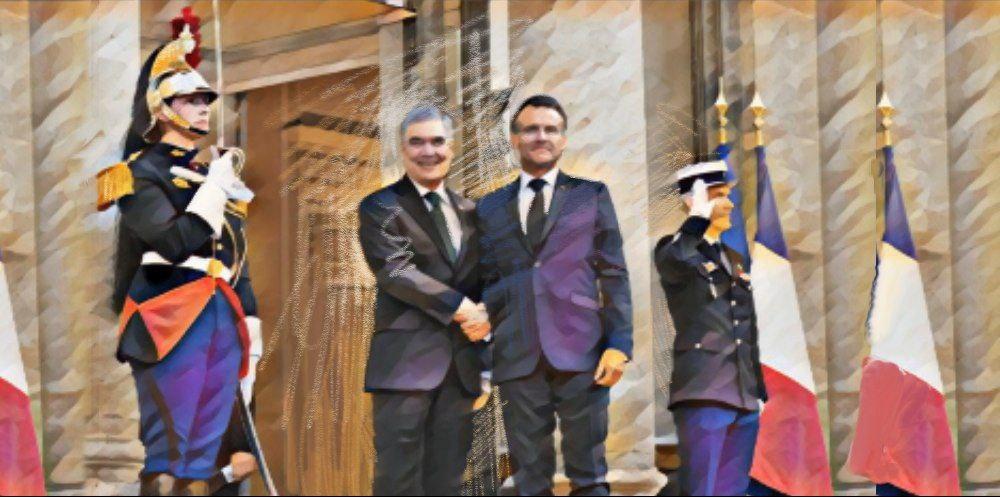
Nearly 14 years after his last official visit, Berdimuhamedov landed at Paris’ Orly airport last Monday. He was in France ostensibly to attend the Franco-Turkmen Economic Forum, but the visit also saw him ushered into the Élysée Palace for an audience with President Emmanuel Macron.

Characteristically, his presence in Paris was kept quiet, receiving very little coverage even in the French media.

“It was much less discussed than the near-concurrent visit of the Syrian leader, Ahmed Al-Charaa,” Michaël Levystone, co-founder of l’Observatoire de la Nouvelle Eurasie, a Paris think tank told The Times of Central Asia. “You have to understand that Turkmenistan is a country that is virtually unknown to the general public in France – and for good reason: it goes out of its way to remain extremely discreet!”

Nevertheless, the visit marks a rare moment of high-level Western diplomacy with one of the world’s most opaque regimes, as well as an extremely uncommon public diplomatic appearance from Berdimuhamedov Senior since ceding formal power in 2022. The questions are why France? And why now?

What Was Discussed

The two readouts of the encounter were notably different. The Élysée offered a terse summary on its website, noting vaguely that the meeting “provided an opportunity to review the bilateral relationship between Turkmenistan and France as well as regional issues.” Macron then followed this up with an equally laconic post on X, noting that the two had “signed several agreements between Turkmenistan and France in the areas of energy transition, infrastructure, education, and culture. They demonstrate the strengthening of our cooperation. We also took stock of major regional and international crises, including Russia’s war of aggression against Ukraine and the situation in the Middle East.”

On the other hand, the state-run news service Turkmenistan Today provided what can only be described as a detailed travelogue, noting the many dignitaries who had the pleasure of meeting the Hero-Arkadag on his whistle-stop tour of the City of Lights.

According to the Turkmens, the visit yielded a flurry of agreements. A memorandum of understanding was inked between state-owned Türkmengaz and French tech firm Kayrros SAS, while France’s Thales Alenia Space Group signed a framework deal to provide Ashgabat with a second communications satellite. There were further promises of joint work on green energy, education, and archaeological research.

A Foot in the Door

One French company in particular is responsible for much of the engagement between the two countries. As part of his trip to Paris, Berdimuhamedov met with construction magnate Martin Bouygues, CEO of the firm that bears his family’s name.

The Presidential Palace and ministries complex, built by the French company Bouygues; image: TCA, Stephen M. Bland

“Bouygues has built numerous monumental buildings in Ashgabat since Turkmenistan’s independence,” Levystone told TCA. “I believe the head of the group is received annually at the Oguz Khan Presidential Palace, a building constructed by Bouygues during the Saparmurat Niyazov era. Many construction projects carried out by Bouygues – for staggering sums – justify, as part of economic diplomacy, a French diplomatic presence of substance in Turkmenistan.”

Indeed, unlike Britain and Germany, whose delegations are cooped up in a hotel overlooking the Turkmenistan State Circus, France has its own physical embassy building in the Turkmen capital. It also maintains a relatively active Institut Français.

In 2024, Turkmenistan even unveiled a statue of author Honoré de Balzac, quite an achievement in a country where monuments tend to be dedicated to those currently occupying the seat of power, their published works, and their assorted pets.

Niyazov’s Ruhnama Monument; image: TCA, Stephen M. Bland

Energy to the East

But Turkmenistan presents a prize not only to the business and literary communities. The country is also viewed as a potentially important factor in Europe’s energy security.

France in particular is moving to shore up its energy supply lines. Kazakhstan’s Kassym-Jomart Tokayev’s state visit in November was quickly followed in March by the arrival of  Uzbekistan’s Shavkat Mirziyoyev, as Paris quietly expands its diplomatic overtures toward Central Asia.

One key interest is uranium. In the decade 2012-2022, Kazakhstan (27%) and Uzbekistan (19%), accounted for almost half of the fuel supplied to France’s network of nuclear power stations. This reliance is only likely to have increased since French troops were expelled from Niger in 2023, a country that used to supply around 20% of France’s uranium needs.

Turkmenistan on the other hand, is attractive because of gas. With Europe seeking to limit purchases of Russian gas, and with American liquified natural gas (LNG) now posing its own risks due to a newly capricious White House, diversification has become more important. This has led to a covetous gaze being cast across the Caspian: Turkmenistan possesses the world’s fifth-largest proven natural gas reserves.

Supply of Gas to the European Union (2024):

Gas Supplier Billion cubic meters Percentage of total supply
Norway 91.12 33.4%
United States 45.14 16.5%
Algeria 39.19 14.4%
Russia (pipeline) 31.62 11.6%
Russia (LNG) 20.05 7.3%
Qatar 11.82 4.3
Azerbaijan 11.66 4.3
UK 11.66 4.3
Others 10.63 3.9

Source: European Commission – https://www.consilium.europa.eu/en/infographics/where-does-the-eu-s-gas-come-from/

What Does Ashgabat Want?

Turkmenistan too is seeking diversification. The country is currently China’s largest gas supplier, surpassing even Russia, with revenues from gas sales to Beijing offering around $10 billion a year to the Turkmen treasury.

But this relationship has become increasingly asymmetrical. In 2012, gas sales to China accounted for 52% of Ashgabat’s total exports and 51% of Beijing’s total gas supply. In the intervening decade, China has diversified suppliers, helped by the growing viability of LNG and the Power of Siberia pipeline from Russia.

Meanwhile, Turkmenistan has doubled down on its golden goose. By 2022, China represented 81% of Turkmenistan’s gas exports, while China now imports just 28% of its supplies from Ashgabat.

With the Chinese economy slowing and Ashgabat in a position of increasing dependence, over the past two years Turkmenistan has belatedly begun a search for new markets. Some of the slack has been taken up by the growing gas deficit in Uzbekistan, while plans are mooted to increase gas pipeline capacity to Kazakhstan.

Turkmenistan has also begun offering gas swaps to drive sales to the West. This involves pumping gas to Iran, which then sells on some of its own production. Iraq signed a deal to receive 10 bcm last year, and Turkey concluded its own gas swap deal in March.

In August 2023, Turkmenistan also announced its intention to transport gas to the EU. Accessing this Turken gas will not be easy. The long-proposed 300-kilometer pipeline under the Caspian from Turkmenbashi to Baku continues to founder, with financing a particular issue.

There are potential workarounds, however. The gas swaps with Iran could eventually reach European markets, while gas from Kazakhstan is now being transported as LNG across the Caspian. With Turkmenistan proclaiming at a recent Samarkand summit that Turkmenbashi Port might be expanded as part of the Trans-Caspian Transport Corridor initiative, this represents another plausible export route.

But such attempts may be a long way in the future. Europe also remains reluctant to purchase Turkmen gas given its production involves some of the highest methane emissions in the world. French tech-firm Kayrros described the emission levels as “mind-boggling” in 2023, and it is notable that methane monitoring was one of the key agreements signed at the Franco-Turkmen economic forum.

So, it’s likely that for all the pipeline dreams, the main reason for Arkadag’s visit was to boost his legitimacy. Even though Macron only managed to squeeze him into a busy week that involved meetings with the leaders of Syria, Ecuador, and Germany, VE Day celebrations, and a trip to Ukraine, the fact that he met Arkadag at all boosts the Turkmen leader’s profile. For a reclusive leader who has by and large retreated from public life, a smiling photo-op on the steps of the Élysée is an excellent way of remaining relevant.

Tellingly, not a word was uttered, at least publicly, on Turkmenistan’s domestic human rights record, which continues to rank among the worst in the world.

Berdimuhamedov has also extended an invitation to Macron to attend an international forum in Ashgabat in December this year, marking the 30th anniversary of Turkmenistan’s neutrality. Another small sign, perhaps, that Turkmenistan is taking some tentative steps on the tightrope between openness and control.

Kazakhstan’s Young Workforce Grows, But Sectoral Gaps Persist

The youth labor market in Kazakhstan remains a vital topic amid the country’s ongoing economic transformation. According to analysts from Finprom.kz, approximately 1.8 million young people aged 15 to 28 were employed across the country in 2024, an increase of 0.6% compared to the previous year.

Regional Distribution of Youth Employment

The highest concentration of young workers is in Almaty, where 243,200 young people are employed, up 5% from 2023. Almaty is followed by the Turkestan region. In contrast, the Ulytau, North Kazakhstan, and Zhetysu regions recorded the lowest figures for youth employment.

Of the total number of employed youth, 1.4 million (77.7%) work as salaried employees. Additionally, the country is home to 331,900 young individual entrepreneurs, 58,300 self-employed workers, 2,700 founders or participants in economic partnerships, joint-stock companies, or cooperatives, and 2,400 engaged in private practice.

Sectoral Breakdown

Among all employed young people, the largest group, 424,400 individuals, are professionals, although this marks a 1.3% decrease from the previous year. They are followed by service and sales workers (291,700), unskilled laborers (281,700), technical and support staff (195,100), and industrial, construction, and transport workers (142,600).

In terms of industry sectors, youth are primarily employed in wholesale and retail trade, automotive repair, education, and agriculture, including forestry and fishing. The lowest youth employment is seen in utilities (water and electricity supply) and real estate.

Youth Unemployment: A Gradual Decline

Youth unemployment is on the decline. In 2024, the number of unemployed individuals aged 15 to 28 dropped to 62,000, a 6.7% decrease from 2023. The unemployment rate stood at 3.7% among 16 to 24-year-olds and 3% among those aged 25 to 28. For comparison, the overall unemployment rate for the working-age population in Kazakhstan reached 4.7%.

Almaty recorded the highest number of unemployed youth (11,100), followed by Astana (7,800) and the Almaty region (7,700). Ulytau, Pavlodar, and North Kazakhstan regions reported the lowest youth unemployment figures.

As for the length of time spent job hunting in 2024, 18,200 young people searched for one to three months, 16,200 for three to six months, and 16,000 for less than a month. A smaller share, 7,500, searched for more than six months, and 4,000 had been looking for work for over a year.

Broader Context and Causes of Unemployment

Nationwide, 448,200 Kazakhstani citizens were unemployed in the fourth quarter of 2024. The unemployment rate was 4.2% among men (211,100) and 5.1% among women (237,100). The most affected age groups were 35 to 54 (256,900 people) and 55 to 64 (69,700).

The most frequently cited reasons for unemployment included family responsibilities (61,400), layoffs or company closures (50,300), and difficulty finding suitable jobs (112,500). Other contributing factors were domestic duties (44,200), health issues (17,500), and challenges securing employment post-graduation (16,600).

Policy Implications

Experts highlight the importance of developing flexible employment policies tailored to the evolving labor market. Enhancing conditions for self-employment and youth entrepreneurship is seen as a potential key strategy for reducing youth unemployment in the long term.

ADB Finances 90% of Road Projects in Tajikistan’s Regions

The Asian Development Bank (ADB) has financed the construction and reconstruction of 90% of all roads in Tajikistan outside the capital, Dushanbe. This was announced by Evgeny Zhukov, ADB Director General for Central and West Asia, during the 58th Annual Meeting of the Bank’s Board of Governors in Milan.

Tajikistan’s Largest Transport Infrastructure Investor

According to Zhukov, Tajikistan has long been a key partner for the ADB. Since the start of cooperation, the bank has invested approximately $2.7 billion in the country, with the majority of funds directed toward public sector development.

“If you travel outside Dushanbe, there is a 90% chance the roads you are on were built or modernized with ADB support. This confirms the effectiveness of our investments,” Zhukov stated.

Laziza Sabirova, Head of Regional Cooperation and Integration at the ADB’s Central and West Asia Department, emphasized the bank’s commitment to quality control. An independent unit evaluates whether project outcomes align with initial objectives and ensures efficient use of funds.

“These specialists assess each project’s relevance and effectiveness, checking if goals were achieved, whether there was overspending, and evaluating construction quality. Post-completion, they also analyze facility use, maintenance, and any further funding needs,” Sabirova explained.

Zhukov also highlighted the ADB’s intent to strengthen cooperation with other international financial institutions, including the World Bank and the Asian Infrastructure Investment Bank. One of the largest upcoming joint initiatives will involve funding the Rogun hydroelectric power plant. The ADB plans to allocate up to $500 million for this project in the coming years.

Future Development Plans

Earlier announcements indicated that the ADB is planning around 20 major projects in Tajikistan between 2025 and 2029. These initiatives span agriculture, social services, urban development, and energy. Particular emphasis will continue to be placed on improving transport infrastructure to enhance domestic logistics and boost economic ties with neighboring countries.

Currently, the ADB’s portfolio in Tajikistan includes 19 ongoing public investment projects valued at about $1 billion. These cover key sectors such as energy, healthcare, water supply, irrigation, environmental protection, and tourism. In support of these efforts, the ADB has also provided 12 technical assistance grants totaling $11.2 million.

Supporting Economic Stability

Ko Sakamoto, the ADB’s permanent representative in Tajikistan, affirmed the bank’s ongoing partnership with the government to reinforce economic stability and improve living standards.

“Our collaboration with local partners is already producing tangible results, and we are confident that upcoming projects will contribute to sustainable development,” Sakamoto said.

Tajikistan remains one of the largest recipients of ADB grants in Central Asia. Since the beginning of their partnership in 1998, the ADB has delivered significant financial support for vital infrastructure projects, helping lay the groundwork for long-term economic progress.

India and Pakistan: A Central Asian Perspective on Two Military Giants

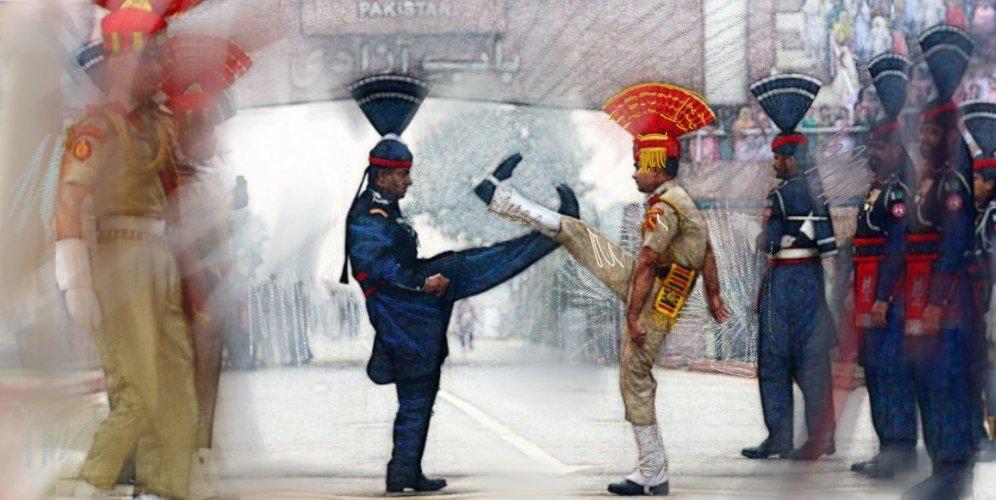
The new round of heavy clashes involving India and Pakistan over the disputed region of Kashmir – then settled by a bilateral adherence to a “full-scale ceasefire” – has also been a confrontation involving the players surrounding the two Asian giants.

The involvement of some of them took place in plain sight: take the case of Turkey’s President Recep Tayyip Erdoğan, a staunch ally of Pakistan, which sent the country a military ship and a group of fighter jets. Or China, which in recent years has invested tens of billions of dollars in Pakistan under the Belt & Road Initiative, and has become by far the largest supplier of military equipment to Islamabad. Beijing immediately called on both sides to engage in diplomacy.

On the Indian front, as reported by recent research on the subject, New Delhi is purchasing weapons from an increasingly varied group of countries, including Russia, France, Israel and the United States. The ceasefire saw direct involvement from Washington, which acted as mediator between the two sides.

Given also its geographical proximity to the Indian subcontinent, when it comes to Central Asia it is clear that the region may be called into question in any confrontation between India and Pakistan – or that, at least, would be heavily affected by it.

During the strikes carried out by India against Pakistan following the deadly attack in Indian-controlled Kashmir, the Indian media emphasized the strategic role that the military base India allegedly operates in Tajikistan could play in a possible open confrontation with Pakistan.

Indian experts pointed out that the base could have given New Delhi the ability to strike Pakistan from the west, seriously compromising Islamabad’s air defense capabilities.

Furthermore, China was also called into question in India’s alleged use of the military outpost, as New Delhi is said to be monitoring China’s movements on the northern front using its presence in Tajikistan.

This base is Ayni Airbase, a Soviet-era military facility located near the Tajik capital Dushanbe. The facts we know for certain point to an Indian involvement in the Tajik base which appears to have ended around 2015. In 2002, India, in collaboration with Tajikistan and Russia, financed an operation to refurbish the base, investing around $70 million in the project.

Among the changes made was the lengthening of the runway, which was intended to ensure that it could be used by aircraft operated by the Indian armed forces.

As also stated in the report on Central Asian armed forces drafted by the DC-based The Oxus Society for Central Asian Affairs, after a phase in which it seemed that India would play a concrete role in the management of the base, Dushanbe subsequently backtracked, partly due to pressure from Russia.

The same path was followed by New Delhi’s involvement in the Farkhor airbase, initially used to reach Afghanistan by land by landing Indian cargo planes at the base, located near the border between Tajikistan and Afghanistan. Over the years, the logistical importance of the structure gradually declined until it was finally abandoned by India.

Despite the rhetoric of Indian media, New Delhi’s military presence in Tajikistan is therefore essentially non-existent, unlike that of China. Since 2015, with much attention from the international media, Beijing has built two military outposts in Tajikistan and is said to already have agreements with Dushanbe for the construction of a third facility.

Used purely for intelligence and anti-terrorism purposes, it is not certain that these bases will not also house personnel from the People’s Liberation Army, the Chinese army, in the future.

Pakistan has itself deepened its bilateral security relationship with Tajikistan in recent years. One of the most important steps was taken in 2021 with the signing of a memorandum of understanding, according to which Pakistan would begin supplying Tajikistan with domestically produced weapons.

Given the absence of an Indian military outpost in Tajikistan, and more generally in the region, New Delhi nevertheless maintains significant bilateral relations on security affairs with the Central Asian republics.

Proof of this can be found, for example, in the military drills that the Asian giant periodically conducts with Kazakhstan, Uzbekistan and Kyrgyzstan. The longest relationship in this regard is with Bishkek: in March 2025, the twelfth edition of the joint exercises, known as Khanjar, was held, which saw the participation, as reported by the Indian Ministry of Defence, of troops from The Parachute Regiment (Special Forces) for India and the Kyrgyz Scorpion Brigade.

In 2024, the eighth edition of the joint exercises between India and Kazakhstan, Kazind, was held on Indian territory, for the first time including the Air Forces and Airborne Assault Forces of Kazakhstan.

A few weeks ago, in mid-April 2025, the sixth edition of Dustlik, the joint exercises held annually by New Delhi and Tashkent, took place as well.

A few weeks ago, another very important step was taken but on the Pakistani side: Kazakh president Kassym-Jomart Tokayev received in Astana General Asim Munir, the Chief of Army Staff of the Pakistan Armed Forces.

During the several meetings that took place, possible collaborations in the field of defense were also discussed, including technical-military cooperation and combat and special forces training. Munir, who is usually active behind the scenes and far from the spotlight, during the recent crisis emerged as one of the most prominent figures, clearly announcing Islamabad’s willingness to respond forcefully to any Indian attack.

As can be seen, the security ties between India and Pakistan and the Central Asian republics are remarkable. The latter’s caution on security issues and close military ties with Russia are factors that would suggest that Central Asia would be spared from a large-scale conflict between India and Pakistan.

On the other hand, however, in such a case, China could be called upon to support its ally Pakistan. As we have seen, Beijing has a significant military presence in Tajikistan, a factor that should not be underestimated when considering the possible repercussions in Central Asia of the instability in the subcontinent.

That said, what is certain is that an open conflict could destabilize the entire area, from Afghanistan to the Central Asian republics, and its impact would be felt on several fronts.