• KGS/USD = 0.01144 0%
  • KZT/USD = 0.00212 0%
  • TJS/USD = 0.10523 0%
  • UZS/USD = 0.00008 0%
  • TMT/USD = 0.28530 0%
  • KGS/USD = 0.01144 0%
  • KZT/USD = 0.00212 0%
  • TJS/USD = 0.10523 0%
  • UZS/USD = 0.00008 0%
  • TMT/USD = 0.28530 0%
  • KGS/USD = 0.01144 0%
  • KZT/USD = 0.00212 0%
  • TJS/USD = 0.10523 0%
  • UZS/USD = 0.00008 0%
  • TMT/USD = 0.28530 0%
  • KGS/USD = 0.01144 0%
  • KZT/USD = 0.00212 0%
  • TJS/USD = 0.10523 0%
  • UZS/USD = 0.00008 0%
  • TMT/USD = 0.28530 0%
  • KGS/USD = 0.01144 0%
  • KZT/USD = 0.00212 0%
  • TJS/USD = 0.10523 0%
  • UZS/USD = 0.00008 0%
  • TMT/USD = 0.28530 0%
  • KGS/USD = 0.01144 0%
  • KZT/USD = 0.00212 0%
  • TJS/USD = 0.10523 0%
  • UZS/USD = 0.00008 0%
  • TMT/USD = 0.28530 0%
  • KGS/USD = 0.01144 0%
  • KZT/USD = 0.00212 0%
  • TJS/USD = 0.10523 0%
  • UZS/USD = 0.00008 0%
  • TMT/USD = 0.28530 0%
  • KGS/USD = 0.01144 0%
  • KZT/USD = 0.00212 0%
  • TJS/USD = 0.10523 0%
  • UZS/USD = 0.00008 0%
  • TMT/USD = 0.28530 0%

From Kyz Kuu to Niqabs: Why Kazakh Women Face a Crisis of Values

Before the 1917 revolution, Kazakh women enjoyed significant freedoms due to their nomadic lifestyle. Living in the remote steppe, women were responsible not only for managing livestock and households but also for defending their families and property, often with weapons in hand. The Soviet era formalized gender equality, enabling women to become leading producers, scientists, decorated soldiers, and politicians. 

Today, however, these traditions face erosion from two opposing forces: rising consumerism and a growing Arab-influenced Islamization. According to Kazakh political scientist Zamir Karazhanov, women in Kazakhstan are struggling to find their place amid an expanding spiritual vacuum and polarized ideologies.

A Reversal in Feminism

A centuries-old game, Kyz Kuu (“Catch the Girl”), exemplifies the historical freedom of nomadic Kazakh women. The game, rooted in equestrian tradition, involved a female rider gaining a head start before being pursued by a young horseman. If he caught her and took her ribbon, he could propose marriage. If not, the woman would chase and whip the suitor with a kamcha (whip) in front of spectators, a demonstration of both female skill and independence.

During the Soviet period, the roles of Aliya Moldovan and Manshuk Mametova both posthumously named Heroes of the Soviet Union in World War II, underscored female empowerment in Kazakhstan.

In contrast, contemporary Kazakhstan is embroiled in a heated debate over the niqab, a face-covering garment not traditionally worn by Kazakhs. This shift has sparked national concern, culminating in the passage of a June 2025 law banning face coverings in public places.

Declining Representation and Shifting Priorities

Women’s representation in politics and governance has deteriorated, particularly in Kazakhstan’s southern and western regions. Despite officially favorable statistics, political scientist Zamira Karazhanova argues that the state practices only “artificial equality.” Party-imposed quotas for women and youth offer a superficial solution without addressing the systemic barriers to real empowerment.

“To achieve gender equality, we must create genuine opportunities for women to participate in politics and civil service,” said Karazhanova.

Karazhanov notes a broader cultural shift, with young women increasingly drawn to the lifestyle of tokal, unofficial second wives of wealthy men. These figures flaunt luxury and affluence on social media, eclipsing the appeal of education and career development.

“The pursuit of wealthy husbands is becoming a kind of ideology,” Karazhanov said. “Many young women are growing up with no interest in professional growth. They have entirely different ideals.”

The Rise of Foreign Influences

“Islam in Kazakhstan is becoming Arabized,” Karazhanov stated. “This affects not only how women dress, but also how they are perceived and perceive themselves. Religion is becoming a key part of national identity, even if some believers visit the mosque on Fridays and bars on Saturdays.”

Following the collapse of the USSR, Kazakhstan experienced a spiritual vacuum, filled rapidly by imported religious ideologies. Many religious leaders were educated in Arab countries or Afghanistan, bringing with them foreign dogmas that were alien to traditional Kazakh Islam. Karazhanov stressed that Arabization and radicalization are not confined to Kazakhstan, but also affect Russia, Turkey, and other Central Asian nations.

Initially, the Kazakh state underestimated the risks of radicalism. “Only recently have laws been introduced to regulate this space,” Karazhanov noted, criticizing the government’s short-sightedness in the ideological sphere.

The ideological rift is now palpable in society. While some women increasingly retreat into conservative roles, others turn to radical feminism. A provocative feminist protest in Almaty this year, which Karazhanov described as “borderline striptease,” alienated many citizens and highlighted the nation’s disorientation.

“Women no longer know who to emulate: social media influencers, feminist activists, or niqab-wearing neighbors,” he concluded. “Kazakhstan is in the throes of a values crisis.”

Kazakhstan Begins Oil Exports to Hungary

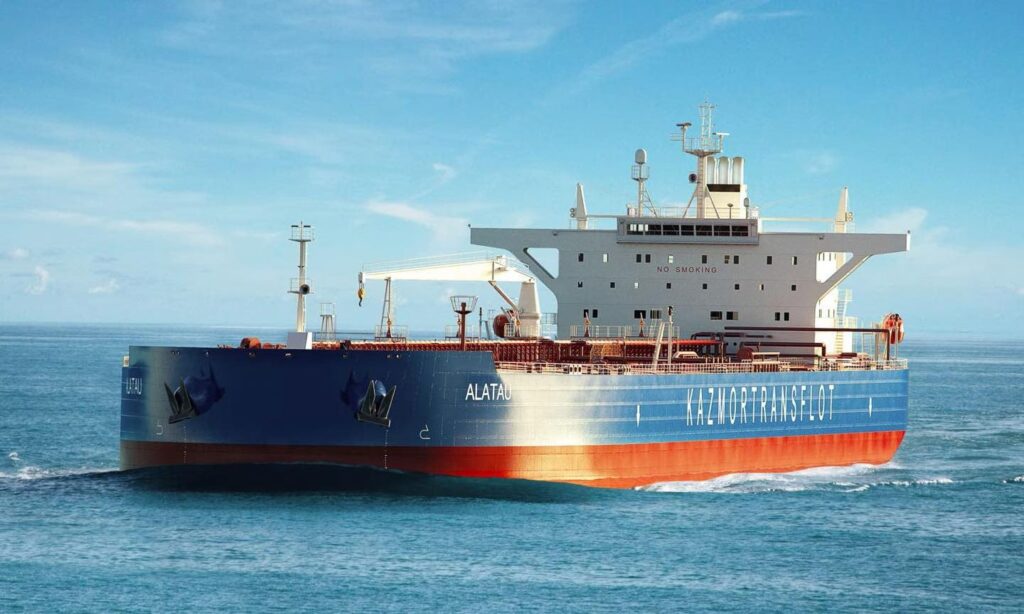
Kazakhstan has shipped its first batch of crude oil to Hungary, marking a significant step in the deepening energy partnership between KazMunayGas (KMG), the country’s national oil and gas company, and Hungary’s MOL Group.

According to KMG, 85,000 tons of crude were transported by sea from the Russian port of Novorossiysk to the Croatian port of Omisalj aboard the Alatau tanker, operated by Kazmortransflot, a KMG subsidiary. From there, the oil was transported via the Adriatic pipeline, operated by JANAF, Croatia’s state oil pipeline operator, to the Százhalombatta refinery in Hungary.

Upon the tanker’s arrival in Croatia, representatives of KMG, MOL Group, and JANAF convened to discuss further cooperation. Following the meeting, KMG and MOL Group signed a framework agreement outlining future oil supply arrangements.

The deal broadens the scope of Kazakhstan’s oil exports to the European Union. Kazakhstan already supplies crude to Germany via the Druzhba (Friendship) pipeline, which runs through Russian territory.

As previously reported by The Times of Central Asia, Kazakhstan and Hungary reached a preliminary agreement earlier this year to supply Kazakh oil to Hungary through the Druzhba pipeline as well. The agreement was concluded in February during a meeting in Astana between Kazakhstan’s Minister of Energy, Almasadam Satkaliyev, and Hungarian Minister of Foreign Affairs and Trade, Péter Szijjártó. The two sides agreed to conduct trial shipments in 2025.

MOL Group has been active in Kazakhstan for over two decades and has invested $200 million in the development of the Rozhkovskoye gas condensate field in western Kazakhstan.

Final Report on AZAL Crash Near Aktau Expected by Year-End

Kazakhstan is set to complete its investigation into the crash of an Azerbaijan Airlines (AZAL) aircraft near Aktau by the end of 2025. The announcement was made by Deputy Prime Minister Kanat Bozumbayev during a briefing in Astana.

Bozumbayev stated that the final report is nearing completion. “Our Ministry of Transport is working intensively, with international experts from various countries participating. Some of the equipment remains abroad for examination and will be returned soon. The analysis stage is coming to an end, and we are moving on to preparing the final report,” he said. “The final report will be available in a few months; the truth will be clear by the end of the year, and all requirements will be met to the letter.”

He also emphasized that it is too early to determine the cause of the damage to the aircraft. “These questions must be answered by explosive ordnance disposal experts, and that work is being carried out by law enforcement agencies,” he added.

The Embraer 190 aircraft, which was en route from Baku to Grozny, crashed near Aktau on December 25, 2024, after the crew reported damage to the fuselage and attempted an emergency landing. Of the 67 people on board, 38 died. The crash sparked an international controversy, with Baku accusing Russian air defense forces of striking the aircraft, an allegation Moscow has denied. Kazakhstan, as the country where the crash occurred, is conducting the investigation as a neutral party.

Bozumbayev confirmed that Kazakhstani experts have submitted formal requests to several countries whose weapons may match the damaging elements identified in the fuselage.

Among the victims were six Kazakh citizens. Despite this, Astana is refraining from issuing official claims against any foreign states. In contrast, Azerbaijan has announced its intention to seek compensation through international legal channels.

Kazakhstan Breaks Ground on First Nuclear Power Plant

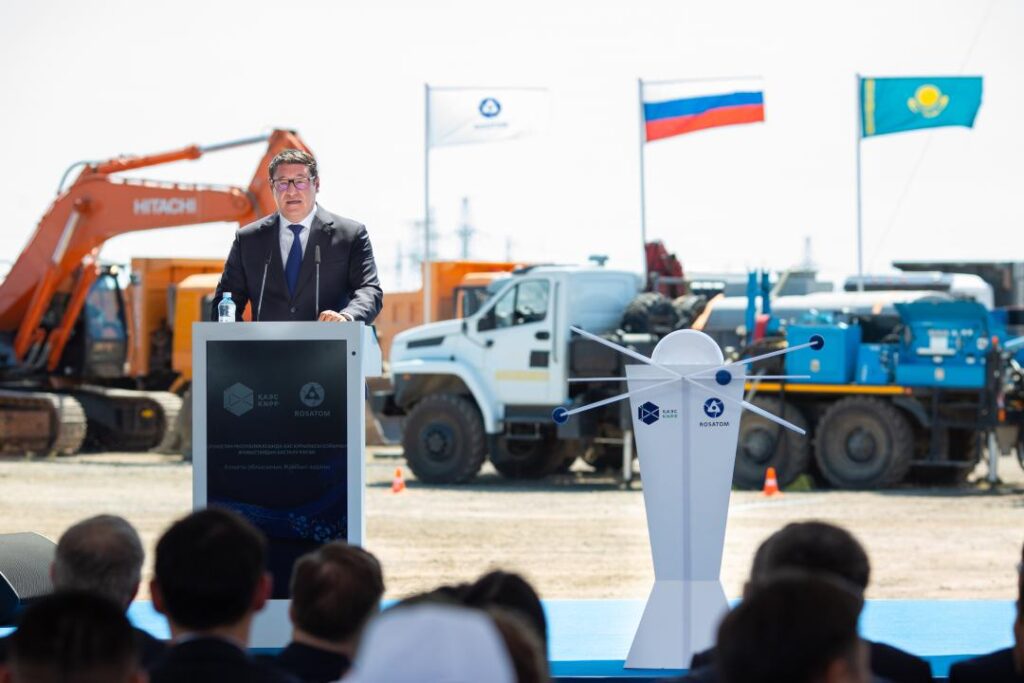
Kazakhstan has officially launched the construction of its first nuclear power plant, marking a significant milestone in the country’s long-term energy strategy. A groundbreaking ceremony was held on Friday in the Almaty region, in the south of the country. The project is being led by a consortium headed by Rosatom, Russia’s state nuclear energy corporation.

The facility will be located near the village of Ulken on the shores of Lake Balkhash, approximately 400 kilometers from Almaty, Kazakhstan’s largest city. The plant will feature two reactors with a combined capacity of 2.4 gigawatts by 2035 and is expected to meet a substantial share of the country’s future electricity demand.

According to Almasadam Satkaliyev, Chairman of the Atomic Energy Agency of the Republic of Kazakhstan, the total investment in the project is estimated at $14-15 billion. An additional $1 billion has been allocated for the development of social infrastructure in the surrounding region.

“Today’s ceremony marks the start of engineering and survey work, a critical preparatory stage that will determine not only the final site and configuration of the plant, but also the safety, reliability, and economic efficiency of the entire project,” Satkaliyev said.

Rosatom Director General Alexey Likhachev presented a model of the plant, which will be based on the design of Russia’s Novovoronezh Nuclear Power Plant and utilize Generation III+ reactor technology. This design is recognized for its improved fuel efficiency, advanced safety systems, and standardized construction process, which aims to reduce both construction and operational costs.

Satkaliyev stressed that Kazakhstani enterprises and research institutions would play a central role in the project, with the aim of bolstering domestic industry, creating thousands of jobs, and advancing the country’s nuclear science capabilities to international standards.

According to the Agency’s press service, Satkaliyev recently met with Professor Jozef Konings, Dean of the Nazarbayev University Graduate School of Business, and Professor David Robinson of Duke University (USA) to discuss collaboration on nuclear workforce development. Discussions focused on potential joint academic programs, faculty exchanges, and international research partnerships.

“Human capital development is a key pillar of the safe and sustainable introduction of nuclear technologies in Kazakhstan. I am confident that cooperation with leading academic institutions will contribute to forming a new generation of specialists capable of ensuring the safe and efficient operation of future nuclear power plants,” Satkaliyev stated.

As previously reported by The Times of Central Asia, Kazakhstan plans to build at least three nuclear power plants. The second and third facilities are slated for development by the China National Nuclear Corporation (CNNC).

No Kremlin Needed: Peace Breaks Out in Post-Soviet Eurasia

Two decades ago, no border dispute in the former Soviet space was resolved without a Kremlin handshake. Moscow was the central mediator. Not anymore.

In March 2025, Tajikistan and Kyrgyzstan signed a historic border agreement without Moscow at the table. Not long after, Armenia and Azerbaijan began finalizing a peace treaty of their own. Now there’s talk of the two leaders traveling to the White House to sign the deal.

Russia is losing its position as a peace broker in its near abroad. For decades, Russia played the “big brother” and mediator, inserting itself into every conflict with the implicit message: nothing moves without Moscow.

Today, we are witnessing a different pattern. Regional actors are no longer passive clients of Russian peace making. Tajikistan and Kyrgyzstan resolved a decades-long border dispute without outside pressure. Armenia and Azerbaijan, once frozen in a Kremlin-managed stalemate, are building a peace path with Western and regional partners instead.

The Armenia–Azerbaijan Case: Peace Without Moscow

Once the unchallenged mediator in the Nagorno-Karabakh conflict, Moscow now finds itself watching from the sidelines as Armenia and Azerbaijan step toward a historic peace deal.

After the 2020 war and Azerbaijan’s decisive 2023 offensive that reabsorbed Nagorno-Karabakh, Armenia was left exposed. Moscow, tied down in Ukraine and facing a credibility crisis, withdrew its peacekeepers from Karabakh in mid-2024. Yerevan, once loyal to Russia and the CSTO, found itself abandoned. The Kremlin neither enforced security guarantees nor deterred Azerbaijani advances. As public trust in Russia collapsed, Armenian leadership pivoted West.

This vacuum opened the door for the U.S., and specifically Donald Trump, to step in. Armenian and Azerbaijani leaders met in Abu Dhabi in July, brokered by Emirati and American intermediaries. The Trump administration has since accelerated the process, with reports of a draft treaty offering mutual recognition, demilitarization zones, and the establishment of a strategic corridor linking Azerbaijan to Nakhchivan on a 100-year lease supervised by the U.S. This creative proposal, unimaginable under Russian mediation, has gained serious traction.

If finalized at the White House, the agreement would represent the first U.S.-brokered peace deal in the post-Soviet space, a dramatic break with 30 years of Kremlin-led diplomacy. For the region, it’s a significant development: the Caucasus is no longer Russia’s to manage.

Even more visible is Azerbaijan’s shift. Though long pursuing a multi-vector foreign policy, Baku now leans heavily toward Turkey, Israel, and the Gulf. Talks are reportedly underway for Baku to join a version of the Abraham Accords, with support from Washington and Riyadh. 

The Tajikistan–Kyrgyzstan Case: Local Solutions

In March 2025, Tajikistan and Kyrgyzstan signed a final border delimitation agreement. It ended three decades of violence, and territorial ambiguity. The signing came without Kremlin mediation, a sharp departure from Cold War-era norms when Moscow acted as both arbiter and enforcer in Central Asia’s internal affairs.

The shift didn’t happen overnight. After the bloody clashes of 2021 and 2022, Russia distanced itself from active mediation, with the Kremlin signaling as early as late 2022 that it had no intention to directly intervene. Its preoccupation with Ukraine, economic strain from sanctions, and declining trust across Central Asia had made its diplomatic capital all but exhausted.

Instead, it was Uzbekistan, long seen as a regional rival to both Bishkek and Dushanbe, that stepped up. For the first time since the Soviet collapse, all five Central Asian states reached full agreement on their borders.. It marked the end of a Soviet-era fragmentation policy that had, by design, left borders vague to promote dependence on Moscow. Central Asia, long considered Russia’s geopolitical backyard, resolved one of its most sensitive conflicts through region-led diplomacy. 

What’s Driving Russia’s Retreat?

Russia’s fading influence is not accidental. It is the consequence of war, overreach, and broken promises. The Ukraine invasion has drained Russia’s military strength and diplomatic focus, leaving little energy for distant partners. Allies like Armenia have lost trust, especially after Moscow’s failure to honor its CSTO security obligations during Azerbaijani offensives. 

The post-Soviet space is no longer post-Soviet, at least not politically. From the Pamirs to the Caucasus, states are reconsidering boundaries, making peace, and asserting agency without waiting for Moscow’s permission. What once seemed unimaginable, resolving ethnic and territorial disputes without Kremlin arbitration, is now happening in real time. If Russia’s influence was once the reason why Eurasia’s conflicts persisted, its absence has become the space in which long-frozen conflicts can finally end. Not with Russian orders, but with regional diplomacy.

Shadows over the Trails: Mystical Legends of the Almaty Mountains

The mountains surrounding Almaty captivate not only with their natural beauty and fresh alpine air but also with the legends that echo along their winding trails. Travelers speak of a ghostly woman in white, a towering old man with a chessboard, and a mysterious “Japanese Road” haunted by the spirits of the past. The vistas are breathtaking, yet around every turn, a chilling tale may be waiting.

Urban legends have become integral to the cultural fabric of the Almaty region, shaped by the imaginations of hikers and storytellers alike. But could there be a grain of truth behind these supernatural accounts?

The Almarasanian Maiden

Most Almaty residents are introduced to local folklore during childhood, particularly during overnight camps in the mountain foothills. Beneath the star-strewn sky and beside crackling campfires, counselors often begin the night’s stories with: “Have you heard the tale of the Almarasanian Maiden?”

The best-known legend describes a spectral woman dressed in white, appearing along treacherous mountain passes. But older residents tell a more detailed and tragic version.

According to this tale, a woman once abandoned by her husband in the Zailiyskiy Alatau mountains was driven to madness. In her grief, she killed her two sons, hanging them from birch trees before taking her own life on a third. Struck by lightning but not destroyed, the three birches remain: two standing strong, the third broken but alive. Climbers later erected two crosses beneath them in remembrance.

Since then, sightings of the woman in white have persisted. She is said to either warn travelers of danger or exact vengeance on those who betray loved ones.

Though the story may sound fantastical, real-life tragedies have kept the legend alive. In May 2025, a rockfall in the Alma-Arasan Gorge killed a young woman and led to the trail’s temporary closure for reconstruction.

In 2009, 11 people died in a horrific accident when a truck collided with a bus stop. While the official cause was listed as a heart attack suffered by the driver, witnesses reported that he remained conscious and tried to steer the vehicle moments before impact. His widow later stated that he had no history of heart problems.

The Japanese Road

After Japan’s defeat in Manchuria in 1945, many prisoners of war were sent to labor camps across the Soviet Union, including Kazakhstan. In Almaty, they constructed what is now known as the Japanese Road.

Built under harsh conditions, the road was originally part of a water supply system connecting Big Almaty Lake to the city.

Modern hikers report an eerie atmosphere. Some claim to see ghostly figures, presumed to be the spirits of those who died building the road. These apparitions are seen as ill omens, urging visitors to leave before nightfall.

The White Old Man

Among the most curious legends is that of a ghostly, two-meter-tall old man with a flowing beard, who carries a chessboard. He appears to hikers and shepherds, silently inviting them to play.

Refusing is said to bring bad luck or worse. But those who offer tea and engage in a few friendly games are said to be rewarded, never losing their way and enjoying peace among the mountains.

The origin of this tale lies in reality. The “White Old Man” was a real person: Dadon, a local topographer known for his encyclopedic knowledge, uncanny stamina, and his habit of always carrying a chess set. Over time, stories of his exploits blurred into myth.

Even during his lifetime, rumors of his ghost began circulating. If the spirit of Dadon still roams the mountains, legend holds that he brings only wisdom and good fortune.

The Abandoned Airfield

Beyond the peaks, in the plains of the Almaty region, lies another eerie site: the abandoned airstrip known as Samsy Airport. Once the subject of viral travel blogs, the location now draws urban explorers and film crews intrigued by its post-apocalyptic atmosphere.

Located in the Zhambyl district, the airfield is home to rusting crop-dusting planes and a cracked runway slowly being reclaimed by nature. While it’s easy to locate online, visiting may cost you, local residents posing as security personnel charge travelers up to 4,000 tenge per person for access.

The true reason for the site’s abandonment remains unclear. No official explanation was ever given for the airfield’s sudden closure, nor for the workers’ decision to leave behind expensive equipment.

Was it simply a case of economic decline, or did something more sinister drive them away?