• KGS/USD = 0.01143 -0%
  • KZT/USD = 0.00192 -0%
  • TJS/USD = 0.10820 0.19%
  • UZS/USD = 0.00008 0%
  • TMT/USD = 0.28575 0%
  • KGS/USD = 0.01143 -0%
  • KZT/USD = 0.00192 -0%
  • TJS/USD = 0.10820 0.19%
  • UZS/USD = 0.00008 0%
  • TMT/USD = 0.28575 0%
  • KGS/USD = 0.01143 -0%
  • KZT/USD = 0.00192 -0%
  • TJS/USD = 0.10820 0.19%
  • UZS/USD = 0.00008 0%
  • TMT/USD = 0.28575 0%
  • KGS/USD = 0.01143 -0%
  • KZT/USD = 0.00192 -0%
  • TJS/USD = 0.10820 0.19%
  • UZS/USD = 0.00008 0%
  • TMT/USD = 0.28575 0%
  • KGS/USD = 0.01143 -0%
  • KZT/USD = 0.00192 -0%
  • TJS/USD = 0.10820 0.19%
  • UZS/USD = 0.00008 0%
  • TMT/USD = 0.28575 0%
  • KGS/USD = 0.01143 -0%
  • KZT/USD = 0.00192 -0%
  • TJS/USD = 0.10820 0.19%
  • UZS/USD = 0.00008 0%
  • TMT/USD = 0.28575 0%
  • KGS/USD = 0.01143 -0%
  • KZT/USD = 0.00192 -0%
  • TJS/USD = 0.10820 0.19%
  • UZS/USD = 0.00008 0%
  • TMT/USD = 0.28575 0%
  • KGS/USD = 0.01143 -0%
  • KZT/USD = 0.00192 -0%
  • TJS/USD = 0.10820 0.19%
  • UZS/USD = 0.00008 0%
  • TMT/USD = 0.28575 0%
13 December 2025

French Companies Eye Role in Uzbekistan’s Nuclear Energy Plants

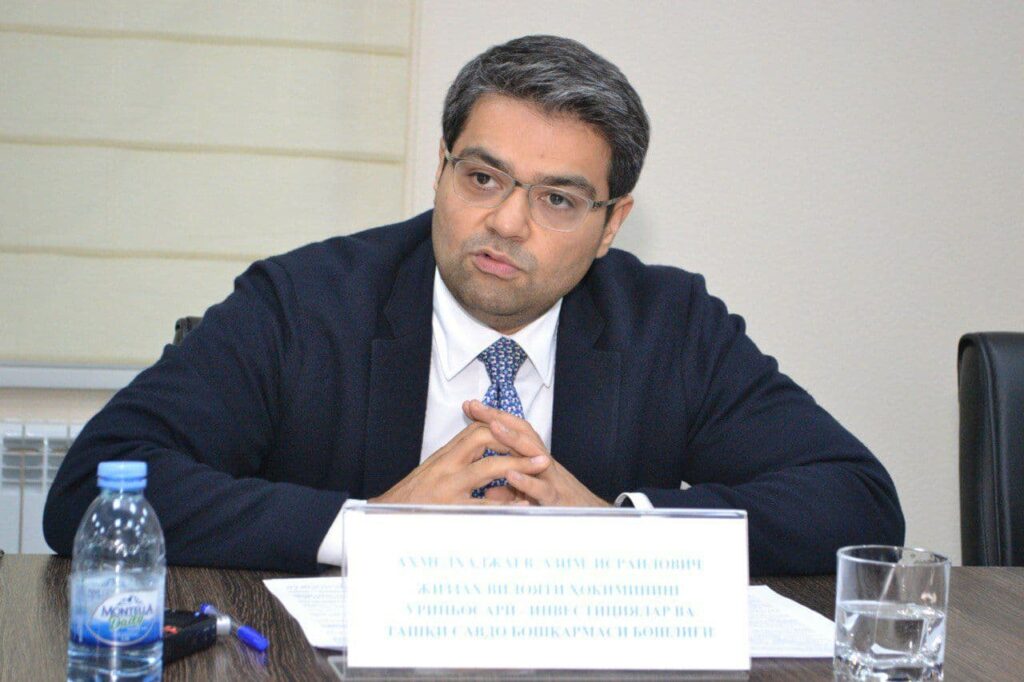
Uzbekistan is exploring collaboration with French firms in the construction of a small-capacity nuclear power plant (SCNPP) in the Jizzakh region, according to Azim Akhmadkhodjaev, Director of Uzbekistan’s Atomic Energy Agency, in an interview with Le Figaro.

Akhmadkhodjaev noted that France could offer some of the most effective solutions and support for the project. Ongoing discussions involve several French companies: Assystem for technical support, Bureau Veritas for specialist training, and Framatome for technical management of the facility.

Uzbekistan’s Minister of Energy, Jurabek Mirzamakhmudov, emphasized that French companies view Uzbekistan not only as an investment opportunity but also as a technological partner. Talks have centered on training local personnel to meet the technical demands of the nuclear sector. Joanna Golas, president of the France-Uzbekistan Economic Chamber, underscored the importance of preparing skilled technical specialists for the project.

Uzbekistan is also advancing its renewable energy agenda, aiming to raise the share of renewables in its energy mix from 16% to 54% by 2030. Cooperation with French companies could bolster the country’s efforts to build a more sustainable and diversified energy system.

Previously, Uzbekistan signed a protocol with Russia, appointing Rosatom as the main contractor for the SCNPP project in Jizzakh. The agreement includes the construction of six reactors with a combined capacity of 330 MW. A successful partnership with French firms would bring additional technological expertise to the table and complement the existing plan.

China to Support Hydrogen Innovation Center in Kazakhstan

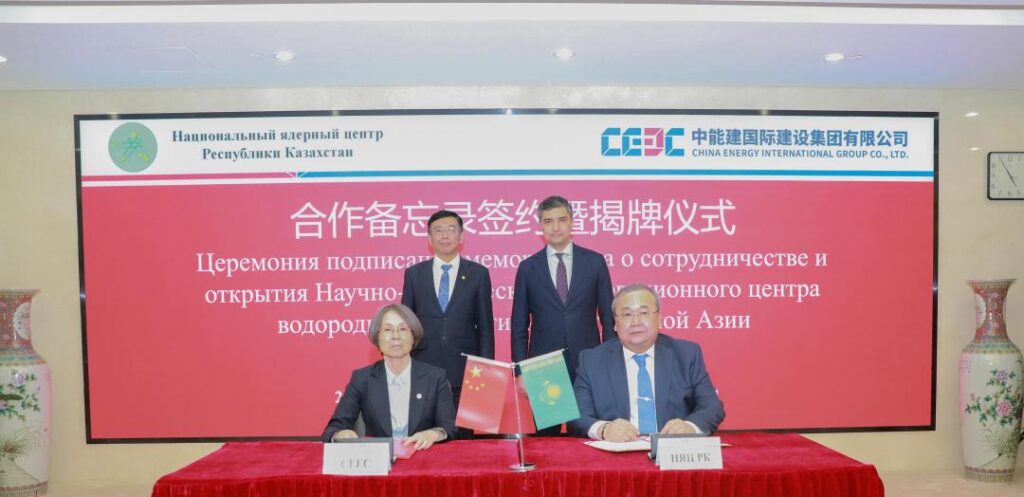
On March 20 in Beijing, Kazakhstan’s National Nuclear Center, part of the Ministry of Energy, signed a memorandum with China Energy Overseas Investment Co., Ltd. and Shanghai Jiao Tong University to establish a Scientific and Technical Innovation Center for Hydrogen Energy in Central Asia. The facility will be located in the city of Kurchatov, in Kazakhstan’s Abai Region, according to a statement from the Ministry of Energy.

The future center is intended to serve as a key scientific and technological platform for research, testing, and the implementation of advanced hydrogen energy solutions. It aims to boost Kazakhstan’s competitiveness in the hydrogen sector, foster international cooperation in green energy, support innovative energy projects, and help train a new generation of highly qualified specialists.

“Hydrogen energy is one of the key areas of the global energy transition,” said Deputy Minister of Energy, Bakytzhan Ilyas. “Kazakhstan has significant potential in this area, and the creation of the center in Kurchatov will open up new opportunities for the development of science, technology, and industry.”

The initiative is also closely tied to Kazakhstan’s long-term climate goals. The center is expected to support the country’s strategy to achieve carbon neutrality by 2060 and to promote the adoption of environmentally friendly technologies in the energy sector.

In September 2024, Kazakhstan approved its Concept for the Development of Hydrogen Energy until 2030. The policy outlines key objectives including:

  • Fulfilling international commitments to reduce greenhouse gas emissions
  • Advancing the national goal of carbon neutrality
  • Expanding access to modern, sustainable energy sources

While the strategy prioritizes hydrogen technologies as a cornerstone of Kazakhstan’s low-carbon transition, the global hydrogen sector remains in its early stages, and significant technical and economic hurdles must still be overcome.

A New Chapter of Peace and Cooperation in Central Asia: The Kyrgyz-Tajik Border Agreement

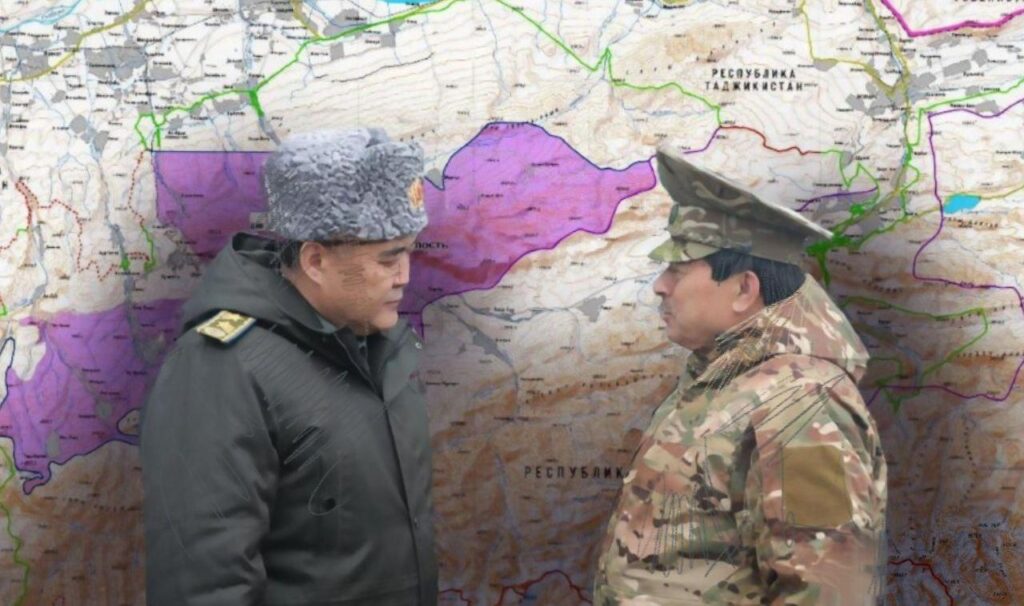
On March 13, 2025, a historic milestone was achieved with the signing of the Kyrgyz-Tajik border agreement. This long-anticipated treaty, signed by Kyrgyzstan’s President Sadyr Japarov and Tajikistan’s President Emomali Rahmon, resolved a long-running dispute over the 984-kilometer boundary between the two nations. Clashes in 2021 and 2022 left scores dead, hundreds wounded, and thousands displaced. The resolution marked not only the end of an enduring source of regional tension but also the beginning of a prospective era of peace and collaboration.

The significance of this agreement is substantial and far-reaching. For decades, the unresolved Kyrgyz-Tajik border remained a flashpoint for clashes, occasionally escalating into violence between communities living in border regions such as Batken. The new treaty now promises a peaceful future, with both leaders showing their commitment to long-term regional stability.

A Diplomatic Achievement

The path to this agreement was anything but straightforward, with Kyrgyz President Japarov characterizing the land exchanges involved in the treaty as a “tough but necessary decision.” During Nauryz celebrations in Osh, Japarov praised the expert teams who worked for four years to reach a settlement that balanced the interests of both sides.

Japarov emphasized the benefits of the treaty for border-area communities, specifically in Batken, where tensions have been acute. The “lives of our citizens in border areas of the Batken region will be peaceful from now on,” he stated, promising new homes for residents displaced during past conflicts. The treaty aims to bring not only peace but also economic development, as secure frontiers pave the way for cross-border trade and infrastructure investment.

For Tajikistan’s President Rahmon, the agreement not only resolved a geopolitical challenge but reinforced the shared value of cooperation in the region. His message during Nauryz to President Japarov symbolized the optimism underpinning their new relationship. “I am confident that our countries, relying on the high universal values of this ancient holiday, will continue their joint efforts to enrich the content of their multifaceted relations,” Rahmon wrote.

Messages of Support on a Symbol of Renewal

The signing of the treaty aligned closely with Nauryz, the ancient festival that symbolizes renewal, prosperity, and unity across Central Asia. World leaders also viewed the timing as auspicious, with U.S. President Donald Trump extending his congratulations to President Rahmon in a message of goodwill on the occasion of Nauryz. “This is a major achievement that will bring great economic benefits and security to both countries,” Trump wrote, highlighting the agreement’s potential to stabilize the region.

Trump also reaffirmed America’s support for Tajikistan’s sovereignty, underscoring the importance of ongoing cooperation. His words echoed a broad international sentiment celebrating the Kyrgyz-Tajik agreement as a step toward enhanced regional partnerships.

Regional Cooperation on the Rise

The Kyrgyz-Tajik border agreement forms part of a broader trend of strengthening ties among Central Asian nations. Recently, Kyrgyzstan resolved a similar border issue with Uzbekistan, setting a precedent for peaceful dispute resolution. Now, Japarov has suggested taking the next step by creating a visa-free travel regime and even a unified regional visa for international visitors. Such moves could transform the region into a hub for tourism and cooperation, further integrating Central Asia both economically and diplomatically.

The possibility of closer ties will once again take center stage when the leaders of Kyrgyzstan, Tajikistan, and Uzbekistan meet in Khujand on March 31 to sign an agreement on their respective borders.

Challenges and Opportunities Ahead

While the landmark Kyrgyz-Tajik treaty paves the way for peace, challenges remain. Inhabitants of border regions will require assurance and tangible support to adapt to the newly drawn boundaries. Infrastructure, housing, and public services will be crucial to the pact’s long-term success. Nonetheless, the treaty has set a powerful example of diplomacy triumphing over discord.

Kazakhstan to Build $1.35 Billion Fertilizer Plant in Mangistau

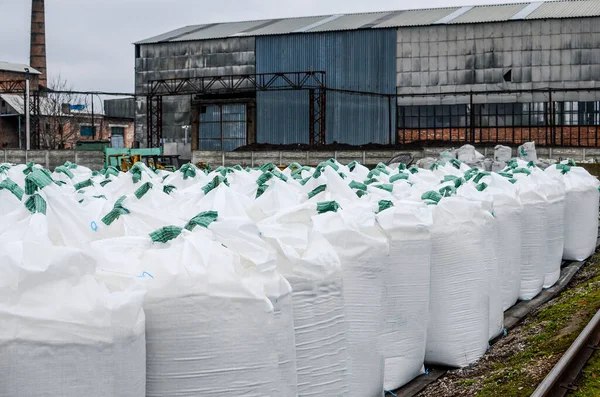
Kazakhstan will begin construction of a major fertilizer plant valued at $1.35 billion, under an investment agreement recently approved by the government. The project aims to boost domestic fertilizer production and reduce the country’s reliance on imports.

Strategic Industrial Partnership

The facility will be built in the Mangistau region under a joint venture between Kazakhstan’s national gas company QazaqGaz and Turkish construction firm ESTA Construction. The new company, Qazesta Fertilizers Ltd., will oversee the project, which is expected to benefit from Mangistau’s favorable logistics for export across the Caspian Sea.

The plant is designed to produce up to 700,000 tonnes of urea and 42,000 tonnes of ammonia annually. Construction is scheduled to take three and a half years, creating an estimated 3,000 jobs during the building phase and 400 permanent positions upon completion.

Officials say the project will support the development of Kazakhstan’s gas chemical industry and contribute to import substitution. Currently, the country produces three types of fertilizers, ammonium nitrate, ammophos, and ammonium sulfate, but domestic output meets only half of the 3.2 million tonnes required to satisfy national demand.

Challenges in Fertilizer Use and Production

Kazakhstan’s limited fertilizer use has drawn concern from analysts. According to Energyprom.kz, citing UN Food and Agriculture Organization (FAO) data, nitrogen fertilizer application has not exceeded 4.0 kg per hectare since 2000, and dropped to just 2.4 kg in 2022. In contrast, Uzbekistan applied 187.2 kg per hectare that year, while Russia applied 17.6 kg.

Phosphate fertilizer usage in Kazakhstan was similarly low at 1.33 kg per hectare, compared to 5.91 kg in Russia.

Domestic fertilizer production also declined in 2024. Total output fell by 9.3% to 367,500 tonnes. Production of nitrogen fertilizers dropped by 11.4% to 345,500 tonnes, while phosphate fertilizer output rose by 47.1% to 22,000 tonnes. Despite the gains, national supply still lags behind farmers’ needs.

Import Dependency and Export Growth

Kazakhstan remains dependent on foreign supplies of nitrogen fertilizers, with imports accounting for 57.8% of the market. In 2024, imports rose by 7.3% to 472,300 tonnes. Meanwhile, exports of nitrogen fertilizers nearly doubled to 214,400 tonnes. Phosphate fertilizers, however, are largely produced domestically, with imports making up just 1.2% of supply.

Kazakhstan’s largest fertilizer export destinations in 2024 included Brazil (187,600 tonnes), Poland (92,500 tonnes), Ukraine (87,600 tonnes), and Russia (67,400 tonnes). However, declining global prices led to a 13.5% drop in export revenue, despite only a 1.1% decrease in volume.

Global Market Dynamics

Geopolitical factors continue to shape global fertilizer markets. Sanctions imposed on Russia and Belarus in 2022 initially triggered shortages and price spikes, although some restrictions were later eased to mitigate food security risks. In 2024, U.S. imports of Russian fertilizers rose by 20% to $85.5 million.

At the same time, the European Union is weighing new duties on fertilizer imports from Russia and Belarus, a move that has drawn criticism from European agricultural associations concerned about rising input costs.

In this shifting global context, Kazakhstan’s expanded fertilizer capacity could enhance its role as a regional supplier. The launch of the Mangistau plant is expected to not only reduce reliance on imports but also strengthen Kazakhstan’s export potential, positioning the country more competitively in the global agro-industrial market.

EBRD Finances Coffee-Processing Plant at Kazakh-Chinese Border

The European Bank for Reconstruction and Development (EBRD) has announced a loan of up to $10 million to Empire Manufacturing Kazakhstan (EMK) to support the construction of a coffee-processing facility in the Khorgos Free Economic Zone, located on Kazakhstan’s border with China.

EMK is a subsidiary of Food Empire Holdings, a global food and beverage group listed on the Singapore Exchange. The new plant will enhance the company’s regional production capacity and is expected to set a new standard for food-processing technology and hygiene in Kazakhstan and Central Asia.

Once operational, the facility will export up to 50 percent of its coffee products to markets across Central Asia and the South Caucasus, where demand for Food Empire’s instant beverages is on the rise.

The investment aligns with the EBRD’s broader strategy to support private sector growth in Kazakhstan. To date, the Bank has invested more than €11 billion in 335 projects across the country, with a strong emphasis on fostering entrepreneurship and innovation.

Urban Legends of Central Asia: The Global Allure of Supernatural Tales

Supernatural TV series coming out of the U.S. have captivated audiences with their blend of mystery, horror, and fantasy. Shows like Buffy the Vampire Slayer, and Stranger Things explore themes of good versus evil, the unknown, and human resilience in the face of extraordinary threats. Their storytelling and relatable characters have created devoted fan bases and influenced pop culture.

This year marks the 20th anniversary of Supernatural, the television series that evolved into a global cult phenomenon over its 15-season run and was a hit in Kazakhstan. The show followed the Winchester brothers as they hunted ghosts, demons, and other preternatural beings, drawing on local legends and folklore. But tales of the uncanny are not exclusive to the American Midwest. Central Asia – and Almaty in particular – offers a rich tapestry of urban myths that could easily serve as material for a local paranormal series. Recent years have seen an explosion in the horror/paranormal genre across Central Asia, with domestic productions now outperforming foreign blockbusters at the box office in Kazakhstan, something which was unthinkable just a decade ago.

The Hitchhiking Ghosts of Almaty

One of the earliest episodes of Supernatural features a ghostly hitchhiker, an image that Almaty residents might find eerily familiar.

“I often drive the Kapchagay highway past midnight,” said Vadim, a resident of a village north of Almaty. “A couple of times I’ve seen a figure in white, just like the one my grandfather used to talk about, the ghost of a girl thumbing for a ride. If you stop, she asks you to call her parents and gives you a city phone number. But it’s an old Soviet six-digit number. When people called, someone on the other end would say their daughter had died long ago.”

In another variation, the phantom begins to flirt with the driver, until he looks down and sees that instead of feet, she has hooves.

There are multiple versions of this legend. Another ghostly hitchhiker is said to haunt Zhandosov Street near a former fruit and vegetable factory, reportedly foretelling fatal accidents. A third ghost is rumored to dwell in a bank building at the intersection of Seyfullin and Shevchenko streets, which is allegedly constructed upon the grave of a woman who was murdered.

This last tale, however, doesn’t hold up to scrutiny. The building once housed a design institute and later a high-end nightclub, hardly the kind of place a malevolent spirit would haunt. Local students and clubgoers have reported no paranormal activity.

The Martyr of Baum Grove

Baum Grove in Almaty has long been the subject of ghost stories, many centered on a buried treasure and the murder of an Orthodox bishop during the Russian Civil War. While the Soviet authorities never investigated the legend, literature offers a clue. In his 1925 novel Mutiny, Bolshevik writer Dmitry Furmanov recounted the extrajudicial killing of a bishop outside the city by drunken Red Army soldiers.

Historical records confirm that on September 16, 1918, troops from Ivan Mamontov’s punitive detachment abducted Bishop Pimen (Belolikov) from his residence and executed him in Baum Grove. The Russian Orthodox Church has since recognized him as the first martyr of the church in Kazakhstan, and in 2023, events were held to mark the 105th anniversary of his death. An obelisk now stands on the presumed site of his execution.

Bishop Pimen of Vernoye and Semirechensk; image: Mitropolia.kz

While stories persist about a cursed treasure buried with the bishop, historians note that he was brought to the grove for execution, making it highly unlikely that he hid valuables there, let alone put a curse on them.

Ghosts and Tunnels in Panfilov Park

Nearby Panfilov Park, named after the 28 Panfilov Guardsmen, also enjoys a reputation for the supernatural. Local lore tells of a spectral figure that wanders near the Museum of Folk Musical Instruments at night.

Another widespread belief is the existence of underground tunnels running beneath Almaty. Some say they begin under the Ascension Cathedral and stretch as far as China, and were allegedly used to hide church treasures during the revolution.
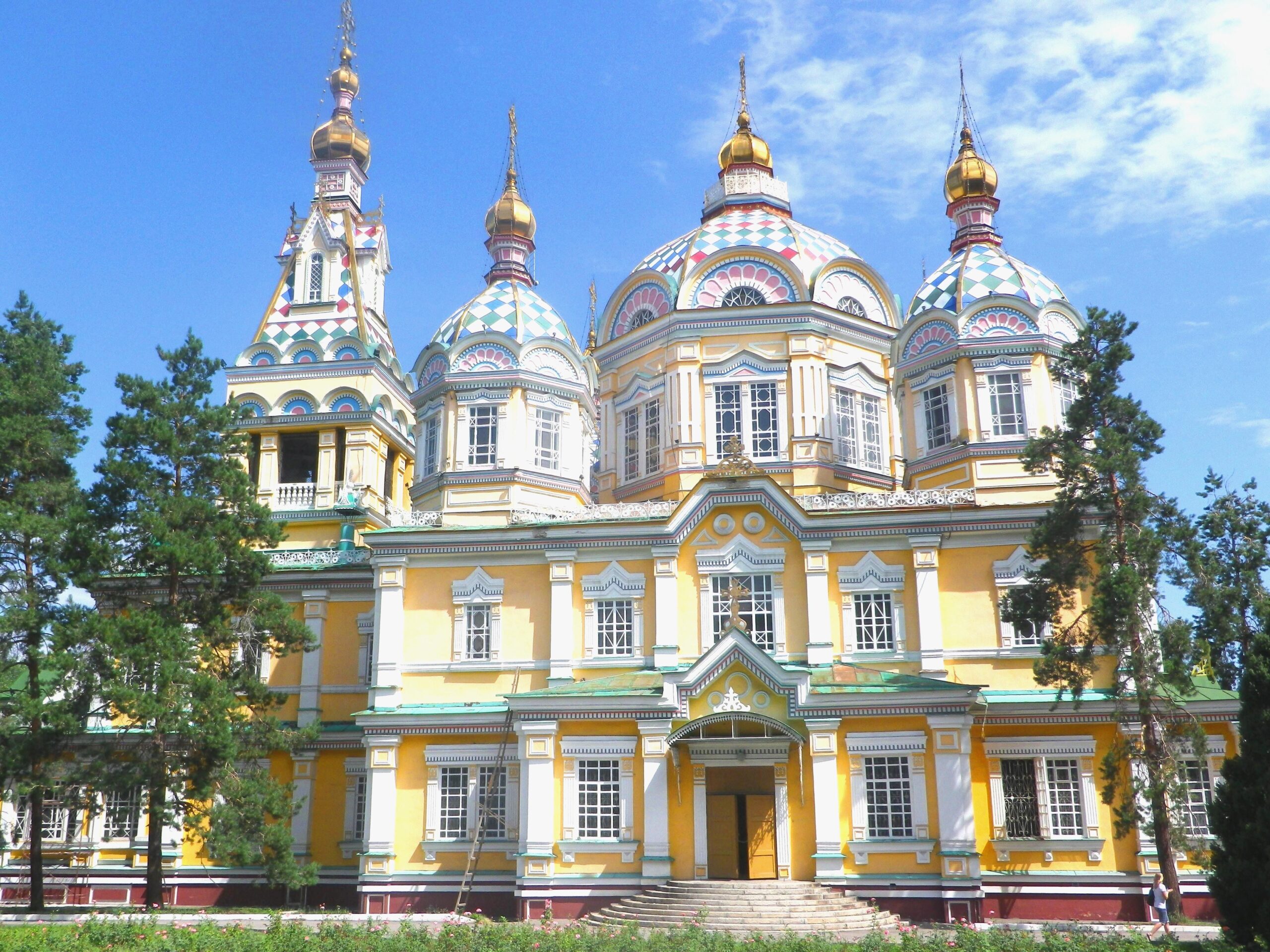
The Ascension Cathedral in Panfilov Park; image: TCA, Stephen M. Bland

“There really are underground passages under Almaty,” confirmed local tour guide, Eugenia. “They connect the Ascension Cathedral to the former residence of the Governor-General of Verny, now at the intersection of Tole Bi and Dostyk Street, as well as to the bishop’s former house, now the site of a Citibank on Kazybek Bi Street, and to Kaldayakov Street, where the House of Officers is located.”

The Abandoned Military Hospital

Almaty’s Tau-Samal district is home to an abandoned hospital once used for the treatment and rehabilitation of veterans from World War II, the Soviet-Afghan War, and the Chornobyl disaster. Opened in 1967, the hospital could once house up to 500 patients.

According to legend, the hospital was suddenly evacuated before its closure. Staff and patients reportedly left behind personal belongings, medical equipment, and supplies. The back entrance was said to be barricaded to keep something, unnamed and unsettling, out.

There’s even talk of a ghost soldier who died of battle wounds while being treated at the facility.
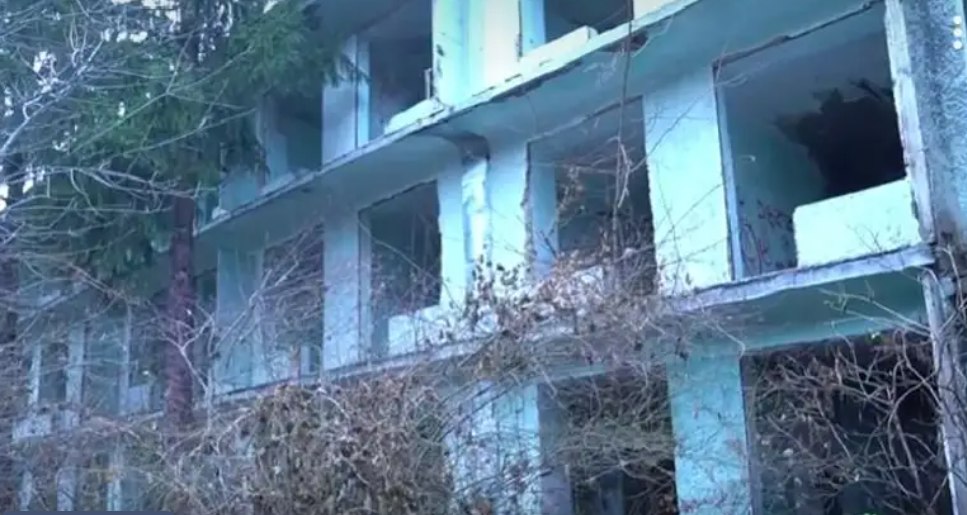
Abandoned War Veterans Hospital; image: zakon.kz

But more mundane and, more troubling realities lie behind the story. The hospital was closed in 2010 due to structural issues, including a crack in the wall of its main building. Veterans of the Afghan War and the Chornobyl cleanup have repeatedly petitioned President Kassym-Jomart Tokayev to fulfill government promises to restore the facility.

“In August 2010, the main hospital building, located in one of Almaty’s most prestigious districts, was shut down,” read one such appeal. “We were promised a new state-of-the-art facility with 240 beds for war veterans. Each year we receive letters from the Ministry of Health assuring us that construction will begin soon, but nothing has happened. Perhaps someone has other plans for this prime land?”

The hospital may indeed be haunted, but by neglect and bureaucratic inertia rather than by ghosts.