• KGS/USD = 0.01144 0%
  • KZT/USD = 0.00211 0%
  • TJS/USD = 0.10460 0%
  • UZS/USD = 0.00008 0%
  • TMT/USD = 0.28571 0.28%
  • KGS/USD = 0.01144 0%
  • KZT/USD = 0.00211 0%
  • TJS/USD = 0.10460 0%
  • UZS/USD = 0.00008 0%
  • TMT/USD = 0.28571 0.28%
  • KGS/USD = 0.01144 0%
  • KZT/USD = 0.00211 0%
  • TJS/USD = 0.10460 0%
  • UZS/USD = 0.00008 0%
  • TMT/USD = 0.28571 0.28%
  • KGS/USD = 0.01144 0%
  • KZT/USD = 0.00211 0%
  • TJS/USD = 0.10460 0%
  • UZS/USD = 0.00008 0%
  • TMT/USD = 0.28571 0.28%
  • KGS/USD = 0.01144 0%
  • KZT/USD = 0.00211 0%
  • TJS/USD = 0.10460 0%
  • UZS/USD = 0.00008 0%
  • TMT/USD = 0.28571 0.28%
  • KGS/USD = 0.01144 0%
  • KZT/USD = 0.00211 0%
  • TJS/USD = 0.10460 0%
  • UZS/USD = 0.00008 0%
  • TMT/USD = 0.28571 0.28%
  • KGS/USD = 0.01144 0%
  • KZT/USD = 0.00211 0%
  • TJS/USD = 0.10460 0%
  • UZS/USD = 0.00008 0%
  • TMT/USD = 0.28571 0.28%
  • KGS/USD = 0.01144 0%
  • KZT/USD = 0.00211 0%
  • TJS/USD = 0.10460 0%
  • UZS/USD = 0.00008 0%
  • TMT/USD = 0.28571 0.28%

Kazakhstan to Raise Minimum Wage in 2026

Kazakhstan’s Minister of Labor and Social Protection, Svetlana Zhakupova, has announced that the government plans to raise the minimum wage starting January 1, 2026. While the exact amount was not disclosed, Finance Minister Madi Takiev suggested the minimum wage could increase to just over 90,000 KZT ($189) per month.

Speaking on the sidelines of a joint meeting of both chambers of the Kazakh parliament, Zhakupova noted that last year her ministry approved a new methodology for calculating the minimum wage. The formula is based on labor productivity, median wages, and inflation. As all these indicators, especially inflation, have risen this year, an adjustment is being prepared.

“Today, several institutions are conducting research to determine accurate indicators of labor productivity and median wages by region and by industry, all of which will inform the new minimum wage,” Zhakupova said. “By the end of the year, we expect to finalize the amount so that the increase can take effect from January 1.”

Finance Minister Takiev echoed this projection, estimating the new figure at approximately 90,000 KZT.

Currently, the minimum wage in Kazakhstan stands at 85,000 KZT ($164). If the forecast is accurate, the planned increase would be the smallest in seven years. For context, the minimum wage rose from 28,200 KZT to 42,500 KZT ($54 to $81) in 2019, to 60,000 KZT ($116) in 2022, and to 70,000 KZT ($135) in 2023. The current level was established in January 2024. Inflation for the first five months of this year reached 11.3%, according to official data.

Earlier, parliamentary deputy Askhat Rakhimzhanov called for revising key social indicators, including the minimum subsistence level, minimum wage, and consumer basket. He argued the subsistence minimum, currently 46,000 KZT ($89), should be raised to at least 115,700 KZT ($223).

Deputy Prime Minister Serik Zhumangarin, who also heads the Ministry of National Economy, agreed that the minimum wage should rise but cautioned against abrupt increases.

“Raising the minimum wage is complex. It must be balanced with efforts to contain inflation, as it leads to higher production costs and stimulates demand, which can further drive inflation,” Zhumangarin said. He acknowledged the sharp rise in prices and admitted he could not live on 85,000 KZT.

According to the National Statistics Bureau, the average monthly nominal wage in Kazakhstan during Q1 2025 was 423,100 KZT ($816), while the median wage stood at 300,300 KZT ($579). Only 6.1% of the working population, or around 170,000 workers, earn less than 100,000 KZT monthly, according to the Applied Economics Research Centre (AERC). The majority, 53%, earn between 150,000 and 350,000 KZT ($290 to $675).

As previously reported by The Times of Central Asia, medical personnel remain among the lowest-paid occupational groups in the country.


Central Asia Rethinks Trade Routes Amid Middle East Crisis

The escalating conflict between Iran and Israel is threatening to disrupt Central Asia’s southern trade and transport corridors, prompting governments in the region to reassess their export strategies. According to the Russian outlet Nezavisimaya Gazeta, Kazakhstan and Uzbekistan are exploring alternative routes to mitigate risks associated with instability in the Persian Gulf.

A major concern is the potential closure of the Strait of Hormuz, a critical chokepoint for global trade. This poses a significant challenge for Kazakhstan, which relies on Iran as its sole southern railway outlet.

Kazakhstan Seeks Alternative

Kazakhstan’s Minister of National Economy, Serik Zhumangarin, emphasized the importance of maintaining uninterrupted cargo movement. “If rail service through Iran is disrupted, and this is our only southern route, the state is prepared to redirect cargo through alternative paths,” he said.

Though exports via Iran remain relatively limited, about $350 million in 2024 and $120 million from January to May 2025, Kazakhstan had planned to expand its use of the Iranian corridor. In early June, Astana and Tehran agreed to boost wheat and barley shipments to three million tons annually.

Alternatives under consideration include multimodal routes incorporating rail and ferry links across the Caspian Sea via Turkmenistan and Azerbaijan, as well as the Trans-Caspian or “Middle Corridor” connecting China to Georgia via the Caspian. Air freight is also being considered for select goods. While these alternatives involve added logistical challenges, the government has pledged support to businesses should the conflict persist.

Zhumangarin reassured that rerouting exports is unlikely to significantly affect prices, noting that most of Kazakhstan’s exports are globally traded commodities whose prices are shaped by international markets. As previously reported by The Times of Central Asia, Kazakh officials had already warned of risks to southern routes. Nonetheless, Zhumangarin emphasized that contingency plans are in place and that “it’s too early to say how the situation will evolve.”

Uzbekistan Focuses on Diversification

Uzbek President Shavkat Mirziyoyev has likewise responded swiftly, ordering an immediate assessment of the crisis’s impact on trade and transportation, and calling for urgent diversification of export routes. According to the presidential press service, transport costs could rise by as much as 30%.

“The need to redirect cargo flows to safer ports and negotiate alternative trade corridors with partner countries was emphasized,” the statement said. Authorities have been instructed to support export-oriented businesses and identify new markets to help stabilize domestic prices.

Until recently, Uzbekistan had been expanding trade ties with Iran, aiming to increase bilateral trade to $2 billion annually. However, these plans are now under review due to the regional instability.

Experts: Southern Routes Not Yet Critical

Despite the growing concerns, experts say Uzbekistan is not heavily dependent on southern corridors. Grigory Mikhailov, editor-in-chief of the logistics portal LogiStan.info, noted that most of Uzbekistan’s trade continues through Russian ports (St. Petersburg, Vladivostok, Novorossiysk) and China.

“These routes are well-established, reliable, and offer predictable delivery times. Sanctions have had little to no impact on cargo passing through Russia,” Mikhailov said. He added that the Iranian route via Bandar Abbas remains underdeveloped, citing incomplete infrastructure, problematic payment systems, and limited capacity. “For now, shipments along this route are mostly experimental,” he said.

Mikhailov concluded that Uzbekistan has not suffered significant losses from the Iranian situation, calling it “more of a political issue.” He noted that the country is now prioritizing the development of its northern and eastern trade corridors, particularly the North-South route through Russia.

Kyrgyzstan to Host First International Equestrian Rally Gallops

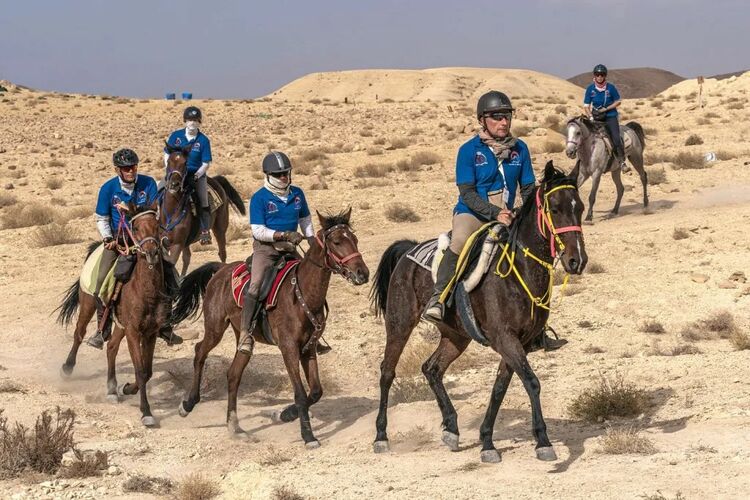
For the first time, the international equestrian adventure race known as The Gallops will be held in Central Asia, with the 2025 edition taking place around the scenic mountain lake of Son-Kul in Kyrgyzstan’s Naryn region.

Scheduled for July 19-27, Gallops-2025 will begin in the village of Kyzart. Over five days, participants will cover more than 200 kilometers on horseback, navigating a route encircling Lake Son-Kul.

This unique event, inspired by the spirit of the Paris-Dakar rally, combines elements of orienteering and endurance riding. While not a traditional competition, The Gallops tests participants’ stamina, solidarity, and self-discipline, making it a challenge of both physical and mental endurance.

Organized in collaboration with local government authorities, Gallops-2025 is expected to attract around 100 riders, including professionals and VIPs from more than 15 countries. Participants will include public figures such as actors, athletes, members of royal families, and media personalities.

According to the office of the Kyrgyz president’s plenipotentiary representative in the Naryn region, the event has already garnered significant attention from global media and social platforms, bolstering Kyrgyzstan’s profile as a destination for adventure tourism.

Past editions of The Gallops were held in Oman (2014), Morocco (2018), India (2019), and Jordan (2021).

International Human Rights Defenders Demand Release of Turkmen Activist

Turkmen civil activist Murat Dushemov, who has completed a four-year prison sentence, was not released on June 14 as expected. Instead, he was transferred to a pre-trial detention facility in Turkmenabat just days before his anticipated release.

Sentence Served, Yet No Freedom

According to Turkmen.News, new criminal charges were filed against Dushemov following an alleged altercation with another inmate, an incident human rights defenders claim was fabricated. Dushemov asserts he was framed in a deliberate provocation:

“The person who filed the complaint started hitting the wall, injuring himself, and smearing the wall with blood. They want to slander me again to prolong my stay here,” he said.

Human rights advocates argue the authorities are using these new accusations as a tactic to extend Dushemov’s imprisonment.

Retaliation for Criticism

Dushemov was arrested in 2021 and sentenced to four years on charges of extortion and bodily harm. International watchdogs have consistently stated that the charges were politically motivated. Prior to his arrest, Dushemov had openly criticized the Turkmen government’s COVID-19 policies, questioning the legal basis for mask mandates and mandatory vaccination, which he refused to comply with.

One allegation involved the chief doctor of a medical facility, whom Dushemov allegedly blackmailed by threatening to release a compromising video. Another accusation stemmed from a supposed provocation in prison, where two inmates, allegedly encouraged by authorities, fought each other and later claimed Dushemov had assaulted them.

Global Advocacy

Five human rights groups, including the Norwegian Helsinki Committee, Turkmen.News, the Turkmen Human Rights Initiative, the International Partnership for Human Rights, and the Association for Human Rights in Central Asia, have issued a joint statement calling for Dushemov’s immediate release. They condemned the new charges as retaliation for his civic activism:

“The authorities must drop the new criminal charges brought against civil society activist Murat Dushemov as clear retaliation for his activities and release him immediately,” they stated.

The groups also urged Turkmenistan’s international partners to exert diplomatic pressure on Ashgabat to halt its persecution of activists and journalists.

Human Rights Watch echoed this call, stating on June 25 that the Turkmen authorities must “immediately and unconditionally release activist Murat Dushemov and end all abuses aimed at prolonging his detention.”

The case of Murat Dushemov illustrates the ongoing suppression of dissent in Turkmenistan. Despite growing international criticism, the government continues to use the criminal justice system as a tool to silence civil society.

Kyrgyzstan Launches Major Gold Exploration at Historic Makmal Deposit

Kyrgyzstan has initiated large-scale geological exploration at the historic Makmal gold deposit in the Jalal-Abad region, marking the first such effort in decades. The announcement was made by Kyrgyzaltyn, the state-owned enterprise responsible for gold and precious metals mining.

According to the company, its subsidiary, Makmal Gold Company, has begun exploratory drilling in the southwestern section of the mine, an area previously untouched by mining operations. Soviet-era geological surveys suggest that this zone may hold up to four tons of gold reserves.

“Extensive work is underway to extend the life of the Makmal mine,” the Kyrgyzaltyn press service stated. “We plan to drill 19 wells at depths ranging from 140 to 400 meters. This will help us better define reserves and create additional employment opportunities.”

The exploration will proceed in two phases. In the first stage, geologists will drill a total of 3,275 meters. If results are favorable, a one-kilometer tunnel will be constructed to allow for precise reserve estimation, laying the groundwork for future industrial extraction. Kyrgyzaltyn also plans to evaluate other previously unexplored areas of the deposit.

Historic and Economic Significance

The Makmal deposit, one of Kyrgyzstan’s earliest gold mining sites, began industrial operations in 1986. Originally projected to last ten years, the discovery of new veins has kept the mine active to the present day.

Currently, the mine contributes more than 95% of budget revenues for the Toguz-Toro district. Makmalzoloto, the operator, has also invested significantly in regional infrastructure, allocating 54 million Kyrgyz som (approximately $618,000) over the past three years, with an additional 50 million som ($572,000) directed toward charitable initiatives.

The company employs more than 500 workers, nearly all of whom are local residents. While the annual output is modest, less than one ton, Makmal remains among the ten largest operational gold mines in the country. Kyrgyzstan has around 2,500 registered mineral deposits, of which 46 are classified as large.

Emigration from Kazakhstan Drops to Lowest Level in a Decade

Kazakhstan is witnessing a significant decline in emigration, reaching its lowest level in more than ten years, according to a study by analysts at Ranking.kz. The analysis, based on data from the National Statistics Bureau (NSB) of the Agency for Strategic Planning and Reforms of the Republic of Kazakhstan (ASPiR RK), highlights shifting demographic and economic patterns within the country.

Statistical Overview and Long-Term Trends

In the first four months of 2025, just 1,700 individuals left Kazakhstan for permanent residence abroad, a figure 2.8 times lower than the same period in 2024, when 4,800 people emigrated. Immigration also declined slightly, with 8,100 people entering Kazakhstan between January and April 2025, compared to 9,900 the previous year. Despite this, the migration balance remains positive, with more people arriving than leaving.

A longer-term view underscores a consistent downward trend. In 2000, some 155,700 people emigrated. By 2024, this figure had dropped to 12,700. Notable upticks occurred during periods of heightened outflow, specifically between 2006-2008 and 2013-2019. However, for the past two years, Kazakhstan has maintained a positive migration balance. In 2024, 23,900 people immigrated to the country, nearly double the number who left.

Key Destinations for Emigrants

Most emigrants originate from Kazakhstan’s northern and eastern regions. In 2024, 47.9% of those who left came from the Kostanay, Pavlodar, Abai, North Kazakhstan, and East Kazakhstan regions.

Russia continues to be the primary destination, receiving 69% of all Kazakhstani emigrants. However, that number is sharply down: from January to March 2025, only 644 citizens moved to Russia, a 75.5% decline compared to the same period in 2024.

Germany is the second most popular destination. In 2024, approximately 2,000 Kazakhstani citizens relocated there, but this too marked a significant decrease of 67.9%. Emigration to nearly all traditional destinations has declined, with the exception of Kyrgyzstan. While still relatively minor in scale (about 300 people annually), migration to Kyrgyzstan is gradually increasing, particularly from Kazakhstan’s southern regions.

Causes Behind the Decline

The United Nations Population Fund had previously forecast a drop in emigration, attributing it to Kazakhstan’s economic development, increased labor demand, and the diminishing pool of ethnic migrants.

Demographic shifts also play a role. Population growth in southern Central Asian republics is contributing to a new influx of migrants into Kazakhstan.

A 2024 public opinion survey conducted by the Demoscope Express Monitoring Bureau supports these trends. Among the 1,100 respondents, 78.5% said they had no plans to emigrate within the next two to three years. Only 6.9% expressed intent to leave, and 5.6% said they would like to emigrate but were currently unable to do so.

The most commonly cited reasons for emigration include the desire for higher income (24.5%), better employment opportunities (14%), and a perceived lack of prospects within Kazakhstan (23.9%). Other motivations include studying abroad (11.7%), family reunification (2.6%), and returning to ancestral homelands (0.6%).