• KGS/USD = 0.01144 0%
  • KZT/USD = 0.00213 0%
  • TJS/USD = 0.10456 0.19%
  • UZS/USD = 0.00008 0%
  • TMT/USD = 0.28490 0%
  • KGS/USD = 0.01144 0%
  • KZT/USD = 0.00213 0%
  • TJS/USD = 0.10456 0.19%
  • UZS/USD = 0.00008 0%
  • TMT/USD = 0.28490 0%
  • KGS/USD = 0.01144 0%
  • KZT/USD = 0.00213 0%
  • TJS/USD = 0.10456 0.19%
  • UZS/USD = 0.00008 0%
  • TMT/USD = 0.28490 0%
  • KGS/USD = 0.01144 0%
  • KZT/USD = 0.00213 0%
  • TJS/USD = 0.10456 0.19%
  • UZS/USD = 0.00008 0%
  • TMT/USD = 0.28490 0%
  • KGS/USD = 0.01144 0%
  • KZT/USD = 0.00213 0%
  • TJS/USD = 0.10456 0.19%
  • UZS/USD = 0.00008 0%
  • TMT/USD = 0.28490 0%
  • KGS/USD = 0.01144 0%
  • KZT/USD = 0.00213 0%
  • TJS/USD = 0.10456 0.19%
  • UZS/USD = 0.00008 0%
  • TMT/USD = 0.28490 0%
  • KGS/USD = 0.01144 0%
  • KZT/USD = 0.00213 0%
  • TJS/USD = 0.10456 0.19%
  • UZS/USD = 0.00008 0%
  • TMT/USD = 0.28490 0%
  • KGS/USD = 0.01144 0%
  • KZT/USD = 0.00213 0%
  • TJS/USD = 0.10456 0.19%
  • UZS/USD = 0.00008 0%
  • TMT/USD = 0.28490 0%

International Human Rights Defenders Demand Release of Turkmen Activist

Turkmen civil activist Murat Dushemov, who has completed a four-year prison sentence, was not released on June 14 as expected. Instead, he was transferred to a pre-trial detention facility in Turkmenabat just days before his anticipated release.

Sentence Served, Yet No Freedom

According to Turkmen.News, new criminal charges were filed against Dushemov following an alleged altercation with another inmate, an incident human rights defenders claim was fabricated. Dushemov asserts he was framed in a deliberate provocation:

“The person who filed the complaint started hitting the wall, injuring himself, and smearing the wall with blood. They want to slander me again to prolong my stay here,” he said.

Human rights advocates argue the authorities are using these new accusations as a tactic to extend Dushemov’s imprisonment.

Retaliation for Criticism

Dushemov was arrested in 2021 and sentenced to four years on charges of extortion and bodily harm. International watchdogs have consistently stated that the charges were politically motivated. Prior to his arrest, Dushemov had openly criticized the Turkmen government’s COVID-19 policies, questioning the legal basis for mask mandates and mandatory vaccination, which he refused to comply with.

One allegation involved the chief doctor of a medical facility, whom Dushemov allegedly blackmailed by threatening to release a compromising video. Another accusation stemmed from a supposed provocation in prison, where two inmates, allegedly encouraged by authorities, fought each other and later claimed Dushemov had assaulted them.

Global Advocacy

Five human rights groups, including the Norwegian Helsinki Committee, Turkmen.News, the Turkmen Human Rights Initiative, the International Partnership for Human Rights, and the Association for Human Rights in Central Asia, have issued a joint statement calling for Dushemov’s immediate release. They condemned the new charges as retaliation for his civic activism:

“The authorities must drop the new criminal charges brought against civil society activist Murat Dushemov as clear retaliation for his activities and release him immediately,” they stated.

The groups also urged Turkmenistan’s international partners to exert diplomatic pressure on Ashgabat to halt its persecution of activists and journalists.

Human Rights Watch echoed this call, stating on June 25 that the Turkmen authorities must “immediately and unconditionally release activist Murat Dushemov and end all abuses aimed at prolonging his detention.”

The case of Murat Dushemov illustrates the ongoing suppression of dissent in Turkmenistan. Despite growing international criticism, the government continues to use the criminal justice system as a tool to silence civil society.

Kyrgyzstan Launches Major Gold Exploration at Historic Makmal Deposit

Kyrgyzstan has initiated large-scale geological exploration at the historic Makmal gold deposit in the Jalal-Abad region, marking the first such effort in decades. The announcement was made by Kyrgyzaltyn, the state-owned enterprise responsible for gold and precious metals mining.

According to the company, its subsidiary, Makmal Gold Company, has begun exploratory drilling in the southwestern section of the mine, an area previously untouched by mining operations. Soviet-era geological surveys suggest that this zone may hold up to four tons of gold reserves.

“Extensive work is underway to extend the life of the Makmal mine,” the Kyrgyzaltyn press service stated. “We plan to drill 19 wells at depths ranging from 140 to 400 meters. This will help us better define reserves and create additional employment opportunities.”

The exploration will proceed in two phases. In the first stage, geologists will drill a total of 3,275 meters. If results are favorable, a one-kilometer tunnel will be constructed to allow for precise reserve estimation, laying the groundwork for future industrial extraction. Kyrgyzaltyn also plans to evaluate other previously unexplored areas of the deposit.

Historic and Economic Significance

The Makmal deposit, one of Kyrgyzstan’s earliest gold mining sites, began industrial operations in 1986. Originally projected to last ten years, the discovery of new veins has kept the mine active to the present day.

Currently, the mine contributes more than 95% of budget revenues for the Toguz-Toro district. Makmalzoloto, the operator, has also invested significantly in regional infrastructure, allocating 54 million Kyrgyz som (approximately $618,000) over the past three years, with an additional 50 million som ($572,000) directed toward charitable initiatives.

The company employs more than 500 workers, nearly all of whom are local residents. While the annual output is modest, less than one ton, Makmal remains among the ten largest operational gold mines in the country. Kyrgyzstan has around 2,500 registered mineral deposits, of which 46 are classified as large.

Emigration from Kazakhstan Drops to Lowest Level in a Decade

Kazakhstan is witnessing a significant decline in emigration, reaching its lowest level in more than ten years, according to a study by analysts at Ranking.kz. The analysis, based on data from the National Statistics Bureau (NSB) of the Agency for Strategic Planning and Reforms of the Republic of Kazakhstan (ASPiR RK), highlights shifting demographic and economic patterns within the country.

Statistical Overview and Long-Term Trends

In the first four months of 2025, just 1,700 individuals left Kazakhstan for permanent residence abroad, a figure 2.8 times lower than the same period in 2024, when 4,800 people emigrated. Immigration also declined slightly, with 8,100 people entering Kazakhstan between January and April 2025, compared to 9,900 the previous year. Despite this, the migration balance remains positive, with more people arriving than leaving.

A longer-term view underscores a consistent downward trend. In 2000, some 155,700 people emigrated. By 2024, this figure had dropped to 12,700. Notable upticks occurred during periods of heightened outflow, specifically between 2006-2008 and 2013-2019. However, for the past two years, Kazakhstan has maintained a positive migration balance. In 2024, 23,900 people immigrated to the country, nearly double the number who left.

Key Destinations for Emigrants

Most emigrants originate from Kazakhstan’s northern and eastern regions. In 2024, 47.9% of those who left came from the Kostanay, Pavlodar, Abai, North Kazakhstan, and East Kazakhstan regions.

Russia continues to be the primary destination, receiving 69% of all Kazakhstani emigrants. However, that number is sharply down: from January to March 2025, only 644 citizens moved to Russia, a 75.5% decline compared to the same period in 2024.

Germany is the second most popular destination. In 2024, approximately 2,000 Kazakhstani citizens relocated there, but this too marked a significant decrease of 67.9%. Emigration to nearly all traditional destinations has declined, with the exception of Kyrgyzstan. While still relatively minor in scale (about 300 people annually), migration to Kyrgyzstan is gradually increasing, particularly from Kazakhstan’s southern regions.

Causes Behind the Decline

The United Nations Population Fund had previously forecast a drop in emigration, attributing it to Kazakhstan’s economic development, increased labor demand, and the diminishing pool of ethnic migrants.

Demographic shifts also play a role. Population growth in southern Central Asian republics is contributing to a new influx of migrants into Kazakhstan.

A 2024 public opinion survey conducted by the Demoscope Express Monitoring Bureau supports these trends. Among the 1,100 respondents, 78.5% said they had no plans to emigrate within the next two to three years. Only 6.9% expressed intent to leave, and 5.6% said they would like to emigrate but were currently unable to do so.

The most commonly cited reasons for emigration include the desire for higher income (24.5%), better employment opportunities (14%), and a perceived lack of prospects within Kazakhstan (23.9%). Other motivations include studying abroad (11.7%), family reunification (2.6%), and returning to ancestral homelands (0.6%).

Silicon Steppes: Can Kazakhstan Become Eurasia’s Next Digital Nexus?

At this month’s Eurasian Economic Forum in Minsk, Kazakh President Kassym-Jomart Tokayev urged fellow Eurasian Economic Union (EAEU) leaders to reorient toward the future. “Digitalization and artificial intelligence… should become an absolute priority of the EAEU,” he told the plenary session, warning that “we are already living in the era of AI.” Tokayev cited forecasts that AI could contribute $15 trillion to global GDP and displace 300 million jobs by 2030, arguing the EAEU bloc has a “historic opportunity” to act now. “It is important to use this window of opportunity in a timely manner… to strengthen our role in the emerging digital world order,” he stated. “A small group of countries will emerge as leaders in this field… others may be left behind. The EAEU must lead — or, at the very least, avoid lagging behind.”

Tokayev’s remarks capped a speech outlining Kazakhstan’s sweeping digital agenda, which includes a national supercomputer, a high-profile artificial intelligence hub, and a “CryptoCity” pilot zone. These efforts signal not only a pivot away from extractive industries but a push to establish Kazakhstan as the heart of Central Asia’s digital and data infrastructure.

Once seen as an economic hindrance, Kazakhstan’s landlocked geography is now being leveraged as a potential asset. A 3,700 km West–East Fiber-Optic Highway is under construction, connecting China’s Xinjiang province to the Caspian Sea. The project, expected to be completed in 2026, aims to provide a secure, high-speed terrestrial route for global data flows between Europe and East Asia. By pairing this with expanded redundancy and data center capacity, Kazakhstan hopes to serve as a neutral, cost-effective host for hyperscale data centers supporting global cloud providers and sovereign clients alike.

With abundant energy, political stability, and growing fiber capacity, officials argue Kazakhstan can reduce regional dependence on submarine cables routed through politically sensitive chokepoints.

Kazakhstan’s infrastructure investments are central to Tokayev’s vision. In Astana, the futuristic Nur Alem sphere — originally built to host the 2017 World Expo — is being converted into Alem.AI, an international artificial intelligence center focused on education, research, and applied technology. The facility will host labs, training academies, and co-working space for startups, to produce 10,000 AI specialists per year and generate $5 billion in AI-driven exports by 2029.

Complementing this is the new national AI supercomputer, developed in partnership with UAE-based Presight AI. Launched in May 2025, the system is rated at up to 2 exaflops, powered by NVIDIA H200 chips, and installed within a Tier III-certified data center. Government officials say it will be used for machine learning, scientific modeling, LLM development, and cybersecurity testing, and will eventually be made available to Kazakh universities and private sector firms.

Meanwhile, the CryptoCity pilot zone near Alatau will allow the regulated use of cryptocurrencies in daily life, from shopping to property purchases, within a restricted environment. It is being developed under the supervision of Kazakhstan’s Ministry of Digital Development and Samruk-Kazyna, the country’s sovereign wealth fund. Though crypto transactions currently remain largely banned in the country, officials say the sandbox could pave the way for national reforms.

Of the Central Asian countries, Kazakhstan is the furthest along in transforming its digital economy. Uzbekistan is also moving fast, with 10,000 registered IT firms and major progress on digital exports, but Kazakhstan still leads the way in AI readiness rankings, cloud infrastructure, and the development of e-governance.

The Astana Hub, the country’s tech free zone, now hosts over 1,600 companies, including startups, accelerators, and multinationals such as TikTok and Telegram. The technology park offers tax breaks, streamlined visas, and legal arbitration in English common law. The government has modeled aspects of its ecosystem on Singapore and the UAE, and is actively working with investors from both nations to build out cloud, connectivity, and AI capacity.

Kazakhstan’s challenges — many of which Tokayev has publicly acknowledged — remain very real. Talent shortages are widespread, with over 70% of Kazakh companies reporting that they have struggled to hire qualified IT professionals. In response, the government launched a plan to train a million citizens in AI and digital skills by 2029, while also scaling up specialist academies like TUMO and Tomorrow School, and offering a Digital Nomad Visa for foreign tech workers.

Cybersecurity, too, is a growing concern. More than 30,000 cyberattacks were registered in just the first five months of 2025, double the number from the same period in the previous year. A major data breach in late 2024 highlighted vulnerabilities in government systems. In response, Kazakhstan’s National Security Committee and Ministry of Digital Development are working on a national cybersecurity strategy, while reinforcing defense capabilities with support from UAE and Israeli consultants.

Perhaps most significant for foreign investors is Kazakhstan’s incomplete regulatory environment. Core legislation on AI ethics, data protection, and digital assets remains under review. CryptoCity, in fact, exists because national laws do not yet allow crypto to be used for real-world payments. Tokayev has formed a National AI Development Council to fast-track legal reforms and has committed to finalizing a digital law package by the end of 2025.

Kazakhstan’s digital leap comes as companies across the globe are reevaluating where to build and host infrastructure. Cost pressures in North America, regulatory headwinds in Europe, and geopolitical sensitivities in East Asia are pushing tech firms to look for alternatives. If Kazakhstan can deliver on bandwidth, regulation, security, and talent, it may become more than just a case study in digital ambition. It could be a new high-tech junction on the global tech map. By transforming infrastructure into opportunity and vision into governance, it has a chance to turn its Eurasian geography into strategic leverage for the digital age.

Almaty to Issyk-Kul Flights Open Scenic Cross-Border Gateway

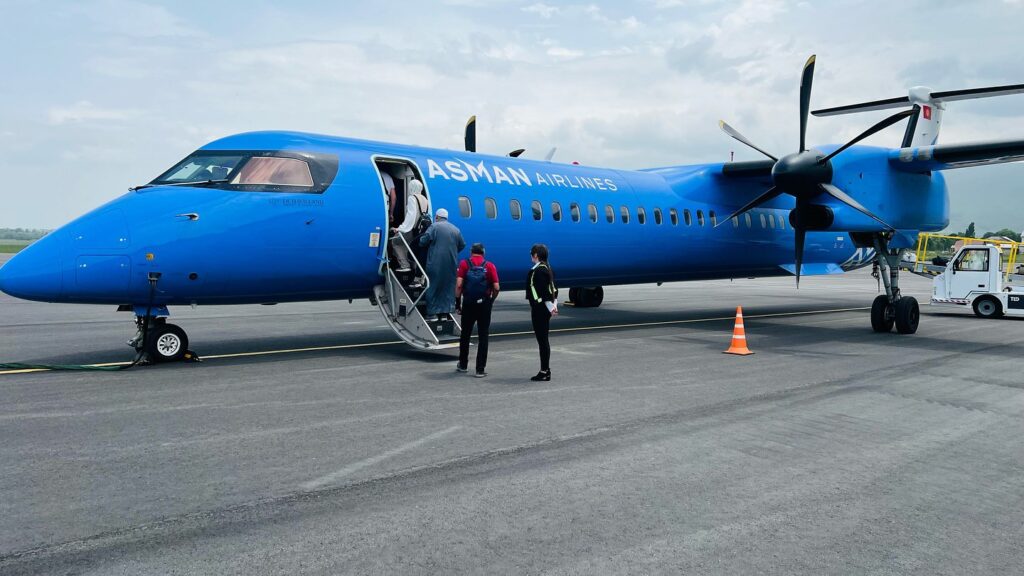
Regular passenger flights now link Almaty, Kazakhstan’s largest city, to Lake Issyk-Kul, Kyrgyzstan’s premier tourist destination. The new air service was launched by Kyrgyzstan’s Asman Airlines on June 27, according to Kazakhstan’s Ministry of Transport. The airline will operate two weekly flights, on Mondays and Fridays, between Almaty and Tamchy airport, located on the lake’s northern shore. Kazakhstan’s low-cost carrier Fly Arystan is also set to launch direct flights between Almaty and Issyk-Kul, beginning July 3. These flights will run twice a week, on Thursdays and Sundays.

Lake Issyk-Kul remains a favored summer destination for tourists across the region, particularly among Almaty residents seeking weekend getaways. The new air routes are expected to improve access for travelers from southern Kazakhstan, significantly reducing travel time and simplifying logistics during the peak tourist season.

The Asman Airlines flight between Almaty and Issyk-Kul takes approximately one hour and 20 minutes. Previously, travelers had to drive over 460 kilometers via Bishkek, a journey that typically took about eight hours.  Efforts to shorten this overland route continue.

The Times of Central Asia recently reported on the advancement of a long-discussed highway project aimed at directly linking Almaty to Issyk-Kul. Although the two locations are only 80 kilometers apart in a straight line, mountain ranges force travelers to detour through the Kyrgyz capital.

The lake has also become more accessible to tourists from Uzbekistan. On June 22, Uzbek budget airline Fly Khiva launched regular flights from Tashkent to Tamchy. These flights will operate every Sunday through August 10, 2025.

Uzbekistan Extends Sentences for Religious Prisoners Amid Longstanding Security Fears

Two Muslim prisoners of conscience in Uzbekistan — both previously jailed for nonviolent religious activity — have had their sentences extended in recent months under charges that human rights observers describe as vague and politically motivated. While the cases have drawn criticism from international monitors, they also highlight the Uzbek government’s enduring fears over political Islam, concerns shaped by geography, history, and national security calculations.

Tulkun Astanov, a 54-year-old activist originally imprisoned in 2020 for defending the rights of fellow Muslims, was sentenced to an additional three years and two months in a strict-regime labor camp this May. Authorities accused him of refusing to attend morning exercises in prison and of disobeying lawful orders. Astanov, who has suffered multiple strokes in custody, submitted a written request to be excused from physical activity on medical grounds — documentation which was reportedly dismissed by prison officials. His family and legal counsel contend the new case was fabricated to prevent his scheduled release later this year. The U.S. State Department has documented repeated concerns about his treatment in its 2022 International Religious Freedom Report.

A second prisoner, Fariduddin Abduvokhidov, 30, was arrested in 2020 after participating in private Islamic study circles. He was originally given an 11-year sentence, but earlier this year, his term was extended twice: by ten years in March and an additional year in April. According to his family, the new charges relate to alleged “religious propaganda” while in detention. They say he was not fully informed of the basis of the charges and declined to appeal, citing emotional fatigue and lack of faith in the process.

International monitors, including Human Rights Watch, have raised alarm about Uzbekistan’s use of vague extremism provisions to prosecute peaceful religious expression. Trials are often held behind closed doors, with little transparency or legal recourse for defendants. In both cases, court documents have not been made available to families or the public.

Uzbekistan shares a 144-kilometer border with Afghanistan, where groups like the Taliban and ISIS-K remain active. During the 1990s and early 2000s, Uzbekistan suffered violent attacks from the Islamic Movement of Uzbekistan (IMU), a jihadist group aligned with the Taliban and later al-Qaeda. Those experiences left a lasting impact on both policymakers and public opinion, contributing to an enduring suspicion of independent Islamic activism.

Several OECD democracies, including France, Belgium, and Austria, have enacted bans on face coverings in public. While controversial, those policies were introduced through public debate and are subject to judicial review. In Uzbekistan, by contrast, the lack of independent courts, competitive elections, and free media means that state regulation of religion is rarely subject to institutional checks.

Uzbekistan has made real progress in other aspects of governance. Since independence in 1991, the country has implemented reforms in public administration, economic policy, and digital infrastructure, and it is currently pursuing accession to the World Trade Organization. Engagement with the OECD and OSCE has also deepened.

For many observers, Uzbekistan’s evolution will be gradual, and should be allowed to proceed on its own terms. But the continued imprisonment of individuals like Astanov and Abduvokhidov underscores the lingering tension between state security and personal freedom. The question ahead is not whether Uzbekistan should protect itself from extremism, but whether it can do so while embracing the pluralism that defines a more open society.

At the same time, lasting democratic development will require not only rights and representation but also the consistent application of law and order. For Uzbekistan, the task is to build a system where security and justice reinforce — not undermine — each other.