• KGS/USD = 0.01144 0%
  • KZT/USD = 0.00217 0%
  • TJS/USD = 0.10456 0%
  • UZS/USD = 0.00008 0%
  • TMT/USD = 0.28490 0%
  • KGS/USD = 0.01144 0%
  • KZT/USD = 0.00217 0%
  • TJS/USD = 0.10456 0%
  • UZS/USD = 0.00008 0%
  • TMT/USD = 0.28490 0%
  • KGS/USD = 0.01144 0%
  • KZT/USD = 0.00217 0%
  • TJS/USD = 0.10456 0%
  • UZS/USD = 0.00008 0%
  • TMT/USD = 0.28490 0%
  • KGS/USD = 0.01144 0%
  • KZT/USD = 0.00217 0%
  • TJS/USD = 0.10456 0%
  • UZS/USD = 0.00008 0%
  • TMT/USD = 0.28490 0%
  • KGS/USD = 0.01144 0%
  • KZT/USD = 0.00217 0%
  • TJS/USD = 0.10456 0%
  • UZS/USD = 0.00008 0%
  • TMT/USD = 0.28490 0%
  • KGS/USD = 0.01144 0%
  • KZT/USD = 0.00217 0%
  • TJS/USD = 0.10456 0%
  • UZS/USD = 0.00008 0%
  • TMT/USD = 0.28490 0%
  • KGS/USD = 0.01144 0%
  • KZT/USD = 0.00217 0%
  • TJS/USD = 0.10456 0%
  • UZS/USD = 0.00008 0%
  • TMT/USD = 0.28490 0%
  • KGS/USD = 0.01144 0%
  • KZT/USD = 0.00217 0%
  • TJS/USD = 0.10456 0%
  • UZS/USD = 0.00008 0%
  • TMT/USD = 0.28490 0%

Bishkek Launches “Living Wall” Project to Tackle Heat and Pollution

Bishkek has launched a pilot project to green the facades of buildings as part of a broader effort to adapt to climate change and mitigate growing heat and air pollution in Kyrgyzstan’s capital.

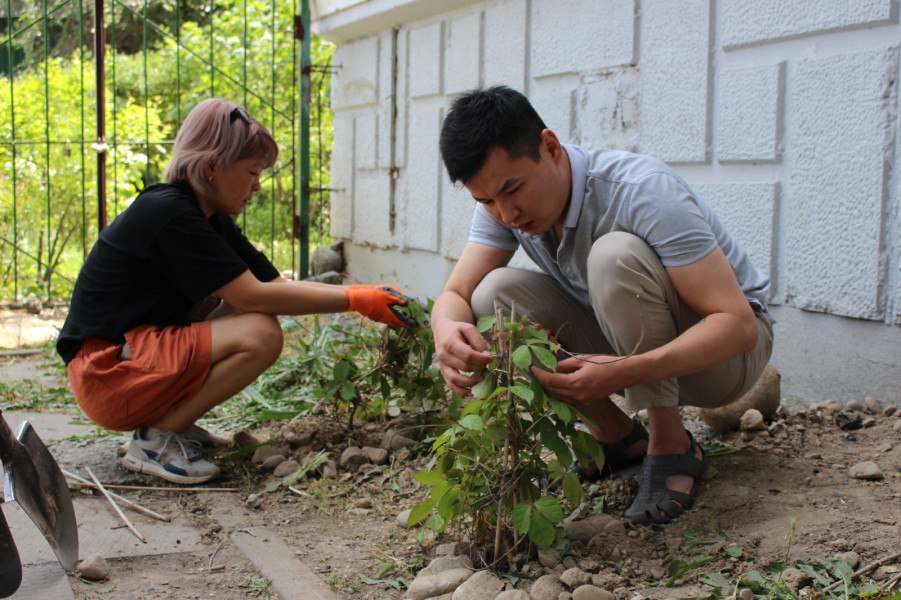
In June, vertical greenery was installed on the facades of three schools and one apartment building under the “1000 Green Walls” program. The initiative is jointly implemented by the environmental organization MoveGreen and the Bishkek municipality, with support from the United Nations Environment Programme (UNEP) and the development agency Bread for the World.

More Than Just Aesthetic

Green facades, also known as living walls, offer both visual and environmental benefits. They reduce building surface temperatures, absorb carbon dioxide, release oxygen, and filter dust and pollutants from the air. These vertical gardens also improve sound insulation, protect buildings from temperature extremes, and support urban biodiversity, providing habitat for birds, insects, and butterflies.

Two species were selected for the pilot phase: maiden grapes and ivy.

Maiden grapes are fast-growing, frost- and drought-resistant vines that create dense green coverage. In addition to insulating buildings, they absorb dust and exhaust emissions, improving local air quality. Their vibrant red foliage in autumn also enhances the city’s visual appeal.

Ivy, an evergreen perennial, retains its foliage year-round and provides consistent thermal and acoustic insulation. It is effective in trapping airborne pollutants and helps create a more temperate and pleasant microclimate around buildings.

A Scalable Urban Solution

The Bishkek municipality views this as a sustainable and scalable urban solution. “These green facades contribute to a more comfortable, ecological, and aesthetically pleasing urban environment,” officials said.

The city plans to expand the 1000 Green Walls program to include more schools, kindergartens, and residential buildings in the coming months.

Structural Barriers Continue to Hamper Industrial Growth in Tajikistan

Despite recent gains in industrial output, Tajikistan’s full industrial potential remains largely unrealized. Analysts point to a combination of systemic issues that continue to constrain the sector’s sustainable development.

Growth Driven by Extractive Industries

According to the Statistical Agency under the President of Tajikistan, industrial production totaled 18.9 billion somoni in January, April 2025, marking a 25.2% increase compared to the same period in 2024. However, this growth was overwhelmingly fueled by the extractive sector, which surged by 90%. In contrast, manufacturing expanded by just 3.5%.

While 121 new enterprises were launched during the first four months of the year, disruptions in existing operations and the narrow structure of industrial growth highlight deeper systemic problems.

Idle Enterprises and Obsolete Equipment

Minister of Industry and New Technologies Sherali Kabir reported that 92 industrial enterprises remained non-operational as of August 2024. Over half have been idle since 2008-2018, with the rest inactive since 2019-2022.

The reasons range from financial difficulties and pandemic-related business closures to outdated equipment and low competitiveness. Rising input costs and limited market access further compound the problem. Some sectors, such as textiles and garments, could potentially resume operations, but only with significant modernization.

Although some light and food industry enterprises have diversified, others, such as the porcelain factory in Tursunzade, have failed to adapt to changing market conditions.

Raw Material Shortages

Insufficient raw material supply remains a major bottleneck for several subsectors. The vegetable oil industry, for instance, requires approximately 833,000 tons of oilseeds to produce 100,000 tons of oil. However, domestic output is under 100,000 tons, limiting production to just 25,000 tons, four times below the national requirement.

The canning industry faces similar constraints due to an inconsistent supply of fruits and vegetables.

Energy Shortages

Power outages continue to disrupt industrial output, especially in winter. Cotton processing plants produced 980 tons less fiber in the first half of 2025 compared to the same period in 2024 due to energy shortages.

At the Azot plant in Levakant, production losses translated to a 7.3 million somoni revenue shortfall. Agricultural infrastructure has also been affected: the Land Reclamation Agency reported 130 pump station failures in 2023 alone, caused by voltage surges and sudden power cuts.

Declining Cement and Coal Exports

Despite advances in cement production, Tajikistan’s export volumes have declined sharply. From January to April 2025, the country exported just 154,000 tons of cement, down from 655,000 tons during the same period in 2024. This marks a 30.4 percent decline compared to the same period in 2023.

The decline stems largely from reduced demand in key markets. Uzbekistan’s new cement plants have fulfilled domestic needs and displaced Tajik exports to Afghanistan.

Coal exports have also suffered due to increased transit fees. Afghanistan raised its transit tariff from $7 to as much as $50 per ton, leading to a 15,000-ton decline in exports to Afghanistan and a 65,000-ton drop to Pakistan.

High Production Costs Undermine Competitiveness

High production costs across all sectors continue to undermine Tajikistan’s industrial competitiveness. For example, the cost of cultivating one hectare of cotton exceeds 10,000 somoni, twice as high as in neighboring Uzbekistan. This is driven by elevated fuel, service, and fertilizer prices.

Livestock farming faces similar hurdles. High feed and veterinary costs make domestic meat and dairy products less competitive, reducing profitability and limiting foreign investment interest.

Uzbekistan Signs $78 Million Deal with Saudi and French Firms to Manage Hazardous Waste

Uzbekistan has signed a landmark $78 million agreement with Saudi Arabia’s Vision International Investment Company (VIIC) and France’s Suez International to improve hazardous industrial waste management and bolster environmental protection. The Ministry of Ecology announced the signing earlier this month.

The agreement was formalized by Deputy Minister of Ecology Jusipbek Kazbekov, VIIC Director of Development Kapil Lalwani, and Paul Bourdillon, Regional Director for Europe and Central Asia at Suez. The project will be implemented in three phases.

A Three-Phase Strategy

The first phase will involve the construction of new waste stabilization facilities, landfills, and transfer stations to safely store and process hazardous industrial waste.

The second phase will focus on developing engineering designs and piloting technologies to produce Refuse-Derived Fuel (RDF), a method that converts waste into usable energy. This phase will also test incineration and thermal treatment systems.

In the third and final phase, the project will establish a full-scale RDF and waste-to-energy facility.

Suez International, with over 160 years of experience, is a global leader in water and waste management, offering innovative solutions across Europe, Asia, the Americas, Africa, and the Middle East. Saudi-based VIIC, founded in 2002, manages nearly $96 billion in assets and is active in energy, infrastructure, and public-private partnership projects.

The Ministry of Ecology views the agreement as a significant advancement for Uzbekistan’s environmental policy, aiming to reduce industrial pollution and support sustainable development.

Broader Environmental Initiatives

Uzbekistan’s Ministry of Ecology is also collaborating with the Food and Agriculture Organization of the United Nations (FAO) and the European Union to manage hazardous agricultural chemicals. A joint project launched in Tashkent last year aims to reduce pesticide use and improve waste handling in agriculture.

Minister of Ecology Aziz Abdukhakimov emphasized the importance of these initiatives for public health and environmental safety. He also highlighted the need to update the national registry of contaminated areas, particularly former agricultural airfields, many of which have not been surveyed since the 1990s.

World Bank: Over 65,000 Premature Deaths a Year in Central Asia Linked To Air Pollution

Air pollution remains one of the most pressing environmental and public health challenges in Central Asia, with significant consequences for human life and regional economies. A new World Bank assessment highlights the scale of the crisis, linking poor air quality to more than 65,000 premature deaths in 2021 across the region.

The report identifies pollution from fossil fuel combustion, especially for heating and transportation, as a major contributor to declining air quality in both urban and rural areas. Transboundary sand and dust storms are compounding the problem, affecting multiple countries simultaneously.

In many Central Asian cities, concentrations of fine particulate matter (PM2.5) exceed safe limits by a wide margin. During the winter, levels can spike to six to twelve times higher than the World Health Organization’s recommended thresholds. The economic burden is also staggering: the annual health costs associated with air pollution are estimated at $15-21 billion, representing 3-5% of the region’s GDP in 2022.

Human-Caused Emissions Dominate

According to experts, 50-80% of PM2.5 exposure is due to human activity, primarily the burning of solid fuels for heating in households and small businesses. While natural dust is a contributing factor in some areas, anthropogenic sources remain the dominant driver.

The World Bank argues that this crisis can be mitigated with the right policy interventions. Effective strategies include reducing emissions from household heating, traffic, and industrial operations, as well as expanding urban green spaces.

To better coordinate efforts, the Bank advocates for an “airshed approach”, a governance model that promotes joint responsibility between national and local authorities to improve air quality. Additional recommendations include strengthening air quality laws and monitoring systems, updating standards, raising public awareness, and enhancing cross-border cooperation among Central Asian states.

Impact on Children

A separate report by UNICEF underscores the disproportionate toll air pollution takes on children. In 2021, approximately 6,441 children and teenagers across Europe and Central Asia died from air pollution-related causes, 85% of them under the age of one. UNICEF stressed that these deaths were entirely preventable.

Experts maintain that improving air quality could yield wide-ranging benefits, including increased productivity, reduced healthcare costs, and enhanced quality of life. They urge governments to integrate air quality management into climate and development plans to unlock additional financial and technical assistance.

South Korea to Support Electric Transport Infrastructure Development in Bishkek

South Korean companies will assist Bishkek in building a modern charging infrastructure for electric public transport, following agreements reached between Kyrgyz Deputy Minister of Economy and Trade Sanzhar Bolotov and representatives of the Korea Environmental Transport Association, along with several private firms.

The collaboration aims to jointly develop, implement, and operate a state-of-the-art network of charging stations for electric buses in the Kyrgyz capital. It also includes the introduction of improved environmental practices.

“The South Korean side expressed its readiness not only to help with infrastructure, but also to transfer to Bishkek expert knowledge and technology in the field of eco-friendly transport, as well as to conduct extensive information campaigns to promote electric transport among the population,” the Kyrgyz Ministry of Economy and Trade stated.

The agreement also encompasses a range of environmental initiatives. South Korean experts will assist Bishkek in improving air quality and reducing carbon emissions, critical objectives for a city frequently plagued by severe air pollution, particularly in the autumn and winter months.

An important component of the agreement is the training of young specialists in South Korea. “Particular attention will be paid to the formation of a system of interaction between industry and the academic community, which will ensure the employment of trained specialists and the development of local expertise in the field of charging infrastructure operation,” the ministry added.

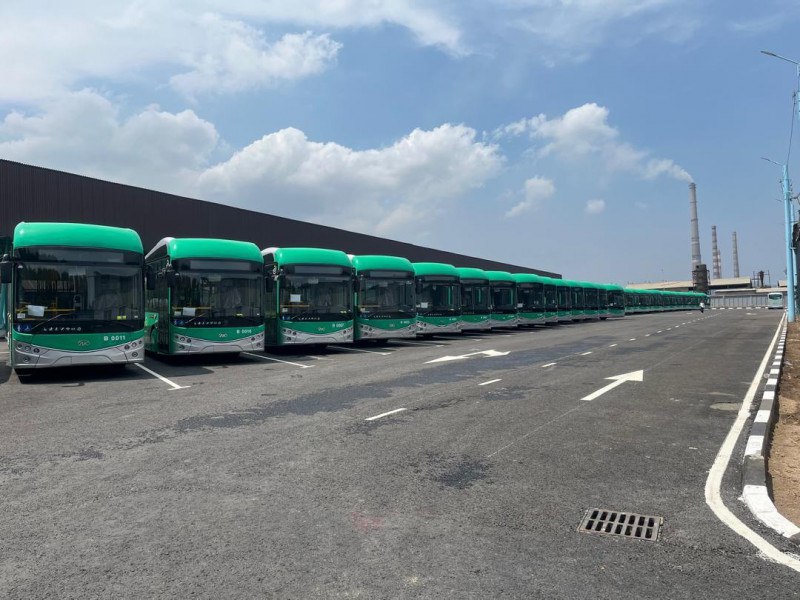
Bishkek has pursued a consistent strategy of replacing traditional public transport with electric alternatives. Initially, the city phased out route taxis, replacing them with buses powered by gas and petrol. More recently, city authorities purchased 120 electric buses manufactured in China, with some units already delivered, through a project in collaboration with the Asian Development Bank. Concurrently, the city has begun phasing out its aging trolleybus fleet, a move that has sparked public debate. The infrastructure previously used for trolleybuses is being repurposed for the electric bus network. However, the process has faced delays, and several tenders for modifying the existing contact network have been cancelled.

Starting in 2025, the popular Ala-Archa Nature Park will ban entry for vehicles with internal combustion engines. Tourists will be transported exclusively by municipal electric buses or allowed to use their own electric vehicles.

Kazakhstan Aims to Revive Investment Appeal Amid Global Headwinds

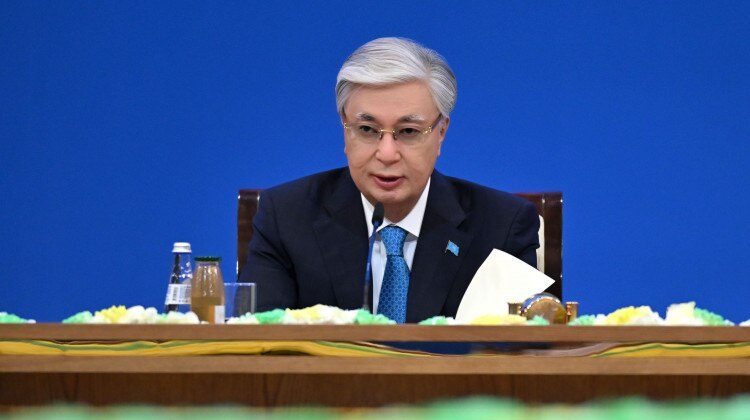
Kazakhstan’s President Kassym-Jomart Tokayev has convened the 37th plenary session of the Foreign Investors Council, reaffirming its strategic role in ensuring the country’s economic sustainability and attracting international capital. Operating for over two decades, the council continues to serve as a vital platform for dialogue between the state and global business leaders.

Despite global headwinds, sluggish GDP growth, inflation, and disrupted supply chains, Kazakhstan has shown economic resilience. According to Tokayev, the country’s GDP grew by 6% in the first five months of 2025, driven by gains in transport, logistics, construction, trade, mining, and manufacturing.

New Tools to Support Investors

Tokayev announced the creation of an Investment Task Force, which has resolved issues surrounding 137 projects totaling $70 billion. To safeguard investors from undue inspections and state pressure, a “prosecutor’s filter” has been introduced.

Kazakhstan has also launched a National Digital Investment Platform, providing integrated government services through a single portal. A revised Tax Code, now under Senate review, proposes incentives for exporters and producers of high-value goods.

Image: akorda

Sectoral Focus: Mining, Manufacturing, and Logistics

Mining remains a key economic pillar, with major international players such as Rio Tinto, Fortescue, Ivanhoe Mines, First Quantum, and Teck Resources establishing operations in the country. The proposed tax reforms aim to stimulate the domestic processing of raw materials.

In industrial production, firms like Alstom, Stadler, and Wabtec are investing in rolling stock, manufacturing, and maintenance. Wabtec, meanwhile, is planning a $200 million investment in alternative fuel technologies.

Kazakhstan also ranks among the world’s top grain exporters and holds the sixth-largest area of agricultural land. Multinationals, including PepsiCo, Fufeng Group, and Dalian Hesheng, are investing in the agro-industrial sector, enhancing both value-added production and technology adoption.

The nation has initiated large-scale infrastructure projects: by 2029, it aims to reconstruct 11,000 km of railways and build 5,000 km of new highways. Key segments include Dostyk-Moyinty, Bakhta-Ayagoz, and Altynkol-Zhetigen. In 2025 alone, more than 13,000 km of roadworks are also scheduled. Terminal expansions at Almaty, Kyzylorda, and Shymkent airports have also been completed, increasing their combined capacity sixfold.

Digital Future and Artificial Intelligence

Kazakhstan now ranks among the top 30 countries in digitalization, according to the United Nations. Over 4,000 entities, including cryptocurrency exchanges, are registered with the Astana-based MCCE. Tokayev announced the launch of a CryptoCity pilot zone, enabling real-world digital currency transactions.

With over 89% of transactions now cashless, Kazakhstan is positioning artificial intelligence as a cornerstone of its digital sovereignty and future competitiveness.

Image: akorda

Foreign Investment Challenges

The forum featured remarks from key international stakeholders, including EBRD President Odile Renaud-Basso, ADB Vice President Bhargav Dasgupta, and representatives from VEON, CNPC, and Alstom, as well as Kazakhstan’s Minister of Industry, Yersay Nagaspayev, and the Head of the Association of Foreign Investors, Erlan Dosymbekov.

However, Tokayev’s pro-investment declarations come amid sobering data. For the first time in three decades, Kazakhstan lost its lead in Central Asia for foreign direct investment (FDI). According to the United Nations Conference on Trade and Development (UNCTAD), net FDI inflows were negative in 2024, at $2.55 billion, a decline of $6.3 billion year-on-year and the first such drop since 1992.

Uzbekistan emerged as the new regional leader with $2.8 billion in FDI, followed by Turkmenistan ($1.6 billion), Kyrgyzstan ($705 million), and Tajikistan ($291 million).

Globally, FDI declined by 11% to $1.5 trillion in 2024, marking a second consecutive year of contraction due to geopolitical tensions, high borrowing costs, and tightening monetary policy.

Against this backdrop, Tokayev’s calls for reforming Kazakhstan’s investment landscape carry added urgency. Analysts stress that rhetoric must be matched by action: reinforcing property rights, strengthening the rule of law, and upholding transparent, stable investment rights will be essential for regaining investor confidence.