• KGS/USD = 0.01144 0%
  • KZT/USD = 0.00194 -0%
  • TJS/USD = 0.10883 0%
  • UZS/USD = 0.00008 0%
  • TMT/USD = 0.28571 0%
  • KGS/USD = 0.01144 0%
  • KZT/USD = 0.00194 -0%
  • TJS/USD = 0.10883 0%
  • UZS/USD = 0.00008 0%
  • TMT/USD = 0.28571 0%
  • KGS/USD = 0.01144 0%
  • KZT/USD = 0.00194 -0%
  • TJS/USD = 0.10883 0%
  • UZS/USD = 0.00008 0%
  • TMT/USD = 0.28571 0%
  • KGS/USD = 0.01144 0%
  • KZT/USD = 0.00194 -0%
  • TJS/USD = 0.10883 0%
  • UZS/USD = 0.00008 0%
  • TMT/USD = 0.28571 0%
  • KGS/USD = 0.01144 0%
  • KZT/USD = 0.00194 -0%
  • TJS/USD = 0.10883 0%
  • UZS/USD = 0.00008 0%
  • TMT/USD = 0.28571 0%
  • KGS/USD = 0.01144 0%
  • KZT/USD = 0.00194 -0%
  • TJS/USD = 0.10883 0%
  • UZS/USD = 0.00008 0%
  • TMT/USD = 0.28571 0%
  • KGS/USD = 0.01144 0%
  • KZT/USD = 0.00194 -0%
  • TJS/USD = 0.10883 0%
  • UZS/USD = 0.00008 0%
  • TMT/USD = 0.28571 0%
  • KGS/USD = 0.01144 0%
  • KZT/USD = 0.00194 -0%
  • TJS/USD = 0.10883 0%
  • UZS/USD = 0.00008 0%
  • TMT/USD = 0.28571 0%
16 December 2025

ADB Considers $500 Million Support for Tajikistan’s Rogun Hydropower Plant

The Asian Development Bank (ADB) will continue supporting Tajikistan’s Rogun Hydropower Plant (HPP) project in 2025, the bank’s new country manager, Ko Sakamoto, announced on February 25.

Speaking to reporters, Sakamoto emphasized that Rogun HPP is a top priority for the Tajik government, highlighting its significance for Tajikistan’s energy independence, regional stability and climate change mitigation.

The ADB has been invited to join a consortium of financial institutions financing the project. Tajikistan has requested $500 million in assistance, and the bank is currently reviewing the proposal.

“ADB will continue to support the project and share updates as negotiations progress,” Sakamoto said.

In 2024, ADB provided $220 million in assistance to Tajikistan, funding six projects across agriculture, energy, health, public administration and transport. ADB plans to approve four new projects in 2025, including an initiative on digital agriculture aimed at boosting food security.

The bank is developing a five-year strategy that will align with Tajikistan’s long-term development goals. It will support glacier protection efforts, as Tajikistan leads regional climate initiatives. An international glacier conservation conference is scheduled for May in Dushanbe.

As Tajikistan works toward greater energy security, Rogun remains central to its economic and environmental strategy. ADB’s continued involvement signals strong international backing for the project, which has the potential to transform Tajikistan into a key regional energy exporter. If approved, the $500 million in funding would mark a significant step toward completing one of Central Asia’s most ambitious hydropower projects.


Uzbekistan to Help Kyrgyzstan Export Nuts and Dried Fruits to Global Markets

Kyrgyzstan has secured a trade agreement with a leading Uzbek exporter of dried fruits, paving the way for systematic food exports to Europe and the Persian Gulf.

Ecofruit, a major Uzbek producer and exporter of dried fruits, has expressed strong interest in Kyrgyz nuts and dried fruits, citing their high quality and ecological purity.

“Among the products that can enter international markets are apricots, dried uruk, prunes, walnuts, pistachios, barberries, and white and red beans. Of particular interest were walnuts and prunes, which enjoy stable demand in foreign markets,” the Kyrgyz Ministry of Economy said.

The Uzbek company also announced plans to open a representative office in Kyrgyzstan, signaling long-term cooperation.

Kyrgyzstan is expanding its dried fruit exports, with apples accounting for the largest share of the country’s fruit and berry production.

In 2023, Kyrgyzstan exported nearly 1,000 tons of dried apples to Germany. Other key importers include Russia, Turkey, Kazakhstan, and Japan. Sample shipments are now reaching the countries of the Persian Gulf, and South Korea.

Once used primarily as an ingredient, dried apples are now marketed as snacks.

Kyrgyzstan is also known for its high-quality beans, particularly from the Talas region, which is a major production and export hub. Kyrgyz beans are exported to Turkey, Russia, India, Iran, and several European countries. In 2024, exports expanded to China, with 16 Kyrgyz companies registered as official bean suppliers.

Walnuts have an even wider global market and are grown primarily in the southern regions of Kyrgyzstan, particularly in the renowned Arslanbob walnut forests, which span 42,500 hectares.

At the end of 2023, the Kyrgyz Ministry of Economy signed agreements to export walnuts to China and Turkey. While Russia remains the primary buyer, Kyrgyz walnuts are also exported to the Middle East.

With Uzbekistan’s Ecofruit expanding its presence in Kyrgyzstan, the country’s nuts and dried fruits sector is poised for stronger global market integration. The partnership could increase export volumes and create new trade routes, benefiting Kyrgyz farmers and agribusinesses.

Seven Uzbeks Deported from the U.S. Arrive in Tashkent

Uzbekistan has been in contact with Latin American governments and U.S. authorities regarding the deportation of its citizens from the United States, Foreign Ministry spokesperson Ahror Burhonov confirmed.

Uzbek Citizens Returned from the U.S.

Seven Uzbek nationals, who were initially set to be deported to Costa Rica, have been repatriated to Uzbekistan following negotiations with U.S. officials.

“As a result of talks with the U.S., seven of our citizens, who were scheduled to be sent to Costa Rica but wished to return home, arrived in Uzbekistan on February 24 on a New York-Tashkent flight,” Burhonov announced on his Telegram channel.

U.S. Deportation of Migrants

The Times of Central Asia previously reported that 200 migrants from Central Asia and India were among those slated for deportation to Costa Rica as part of U.S. immigration enforcement measures.

Additionally, a U.S. Air Force flight recently transported deportees from multiple countries, including Afghanistan, China, India, Iran, Nepal, Pakistan, Sri Lanka, Turkey, Uzbekistan, and Vietnam, to Panama.

Two more deportation flights are expected, bringing the total number of deportees to 360.

Tajik Scientist Kholikzoda Wins Gold Medal at International Inventors Forum

Tajik scientist Omina Kholikzoda has won a gold medal at the 15th International Invention Fair of the Middle East, held in Kuwait.

Kholikzoda, a researcher at the Ibn Sina Tajik State Medical University’s Institute of Fundamental Medicine, was awarded for her discovery, a preparation called Tagetol, derived from the essential oil of small-flowered tagetes, a plant native to Tajikistan.

Tagetol has strong hepatoprotective, choleretic, antioxidant, detoxifying, and anti-inflammatory properties.

The International Invention Fair of the Middle East, established in 1974, is considered one of the world’s largest platforms for showcasing scientific achievements. This year’s event featured participants from 66 countries, highlighting cutting-edge research and technological advancements.

Five scientists from Tajikistan took part in the forum, but it was Kholikzoda’s work that stood out, receiving top recognition from the jury.

Kholikzoda’s success at the international level underscores Tajikistan’s growing presence in scientific research and innovation.

Kazakhstan Proposes “Idioten Test” for Repeat Traffic Offenders

Kazakhstan may introduce a special psychophysiological test for repeat traffic offenders, inspired by a practice used in Germany. Senate Deputy Marat Kozhayev has proposed that motorists who repeatedly commit the same traffic violations be subjected to such a test, which could result in the revocation of their driver’s licenses.

German “Idioten Test” as a Model for Kazakhstan

Speaking at a roundtable on road safety, Kozhayev, who has an extensive background in law enforcement, suggested adopting stricter policies for repeat offenders.

“In Germany, there is a so-called ‘Idioten Test,’ which drivers must undergo after committing three identical traffic offenses. This test is a serious challenge,” Kozhayev said. He believes a similar system in Kazakhstan could deter habitual violators.

Proposal to End Fine Discounts for Frequent Offenders

Kozhayev also advocated for the abolition of the 50% discount on traffic fines for drivers with more than ten recorded violations.

Currently, Kazakhstan allows fines to be paid at a 50% discount if settled within a week of issuance. However, Kozhayev pointed out that some drivers accumulate up to 300 violations per year. He cited official statistics from 2024, revealing that:

  • 162,000 drivers committed between 10 and 100 violations.
  • 500 drivers committed between 100 and 300 violations.

“These serial violators should not benefit from fine reductions,” Kozhayev emphasized. “If a driver wants to stand out on the road, let them bear full responsibility for their actions. Why should we continue forgiving violations and offering discounts?”

He believes that drivers with such an extensive history of infractions should have their licenses revoked altogether.

Debate Over Drunk Driving Penalties

Kozhayev also opposes any reduction in penalties for drunk driving, engaging in an indirect debate with Mazhilis Deputy Nikolai Arsyutin.

Arsyutin had recently argued that Kazakhstan’s seven-year license revocation policy for drunk driving was too harsh, particularly in cases where no accident occurred, and the alcohol level was minimal.

He also warned that harsh penalties create opportunities for police abuse, citing numerous citizen complaints about the objectivity of intoxication tests.

“There are concerns about the accuracy of alcohol and drug tests,” Arsyutin said, calling for standardized testing procedures.

More Than 200,000 Licenses Revoked Since 2022

According to the Ministry of Internal Affairs, over 200,000 drivers in Kazakhstan have had their licenses revoked since the stricter Code of Administrative Offenses was introduced in 2022. Arsyutin argues that most countries take a more flexible approach, adjusting penalties based on the degree of intoxication and the circumstances surrounding the offense.

This, he claims, would help reduce both the social backlash and corruption risks. Arsyutin has called on the Ministry of Internal Affairs to conduct a thorough review and propose unified rules for determining intoxication levels.

As The Times of Central Asia previously reported, Kazakhstan continues to see a steady rise in vehicle ownership, with the country setting a record for new car sales in 2024.

Caspian Sea Shrinking Faster Than Expected, Risking Aral Sea-Like Disaster

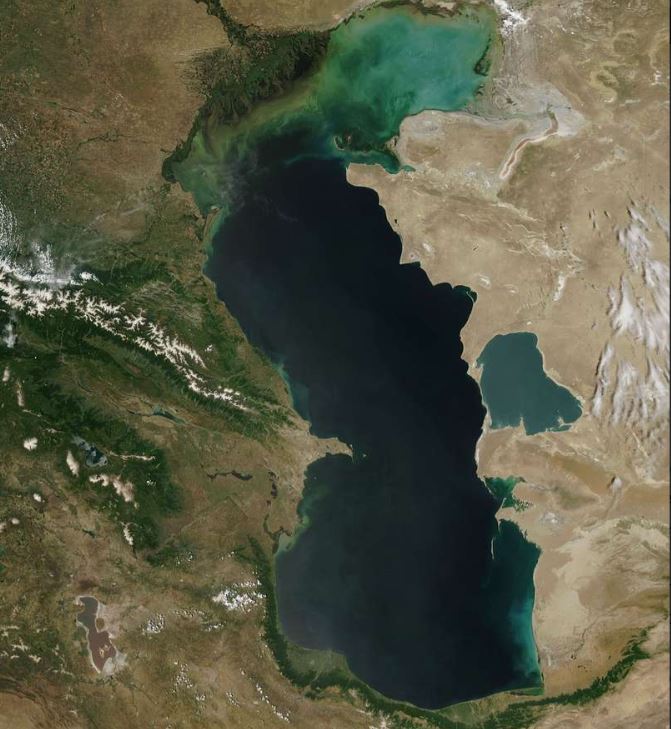
The Caspian Sea is shoaling at an alarming rate, raising concerns among environmentalists in the countries that border it. According to the global movement Save The Caspian Sea, the sea level has dropped by two meters over the past 18 years. If this trend continues, the water level could fall by another 18 meters by 2100, triggering an ecological catastrophe much sooner than anticipated.

Kazakh Coastlines Recede by 50 Kilometers

The most dramatic retreat of the Caspian shoreline has been recorded along the Kazakh coast, where the sea has receded by 50 kilometers.

Environmental activist Vadim Ni, founder of Save The Caspian Sea, reports that from 2005 to 2023, the sea’s surface area has shrunk by more than 30,000 square kilometers. This drastic change is devastating local ecosystems, particularly the Caspian seal population, which has declined from one million to just 70,000. Each year, thousands of dead seals are found along Kazakhstan’s coastline.

Shipping and Oil Production at Risk

Falling water levels are also disrupting shipping and trade in the Caspian Sea. Cargo ships can no longer enter the port of Aktau, a critical hub in the Trans-Caspian transport corridor that connects Kazakhstan with Azerbaijan.

The Kazakh government has developed a dredging project to keep Aktau operational, with plans approved in December 2024. The project is expected to cost 42 billion tenge ($84 million).

Additionally, the shoaling of the Caspian Sea is limiting the loading capacity of transport ships to just 75% of their maximum displacement. This also hinders access to the Kashagan oil field, one of Kazakhstan’s largest energy projects.

The Caspian Sea as seen from space; image: NASA

Ecologists Warn of Aral Sea-Like Collapse

Russian ecologist Alexander Veselov has warned that the Caspian Sea could face the same fate as the Aral Sea, which virtually disappeared due to overuse and mismanagement.

“The Caspian Sea may split into several parts, water quality will deteriorate, leading to mass deaths of swans, sturgeons, and seals. However, state authorities are failing to respond adequately to the crisis,” Veselov said.

Impact on Climate and Regional Weather

The Caspian Sea plays a crucial role in regulating the climate across Central Asia and beyond.

Pyotr Zavyalov, deputy director of the Shirshov Institute of Oceanology at the Russian Academy of Sciences, warns that a continued drop in sea level could alter precipitation patterns as far as the Pacific region.

The current average sea level of the Caspian stands at minus 29.5 meters relative to the World Ocean, the lowest point in 400 years.

However, precise long-term predictions remain difficult due to the complex interactions of evaporation, river runoff, and precipitation.

Volga River and Algae Threaten Caspian’s Future

The Volga River, which supplies 90% of the Caspian’s water, has seen its flow dramatically reduced due to the construction of numerous dams in recent years.

Meanwhile, scientists have recorded the spread of the dinophyte algae Ceratium tripos var. balticum in the Middle Caspian Sea. This invasive species can trigger harmful algal blooms, reducing oxygen levels and further endangering marine life.

With sea levels plummeting, ecosystems collapsing, and key industries under threat, experts are urging urgent international action to prevent the Caspian Sea from becoming the next Aral Sea. Whether governments in the region will act swiftly and decisively remains to be seen.