• KGS/USD = 0.01144 0%
  • KZT/USD = 0.00211 0%
  • TJS/USD = 0.10460 0.19%
  • UZS/USD = 0.00008 0%
  • TMT/USD = 0.28490 0%
  • KGS/USD = 0.01144 0%
  • KZT/USD = 0.00211 0%
  • TJS/USD = 0.10460 0.19%
  • UZS/USD = 0.00008 0%
  • TMT/USD = 0.28490 0%
  • KGS/USD = 0.01144 0%
  • KZT/USD = 0.00211 0%
  • TJS/USD = 0.10460 0.19%
  • UZS/USD = 0.00008 0%
  • TMT/USD = 0.28490 0%
  • KGS/USD = 0.01144 0%
  • KZT/USD = 0.00211 0%
  • TJS/USD = 0.10460 0.19%
  • UZS/USD = 0.00008 0%
  • TMT/USD = 0.28490 0%
  • KGS/USD = 0.01144 0%
  • KZT/USD = 0.00211 0%
  • TJS/USD = 0.10460 0.19%
  • UZS/USD = 0.00008 0%
  • TMT/USD = 0.28490 0%
  • KGS/USD = 0.01144 0%
  • KZT/USD = 0.00211 0%
  • TJS/USD = 0.10460 0.19%
  • UZS/USD = 0.00008 0%
  • TMT/USD = 0.28490 0%
  • KGS/USD = 0.01144 0%
  • KZT/USD = 0.00211 0%
  • TJS/USD = 0.10460 0.19%
  • UZS/USD = 0.00008 0%
  • TMT/USD = 0.28490 0%
  • KGS/USD = 0.01144 0%
  • KZT/USD = 0.00211 0%
  • TJS/USD = 0.10460 0.19%
  • UZS/USD = 0.00008 0%
  • TMT/USD = 0.28490 0%

Dushanbe Proposed as Regional Glaciology Hub Amid Accelerating Glacier Melt

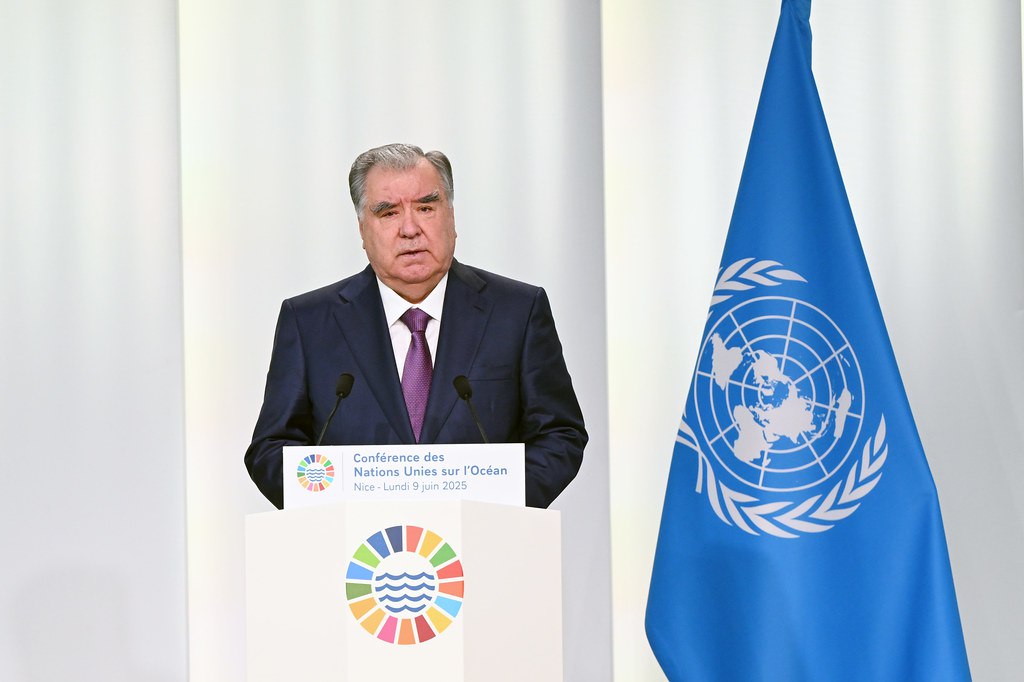
Tajikistan’s President Emomali Rahmon, speaking in France on June 8 at the launch of the International Decade of Cryosphere Sciences (2025-2034), has proposed establishing a Regional Coordination Center for Glaciology in Dushanbe. The event was held as part of the Third UN Ocean Conference in Nice, which convened heads of state and government from 65 countries, UN Secretary-General António Guterres, and leaders of international organizations.

Glaciology Center in the Heart of the Pamir Mountains

Addressing the international community, Rahmon underscored Tajikistan’s commitment to creating a glaciology center. “Given the importance of glaciers and in order to study the impact of climate change on them more accurately, we have decided, with the assistance of international partners, to establish a Regional Coordination Center for Glaciology in Dushanbe,” he stated.

He highlighted that Tajikistan is home to up to 60% of all glaciers in Central Asia, playing a pivotal role in the region’s sustainable development. However, their rapid shrinkage poses a threat not only locally but globally. Rahmon warned that if current melting trends persist, up to a billion people could face negative consequences by 2050, particularly in coastal areas and on islands.

Tajikistan: Initiator of the Climate Agenda

Rahmon emphasised that Tajikistan had been a proactive advocate for water and climate issues on the global stage for two decades. He emphasized the broad international support for the joint initiative by Tajikistan and France to designate 2025-2034 as the “Decade of Action for Cryosphere Sciences.”

“Our initiatives in the field of water and climate issues have received the support of the international community and are being implemented through 14 resolutions of the UN General Assembly,” Rahmon noted. He concluded by urging the international community to expand cooperation for cryosphere preservation and the development of scientific potential in this critical area.

From Declarations to Coalitions

Rahmon’s speech followed the first International High-Level Conference on Glacier Protection held in late May. This forum attracted over 2,500 delegates from 80 countries, including scientists, heads of delegations, international organizations, and donor agencies.

The conference’s primary outcome was the signing of the Dushanbe Declaration, a document advocating for urgent action to protect glaciers and synchronize international efforts. Participants called for significant reductions in greenhouse gas emissions, a transition to sustainable production models, and the implementation of robust climate monitoring systems.

An international coalition was also announced, poised to unite states, scientific institutions, environmental movements, and international organizations. Its mandate will include monitoring the declaration’s implementation, facilitating the exchange of best practices, attracting investment, and developing climate change adaptation technologies.


Central Asian Nations Boost Joint Fight Against Locusts

Kazakhstan, Uzbekistan, and Kyrgyzstan have committed to strengthening their cooperative efforts in combating locust infestations. The agreement emerged during the 55th meeting of the European and Mediterranean Plant Protection Organization (EPPO) working group, where officials from the three nations convened to enhance collaboration, adhere to international plant health standards, and expedite information exchange.

According to Kazinform, Saken Kanybekov, acting head of Kazakhstan’s State Inspection Committee, engaged in discussions with his counterparts from Uzbekistan and Kyrgyzstan, sharing insights and experiences on managing seasonal locust outbreaks.

A key innovation introduced at the meeting was Locust.uz, an online platform developed by Uzbekistan. This system maps locust egg-laying sites and pesticide spraying operations, utilizing GPS tracking to monitor equipment movement. This functionality enables experts to rapidly assess situations and respond swiftly, aiming to prevent the widespread dissemination of locusts.

The three countries pledged increased focus on border areas, which are common pathways for pest migration. They plan to regularly exchange updates on locust conditions, research findings, and ongoing control measures. A further objective is to integrate their digital systems to facilitate more effective data sharing, including plant health certificates.

The Times of Central Asia previously reported on Kazakhstan’s broader efforts to bolster cooperation with neighboring countries, including Kyrgyzstan, Uzbekistan, Russia, and China, to curb locust outbreaks. Joint inspections along the Kazakh-Uzbek border have, to date, found no signs of infestation. Kazakhstan is also closely monitoring its northern border with Russia and has scheduled additional inspections in other regions for June.

As of June 2, Kazakhstan had surveyed over 6.1 million hectares of farmland, representing 35.6% of its target, and treated nearly 1 million hectares with pesticides. The country has deployed a significant arsenal of 443 spraying units, including 55 ultralight aircraft and 49 agricultural drones, to manage the pest.

Locust-damaged land in Kazakhstan has seen a notable increase, rising from 514,000 hectares in 2020 to 1.6 million hectares in 2023, with projections indicating a further rise in 2024. The UN Food and Agriculture Organization (FAO) warns that over 25 million hectares of farmland and 20 million people across Central Asia and the South Caucasus are at risk from locust threats.

Majority of Kazakhstanis Are Religious, But Discrimination Persists, Studies Suggest

A recent study by analysts at Energyprom.kz sheds light on the religious landscape of Kazakhstan. According to data from the educational platform Jagran Josh, Kazakhstan’s population includes approximately 15.4 million believers. 

The majority, 11.3 million, identify as Muslim, while about 4 million identify as Christian. A smaller segment, approximately 670,000 individuals, comprise atheists, agnostics, and those with no religious affiliation. Additionally, there are around 5,000 Hindus, 40,000 Buddhists, and about 50,000 practitioners of traditional local beliefs.

It is important to note that these figures are compiled from various sources, some dating back to 2015 or earlier. Consequently, they are more suitable for broad international comparisons rather than a precise assessment of Kazakhstan’s current religious demographics.

Regional Characteristics of Religiosity

More recent data, based on a 2024 survey of 1,500 respondents (aged 18 to 65) conducted by the Committee on Religious Affairs of the Republic of Kazakhstan, provides deeper insights into domestic religiosity. The survey revealed that 24.1% of Kazakhstani citizens consider themselves practicing believers who strictly observe religious precepts. The majority, 62.7%, identify as believers but observe only some rituals and traditions.

About 9.2% of respondents stated they do not consider themselves believers yet still participate in certain rituals. A smaller proportion, 1.3%, reported no religious affiliation and no participation in rituals, while 0.9% identified as convinced atheists and 0.5% as agnostics.

Regionally, Shymkent recorded the largest share of conditionally religious people who observe only certain traditions, at 77.6%. The Atyrau region exhibited the highest proportion of strict practitioners, at 46%. Conversely, the Pavlodar region led in the number of non-believers who nevertheless participate in rituals, at 24.6%. Atyrau also had the highest proportion of complete non-believers, at 10%.

In terms of religious affiliation, 65.1% of respondents identified as followers of the Hanafi school of Islam, with another 11.6% belonging to other branches of Islam. Orthodox Christianity was practiced by 14.8% of respondents, Catholicism by 2.1%, and Protestantism by 1.8%. Hinduism, Buddhism, paganism, and Tengriism collectively accounted for less than 2%. An additional 0.8% reported believing but not identifying with any particular religion.

The proportion of daily prayers increased from 17.7% to 19.3% over the last quarter. However, 27.9% of respondents reported never praying. Regarding attendance at places of worship (mosques, churches, etc.), 6.2% visit regularly, 14.5% do so weekly, and 33.8% two to three times a year. Notably, 10.4% of respondents have never been to a place of worship.

Daily religious discussions with relatives were reported by 4.3% of Kazakhstani citizens, while 27.3% admitted that they never discuss religion within their families.

Religious Discrimination

Over the past three months, 41.3% of respondents reported experiencing discrimination on religious grounds. The most frequently cited incidents included the publication of offensive images (19.3%), negative comments on social media (11.5%), bans on visiting mosques or churches by the clergy (7.8%), and restrictions on education due to wearing a hijab (10.8%).

Although official statistics on incidents directly classified as religiously motivated are not maintained, 54 criminal offenses were recorded between January and April 2025 under the article “Inciting social, national, ethnic, racial, class, or religious discord.” This figure represents a 35% increase compared to the same period last year.

Bulgarian Ports Eye Middle Corridor Expansion

Kazakhstan and Bulgaria are exploring the integration of Bulgaria’s Black Sea ports of Burgas and Varna into the Trans-Caspian International Transport Corridor (TITC), a move that could significantly expand the reach of this crucial East-West trade route.

The Trans-Caspian International Transport Route (TITR), also known as the “Middle Corridor,” has been operational since 2017, connecting China, Kazakhstan, the Caspian Sea, Azerbaijan, Georgia, and ultimately, European countries. This multimodal corridor facilitates containerized cargo transport by rail and sea, primarily utilizing the Caspian Sea for maritime crossings.

Spanning 11,000 kilometers, the route saw a substantial increase in cargo volume last year, reaching 4.5 million tons compared to 2.76 million tons the previous year.

Astana anticipates further growth, projecting an annual freight traffic volume of 10 million tons on the TITR by 2028. This expansion is part of a broader strategy to broaden the Middle Corridor’s geographical scope.

The potential inclusion of Bulgarian ports was a key topic during Bulgarian President Rumen Radev’s official visit to Kazakhstan.

“Today, the Trans-Caspian International Transport Route has become one of the main international highways. We have agreed to consider the inclusion of the Bulgarian ports of Burgas and Varna in this corridor,” stated Kazakh President Kassym-Jomart Tokayev, following talks with Radev. 

The discussions culminated in a ceremony where heads of state exchanged signed bilateral documents, including a memorandum of understanding between the Ministry of Transport of Kazakhstan and the Ministry of Transport and Communications of Bulgaria, focusing on the development of the TITR.

Radev expressed optimism about the deepened cooperation. “I am confident that the talks will give new impetus to our cooperation. The signed memorandum on the further development of the Trans-Caspian Corridor is a reflection of our aspirations. It is necessary to make the most of the strategic geographical position of Kazakhstan and Bulgaria on this route, which connects Asia with Europe,” he said.

Later, at the Kazakhstan-Bulgaria Business Forum, Tokayev reiterated the target of 10 million tons per year for the TITR’s capacity, aiming for this to be achieved by 2028. 

Previously The Times of Central Asia reported how, during the Astana International Forum, Kazakhstan’s Deputy Foreign Minister Alibek Kuantyrov highlighted Kazakhstan’s perception of the Trans-Caspian International Transport Route as a cornerstone of sustainable logistics across Eurasia. 

Investors Push Back Against New Renewable Energy Bill in Kyrgyzstan

A new draft law proposed by Kyrgyzstan’s Ministry of Energy has sparked concern among renewable energy investors. The legislation, currently under public review until June 20, 2025, imposes new financial and technical obligations on owners of small hydropower plants as well as solar and wind power installations. Following the review period, the bill will be submitted to the president for approval.

Key Provisions and Investor Backlash

Under the proposed law, operators of small hydroelectric and other renewable energy facilities would be required to pay 1% of their electricity sales revenue to local authorities. Additionally, they must maintain the ability to accumulate at least 30% of the station’s installed capacity.

The draft also stipulates that electricity generated from renewable energy sources (RES), which is neither consumed by the producer nor sold under contract, will be priced at the average tariff of the previous year.

Lawmakers claim the bill ensures transmission support for RES providers, mandating that distribution companies and relevant organizations enable the smooth delivery of electricity from private generators to consumers, provided the infrastructure allows.

However, industry representatives argue that the legislation could stall growth in the sector. A letter from a consortium of small hydropower companies in the Chui and Issyk-Kul regions warns that the proposed changes create unnecessary obstacles and risk deterring both domestic and foreign investment.

“No domestic, let alone foreign, investor will be interested in implementing renewable energy projects if the payback period at a tariff of 1.71 KGS ($0.020) per kWh is extended to 20-25 years,” said Rakhatbek Irsaliyev, director of the consortium. “This is especially true given that such projects are not implemented for personal use or resale, but to cover the country’s growing electricity deficit.”

The consortium is urging the government to revisit its tariff policy. Specifically, they are calling for a system that allows energy producers to sell at updated, higher rates, rather than last year’s average. In Kyrgyzstan, electricity tariffs are typically adjusted annually on May 1.

Broader Energy Context

Kyrgyzstan has long touted its substantial energy potential, particularly in hydropower. With abundant rivers and glaciers, it ranks third in hydropower resources among CIS countries, following Russia and Tajikistan. Yet, less than 10% of this potential is currently being utilized.

Government efforts to address the energy shortfall include the commissioning of 18 small hydropower plants in 2025 and the expansion of wind and solar infrastructure nationwide. A major project, Kambarata HPP-1 on the Naryn River, is also in development, involving cooperation with neighboring countries. Meanwhile, the CASA-1000 initiative is nearing completion. This project aims to export summer surplus electricity from Kyrgyzstan and Tajikistan to Pakistan via Afghanistan.

Despite this progress, international organizations like the World Bank have urged Kyrgyzstan to raise electricity tariffs for both residential and commercial users. Since 2024, the government has begun implementing gradual tariff hikes, but experts argue that the pace is insufficient.

“The tariffs set for industrial and commercial consumers allow costs to be recouped. These categories pay a fair price,” said Katarina Gassner, a World Bank expert on Kyrgyzstan. “But tariffs for domestic consumers are leading to a deficit in the sector. As a result, the electricity sector covers only 20% of its own costs. Every kilowatt of energy produced does not cover its own cost.”

As the public consultation process continues, stakeholders in the renewable energy sector are urging lawmakers to revise the bill to ensure a more viable and attractive investment climate.

Ukrainian Children Arrive in Uzbekistan for Rest and Recovery

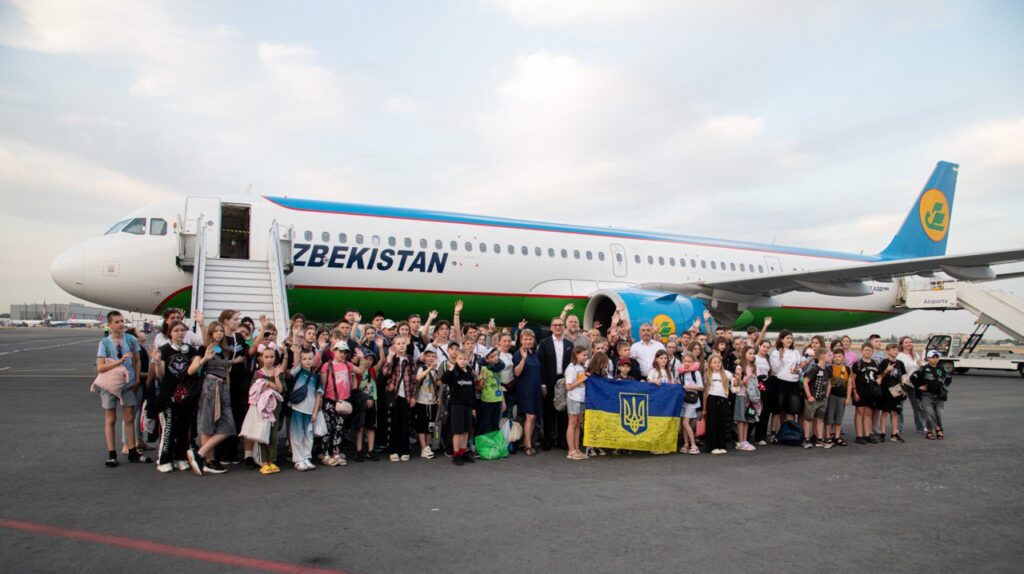
Just ahead of Eid al-Adha, a group of Ukrainian children have arrived in Tashkent for a 12-day program of rest and psychological rehabilitation. The Ukrainian Embassy in Uzbekistan reported that the visit was fully organized and funded by the Uzbek government.

The children, who come from war-affected regions including Kharkiv, Kherson, Mykolaiv, Zaporizhzhia, Sumy, Khmelnytskyi, Lviv, and Kyiv, received a warm welcome upon arrival at Tashkent International Airport. From there, they traveled to a mountain camp nestled in a valley near the Tien Shan range.

According to the embassy, the initiative was launched at the request of the Ukrainian side and is intended to help the children recover emotionally from the ongoing trauma of air raid sirens and missile strikes.

The camp offers a structured program of daily themed events, such as “National Values Day” and “Sports and Health Day,” along with creative competitions and excursions. Evenings are reserved for social gatherings. Ukrainian adults are present to supervise the children throughout their stay.

Nearly all major ministries and government agencies in Uzbekistan are participating in the effort, demonstrating strong coordination and compassion. The Ukrainian Embassy emphasized that the initiative reflects Uzbekistan’s genuine interest in supporting Ukrainian children during this difficult period.

The program aims not only to provide physical and emotional relief, but also to express solidarity and goodwill from the Uzbek people.

Uzbekistan previously provided similar humanitarian assistance to Palestinian civilians, evacuating 100 injured women and children, along with their guardians, from Rafah for medical treatment and care.

Uzbekistan’s response to Russia’s war in Ukraine has been cautious yet distinct, reflecting its careful balancing act in international diplomacy. Tashkent has refrained from openly condemning Moscow, a key economic and regional partner, but has also demonstrated a firm commitment to Ukraine’s sovereignty and territorial integrity within the framework of its foreign policy principles. Uzbekistan has supported UN General Assembly resolutions calling for an end to the conflict, signaling alignment with global norms, while urging a peaceful resolution through dialogue. Officials have consistently avoided taking sides but have voiced concerns about the war’s human cost and economic repercussions.

Beyond formal diplomatic statements, Uzbekistan’s humanitarian actions have highlighted its concern for those impacted by the war. The government’s decision to host Ukrainian children for rehabilitation reflects its broader efforts to provide tangible support to civilians in crisis zones.