The Iran War Is Repricing Central Asia’s Connectivity

Europe’s aviation regulator has extended its current conflict-zone bulletin for the Middle East and Persian Gulf through April 10 and continues to advise operators to avoid Iranian and adjacent airspace at all altitudes. Reuters reported soon after that the squeeze on normal flight paths was pushing more traffic into narrower routes, notably over Azerbaijan and Central Asia. The Strait of Hormuz, meanwhile, has not returned to normal commercial use. A limited number of exempted vessels have crossed, but passage remains selective, politicized, and uncertain rather than routine.
The question, consequently, is no longer only whether Central Asia has alternatives to single-route dependence but whether those alternatives remain commercially usable, taking into account the increased risk, delay, insurance, fuel burn, and congestion. What has changed is the cost of maintaining reliable connectivity.
The Cost of Reliability
The Iran conflict imposes higher operating costs on the wider Eurasian air corridor that is now taking displaced traffic. EUROCONTROL estimates that about 1,150 flights a day continue to be affected by re-routing linked to the Middle East crisis. These add roughly 206,000 kilometers of flying and 602 tons of extra fuel burn per day.
Maritime trends are similar. In March, war-risk premiums in or near the Gulf had risen more than tenfold in some cases, with hull war premiums moving from about 0.25% of vessel value to as much as 3%. Air-freight rates on some routes rose by as much as 70% as shippers redirected urgent cargo away from disrupted sea lanes and restricted airspace. Higher surcharges and narrower margins for operational error can make routes lose commercial value even if they remain formally open.
The wider macroeconomic setting has also made resilience more expensive. Higher oil prices make every detour costlier, raising freight charges, power costs, and production costs across the region’s trading partners. Even where Central Asian cargo does not move through Iranian waters, the same pattern is still present. Asian policymakers were already confronting a combined oil-price and currency shock at a moment when roughly 80% of the oil shipped through Hormuz normally goes to Asia.
The World Bank’s March food and nutrition security update notes that around 20% of global oil supplies and about one-third of global fertilizer trade transit the Strait of Hormuz. Urea prices, for example, surged by nearly 46% month on month between February and March 2026. Importers in Central Asia, as well as in Europe and the South Caucasus, remain under pressure from higher household food costs and tighter producer margins. The price of resilience is now showing up in increased costs for farm inputs, food costs, and household budgets.
How the Burden Falls
Kazakhstan remains the best placed in the region to absorb the shift. The CPC pipeline still carries about 80% of Kazakhstan’s oil exports; oil income contributes 52% of the state budget. Earlier disruptions had constrained Kazakhstan to reroute 300,000 tons of crude, and the country continues to rely on supplementary outlets such as Ust-Luga, the Baku–Tbilisi–Ceyhan pipeline, and China when its main system is stressed. For Kazakhstan, higher oil prices cushion part of the blow, but it still has to pay more to keep redundancy commercially credible.
Turkmenistan’s proximity to Iran increases its notional strategic relevance. It also makes the country immediately more vulnerable to interruption. Prices for key Iranian goods in Ashgabat have jumped sharply as cross-border trade dried up; some Iranian products are now selling for 50% to 70% higher, and some staples have doubled. The World Bank explains that Turkmenistan, as a landlocked country, depends on workable external connectivity in its search for diversification.
Uzbekistan offers the clearest example of the general trend in Central Asia at large. According to a January statement by President Shavkat Mirziyoyev, the competitiveness of national manufacturers had already declined because the cost of transporting Uzbekistan goods to Europe had doubled amidst the geopolitical situation. In March, the World Bank approved a $200 million transport project and said Uzbekistan’s road capacity would need to expand by around 500% by 2030 to accommodate projected freight growth. Routes also have to remain stable and inexpensive enough to preserve export margins and delivery reliability.
Kyrgyzstan and Tajikistan are less able to turn the shock to advantage. The Eurasian Development Bank reported in February that remittance inflows to Kyrgyzstan reached a record $3.5 billion in 2025, equal to 15.4% of GDP and up 16.8% from 2024. World Bank data put Tajikistan’s remittance ratio at 47.9% of GDP in 2024. About 80% of Tajikistan’s fuel imports came from Russia in 2025, and Iran remains a link in the North-South corridor through which Tajikistan reaches Persian Gulf ports. Higher oil prices and regional instability are thus likely to raise shipping costs, lengthen delivery times, and intensify inflationary pressure. In the smaller Central Asian economies, the repricing of connectivity has less to do with corridors and more to do with household budgets, as they affect fuel, food, freight, and purchasing power.
Beyond Route Multiplication
The shock changes the adaptation problem. Corridor multiplication alone no longer suffices. What is required is greater reliability through customs modernization, digitization, lower border friction, and more dependable transit administration. In Tajikistan, for example, a web-based, computerized customs management system developed by UNCTAD to automate, manage, and modernize international trade procedures, called ASYCUDA World, was deployed nationwide on October 1, 2025. It replaces the old customs system by automating, managing, and modernizing international trade procedures with 24/7 electronic submission of cargo manifests and customs declarations. This has already lowered average clearance times for imports and exports well below baseline.
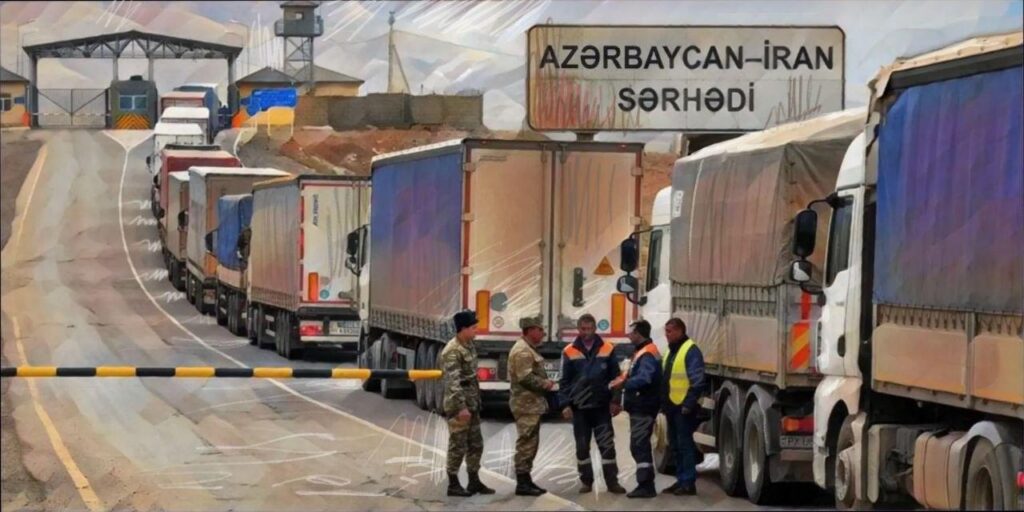
Likewise, the CAREC Advanced Transit System (CATS) and Information Common Exchange (ICE), a digitally harmonized regional initiative supported by the Asian Development Bank to modernize and simplify customs transit, has been implemented. Officials from Azerbaijan, Georgia, Turkmenistan, and Uzbekistan met in Tashkent in April to review conformance testing and agree further transit scenarios for rollout.
The implications of the Iran conflict and Central Asia’s response extend well beyond the region. For the European Union, they bear on whether east-west diversification beyond Russian routes can remain commercially credible. For China, they affect the cost and reliability of westbound overland connectivity. For Turkey, they raise the value of the trans-Caspian and South Caucasus corridor system linking Anatolia more tightly to Central Asia. For the United States they reinforce the strategic case for route pluralization and lower dependence on any single maritime chokepoint. The Iran war has ceased merely to stress-test Central Asia’s southern corridors. It is now raising the price of resilience across regional connectivity systems as a whole.