• KGS/USD = 0.01143 -0%
  • KZT/USD = 0.00192 -0%
  • TJS/USD = 0.10820 0.19%
  • UZS/USD = 0.00008 0%
  • TMT/USD = 0.28575 0%
  • KGS/USD = 0.01143 -0%
  • KZT/USD = 0.00192 -0%
  • TJS/USD = 0.10820 0.19%
  • UZS/USD = 0.00008 0%
  • TMT/USD = 0.28575 0%
  • KGS/USD = 0.01143 -0%
  • KZT/USD = 0.00192 -0%
  • TJS/USD = 0.10820 0.19%
  • UZS/USD = 0.00008 0%
  • TMT/USD = 0.28575 0%
  • KGS/USD = 0.01143 -0%
  • KZT/USD = 0.00192 -0%
  • TJS/USD = 0.10820 0.19%
  • UZS/USD = 0.00008 0%
  • TMT/USD = 0.28575 0%
  • KGS/USD = 0.01143 -0%
  • KZT/USD = 0.00192 -0%
  • TJS/USD = 0.10820 0.19%
  • UZS/USD = 0.00008 0%
  • TMT/USD = 0.28575 0%
  • KGS/USD = 0.01143 -0%
  • KZT/USD = 0.00192 -0%
  • TJS/USD = 0.10820 0.19%
  • UZS/USD = 0.00008 0%
  • TMT/USD = 0.28575 0%
  • KGS/USD = 0.01143 -0%
  • KZT/USD = 0.00192 -0%
  • TJS/USD = 0.10820 0.19%
  • UZS/USD = 0.00008 0%
  • TMT/USD = 0.28575 0%
  • KGS/USD = 0.01143 -0%
  • KZT/USD = 0.00192 -0%
  • TJS/USD = 0.10820 0.19%
  • UZS/USD = 0.00008 0%
  • TMT/USD = 0.28575 0%
13 December 2025

EU Sanctions Envoy’s Kazakh Visit Signals Rising Stakes

On January 30, David O’Sullivan, the European Union’s Special Envoy for Sanctions, made his fourth visit to Kazakhstan. Following the visit, he gave a briefing in Astana, where he discussed the new sanctions package, which could theoretically include Kazakh companies that assist Russia in circumventing restrictions.

What O’Sullivan Said 

According to O’Sullivan, only companies with indisputable evidence against them of involvement in violations will added to the sanctions list.

“We are currently working on preparing a new, 16th package of sanctions. It is possible that Kazakh companies may be added to the list, but no decision has been made yet. We conduct a detailed analysis of companies, examine their trade relations, and review the goods they have previously traded. Of course, we prefer to work with governments to find a systematic solution rather than simply adding individual companies to the list. However, when there is no other option, we do add them,” O’Sullivan explained.

The EU Sanctions Envoy reiterated that the EU remains one of Kazakhstan’s key economic partners, with mutual trade turnover reaching nearly 40 billion euros per annum. The EU accounts for 38% of Kazakhstan’s exports and 55 billion euros in direct foreign investments.

Highlighting the importance of economic ties, O’Sullivan stated that the EU fully respects Kazakhstan’s position on sanctions, but urged authorities to take strict measures against third-party entities using the country’s trade channels.

“We have concerns that unscrupulous actors may try to use Kazakhstan as a platform to circumvent our sanctions,” O’Sullivan warned, pointing to the import of high-tech goods such as microchips, sensors, and circuits, which have been found in Russian drones, missiles, and artillery shells.

O’Sullivan noted that these goods, listed in an open “common high-priority list” of 50 codes, are not produced in Kazakhstan but are allegedly being re-exported from EU and G7 countries through Kazakh intermediaries. While they make up less than 1% of Kazakhstan’s total trade volume, O’Sullivan emphasized that these are “lethal products that kill innocent Ukrainian civilians.”

The special envoy recalled that in 2024, the EU blacklisted two Kazakh companies and issued a warning that this list could be expanded. He noted that particular attention is being given to companies that emerged immediately after the invasion of Ukraine and the start of the new sanctions regime.

“These are usually not well-established, well-known companies with a long history of trading. The fact that a company was created right after the invasion and the imposition of sanctions suggests that its sole purpose may be to evade sanctions,” he stated while stressing that merely registering after 2022 is not sufficient grounds for inclusion on the sanctions list.

Strategically Important Central Asia

Given the statistics cited by O’Sullivan, there was no pressing need for his fourth personal visit to Kazakhstan. The blacklisting of two Kazakh companies last year went largely unnoticed by the country’s general public. However, his visit highlights the mechanisms of international politics set in motion following Donald Trump’s return to the White House and the opening gambits of his administration, such as his ambitions to buy or seize Greenland and his desire to shift the burden of the war in Ukraine onto Europe.

In the emerging architecture in the new paradigm of global politics, it seems that Central Asian countries are being assigned a special role, and O’Sullivan’s visit is closely tied to these developments.

A confirmation of this growing interest in the region comes from as far afield as Tokyo. Recently, it was announced that Akihisa Nagashima, a special advisor to Japanese Prime Minister Shigeru Ishiba, had embarked on an 11-day tour across the five Central Asian countries which will continue until February 8, with Kazakhstan being the first country on his agenda. Nagashima is also scheduled to visit Tajikistan, Kyrgyzstan, Turkmenistan, and Uzbekistan for high-level discussions aimed at “exchanging views on strengthening” cooperation.

Japan’s Ministry of Foreign Affairs explained this interest by noting that Central Asia, a strategically significant region bordering Russia and China, is “rich in resources such as natural gas.” Highly dependent on energy imports, Japan is therefore seeking to strengthen economic ties with the region.

In August 2024, the former Prime Minister of Japan, Fumio Kishida, had planned to visit Central Asia, but the trip was ultimately canceled due to warnings of an increased risk of a major earthquake along Japan’s Pacific coast. Kishida was due to hold the first-ever forum with Central Asian leaders with a view towards adopting a joint statement on “economic cooperation.”

At the same time, Russian Prime Minister Dmitry Mishustin also visited Kazakhstan to participate in the Eurasian Intergovernmental Council. Some Russian analysts believe the Kremlin will attempt to prevent Kazakhstan from pivoting toward the West. For instance, Vitaly Danilov, director of the Center for Applied Analysis of International Transformations at RUDN University, noted that Moscow does not fully comprehend Kazakhstan’s intentions.

“We have joint projects aimed at creating a common Eurasian space, we cooperate within the CSTO, and we work on consolidating post-Soviet nations. Yet at the same time, we see Astana moving toward the West, and this policy remains largely inexplicable to the Russian side,” Danilov stated.

It appears that in response to Trump’s reshaping of world politics, the major economies of the so-called ‘Global West’ are increasingly searching for a foothold and new allies in Central Asia.


Japanese Musician Mashu Komazaki Named “Ambassador of Uzbek Culture”

Japanese singer and musician Mashu Komazaki has been awarded the title of “Ambassador of Uzbek Culture,” becoming the first Japanese citizen to receive this distinction, Uzbekistan’s Ministry of Culture has announced.

As an Ambassador of Uzbek Culture, Komazaki will work to promote Uzbekistan’s traditional music and arts in Japan. The Ministry of Culture has pledged full support for her activities, providing national costumes, musical instruments, and other cultural materials.

Komazaki has a close connection to Uzbek music, having previously volunteered as a music teacher in Bukhara. She plays the dutor, a traditional Uzbek stringed instrument, and has performed at major cultural festivals in Uzbekistan. Speaking at the award ceremony, she expressed gratitude for the honor and shared her passion for introducing more Japanese audiences to Uzbek music.

“When I perform Uzbek music, many in Japan tell me it creates a vivid image of a mysterious land along the Silk Road. Some even say they want to visit Uzbekistan because of the music,” she said.

The “Ambassador of Uzbek Culture” title is part of a new initiative under a presidential resolution aimed at recognizing foreign citizens who actively promote Uzbekistan’s cultural heritage. Those granted the status receive cultural materials and may even be recommended for state awards based on their contributions.

Komazaki plans to organize concerts and educational events in Japan to further showcase Uzbekistan’s rich musical traditions.

Kazakhstan, Turkmenistan, Russia, and Iran to Boost Cargo Transport Along North-South Corridor

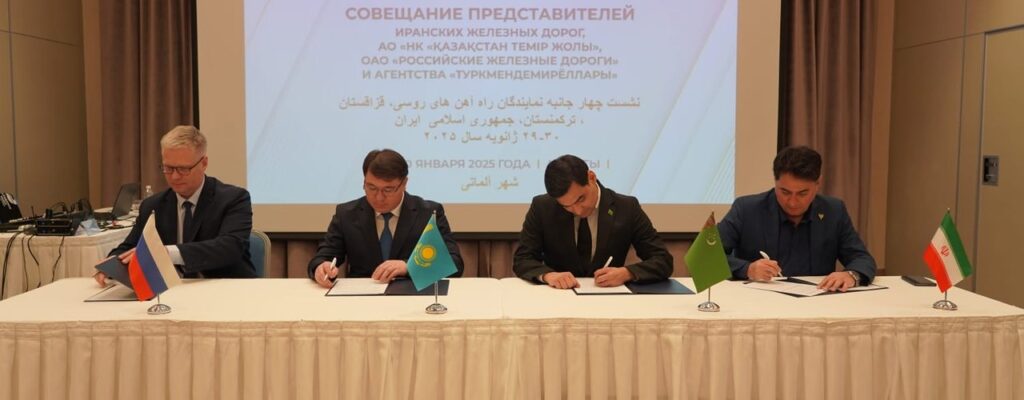
Kazakhstan, Turkmenistan, Russia, and Iran have reaffirmed their commitment to increasing cargo transportation along the North-South transport corridor.

Representatives of national railway companies from the four countries met on January 30 in Almaty to discuss ways to enhance the corridor’s attractiveness and establish favorable end-to-end tariffs for shipments passing through Russia, Kazakhstan, and Turkmenistan to Iran’s Bandar Abbas port.

According to Kazakhstan Temir Zholy (KTZ), the country’s national railway company, the meeting also addressed cargo transportation across Kazakhstan, particularly through the Bolashak rail station, located on the border between Kazakhstan and Turkmenistan. In 2024, 1.6 million tons of cargo was transported via this station.

The North-South corridor, linking Russia, Kazakhstan, Turkmenistan, and Iran, has an annual capacity of 10 million tons of cargo.

In July 2024, Kazakhstan hosted its first international meeting on the North-South transit and trade corridor, bringing together delegations from Azerbaijan, Armenia, Afghanistan, Kazakhstan, Russia, Belarus, Turkmenistan, the UAE, Iran, Iraq, Oman, and Uzbekistan.

During that meeting, Kazakhstan, Iran, Turkmenistan, and Russia signed a roadmap for the eastern route of the corridor. The plan aims to expand the corridor’s capacity to 15 million tons annually by 2027 and 20 million tons by 2030.

By connecting Russia and Belarus to Iran’s Persian Gulf ports, with further access to India, the North-South corridor is expected to enhance trade opportunities and further solidify Kazakhstan’s role as a key transit hub in the region.

Bishkek Tests Chinese Catalytic Converters in Effort to Reduce Air Pollution

The Bishkek municipality has launched an experiment to assess the effectiveness of catalytic converters developed by China’s Qingdao State University in reducing vehicle emissions. The initiative is part of broader efforts to combat air pollution in Kyrgyzstan’s capital.

A lack of catalytic converters in 85% of vehicles operating in Kyrgyzstan is a major contributor to air pollution. These devices play a crucial role in reducing the toxicity of vehicle emissions by converting harmful compounds into less hazardous ones.

As part of the experiment, Chinese catalytic converters have been installed in cars provided by three public figures – a deputy chairman of the Bishkek City Council and two popular bloggers. Specialists from the Ministry of Natural Resources, Ecology, and Technical Supervision will measure the vehicles’ emissions before and after installation using an exhaust gas analyzer to determine the impact of the devices.

The results of the experiment will help authorities decide whether to implement a broader rollout of Chinese-made catalytic converters in Bishkek.

Vehicle Pollution in Bishkek

Bishkek has over 600,000 registered vehicles, nearly double the city’s road capacity of 350,000. According to the Ministry of Natural Resources, Ecology, and Technical Supervision, motor transport accounts for 27% of the city’s total air pollution. Additionally, 333,801 vehicles in Bishkek are more than 15 years old, contributing significantly to deteriorating air quality.

Air pollution remains a persistent issue in Bishkek, a city of over one million residents. The problem worsens in winter when coal burning for household heating – responsible for 40% of the city’s air pollution – intensifies. As a result, Bishkek frequently ranks among the world’s top 10 most polluted cities on IQAir’s global air quality index.

Museum Showcasing Traditional Rishtan Ceramics to Be Established in Uzbekistan

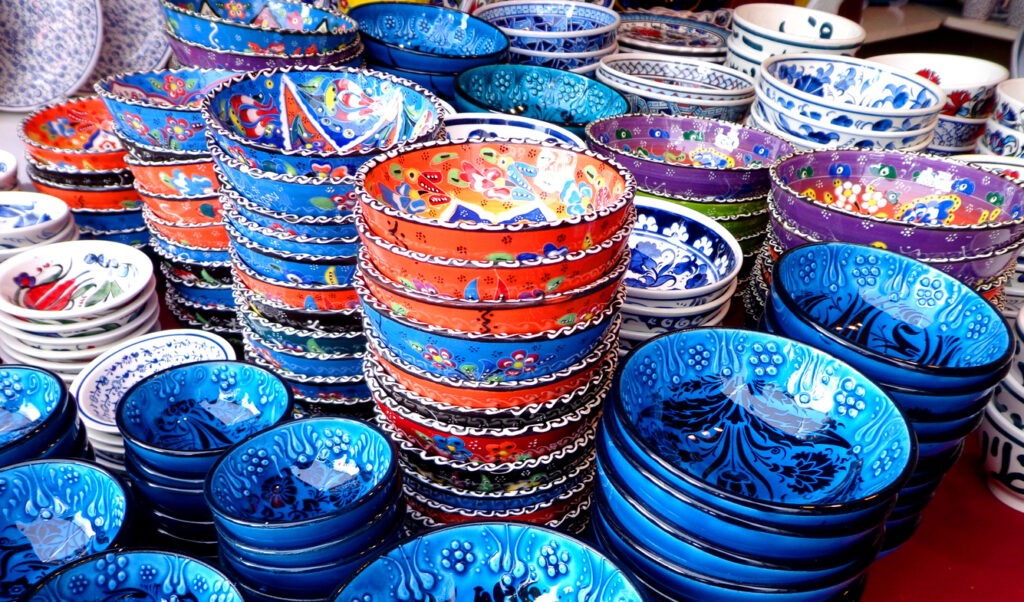
A museum dedicated to the history of traditional ceramics will be established in the Uzbek town of Rishtan. The institution, organized as a non-governmental entity, aims to serve as a center for preserving and promoting the region’s unique pottery heritage.

The museum’s key objectives include collecting and preserving exhibits, conducting cultural and educational programs, and training young artisans in pottery through the traditional mentoring system. Additionally, it will foster international cooperation by collaborating with foreign museums to organize exhibitions and exchange expertise.

To implement the project, a working group has been formed to develop the museum’s concept and oversee its activities. The building designated for the museum is expected to be fully adapted to its needs by April 1, 2025.

Notably, in September 2023, London’s King’s Foundation School of Traditional Arts hosted a master class led by Uzbek ceramist Shokhrukh Rakhimov. The event, supported by Uzbekistan’s Foundation for the Development of Culture and Arts, introduced master’s and doctoral students to the traditions of Uzbek ceramics. Rakhimov inspired participants to explore new artistic forms using ancient craft techniques, highlighting the importance of cultural exchange and the preservation of national heritage within the global academic community.

Uzbekistan Aims for Self-Sufficiency in Potato Production by 2027

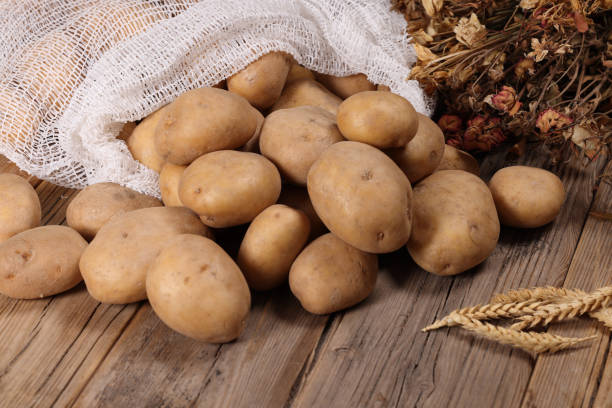
Uzbekistan plans to fully meet its domestic potato demand through local production by 2027. Although potatoes are among the most consumed food products in the country, a portion of the supply still comes from imports, despite being cultivated on 290,000 hectares of land.

Government Initiative to Boost Production

Current potato varieties and yields are falling short of expectations, prompting the government to take action. The Potato Research Institute has been tasked with developing high-yield varieties adapted to Uzbekistan’s climate. The institute will produce three million tubers annually using the in-vitro method, a technique where plant samples from the upper shoot are cultivated under artificial conditions in test tubes or glass containers.

To support these efforts, the government will allocate 400 billion UZS (USD 30.85 million) from the Agricultural Fund this year for potato farming development. Additionally, imported seed potatoes will be exempt from customs duties for the next three years. Authorities have also been instructed to provide farmers with potato cultivation and processing equipment, offering affordable leasing options.

Impact of Regional Potato Supply Disruptions

The announcement comes amid rising potato prices in Central Asia. Recently, Kazakhstan suspended potato exports to non-EEU countries, including Uzbekistan, for six months due to increasing domestic prices. This restriction has already caused difficulties for Uzbek importers.

Additionally, a shipment of 43 wagons of potatoes from Kazakhstan’s Pavlodar region was stopped at the Uzbek border a few days ago for a phytosanitary inspection. The delay left the potatoes in storage for over 10 days, causing them to freeze and spoil.

“Look, it’s rotten. Water is leaking, everything is ruined. First, it froze, then it melted – now it’s useless. There were 68 tons in one wagon,” said businessman Azamat Serikbayev.

The Kazakh entrepreneurs, who had sold the shipment before the export ban took effect, expressed frustration, arguing that all necessary documents had been issued in mid-January. They claim the cargo was unjustly delayed and is now unsuitable even for animal feed. Representatives of five affected companies say they intend to sue officials over their losses.