• KGS/USD = 0.01144 0%
  • KZT/USD = 0.00194 0%
  • TJS/USD = 0.10841 -0.37%
  • UZS/USD = 0.00008 0%
  • TMT/USD = 0.28490 0%
  • KGS/USD = 0.01144 0%
  • KZT/USD = 0.00194 0%
  • TJS/USD = 0.10841 -0.37%
  • UZS/USD = 0.00008 0%
  • TMT/USD = 0.28490 0%
  • KGS/USD = 0.01144 0%
  • KZT/USD = 0.00194 0%
  • TJS/USD = 0.10841 -0.37%
  • UZS/USD = 0.00008 0%
  • TMT/USD = 0.28490 0%
  • KGS/USD = 0.01144 0%
  • KZT/USD = 0.00194 0%
  • TJS/USD = 0.10841 -0.37%
  • UZS/USD = 0.00008 0%
  • TMT/USD = 0.28490 0%
  • KGS/USD = 0.01144 0%
  • KZT/USD = 0.00194 0%
  • TJS/USD = 0.10841 -0.37%
  • UZS/USD = 0.00008 0%
  • TMT/USD = 0.28490 0%
  • KGS/USD = 0.01144 0%
  • KZT/USD = 0.00194 0%
  • TJS/USD = 0.10841 -0.37%
  • UZS/USD = 0.00008 0%
  • TMT/USD = 0.28490 0%
  • KGS/USD = 0.01144 0%
  • KZT/USD = 0.00194 0%
  • TJS/USD = 0.10841 -0.37%
  • UZS/USD = 0.00008 0%
  • TMT/USD = 0.28490 0%
  • KGS/USD = 0.01144 0%
  • KZT/USD = 0.00194 0%
  • TJS/USD = 0.10841 -0.37%
  • UZS/USD = 0.00008 0%
  • TMT/USD = 0.28490 0%
17 December 2025

Kazakhstan’s Nuclear Power Move and Implications for the West

Kazakhstan’s recent referendum approving the construction of its first nuclear power plant (NPP) is a watershed moment. More than a domestic policy decision, this move puts into relief Kazakhstan’s strategy for positioning itself as a linchpin in the diversification of global energy supply chains, with the world’s largest uranium reserves accounting for nearly 40% of the global supply and a key geographic location. The country’s ambitions align with the broader resurgence of nuclear power as an indispensable component of a sustainable energy future, countering decades of stagnation in the West and challenging the dominance of Russia and China.

The renewed attention on nuclear energy arises from a convergence of systemic and technological factors. Environmental pressures to reduce reliance on fossil fuels such as gas and coal have left energy producers searching for scalable, reliable alternatives. Renewable energy sources like wind and solar, while important, remain limited by intermittency and storage challenges. At the same time, safety concerns rooted in historical disasters — Chernobyl, Three Mile Island, and Fukushima — have been mitigated by advances in reactor technology. A growing public recognition of nuclear power’s viability has resulted.

In this context, Kazakhstan’s entry into the nuclear power arena is logical. Enhancing its ability to integrate uranium extraction with downstream nuclear fuel production would underscore its potential to play a central role in addressing global energy needs. By fostering international partnerships, Kazakhstan can leverage its resource wealth to become a critical supplier for advanced economies looking to diversify their energy mix.

Kazakhstan’s move comes at a time of shifting geoeconomic dynamics in the nuclear energy sector. Over the past three decades, Russia and China have consolidated their dominance, exploiting the West’s inertia. Russia has used NPP construction as a geoeconomic tool, creating dependence in such countries as Turkey and Uzbekistan. China, meanwhile, has aggressively developed its domestic nuclear infrastructure while securing global uranium supplies, particularly through investments in Africa and Central Asia.

By contrast, Western nations have lagged behind, plagued by fragmented project management, skilled labor shortages, and political resistance. Anti-nuclear movements, many of which gained momentum during the Cold War with Soviet backing, have continued to stymie development in Europe and North America.

The resulting industrial inertia has left Western economies vulnerable, with insufficient capacity to meet rising energy demands or counterbalance Russian and Chinese influence. Kazakhstan’s emergence offers the West a rare opportunity to reverse this trend. The country’s multi-vector diplomatic strategy, emphasizing balanced relations with global powers, makes it an ideal partner for rebalancing energy supply chains.

Kazakhstan’s role in global energy extends beyond uranium. The country’s geological resources overlap with deposits of rare-earth elements (REEs), which are vital for advanced defense technologies, renewable energy systems, and high-tech manufacturing. The shared extraction technologies and logistical infrastructure for uranium and REEs present opportunities for integrated resource development.

NATO’s Partnership for Peace (PfP) program could play a pivotal role in this regard. By incorporating rare-earth mining and supply chain security into NATO’s Critical Energy Infrastructure Protection (CEIP) framework, member states could secure essential resources while fostering sustainable development in the region. Joint feasibility studies, governance reforms, and public-private partnerships would enhance transparency, attract investment, and ensure the resilience of supply chains.

Moreover, Kazakhstan’s advances in nuclear technology can complement its rare-earth production capabilities. As China continues to dominate global rare-earth markets, expanding its influence through regulatory exports and strategic investments, Kazakhstan’s integration into Western supply chains could provide a critical counterbalance. This dual role in uranium and rare-earth production underscores Kazakhstan’s importance as a strategic ally in mitigating global dependencies.

Kazakhstan’s ambitions to develop a vertically integrated nuclear sector, encompassing everything from uranium mining to advanced nuclear fuel production, align with Western interests in securing critical supply chains. However, achieving this vision requires significant investment and technological cooperation. Western nations must act decisively, providing financial resources, expertise, and regulatory support to accelerate Kazakhstan’s development while aligning it with international standards.

Key initiatives should include collaborative workshops and training programs to build local capacity, as well as regulatory harmonization to attract foreign investment. Governance improvements, including anti-corruption measures, will be critical for ensuring transparency and fostering investor confidence. Public-private partnerships can bridge gaps in infrastructure and technology, enabling Kazakhstan to achieve its full potential as a global energy hub.

Developing nuclear energy enhances Kazakhstan’s geopolitical influence. Reducing reliance on Russia and China and strengthening its multi-vector diplomacy would make it a key player in diversifying global energy supply chains. By advancing uranium processing and nuclear fuel production, Kazakhstan can attract additional Western investment, establishing itself as the main technological and economic hub in Central Asia. Needless to say, this would reinforce its autonomy and further increase its global standing. To cooperate, the West should take urgent  action including targeted investment, technological integration, and collaborative frameworks that materialize the underlying alignment of interests between Kazakhstan and the West.
First Kilometers of TAPI Gas Pipeline Completed in Afghanistan

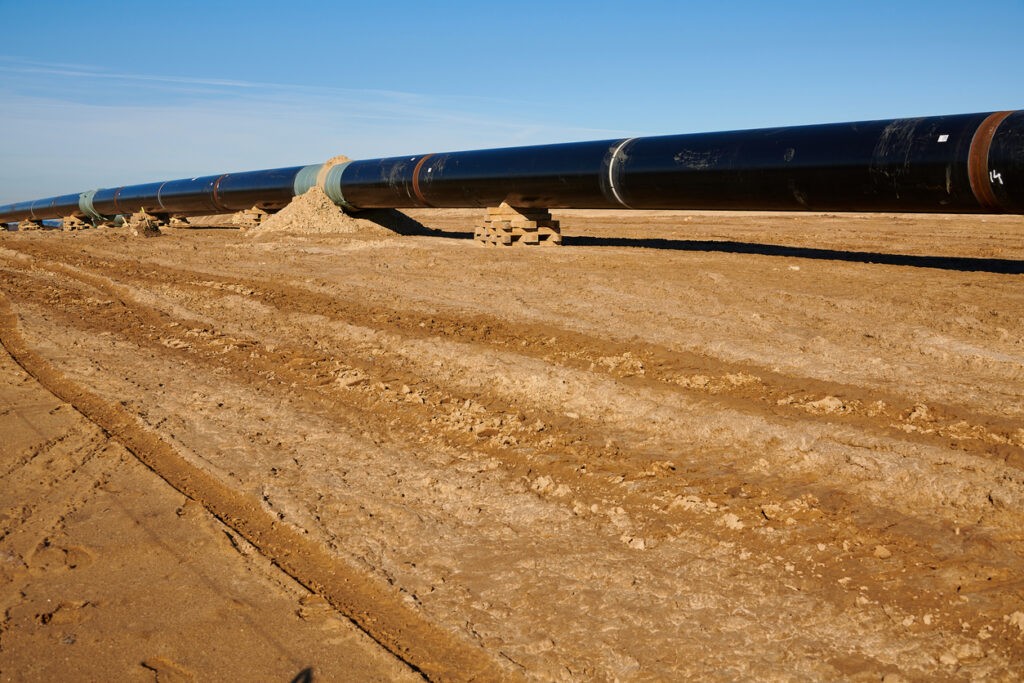
The first three kilometers of the Turkmenistan-Afghanistan-Pakistan-India (TAPI) gas pipeline have been successfully laid in Afghanistan, according to Mohammed Murad Amanov, the executive director of TAPI Pipeline Company Ltd. Amanov stated that the construction is progressing rapidly, raising hopes for the timely completion of the project.

Deputy Governor of Herat Province, Nakibullah Ayub, visited the construction site and confirmed that local authorities are fully prepared to support the project’s swift advancement. So far, 3.4 kilometers of the pipeline route in Afghanistan have been prepared, aligning with the established schedule.

The Afghan section of the TAPI pipeline, which spans 821 kilometers, officially began construction in September 2024. To date, technical surveys have been completed on 153 kilometers of the route, and the initial three kilometers of pipeline were laid within four months.

TAPI is a landmark regional energy project that aims to transport natural gas from Turkmenistan’s Galkynysh gas fields to consumers in Pakistan and India, passing through Afghanistan. The project is expected to enhance economic stability in the region and attract significant foreign investment.

Economic experts have highlighted the strategic importance of the TAPI pipeline for Afghanistan. Analyst Mohammad Asif Stanekzai remarked that the project could boost Afghanistan’s economic credibility and pave the way for increased foreign capital inflows. Additionally, Afghanistan is projected to earn approximately $400 million annually in transit fees.

Last week, Afghanistan’s Acting Minister of Mines and Petroleum, Hidayatullah Badri, held discussions in Kabul with Mohammed Murad Amanov about the progress of the TAPI pipeline and strategies to expedite the remaining work.

Two Turkmen Citizens Arrested in Istanbul for Counterfeit Alcohol Production

Turkish authorities have detained two Turkmen citizens in Istanbul for their alleged involvement in the production and distribution of counterfeit alcoholic beverages, according to Turkish news agency NTV.

The arrests come in the wake of a serious public health crisis in Istanbul, where 38 people have been poisoned by counterfeit alcohol within the past 24 hours. Of those hospitalized, 11 have tragically died.

The suspects were reportedly operating in the Ziya Gökalp district of Istanbul. During a search of their residence, police discovered approximately 50 liters of counterfeit alcohol, 36 narcotic pills, fake migrant identification cards, and a large quantity of medical supplies.

The Istanbul police have launched a comprehensive investigation into the incident. Authorities have revealed that 26 of those hospitalized due to poisoning were foreign nationals, underscoring the broader impact of the counterfeit alcohol trade.

The Consulate General of the Republic of Uzbekistan in Istanbul has confirmed that six Uzbek citizens have died as a result of consuming the counterfeit alcohol. Among the deceased are five men and one woman.

Further details about the investigation and potential charges against the detained suspects are awaited.

27 Defendants Charged in Crocus City Hall Terror Attack

The Russian Investigative Committee has formally charged 27 individuals in connection with the terrorist attack at Crocus City Hall in the Moscow Region. The announcement was made by Alexander Bastrykin, chairman of the Russian Investigative Committee.

“The most serious and tragic incident of last year was the terrorist attack at the Crocus City Hall concert hall, where 146 people were killed. The Main Investigative Department has charged 27 people as defendants in this case,” Bastrykin stated in an interview with Российская газета (Russian Newspaper).

The attack occurred on March 22, 2024, at Crocus City Hall in Krasnogorsk, Moscow Region, with the assailants opening fire with automatic weapons on people inside the building before setting the auditorium on fire.

According to the authorities, the primary suspects in the case are citizens of Tajikistan. Reports indicate that twelve individuals have already been arrested in connection with the attack.

Additionally, The Times of Central Asia previously reported that the Istanbul Prosecutor’s Office had sought prison sentences ranging from 7.5 to 15 years for five Central Asian nationals accused of being involved in last spring’s terrorist attack at Crocus City Hall.

Chinese Company to Manufacture Drones in Kazakhstan

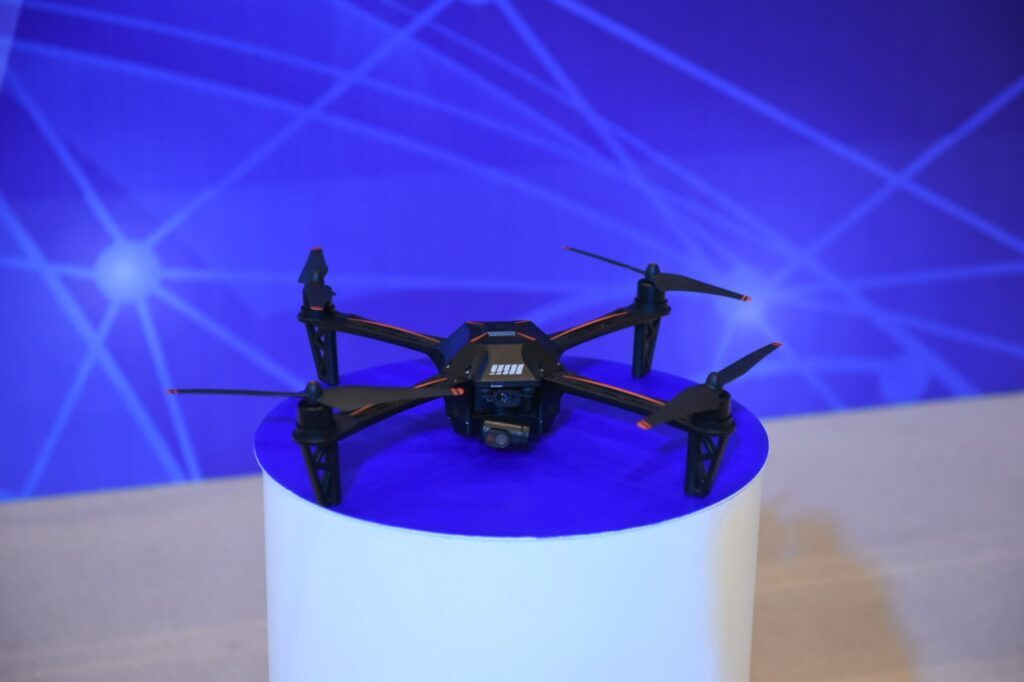
Yesil Technology Company, a subsidiary of China’s Shaanxi Kaizhuo Electronic Technology Co., Ltd., is set to establish an industrial drone production facility in Kazakhstan. The project, valued at approximately $12 million, marks a significant step in advancing high-tech manufacturing in the country.

Construction of the production and research zone, spanning 50,000 square meters, will begin in March 2025 in the Almaty region. The facility will include a workshop for manufacturing drone batteries, a research center for innovative technologies, a full-cycle machine storage, and a test site for drones. Supported by the national company Kazakh Invest, the initiative is projected to create 500 new jobs.

The drones manufactured in Kazakhstan will serve both the domestic market and be exported to neighboring Central Asian countries.

Yesil Technology aims to integrate advanced UAV (unmanned aerial vehicle) technologies into various sectors, including agricultural monitoring, environmental protection, securing sensitive facilities, emergency rescue operations, and counter-drone measures.

Yongning Hui, the head of Yesil Technology, highlighted the company’s commitment to solving critical challenges in the drone industry, including extending UAV flight ranges, enhancing intelligent obstacle avoidance, and improving navigation precision and stability.

“Yesil Technology actively attracts outstanding scientists and researchers from around the world, focusing on solving key problems such as the limitation of unmanned aerial vehicles’ flight range, the accuracy of intelligent obstacle avoidance, and the precision and stability of navigation, which hinder industry development,” Hui stated. “Today, our products already have the ability to operate stably in the most challenging conditions and accurately perform tasks, providing users with calm and reliable aviation services. Yesil Technology also takes on an important mission to train local personnel in unmanned aerial vehicle technology.”

The company’s efforts come at a time of rapid global growth in the low-altitude economy. According to the World Federation of Unmanned Aerial Vehicles, the market for low-altitude drones and related technologies reached $318.64 billion in 2024. By 2050, this figure is expected to surpass $8.8 trillion.

China has emerged as a leader in this sector, with its low-altitude economy market valued at $68.65 billion in 2023. Projections for 2024 estimate growth to $79 billion, with an average annual growth rate of over 16% anticipated over the next five years.

The establishment of the drone production facility in Kazakhstan aligns with the country’s broader goals of fostering technological innovation and regional economic integration.

EBRD Investments in Central Asia Hit Record High in 2024

The European Bank for Reconstruction and Development (EBRD) has announced a record-breaking year in Central Asia, investing €2.26 billion across 121 projects in 2024. This marks a significant milestone for the region, with the EBRD nearly doubling its annual investment compared to 2023.

In addition to its own financing, the EBRD mobilized €784 million from co-financiers, bringing total investments in the region’s real economy to over €3 billion.

Uzbekistan and Kazakhstan were the primary beneficiaries of EBRD funding, receiving €938 million and €913 million, respectively. These figures placed the two nations as the fifth and sixth largest EBRD investment destinations globally in 2024. Tajikistan received €88 million in EBRD funding, while Kyrgyzstan attracted €52 million.

The bulk of EBRD investments – 61% – was directed toward sustainable infrastructure projects, while 24% of funds were allocated to local banks for on-lending to small and medium-sized enterprises (SMEs), women and young entrepreneurs, and initiatives focused on climate resilience and resource efficiency. The remaining 15% supported corporate sector clients.

As the largest institutional green lender in the region, the EBRD has fully aligned its operations with the Paris Agreement. In 2024, 58% of its investments supported green economy projects, reaffirming its commitment to promoting sustainable development.

The EBRD achieved major cumulative milestones last year. In Kazakhstan, its total investments surpassed €10 billion, while in Uzbekistan, cumulative funding reached €5 billion. Tajikistan and Kyrgyzstan have now each received over €1 billion from the bank since it began operating in Central Asia three decades ago.

Overall, the EBRD remains the leading institutional investor in Central Asia, having financed 1,163 green and inclusive projects totaling €21.5 billion to date.