Diplomatic relations between Kazakhstan and Afghanistan began more than 30 years ago, on February 12, 1992. However, in April of that year, the republican regime in Kabul fell, and the country plunged into the abyss of civil war after becoming the Islamic State of Afghanistan. Such chaos had never been seen before. The first Taliban Emirate was established and then overthrown by the US-led coalition, after which the Islamic Republic of Afghanistan was proclaimed
Politics
Kazakhstan’s first diplomatic mission in Kabul was opened in September 2002, less than a year after America launched Operation Enduring Freedom. In 2003, it was transformed into an embassy. From then on, the relationship between the countries became operational.
The new starting point of the Kazakh-Afghan relationship was August 15, 2021, when the Taliban seized power in Kabul. Kazakhstan’s foreign policy was put to a test, but Astana demonstrated foresight and pragmatism.
The Kazakh embassy, unlike most other countries, was not evacuated, diplomats continued to work in the new conditions and began to establish the first contacts with the Taliban authorities.
From the very beginning, Kazakhstan took a clear and understandable position and began to promote it at various levels.
A month after the Taliban seized Kabul, Kazakhstan’s President Kassym-Jomart Tokayev drew attention to the situation in Afghanistan at the SCO meeting in Dushanbe (September 17). As he stated, “Kazakhstan sees future Afghanistan as a truly independent and united state living in peace with itself and its neighbors. At this crucial historical moment, the multinational people of Afghanistan should not be left alone in the face of unprecedented difficulties”.
A few days later, on September 22, during the UN General Assembly, the Kazakh president detailed the position of his country and was one of the first politicians to point out the current problem of “inclusiveness.” Tokayev reaffirmed that Kazakhstan supports the UN Security Council’s call for the formation through negotiations of a new government that would be inclusive and representative. In his words, “It is necessary to create a consensus-based system in which groups with different values or ethnic, religious and gender backgrounds can coexist in one country.”
For a better understanding and retrospective assessment of Astana’s actions on the “Afghan track,” it is worth citing other theses mentioned by the president in New York at a time when most of the world was still doubting the success of the Taliban campaign.
“Afghanistan must continue to fulfill its international obligations and ensure that its territory does not become a springboard for terrorists, drug trafficking, and human traffickers. Regardless of our political or personal convictions, we must not abandon the people of Afghanistan to their fate now. The acute humanitarian situation must be our top priority. UN agencies and other humanitarian organizations must have immediate, safe, and unimpeded humanitarian access.
Kazakhstan has provided for the temporary relocation of the UN Assistance Mission in Afghanistan (UNAMA) and other UN offices in Afghanistan. We are ready to provide a logistical platform for the delivery of humanitarian aid to Afghanistan and to make our own contribution.
Kazakhstan’s initiative to establish a UN Regional Hub in Almaty can contribute to this critical mission. We are ready to work closely with the UN, our neighbors, and other organizations.
Afghanistan’s future stability depends on its economic development. Afghanistan is not a threat but an opportunity. If the country is united and stable, it can contribute to the development of Central Asia.”
This position was not ad hoc – Kazakhstan continues to demonstrate its commitment to it; which is supported by other statements from Astana and its practical measures taken towards Afghanistan.
In general, Kazakhstan’s policy towards Afghanistan can be characterized as balanced, pragmatic, and based on modern realities. The basis of Kazakhstan’s “recipe” is the basic principle of non-interference in internal affairs, as well as a commitment to develop good relations with Afghanistan, regardless of the existing political regime there.
Other “ingredients” are:
– A regional paradigm in which Kazakhstan takes into account the interests of other countries in the region, primarily Tajikistan, Uzbekistan, and Turkmenistan – Afghanistan’s immediate neighbors. It also includes Astana’s desire to engage Kabul in a regional dialog on a wide range of issues and to give Afghanistan’s problems an intra-regional dimension.
– Commitment to resolving security issues through diplomatic and economic means in a civilized manner according to international law and UN provisions.
This “recipe” does not include Astana building direct political relations with the Islamic Emirate of Afghanistan (IEA) and realizing its ambitions of a “middle power”: Kazakhstan is acting in the context of international efforts on Afghanistan, neutral in its stance, but sees the country as a key element of security and stability of Central Asia.
The views of the other Central Asian republics are similar, and this has yielded results. By now, it can be confidently asserted that Central Asia no longer supports the “terrorist threat from the south” discourse that has been used to describe Afghanistan for the past decades.
Kazakhstan shows that solving security issues through diplomatic and economic means in a civilized manner in the format of international law and UN provisions, is an uncompromising option. At the same time, Astana is building its own political potential in the region and the world, and its position in modern Afghanistan compares favorably with the positions of other players on the Afghan track.
Kazakhstan was the first in the region to remove the Taliban from the list of banned organizations and accredited IEA diplomats, thus launching a common trend in Central Asia towards rapprochement with Afghanistan. In addition, the country allowed the Consulate General of Afghanistan in Almaty to become fully operational in 2024 and accredited an Afghan trade attaché.
Along with this, Astana returned its ambassador from Kabul and sent Chargé d’Affaires Gaziz Akbasov, a professional diplomat who previously worked in Afghanistan and Iran. In this case, the diplomatic downgrade should not be seen as a recession in relations. The former ambassador was accredited under the republican regime, and the new head of the Kazakh embassy symbolizes another Taliban page in the relations between the two countries. Astana’s pragmatism can also be traced in this – it does not make an obvious curtsy towards the Emirate against the background of international battles around the recognition of the Taliban but consistently follows its strategy, especially since it still has enough “political savings”.
Currently, only two countries have Taliban-accredited ambassadors – China sent an ambassador back in September 2023, and Tashkent took this important step in late October 2024. It would be unneighborly if Kazakhstan were ahead of Uzbekistan, whose security and economic interests are directly linked to the situation in Afghanistan.
Thus, against the background of the apparent stalling of UN initiatives and the absence of a coordinated international policy on Afghanistan, Kazakhstan has chosen the path of practical interaction with Kabul. It aims at the progressive development of trade and economic relations with Afghanistan, as well as its involvement in intra-regional ties in the future regardless of the political regime.
Economy
Meanwhile, Afghanistan’s economic potential and its investment attractiveness directly depend on the political pressure exerted on Kabul, primarily from the West. This is a serious obstacle, first of all, for Afghanistan’s neighborhood. So far, it is not an economic entity with which it is possible to work in global economic standards and formats.
But the beginning has been made, and remarkably, all the countries of the region, despite the presence of certain contradictions, have set a course for the development of a trade partnership with Afghanistan. They did not need to make any joint decisions for this; everything happened naturally.
Kazakhstan, having no common border with Afghanistan, has taken an important place in these relations and is among the ten main trade partners of Afghanistan.
Quantitative indicators of trade are not so great, but we should not forget that Afghanistan is one of the most depressed economies in the world, and the indicators of trade turnover a priori cannot be high.
Mutual trade between the countries last year amounted to $636.5 million, showing a decline of 35.5% compared to 2022. First of all, the export of Kazakhstani products decreased by 37.1%. According to the latest statistical data, trade turnover between Kazakhstan and Afghanistan for January-August 2024 amounted to $330.7 million, which is 22.1% lower than for the same period of the previous year ($424.5 million).
At the same time, the indicators of Afghan exports to Kazakhstan practically did not decrease: imports to Kazakhstan from Afghanistan in January-August 2024 decreased by 1.2% and amounted to $14.1 million. The main import goods are mineral and carbonated water, vegetable and fruit juices, natural steatite, talcum powder, grapes, сonsumer goods made from aluminum, and precious and semi-precious stones.
The Kazakh-Afghan business forum held in October this year in Almaty was a significant event. Despite predictions that the parties were limited in trade and economic relations, this forum showed the desire of the two countries to use all available opportunities to demonstrate the opposite. Let us dwell on several interesting points characterizing the state and prospects of bilateral trade relations.
Cooperation in the field of finance has been promoted. Afghan Ghazanfar Bank is expected to open its correspondent accounts in Kazakhstan’s Zaman Bank in the near future, which will open new business opportunities. Additionally, the parties do not exclude the possibility of using national currencies in mutual settlements. A trial transfer of $10,000 from Afghanistan has already been made. At the same time, Zaman Bank has begun researching ways to open their accounts in Afghan banks.
Moreover, the Afghan side has asked for technical assistance in creating financial markets. It is not clear yet what forms this cooperation will take, but Kazakhstan has indeed accumulated rich experience in this area. This is evidenced by the active interest shown by foreign partners. South Korean financial holding BNK Financial Group intends to open its bank in Kazakhstan. A Qatari investor bought out Bereke Bank. Abu Dhabi Commercial Bank is expanding its presence in the Kazakhstan market.
Another area where the parties managed to reach not only an understanding but also specific agreements is the transportation and logistics sector. For both Kazakhstan and Afghanistan, taking into account their geographical location, participation in various transportation corridors is a strategic task.
In this regard, the possibility of creating a quadrilateral hub, “Afghanistan-Iran-Kazakhstan-Turkmenistan,” was discussed at the talks. A practical start was made earlier at a similar forum in Kabul in April 2024, where Turkmenistan joined the negotiations. Then, in fact, a new transit route to Afghanistan through Central Asia was announced: China – Kazakhstan – Turkmenistan – Afghanistan. According to official information, the three countries agreed to jointly develop transit and transportation infrastructure in Afghanistan. For this purpose, favorable and competitive tariff conditions will be created, which will allow accelerated passage of container trains from China through Kazakhstan and Turkmenistan to Afghanistan and further to Pakistan, India, and Middle Eastern countries.
Calculations suggest that the delivery period of goods by the accelerated route from Chinese Xian to railway stations on the Turkmen-Afghan border will be reduced to 10-12 days. Kazakhstan and Turkmenistan signed a memorandum on their part providing for the participation of the Kazakh side in the construction of a new railroad in Afghanistan along the route “Turgundi – Herat,” with a length of 115 kilometers.
The results of the Almaty forum also demonstrated the interest of the Afghans in cooperation with Central Asian countries in other transport corridors, in particular in the direction of China-Kazakhstan-Uzbekistan-Afghanistan-Pakistan. On the eve of the forum, the Afghan delegation and businessmen visited the Khorgos Gate Way dry port on the Kazakhstan-China border, which could serve as a logistics hub for Afghan goods.
At the forum, the parties also realized the need to sign an intergovernmental agreement on international road transportation.
The bilateral relations are significantly characterized by the humanitarian assistance provided by Kazakhstan.
Since 2021, in accordance with the government’s decision, the Ministry of Health of Kazakhstan has provided about $3.5 million in humanitarian aid to Afghanistan. These are mainly antibiotics and antiviral drugs. Thirty Afghan citizens are studying at Kazakhstani medical universities on a grant basis, and another 30 are studying on a contractual basis.
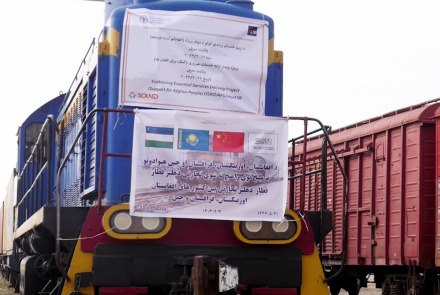
Since the Taliban came to power, more than 150 wagons with humanitarian aid have arrived in Afghanistan, consisting mostly of food, clothes, and medicines.
In Afghanistan itself, Kazakhstan’s policy is perceived positively, and assessments are summarized as follows:
Kazakhstan is an important regional partner with sufficient political weight in the international community;
Kazakhstan has successful economic experience and potential for the realization of significant infrastructure projects on the territory of Afghanistan, especially in the spheres of agriculture, energy, and subsoil use.
Of course, with its minimal relations with the West, the Taliban are extremely interested in attracting business partners and external investments, developing trade relations, and building infrastructure. By doing so, the Taliban stabilizes its regime and creates conditions for slow economic growth.
However, Kazakhstan does not seem to be in a hurry to build a special format of bilateral relations with Afghanistan. At present, it is based on close trade and economic cooperation, which still has room for expansion.
Kazakhstan’s prospects of reaching a strategic level, which is, first of all, direct long-term investments in the Afghan economy, are related to the issues of international recognition. The current status quo is certainly not enough. In addition, the issues of internal security are of no small importance – the Taliban cannot yet guarantee it to the necessary extent.
But everything will take its course – what is important now is that Kazakhstan and other countries in the region are creating conditions for building an adequate financial and economic system in Afghanistan and integrating it into intra-regional ties in the long run.