• KGS/USD = 0.01144 0%
  • KZT/USD = 0.00215 0%
  • TJS/USD = 0.10680 0.19%
  • UZS/USD = 0.00008 0%
  • TMT/USD = 0.28530 0%
  • KGS/USD = 0.01144 0%
  • KZT/USD = 0.00215 0%
  • TJS/USD = 0.10680 0.19%
  • UZS/USD = 0.00008 0%
  • TMT/USD = 0.28530 0%
  • KGS/USD = 0.01144 0%
  • KZT/USD = 0.00215 0%
  • TJS/USD = 0.10680 0.19%
  • UZS/USD = 0.00008 0%
  • TMT/USD = 0.28530 0%
  • KGS/USD = 0.01144 0%
  • KZT/USD = 0.00215 0%
  • TJS/USD = 0.10680 0.19%
  • UZS/USD = 0.00008 0%
  • TMT/USD = 0.28530 0%
  • KGS/USD = 0.01144 0%
  • KZT/USD = 0.00215 0%
  • TJS/USD = 0.10680 0.19%
  • UZS/USD = 0.00008 0%
  • TMT/USD = 0.28530 0%
  • KGS/USD = 0.01144 0%
  • KZT/USD = 0.00215 0%
  • TJS/USD = 0.10680 0.19%
  • UZS/USD = 0.00008 0%
  • TMT/USD = 0.28530 0%
  • KGS/USD = 0.01144 0%
  • KZT/USD = 0.00215 0%
  • TJS/USD = 0.10680 0.19%
  • UZS/USD = 0.00008 0%
  • TMT/USD = 0.28530 0%
  • KGS/USD = 0.01144 0%
  • KZT/USD = 0.00215 0%
  • TJS/USD = 0.10680 0.19%
  • UZS/USD = 0.00008 0%
  • TMT/USD = 0.28530 0%

Opinion: Uzbekistan’s Growth Story Has a Skills Problem

Uzbekistan has become one of Central Asia’s strongest growth stories. GDP expanded by 6.5% in 2024, and the Asian Development Bank projects growth of 6.7% in 2026 and 6.8% in 2027. Industry, services, and foreign investment are all expanding. The World Bank says real GDP growth averaged around 6% a year between 2017 and 2025.

Beneath that momentum, however, a quieter problem is taking shape. Uzbekistan may not yet be training enough workers for the economy it is trying to build. The issue is not a shortage of capital; it is a shortage of market-ready skills.

The country has moved from an isolated, heavily state-controlled economy toward a more open and reform-driven model in less than a decade. But if education, vocational training, and private-sector demand do not align faster, Uzbekistan risks turning one of the region’s strongest demographic advantages into a labor-market strain.

A Dividend That Could Become a Deficit

Uzbekistan is a young country in every sense. About 700,000 young people enter the job market each year, while the working-age population is expected to keep expanding for decades. In development economics, this kind of demographic concentration is often described as a dividend: a period when a large share of the population is of working age, productive, and capable of driving growth.

The risk is that the dividend does not materialize automatically. It depends on whether young people can move into productive, formal, and better-paid work. If the workforce entering the economy is not equipped with the skills employers need, the same demographic pressure can feed into informality, underemployment, migration, and social strain.

The official unemployment rate fell to 4.9% in the third quarter of 2025. That is a meaningful improvement. But around 760,000 people remained registered as job seekers, and the International Labour Organization has estimated informal employment at about 40% of the workforce. Remittances also remain a structural pillar of household income: according to Central Bank data cited by local media, inflows reached $18.9 billion in 2025, up from $14.8 billion in 2024.

This is not the picture of a country that has already solved its human-capital challenge. It is the picture of a country racing against time.

The Mismatch at the Heart of the Problem

The core challenge is not a shortage of graduates. Higher education has expanded dramatically. According to Uzbekistan’s National Statistics Committee, coverage among 18- to 23-year-olds reached 47.7% at the start of the 2024/2025 academic year, up from 8.3% in 2017. The number of higher education institutions has also grown rapidly.

By conventional access metrics, this is an extraordinary achievement. But enrollment alone is not the measure that matters. Employers need workers who can solve practical problems, operate modern equipment, manage digital systems, and adapt quickly to changing production and service needs.

Too many students are still moving through programs shaped by an older economic model: credential-heavy, theoretically oriented, and weakly connected to the needs of a modern labor market in IT, manufacturing, logistics, energy, tourism, and services.

The student-financing system has also reinforced the mismatch. The World Bank has noted that the existing system has not been sufficiently aligned with labor-market needs, including high-demand fields such as STEM and information and communications technology. Women make up a large share of students and education-loan beneficiaries, but they remain underrepresented in STEM fields where demand and wages are often stronger.

The result is a paradox: Uzbekistan is investing heavily in education, but its training pipeline is not yet producing enough of the skills its economy most urgently needs.

What Is Being Done, and Where the Gaps Remain

To its credit, the Uzbek government has recognized the problem and is moving on several fronts.

Vocational and technical education is being pushed closer to the center of national development policy. President Shavkat Mirziyoyev has declared 2026 the year of training young people in modern professions. The same official account says an Agency for Vocational Education is being created to introduce a new educational environment and international standards across 598 technical colleges.

The reform agenda also includes cooperation between 100 technical colleges and educational organizations in Germany, Switzerland, China, South Korea, and the United Kingdom. International BTEC programs have been launched in 14 technical colleges covering areas such as tourism, IT, medicine, construction, logistics, energy, mechanical engineering, biotechnology, and the creative economy.

The October 2025 presidential resolution PQ-316 points in the same direction. It sets out reforms to the vocational education system, including closer employer involvement, stronger regional coordination, and a greater focus on employment outcomes. Its hub-and-spoke logic is practical: not every institution can be equipped with expensive modern laboratories and expert trainers, so regional centers can concentrate high-cost resources and serve surrounding colleges.

A major external commitment followed in December 2025, when the World Bank approved a $250 million loan under the EduImkon Program. The program is intended to expand access to student financing for an estimated 600,000 young people over three years, with around 80% of funds directed toward low-income students and women. Crucially, it is also designed to make student financing more relevant to labor-market demand.

School-level reform is also part of the same picture. Unified state exams for 9th and 11th graders are due to be introduced from the 2026/2027 academic year, with results guiding students toward vocational or higher education pathways. This could create a more coherent pipeline from school to work if implementation is transparent and if vocational routes gain real status among families and employers.

These are genuine achievements. They show a government that is listening to its labor market and trying to adapt its institutions. But the gap between policy ambition and implementation on the ground remains significant.

What Still Needs to Happen

First, curriculum reform must accelerate. Technical schools need enough freedom to respond to local labor demand, not only to centrally defined programs. In a fast-moving economy, demand for skills in ICT, green energy, advanced manufacturing, logistics, and business services can shift faster than any centralized planning mechanism can track. Institutions need room to adjust courses in near-real time with employers.

Second, the gender dimension needs targeted attention. Legal reforms and financing support help, but they will not be enough by themselves. If girls are steered away from technical fields from an early age, the country loses talent before students even reach university or technical college. Uzbekistan needs scholarships, role models, school-level career guidance, and employer partnerships that make technical careers visible and credible for young women.

Third, Uzbekistan must build stronger institutional bridges between education and the private sector. The World Bank Country Economic Memorandum noted that growth between 2017 and 2022 did not generate the desired level of employment, although job creation accelerated in 2023 and 2024. That finding points to a deeper structural problem: investment does not automatically become productive employment.

State-owned enterprises still play a large role in key sectors. That can slow the feedback loop between firms, training institutions, and workers. Private companies are often quicker to define new skill needs, test new training models, and reward practical competence. Deeper market liberalization and stronger employer engagement in curriculum design are therefore not peripheral issues. They are central to whether education reform produces jobs at scale.

The Stakes Are High, and the Window Is Narrow

Uzbekistan has something many countries would envy: youth, time, and economic momentum. The reform trajectory under Mirziyoyev is real. International institutions, including the World Bank, ADB, UNESCO, and the ILO, are engaged and aligned around human capital, skills, and job creation.

But demographic windows do not stay open indefinitely. Young people entering the labor market now will not wait for institutions to catch up. They will look for informal work, migrate, or remain underemployed if formal jobs and useful skills do not meet at the right speed.

Uzbekistan’s economic future will not be decided by its gold reserves, its cotton fields, or even its trade corridors, vital as these are. It will be decided by whether the country can build an education and training system that gives young people the practical, market-relevant skills to power a modern economy.

The issue is no longer whether Uzbekistan understands the problem. It is whether schools, employers, and the state can close the gap before today’s demographic advantage becomes tomorrow’s labor-market pressure.


The views expressed in this article are those of the author and do not necessarily reflect the official policy or position of the publication, its affiliates, or any other organizations mentioned.

EBRD Invests $125 Million in Kazakhstan Railway Operator Eurobond

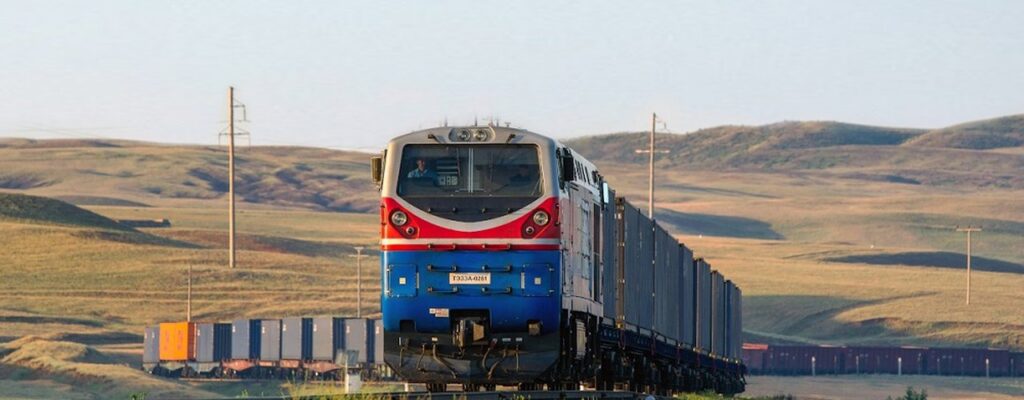
The European Bank for Reconstruction and Development is investing up to $125 million in a Eurobond issue by Kazakhstan’s national railway operator, Kazakhstan Temir Zholy (KTZ). The bond, with a total value of up to $1 billion, was listed on the London Stock Exchange, Kazakhstan Stock Exchange, and Astana International Exchange.

The EBRD’s investment will help modernize passenger stations across Kazakhstan, supporting improvements in safety and operational performance. The upgraded stations are expected to offer higher throughput capacity, modern lighting, and significant enhancements for passengers with disabilities.

According to the Kazakh Ministry of Transport, a large-scale reconstruction and modernization program covering 124 railway stations nationwide began in 2025. The initiative aims to improve convenience and accessibility for all passengers, including those with disabilities, and to bring Kazakhstan’s railway infrastructure in line with international quality and safety standards.

Additional infrastructure upgrades financed by the bond will take place along the Trans-Caspian Corridor and are expected to support more sustainable rail transportation between Europe and Asia.

The EBRD will also mobilize technical cooperation funds to help KTZ adopt international standards in passenger rail services, including measures to strengthen cybersecurity.

KTZ owns and operates a 16,400-kilometer railway network and manages more than 1,700 locomotives, 46,800 freight cars, and 2,300 passenger cars.

In the first quarter of 2026, KTZ transported approximately 3.2 million passengers.

KTZ also transported 64.5 million tons of cargo in the first quarter of 2026, an increase of 360,000 tons compared to the same period last year. Domestic shipments accounted for 40.8 million tons, while exports totaled 23.7 million tons, up 2.2%.

Tashiyev Charged as Kyrgyzstan’s Elite Rift Deepens

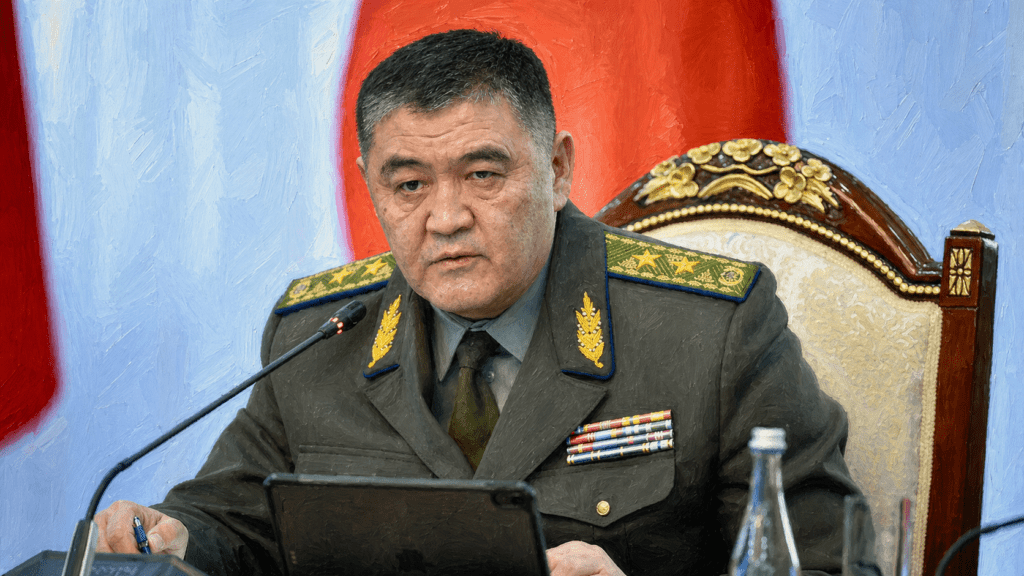
Former head of Kyrgyzstan’s State Committee for National Security (GKNB), Kamchybek Tashiyev, has been charged under two articles of the criminal code, his lawyer said, amid signs of escalating political tension in the country.

According to defense attorney Ikramidin Aitkulov, Tashiyev faces charges under Article 326, concerning forcible seizure or retention of power and actions aimed at forcibly changing the constitutional order, and Article 337, concerning abuse of office. The latter charge relates to alleged actions carried out for personal gain or for the benefit of others, and to conduct by a senior public official.

A restraint measure has been imposed on Tashiyev in the form of a written undertaking not to leave his place of residence. After questioning at the Interior Ministry, he left the building late on April 29. His lawyer said the former official denies all charges.

Tashiyev said he intends to defend himself through legal means. “I am innocent and, God willing, I will be acquitted,” he said in a statement. He also urged his supporters to remain calm and act within the law.

Media reports suggest that former Prosecutor General Kurmankul Zulushev and former parliamentary speaker Nurlanbek Turgunbek uulu may also be linked to the same case, though their legal status remains unclear. The Interior Ministry has not publicly confirmed or denied reports that they were questioned.

President Sadyr Japarov has previously said that any potential involvement by Tashiyev in the so-called “Letter of 75” should be determined by investigators and the courts. The letter, made public in February, urged Japarov and parliament to initiate an early presidential election, citing ambiguity over whether his current term should be treated under the six-year term in force at the time of his 2021 election or the five-year term introduced by the constitution adopted later that year.

Tashiyev’s fall has been one of Kyrgyzstan’s most significant political ruptures since Japarov came to power after the 2020 upheaval. The two men had long been seen as the central tandem in Kyrgyz politics, with Japarov controlling the presidency and Tashiyev heading the security apparatus. That arrangement ended on February 10, when Japarov dismissed Tashiyev as GKNB chairman and deputy chairman of the Cabinet of Ministers.

The official explanation was that the decision had been taken “in the interests of the state” and to prevent a split in society. The move was followed by a wider reshuffle inside the security services and parliament, where figures seen as close to Tashiyev came under pressure. The Times of Central Asia previously reported that Japarov’s decision appeared to have broken the Japarov-Tashiyev tandem that had shaped the country’s power structure since 2020.

The political pressure on Tashiyev’s network intensified in March and April. Tashiyev returned to Kyrgyzstan in March after more than a month abroad and was questioned by the Interior Ministry in connection with Kyrgyzneftegaz, the state oil company. TCA previously reported that the State Tax Service had revived allegations involving the company and private entities linked to Tashiyev’s relatives or associates, while maintaining that its evidence was separate from earlier reporting by Temirov Live.

The investigation widened further when Shairbek Tashiyev, the former security chief’s brother and a former member of parliament, was detained in early April after questioning at the Interior Ministry. His arrest came as the Tashiyev network faced growing pressure and as speculation mounted over whether the February dismissal marked a controlled reshuffle or the start of a deeper elite confrontation.

The latest charges now move that confrontation into a more serious phase and a potential kompromat war and corruption allegations against Tashiyev’s circle, raising questions about what information the former security chief may hold about the president’s own political network.

Kyrgyzstan remains one of Central Asia’s most politically volatile countries. Since gaining independence after the collapse of the Soviet Union in 1991, it has experienced major uprisings in 2005, 2010, and 2020. That history gives the current case added weight. Charges against a former security chief would be politically significant in any Central Asian state, but in Kyrgyzstan, where street politics and elite fractures have repeatedly reshaped the government, they carry a particular risk.

For now, Tashiyev has not been detained, and the charges remain allegations. But the case has already moved beyond speculation about a broken alliance. It now tests whether Japarov can dismantle his former partner’s network without triggering a wider political backlash, and whether Kyrgyzstan’s courts and investigators can handle the country’s most sensitive political case in years without appearing to serve one side of an elite struggle.

Uzbekistan Plans $5.8 Billion Expansion of Hydropower Sector

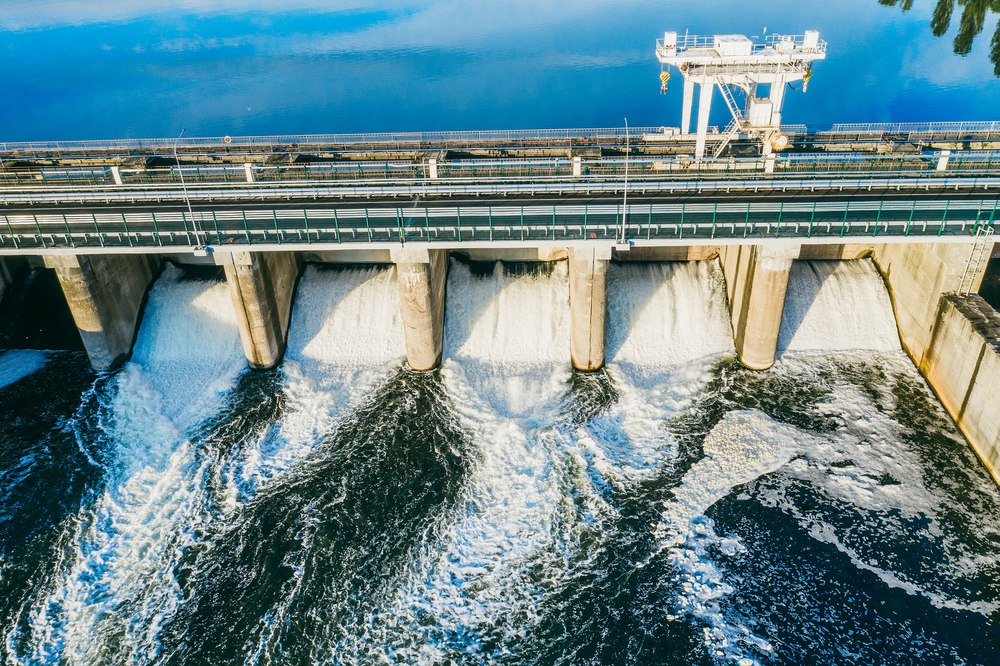
Uzbekistan is planning a major expansion of its hydropower sector, with 73 new projects worth $5.8 billion scheduled for implementation between 2026 and 2032, officials said during a presentation to Shavkat Mirziyoyev.

According to the briefing, the country aims to add 3.6 gigawatts of new generating capacity as part of efforts to diversify its energy mix. Currently, most of Uzbekistan’s electricity is produced from natural gas and coal, while hydropower accounts for only about 10-12%.

Officials emphasized that Uzbekistan’s extensive water network, more than 150,000 kilometers of rivers, canals, and streams, represents a largely untapped energy resource. Expanding hydropower is seen as key to improving energy stability, reducing dependence on fossil fuels, and making more efficient use of water.

The sector has already seen significant growth in recent years. The number of hydroelectric power plants has increased from 36 in 2017 to 100 in 2025, while installed capacity has risen from 1.6 gigawatts to 2.4 gigawatts.

Among the projects discussed, the Upper Pskem hydropower plant in the Bostanlyk district stands out. With an investment of $365 million, it is expected to generate 160 megawatts of electricity and supply power to around 161,000 households. In the Fergana region, a 15-megawatt plant is planned in the Sokh district, which is expected to cover 71% of local electricity demand.

Authorities also reviewed the potential for constructing 42 small hydropower plants in the Upper Tupalang area, which could add 541 megawatts of capacity and generate up to 1.9 billion kilowatt-hours annually. In addition, nearly 3,000 small and micro hydropower plants are planned, with a combined capacity of 164 megawatts.

This year alone, 13 hydropower plants and one wind power facility are expected to come online, with a total capacity of 114 megawatts and annual generation of 537 million kilowatt-hours. A 20-megawatt wind project is also under construction in Bostanlyk with $28 million in grant funding.

Officials said Uzbekistan is also considering the construction of three pumped-storage hydropower plants with a combined capacity of 1.4 gigawatts, which would help balance electricity supply and demand.

The presentation highlighted ongoing efforts to modernize the sector through digital technologies. More than 3,500 monitoring devices have already been installed to track water levels, weather conditions, and infrastructure performance in real time.

The plans build on earlier developments in the sector. Last year, Uzbekistan launched the first stage of the Naryn hydropower cascade, a project valued at over $428 million. The initial plant, built using domestic materials and equipment, produces 171 million kilowatt-hours annually and supplies electricity to around 430,000 households.

Tajikistan’s 100 Somoni Banknote Shortlisted Among World’s Best

A 100 somoni banknote issued by Tajikistan in 2025 has been named among the world’s top new banknotes, according to international experts.

The annual “Banknote of the Year” competition is organized by the International Bank Note Society. The organization said that around 100 new banknotes were issued globally in 2025, but only 17 were deemed sufficiently innovative in terms of design and security features to be shortlisted. Tajikistan’s 100 somoni note was among those selected.

The banknote features a vibrant, multi-colored design and includes a watermark with a portrait of ancient ruler Ismoil Somoni. It incorporates advanced security elements such as Rolling Star color-shifting features, a windowed security thread with dynamic effects, and a concealed “100” numeral. Additional features include see-through registration elements and complex geometric patterns. The note was printed by German firm Giesecke+Devrient and entered circulation on October 30, 2025.

Kazakhstan also received recognition in the competition, with its 1,000 tenge banknote making the shortlist as well. However, neither country ultimately emerged victorious.

The top prize went to a 200 guilder banknote issued by Curaçao and Sint Maarten, themed around the underwater world. The design combines a horizontal obverse with a vertical reverse. Fiji’s 5-dollar note took second place, while Zambia’s 100 kwacha banknote ranked third. Banknotes from the Falkland Islands and Papua New Guinea made up the top five.

The International Bank Note Society says the competition highlights excellence in currency design, with banknotes judged not only as means of payment but also as expressions of national identity.

Chinese Firm Eyes Virus-Free Potato Production in Kazakhstan

Kazakhstan is in discussions with China’s Inner Mongolia Muland Agricultural Technology Co., Ltd over the establishment of a high-tech facility to produce virus-free seed potatoes, according to the Ministry of Agriculture.

The proposal was reviewed during a meeting between Agriculture Minister Aidarbek Saparov and the company’s CEO, Wei Jinglong.

Virus-free seed potatoes are cultivated using in vitro techniques that eliminate pathogens and diseases, improving varietal purity and significantly boosting yields. Specialists estimate that such methods can increase output by 30-50% compared with conventional seed tubers.

Saparov said potato farming remains a strategically important sector of Kazakhstan’s agricultural industry. In 2025, potatoes were planted on 131,000 hectares, with total production reaching 2.8 million tons.

“Developing a technologically advanced domestic seed production system is a key priority for the sector. It is about building a sustainable foundation for food security,” Saparov said.

He added that expanding biotechnology and scaling up the production of virus-free planting material would help reduce dependence on imports and enhance the competitiveness of Kazakhstan’s domestic breeding programs.

At present, 22 specialized farms in Kazakhstan produce original and elite seed potatoes. Biotechnological laboratories, including the Kazakh Research Institute of Fruit and Vegetable Growing, play a crucial role.

The Chinese company has expressed interest in building a laboratory and greenhouse complex using advanced technologies to produce micro- and mini-tubers, drawing on its experience implementing similar projects.

“The project envisions launching industrial-scale production of high-quality seed material and developing export potential targeting Central Asian markets,” the ministry said.

Company representatives indicated they plan to begin implementation in the near term, with the first batch of seed material expected within a year.

The Times of Central Asia previously reported that another Chinese firm, Snow Valley Agricultural Group Co. Ltd, is planning to build a deep-processing potato facility in Kazakhstan’s Pavlodar region.