• KGS/USD = 0.01144 0%
  • KZT/USD = 0.00193 -0%
  • TJS/USD = 0.10811 -0.28%
  • UZS/USD = 0.00008 0%
  • TMT/USD = 0.28490 0%
  • KGS/USD = 0.01144 0%
  • KZT/USD = 0.00193 -0%
  • TJS/USD = 0.10811 -0.28%
  • UZS/USD = 0.00008 0%
  • TMT/USD = 0.28490 0%
  • KGS/USD = 0.01144 0%
  • KZT/USD = 0.00193 -0%
  • TJS/USD = 0.10811 -0.28%
  • UZS/USD = 0.00008 0%
  • TMT/USD = 0.28490 0%
  • KGS/USD = 0.01144 0%
  • KZT/USD = 0.00193 -0%
  • TJS/USD = 0.10811 -0.28%
  • UZS/USD = 0.00008 0%
  • TMT/USD = 0.28490 0%
  • KGS/USD = 0.01144 0%
  • KZT/USD = 0.00193 -0%
  • TJS/USD = 0.10811 -0.28%
  • UZS/USD = 0.00008 0%
  • TMT/USD = 0.28490 0%
  • KGS/USD = 0.01144 0%
  • KZT/USD = 0.00193 -0%
  • TJS/USD = 0.10811 -0.28%
  • UZS/USD = 0.00008 0%
  • TMT/USD = 0.28490 0%
  • KGS/USD = 0.01144 0%
  • KZT/USD = 0.00193 -0%
  • TJS/USD = 0.10811 -0.28%
  • UZS/USD = 0.00008 0%
  • TMT/USD = 0.28490 0%
  • KGS/USD = 0.01144 0%
  • KZT/USD = 0.00193 -0%
  • TJS/USD = 0.10811 -0.28%
  • UZS/USD = 0.00008 0%
  • TMT/USD = 0.28490 0%
10 December 2025

Tajik Activist Ergashev Tried to Commit Suicide Before Deportation from Germany, Reports Associate

Tajik opposition activist Dilmurod Ergashev has attempted suicide before his expected deportation from Germany to Tajikistan. The Insider reports this quoting Ergashev’s associate, Sharofiddin Gadoev.

According to Gadoev, Ergashev was found in his deportation prison cell with wounds on his stomach, body, and arms, as well as slashed veins. He was taken to a hospital, where he received stitches.

“Ergashev realizes that returning to Tajikistan would mean imminent reprisals and repression from Emomali Rahmon’s regime. He would rather die than fall into the hands of a regime known for its cruelty to political opponents,” Gadoev said.

Gadoev’s Reform and Development of Tajikistan movement appealed to the international community and human rights organizations to intervene to prevent Ergashev’s deportation.

“We demand that the German authorities reconsider their decision and grant Dilmurod Ergashev the protection he deserves as a political refugee. The activist’s fate should not be held hostage to bureaucratic decisions. This is a critical moment when the international community must demonstrate unity and determination in defending the rights of those fighting for freedom and justice in their countries,” the statement said.

The Times of Central Asia wrote earlier that the deportation order was issued by the Kleve administrative court on October 28, shortly after the activist was detained. The court ordered Ergashev to be deported by November 7, despite his application for political asylum, which is still pending in another court.

Ergashev actively opposes the regime of Tajik President Emomali Rahmon and is a member of the opposition Group of 24. He joined the Reform and Development of Tajikistan movement in 2024 and has lived in Germany for 13 years.

Kazakhstan Working On a Bill to Ban Quadrobers

Mazhilis deputy Daulet Mukayev has said Kazakhstan is working on a bill to ban quadrobers. The spread of this hobby, where young people imitate animals, could have a detrimental effect on the younger generation, he stated.

“In 2024, quadrobics has undergone a major change. While it used to be more like a sporting challenge, now quadrobers wear animal masks, tails, and paws. If we don’t take action, we risk losing a whole generation,” Mukayev said in response to journalists’ inquiries to the Telegram channel, Buzyq.

Mukayev emphasized that the problem is also a concern in other countries, and parents, society, and the state should work together to solve it. The deputy added that the development of legislative measures and strengthening control over social networks has already begun. However, the deputy did not give precise information about the agencies that initiated this bill. A request for a comment was sent to the Mazhilis press service, which replied that they had not yet received such a piece of legislation.

Earlier, Mukayev had characterized quadrobers as a potentially dangerous social phenomenon and called for a study into the phenomenon, stating that the Mazhilis would develop laws against quadrobing if necessary. However, Kazakhstan’s Ministry of Culture considers quadrobics a temporary fad and stated that its main task remains to ensure the safety of teenagers who participate in this trend.

Quadrobics is an unofficial sport in which participants move on all fours and imitate the habits of animals in costumes. The movement has already been seen in Kazakhstan, Russia, Kyrgyzstan, and Ukraine. Recent cases of this behavior have also been reported in Tashkent, Uzbekistan, where a teenager wearing an animal mask scared passersby on October 10. The next day, another quadrober imitating a dog attacked passengers on public transport, scaring children.

The Times of Central Asia previously reported that the Kyrgyz authorities are trying to curb the growing interest of teenagers in quadrobics. Uzbekistan is also taking steps to control the issue, where parents are being warned of fines for inappropriate behavior by teenagers.

In Russia, the issue of administrative responsibility for parents who do not take responsibility for the upbringing of their children who become overtly interested in quadrobics has also been raised. The problem has not yet been resolved, but a request to the State Duma has requested fines and criminal liability for such actions. In addition, Gennady Shkil, a priest of the Russian Orthodox Church, suggested in a sermon that fathers and mothers of quadrobers should be deprived of parental rights. Shkil stated that “tough measures” are needed “for the salvation of mankind.”

ADB Issues First Bond Denominated in Kyrgyzstan’s Currency

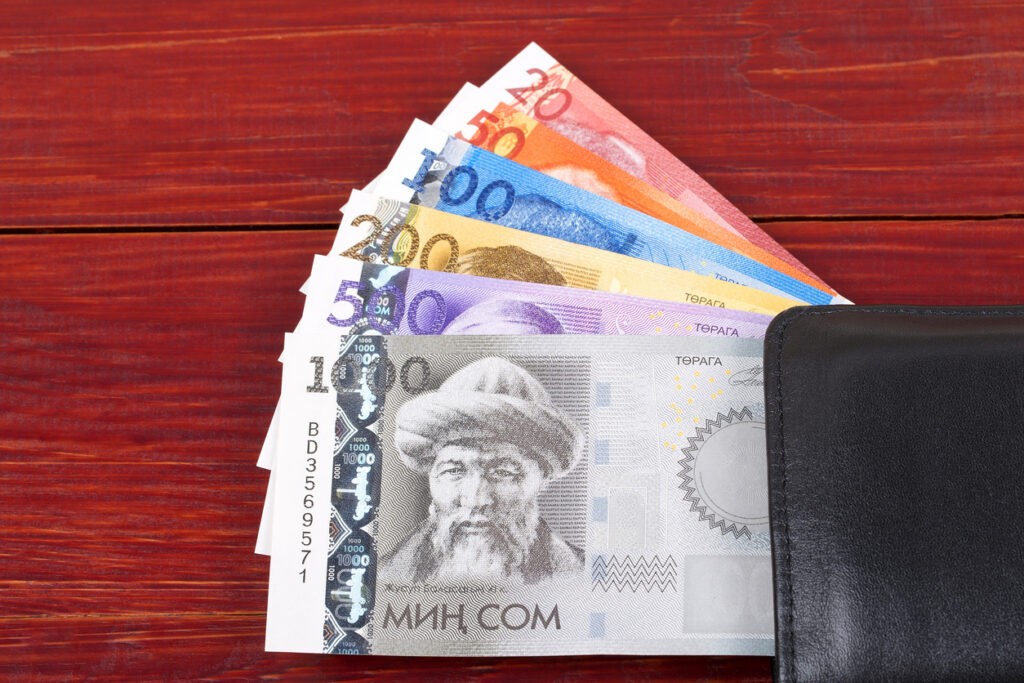
The Asian Development Bank (ADB) has raised about $5 million from its first bond issued in Kyrgyzstan’s currency, the som.

Arranged by Standard Chartered Bank and fully subscribed by Record Currency Management, the 3-year bond issue carries a 10.5% coupon and mitigates currency risk for an ADB project in Kyrgyzstan. The project supports micro and small enterprises (MSEs), with at least 40% of the loan channeled to women-led or owned MSEs. The project is delivered through the local Kompanion Bank, which has a strong presence in rural areas and experience supporting women entrepreneurs nationwide.

ADB Assistant Treasurer Jonathan Grosvenor commented: “ADB’s maiden Kyrgyz Som bond further expands our local currency footprint and builds on our efforts to deliver foreign exchange risk mitigation solutions in all of ADB’s developing member countries.”

Since Kyrgyzstan joined the ADB in 1994, the bank has committed $2.6 billion in public sector loans, grants, and technical assistance to the country.

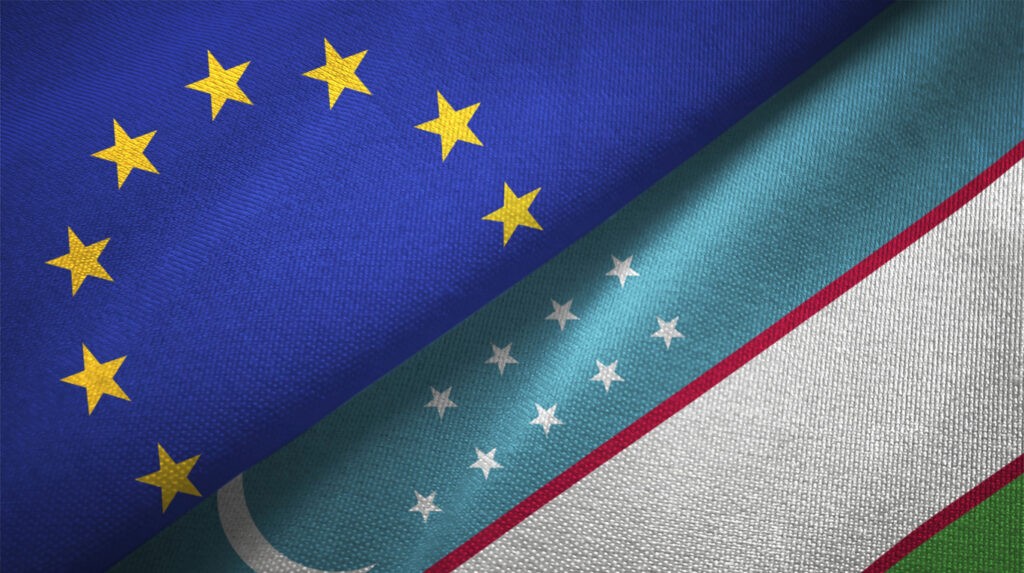
Uzbekistan and EU Look to New Areas of Cooperation

On November 5, the government of Uzbekistan and the European Union held the 7th meeting of their Subcommittee for Development Cooperation in Tashkent, Uzbekistan. The parties reviewed the EU’s ongoing projects in Uzbekistan and agreed to closer cooperation in transport, critical raw materials, digitalization, and territorial planning.

As reported by the EU Delegation to Uzbekistan, the parties discussed the progress of the ongoing EU-funded project, “Further Improvement of Public Services Delivery in Uzbekistan,” which has increased Uzbek citizens’ access to public services in rural areas; projects addressing corruption; and budget support and expertise worth 27 million euro for agricultural reforms.

The EU and the Uzbek government also addressed potential new areas of cooperation, such as critical raw materials, transport, territorial planning of urban and rural areas, and women’s economic empowerment.

As part of the Multi-annual Indicative Program for 2021-2027, the EU will allocate around 43 million euros for new bilateral programs to be launched between 2025 and 2027. An additional 30 million euros will be allocated to regional programs supporting border security, digitalization, including access to the Internet, and national migration policies.

The Multi-annual Indicative Programme for 2021-2027 sets the priorities for the EU-Uzbekistan cooperation. The priority areas are effective governance, green and digital growth, and sustainable agri-food sector.

In April 2024, the European Commission and Uzbekistan signed a Memorandum of Understanding for a strategic partnership on critical raw materials (CRMs), which marked a significant step towards a diversified and sustainable supply of CRMs for green and digital transitions in both the EU and Uzbekistan.

Rich in copper, molybdenum, and gold, Uzbekistan has the second-largest reserves of CRMs in Central Asia (after Kazakhstan).

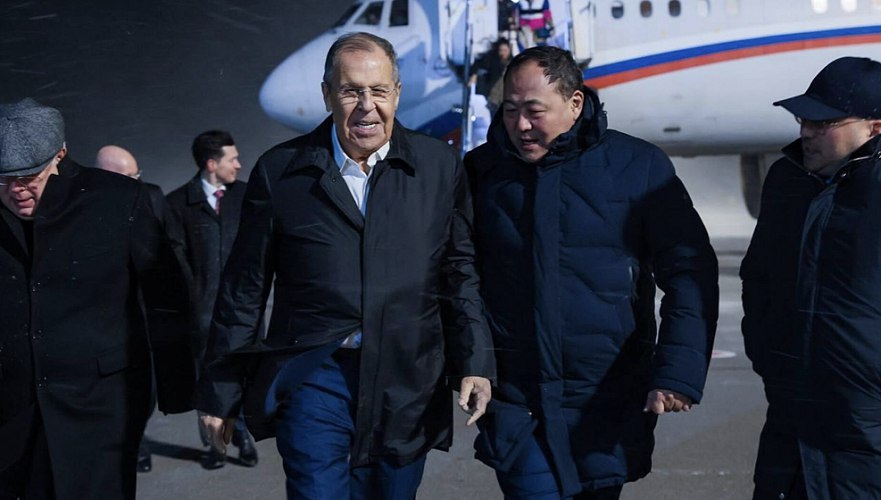
Russian Foreign Minister Sergey Lavrov Arrives in Astana

Russian Foreign Minister Sergey Lavrov has arrived in Astana to talk with Kazakhstan’s Deputy Prime Minister and Foreign Minister Murat Nurtleu.

The visit, which began on the evening of November 6, will last two days. A key meeting topic will be preparations for Russian President Vladimir Putin’s upcoming visit to Kazakhstan.

According to Russian Foreign Ministry spokeswoman Maria Zakharova, the parties plan to discuss strategic partnership and alliance, including bilateral and international issues, and cooperation on integration platforms such as the EAEU, CSTO, CIS, and SCO.

During the visit, the foreign ministers will sign an action plan on cooperation for 2025-2026. In addition, Lavrov will deliver a lecture at the Diplomatic Institute of the Academy of Public Administration and visit the Holy Dormition Cathedral to commemorate the 25th anniversary of the Astana and Alma-Ata Diocese of the Kazakhstan Metropolitan District.

Lavrov and Nurtleu last met on September 26 at the UN General Assembly, where they discussed current issues of Russia-Kazakhstan relations, upcoming contacts, and interaction on international platforms. Russia and Kazakhstan have an extensive treaty and legal framework, and the upcoming talks may focus on new interagency documents.

In late October, Russian presidential spokesman Dmitry Peskov said that Putin’s visit to Kazakhstan is being actively prepared and is tentatively scheduled for November 27, according to the protocol of the intergovernmental commission.

Kazakhstan Begins Export of New Harvest Grain

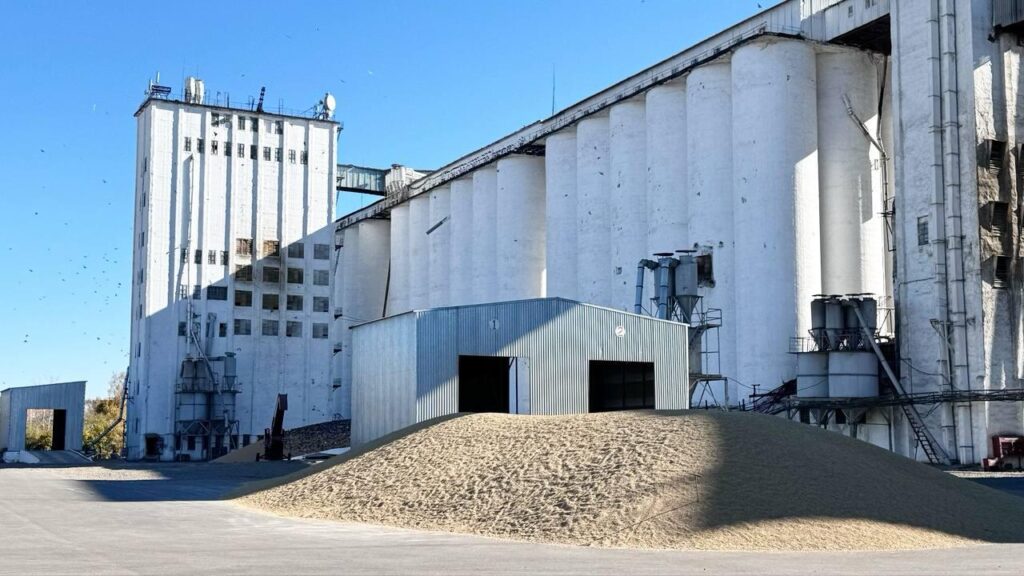
Kazakhstan has begun exporting grain from the new harvest, which totaled 26.6 million tons this year, 56% higher than in 2023.

In September-October, Kazakhstan’s national railway company, Kazakhstan Temir Zholy (KTZ), transported 1.8 million tons of grain for export, 48% more than in the same period last year (1.2 million tons).

During the two months, grain exports to Uzbekistan amounted to 738,000 tons (49% more than in September-October 2023), and 298,000 tons were shipped to Tajikistan (a 48% increase).

Increasing grain exports were also reported to China, Afghanistan, Iran, and Kyrgyzstan.

The Kazakh Ministry of Agriculture expects a significant increase in grain exports in the first half of 2025.

According to KTZ, Afghanistan is ready to import about 200,000 tons of Kazakh grain, which will be transported via Turkmenistan.

According to the Ministry of Agriculture, Kazakhstan plans to export about 12 million tons of the new harvest grain to traditional markets—Central Asia and Afghanistan—and new ones, such as Pakistan, Indonesia, Brazil, and Malaysia.

Uzbekistan remains the primary importer of Kazakh grain, followed by Tajikistan, Afghanistan, Turkmenistan, and China.