• KGS/USD = 0.01144 0%
  • KZT/USD = 0.00196 -0%
  • TJS/USD = 0.10899 -0%
  • UZS/USD = 0.00008 -0%
  • TMT/USD = 0.28490 0%
  • KGS/USD = 0.01144 0%
  • KZT/USD = 0.00196 -0%
  • TJS/USD = 0.10899 -0%
  • UZS/USD = 0.00008 -0%
  • TMT/USD = 0.28490 0%
  • KGS/USD = 0.01144 0%
  • KZT/USD = 0.00196 -0%
  • TJS/USD = 0.10899 -0%
  • UZS/USD = 0.00008 -0%
  • TMT/USD = 0.28490 0%
  • KGS/USD = 0.01144 0%
  • KZT/USD = 0.00196 -0%
  • TJS/USD = 0.10899 -0%
  • UZS/USD = 0.00008 -0%
  • TMT/USD = 0.28490 0%
  • KGS/USD = 0.01144 0%
  • KZT/USD = 0.00196 -0%
  • TJS/USD = 0.10899 -0%
  • UZS/USD = 0.00008 -0%
  • TMT/USD = 0.28490 0%
  • KGS/USD = 0.01144 0%
  • KZT/USD = 0.00196 -0%
  • TJS/USD = 0.10899 -0%
  • UZS/USD = 0.00008 -0%
  • TMT/USD = 0.28490 0%
  • KGS/USD = 0.01144 0%
  • KZT/USD = 0.00196 -0%
  • TJS/USD = 0.10899 -0%
  • UZS/USD = 0.00008 -0%
  • TMT/USD = 0.28490 0%
  • KGS/USD = 0.01144 0%
  • KZT/USD = 0.00196 -0%
  • TJS/USD = 0.10899 -0%
  • UZS/USD = 0.00008 -0%
  • TMT/USD = 0.28490 0%
08 December 2025

EBRD and EU Support Solar Power Project in Uzbekistan

The European Bank for Reconstruction and Development (EBRD) is providing funds to construct a solar power plant in Uzbekistan’s Khorezm region.

The EBRD’s financial package of up to $54.6 million (€50.5 million) will be provided to Sarimay Solar, a special-purpose company fully owned by Voltalia, an international energy producer and service provider based in France. The package will consist of a senior loan of up to $44.8 million (€41.5 million) and a special facility of €9 million, which will support Sarimay Solar during construction.

The project will benefit from an unfunded guarantee covering a senior loan tranche of $7 million (€6.5 million) provided by the European Union’s European Fund for Sustainable Development Plus.

The financing will help Sarimay Solar construct and operate a 100 MWac (126MWdc) greenfield solar photovoltaic plant, contributing to Uzbekistan’s aim of further decreasing its reliance on carbon-intensive thermal power generation and developing up to 25 GW of solar and wind capacity by 2030.

Once operational, the plant is expected to generate up to 252 GWh of electricity yearly and reduce annual CO2 emissions by more than 141,000 tons.

For the fourth year in a row, Uzbekistan has been the leading recipient of EBRD funding in Central Asia. The Bank has invested around €4.9 billion in 167 projects across the country, most of which support private entrepreneurship.

First-Ever Tungsten Production Launched in Kazakhstan

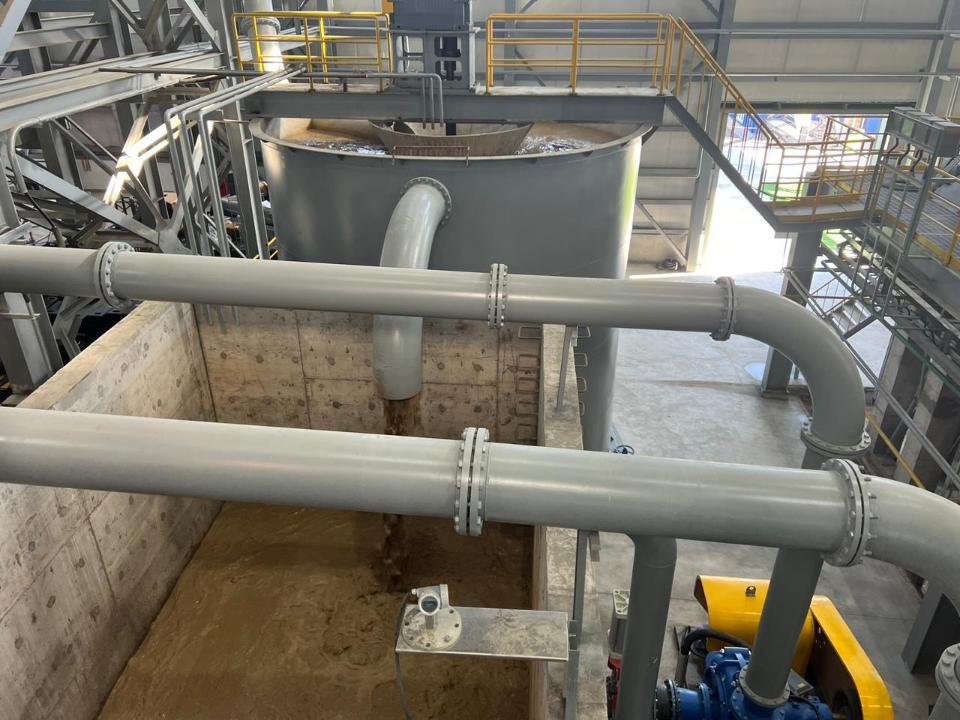
On November 1, Kazakhstan’s first tungsten processing plant was opened in the Almaty region. According to the Kazakh Ministry of Industry and Construction, this will strengthen the country’s position in the global rare earth metals market.

The $300 million project will create up to 1,000 local jobs and, when fully operational, will process 3.3 million tons of ore annually, producing 65% tungsten concentrate.

Jiaxin International Resources Investment Ltd. is implementing the project, which was joined by Jiangxi Copper Corporation, China Railway Construction Company, China Civil Engineering Construction Company, and Ever Trillion International Singapore PTE LTD.

Further plans include constructing a $150 million deep processing facility to increase tungsten content to 88.5% and produce high-purity tungsten carbide.

Tungsten has the highest melting point of all metals and is alloyed with other metals to strengthen them. Tungsten and its alloys are used in many high-temperature applications, such as arc-welding electrodes and heating elements in high-temperature furnaces. Tungsten carbide is tough and important to the metal-working, mining, and petroleum industries.

Speaking at the 36th meeting of the Foreign Investors’ Council in Astana on October 31, Kazakhstan President Kassym-Jomart Tokayev emphasized that Kazakhstan has a unique mineral resource base and has attracted more than $1 billion of private investment in geological exploration over the past six years.

WTO Momentum: Uzbekistan Wraps up Talks with U.S.

Uzbekistan has taken another big stride in its march toward membership in the World Trade Organization, a goal that it hopes to finalize ahead of the WTO ministerial meeting in the spring of 2026.

A bilateral agreement with the United States has been reached after 14 months of negotiations, according to Azizbek Urunov, Uzbekistan’s chief negotiator on WTO accession. Uzbekistan has now completed talks with 21 countries as it seeks to implement reforms and integrate more closely with the global economy, demonstrating considerable momentum toward WTO accession since no deals had been negotiated at the beginning of 2023.

“It has been an adventurous journey, tough but substantive negotiations,” Urunov said after the talks with American counterparts last week. Uzbekistan started the WTO accession process in 1994, several years after independence from the Soviet Union, and then dropped the effort a decade later. It resumed the campaign a few years ago.

Johanna Hill, deputy director-general of the WTO, said last month that Uzbekistan’s goal was to “reduce the number of outstanding bilateral negotiations to under 10 WTO Members by next year.”

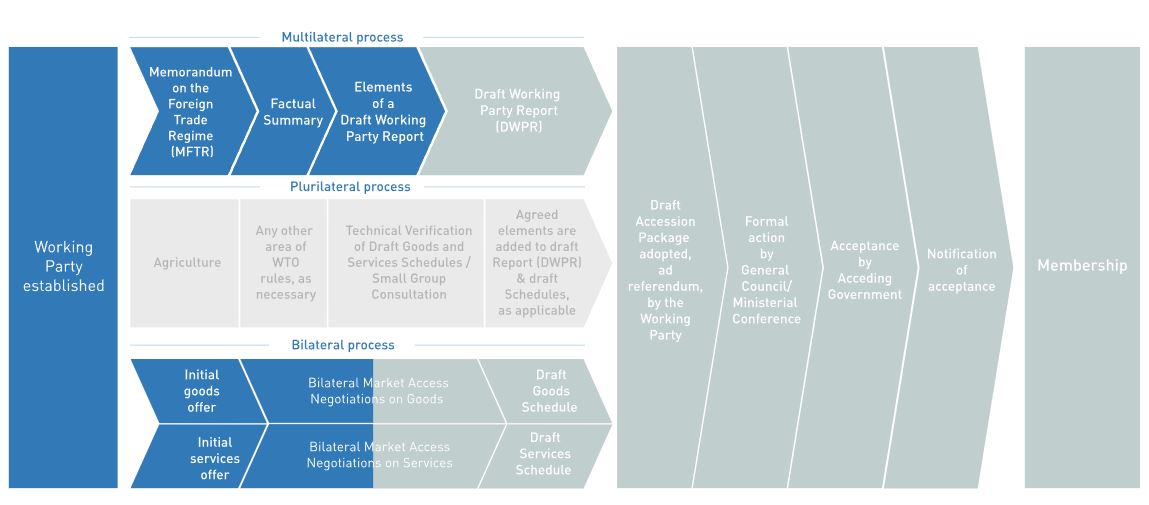
Uzbekistan’s accession process; image: WTO


Uzbekistan is pursuing reforms in the role of state trading enterprises, exports restrictions and subsidies, technical barriers to trade and other areas, according to Hill.

“Uzbekistan has been one of the most active acceding governments of late. It has pushed ahead with economic reform, in the strategic region of Central Asia, with WTO accession very high on the government’s agenda,” she said. Hill cited a WTO report this year that says economies reforming their markets during WTO accession grew on average 1.5% more than economies that did not reform.

The WTO report maintains that trade and more global cooperation are critical to fostering equality and inclusivity, while acknowledging rising geopolitical tensions, measures to restrict trade, greater urgency surrounding the push for sustainability and other challenges.

Some analysts point to the WTO’s ministerial conference in Abu Dhabi, United Arab Emirates earlier this year as a showcase for the troubles that the organization is facing.

“On the critical agenda items – agricultural trade, fisheries subsidies, and reform of the WTO’s dispute-settlement mechanism – ministers simply kicked the can down the road, undertaking to continue work and once more extend deadlines that few expect to be met,” wrote Evan Rogerson, an analyst at the S. Rajaratnam School of International Studies in Singapore. His commentary on the meeting was among several presented by the Council of Councils, an international group of policy institutes.

Mixed Picture: Perceptions of China in Central Asia

China’s growing presence in Central Asia is seen as an economic opportunity by many in the region, but is also viewed with concern by others who fear so-called debt traps and land grabs. A new report on those perceptions of China stresses that there is no overarching Central Asian viewpoint and points to nuance in attitudes among the different countries.

The study by the Central Asia Barometer, a polling group that has said it will suspend operations on December 1 because of insecurity and other obstacles to carrying out its work, is significant because a lot of news about China and Central Asia focuses on official pronouncements by governments and business groups. Assessing public opinion can be more of a challenge in countries with a top-down tradition of leadership.

“Favorability towards China varies widely across countries, with younger generations in Kazakhstan and Kyrgyzstan generally viewing China’s involvement more positively, particularly in areas like technology and investment,” the Central Asia Barometer said. “Older generations in these countries tend to be more skeptical, though. In Turkmenistan, the older population is more optimistic about China’s role, especially with regard to Chinese workers and investment.”

The non-governmental group also noted “a decline or even negative favorability” in perceptions of China among people in Uzbekistan.

The study, titled “Beyond the Silk Road” and released on Friday, is based on multiple surveys of opinions of China between 2017 and 2023 in four Central Asian states -Kazakhstan,  Kyrgyzstan, Turkmenistan, and  Uzbekistan. There was no data from Tajikistan. Perceptions of China depended on demographic factors such as ethnicity, age and gender, as well as the impact of specific Chinese infrastructure projects, and sources of information. Content on social media, for example, tended to improve attitudes toward Chinese business ventures.

As of 2024, China has surpassed Russia as the top trading partner for most countries in Central Asia and is a major source of foreign investment and loans, a potential windfall that is tempered by concern about a lack of transparency in Chinese business practices. A Caspian Policy Institute analysis that was published in August explored negative perceptions of China.

In July, Chinese leader Xi Jinping, architect of the Belt and Road economic initiative, traveled to Kazakhstan for a meeting of the Shanghai Cooperation Organization, a security group whose founding members include several Central Asian countries. There, Xi celebrated Chinese collaboration with President Vladimir Putin of Russia, the region’s other traditional power. Then he visited Tajikistan, a security partner that borders China and Afghanistan.

The Central Asia Barometer said its data indicated a decline among some Central Asian populations in favorable views of Russia, coinciding with a change in feelings about China.

“In 2022, after the Russian invasion of Ukraine, an upward shift in favorability toward China in Kazakhstan was observed while at the same time a pronounced drop in Russia’s favorability was noted,” it noted.

Even so, China is not expected to supplant Russia’s longstanding influence in Central Asia. A commentary published by the Royal United Services Institute in early 2023 said that Russia, despite a reduction in power, remained “a key security and economic actor and has powerful tools at its disposal that can affect the policies of countries in the region.”

Tajikistan and Kuwait Sign Nine Cooperation Agreements

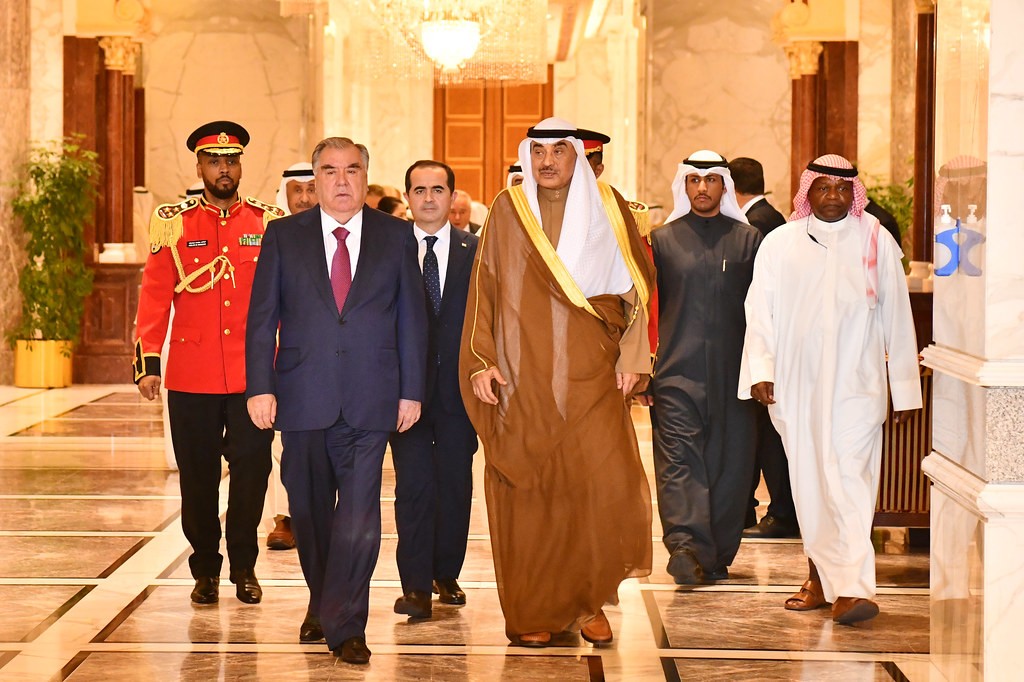
Tajik President Emomali Rahmon began his official visit to Kuwait on November 3. He met with the country’s leaders and finalized agreements to strengthen bilateral cooperation. Following discussions, Tajikistan and Kuwait signed nine key documents to enhance their collaboration, the President’s press service reports.

In the presence of Rahmon and Crown Prince Sheikh Sabah al-Khalid Al-Hamad Al-Mubarak Al-Sabah, both sides signed:
• A Memorandum of Cooperation between the Foreign Ministries of Tajikistan and Kuwait’s Diplomatic Academy;
• A protocol to amend the double taxation agreement between the two countries;
• A memorandum on labor regulation in the private sector;
• Agreements on trade and industrial cooperation;
• A cooperation agreement between Tajikistan’s National Information Agency “Khovar” and Kuwait’s State Information Agency “KUNA”;
• Memorandums covering sports, standardization, and physical culture;
• An executive tourism program for 2024-2026.

Rahmon is quoted as saying: “We are ready to take practical steps to strengthen our relations further.” The discussions emphasized the importance of increasing the intergovernmental joint commission’s activities and establishing an Entrepreneur Council and a Joint Investment Fund between the two nations.

Rahmon also thanked Sheikh Mishaal Al-Ahmad Al-Jabir Al-Sabah for the Kuwait Development Fund’s support of critical projects in Tajikistan, particularly in road construction, energy, and irrigation.

Additionally, both leaders discussed expanding Kuwaiti investment into Tajikistan’s light, food, metallurgy, pharmaceutical, and agriculture industries. The Emir of Kuwait recognized Rahmon’s initiatives in empowering women and shared Kuwait’s similar efforts, highlighting recent appointments of women to senior government roles.

The signed memorandum on private-sector labor regulation was celebrated as a step toward cooperation, further solidifying the growing partnership between Tajikistan and Kuwait.

New Visa for Modern Nomads Introduced in Kazakhstan

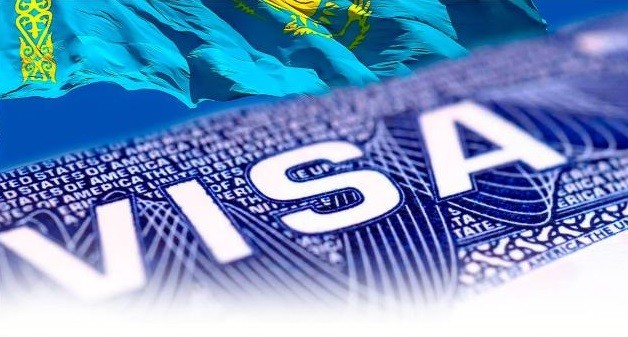
Kazakhstan has introduced a new “Neo Nomad” visa for modern nomads and working tourists who combine work and travel. The new visa regime was developed using the experience of more than 50 countries that have introduced similar programs after the pandemic.

To obtain a Neo-Nomad visa, foreign citizens must prove a stable income of at least $3,000 per month, provide health insurance, and provide a certificate showing that they have no criminal record. The visa is designed for representatives of various industries, including IT, marketing, finance, consulting, design, and e-commerce.

The visa holder can stay in Kazakhstan for up to one year while continuing to work for a foreign company. This will allow foreign citizens to immerse themselves in the local culture, and Kazakhstan to generate additional revenue — which, according to estimates, could amount to about $8 million a year if visas are issued to 500 individuals. Foreigners who take advantage of Neo Nomad will reside and spend the funds in Kazakhstan. The program also does not affect Kazakhstan’s labor market, as foreign citizens do not take local jobs.

Tourism and Sports Minister Yerbol Myrzabasynov said the joint efforts of several ministries have made Kazakhstan attractive to digital nomads, whose number globally has reached 35 million. Almaty and Astana are already on the list of the 150 best cities for this type of tourist.

Many countries have already introduced visas for digital nomads, attracting remote workers and stimulating the economy. For example, Spain offers the Digital Nomad Visa, which allows you to live and work remotely for up to 12 months with the possibility of an extension. Portugal has a D7 Visa program targeting passive income earners, including remote workers. These visas contribute to the development of the local economy, increase consumption, and attract skilled professionals.