
• KGS/USD = 0.01144 0%
  • KZT/USD = 0.00196 -0%
  • TJS/USD = 0.10899 -0%
  • UZS/USD = 0.00008 -0%
  • TMT/USD = 0.28490 0%
  • KGS/USD = 0.01144 0%
  • KZT/USD = 0.00196 -0%
  • TJS/USD = 0.10899 -0%
  • UZS/USD = 0.00008 -0%
  • TMT/USD = 0.28490 0%
  • KGS/USD = 0.01144 0%
  • KZT/USD = 0.00196 -0%
  • TJS/USD = 0.10899 -0%
  • UZS/USD = 0.00008 -0%
  • TMT/USD = 0.28490 0%
  • KGS/USD = 0.01144 0%
  • KZT/USD = 0.00196 -0%
  • TJS/USD = 0.10899 -0%
  • UZS/USD = 0.00008 -0%
  • TMT/USD = 0.28490 0%
  • KGS/USD = 0.01144 0%
  • KZT/USD = 0.00196 -0%
  • TJS/USD = 0.10899 -0%
  • UZS/USD = 0.00008 -0%
  • TMT/USD = 0.28490 0%
  • KGS/USD = 0.01144 0%
  • KZT/USD = 0.00196 -0%
  • TJS/USD = 0.10899 -0%
  • UZS/USD = 0.00008 -0%
  • TMT/USD = 0.28490 0%
  • KGS/USD = 0.01144 0%
  • KZT/USD = 0.00196 -0%
  • TJS/USD = 0.10899 -0%
  • UZS/USD = 0.00008 -0%
  • TMT/USD = 0.28490 0%
  • KGS/USD = 0.01144 0%
  • KZT/USD = 0.00196 -0%
  • TJS/USD = 0.10899 -0%
  • UZS/USD = 0.00008 -0%
  • TMT/USD = 0.28490 0%
08 December 2025

IDB to Fund $156.3 Million for Cancer Hospitals in Turkmenistan

Turkmenportal reported that a Turkmenistan delegation visited Washington DC from October 22 to 26 to participate in the annual meetings of the International Monetary Fund (IMF) and the World Bank, along with related events.

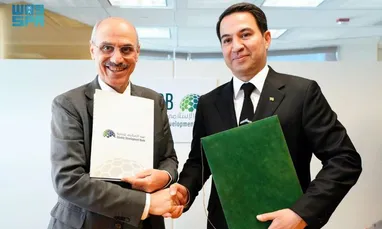
During the visit, representatives of Turkmenistan’s financial and banking sector engaged in bilateral discussions with foreign partners. According to the Saudi Press Agency, the Islamic Development Bank (IDB) has approved $156.3 million in funding to build three specialized cancer treatment hospitals in Turkmenistan. These modern facilities will be located in Balkanabad, Turkmenabad, and Mari, with a combined capacity to serve over 11,750 patients. The agreement was signed in a meeting between IDB President Muhammad Al Jasser and Rahimberdi Jepbarov, Chairman of the State Bank for Foreign Economic Affairs of Turkmenistan.

Meanwhile, on October 24, Swiss pharmaceutical company Roche, in partnership with Nobel Almaty Pharmaceutical Factory, launched the production of innovative drugs in Almaty, Kazakhstan. This initiative is part of an agreement between Roche, Kazakhstan’s SK-Pharmacy, Nobel, and the Kazakh Research Institute of Oncology and Radiology, supported by Kazakh Invest. Under this collaboration, Roche will locally produce three biotechnological drugs to treat HER2-positive breast cancer, a highly aggressive form affecting up to 20% of breast cancer patients in Kazakhstan.

Turkmenistan Scientists Develop New Camel Thorn Microencapsulation Technology

Specialists of the biotechnology department of the International Scientific and Technological Park of the Academy of Sciences of Turkmenistan have developed a technology for microencapsulation of camel thorn extract of medicinal plant. The development was officially recognized, and the State Intellectual Property Service of the Ministry of Finance and Economy of Turkmenistan issued the relevant certificate.

The development of such technologies has become relevant due to the high demand for drugs from local raw materials, which require methods that preserve physicochemical and technological properties. Extraction from camel thorns is carried out by crushing the plant and isolating the active substances with the help of a special mixture. Microencapsulation allows the active substances to be enclosed in microcapsules, which preserves their properties and regulates their release, enhancing the effectiveness of drugs.

The extract created can be used for pharmaceutical and food purposes. Microencapsulated extracts have several advantages, such as high pharmacological activity, positive tolerability, and minimal side effects. According to Altyn Rakhmanova, head of the biotechnology department, the peculiarity of the new technology is that it improves the therapeutic and preventive qualities of products at a low cost. All preparations are made of natural components. They meet the requirements of modern phytotherapy and do not contain artificial additives.

Camel thorn (Alhagi persarum) is a medicinal plant with many healing properties. It contains flavonoids, saponins, sugars, tannins, vitamins C, K, and B vitamins, carotene, ursolic acid, traces of alkaloids, essential oils, dyes, and resins. Camel thorn is used as a natural remedy for various ailments, effectively relieving colds, flu, sore throat, bronchitis, and coughs.

As previously reported by The Times of Central Asia, biotechnologists at the Academy of Sciences of Turkmenistan are advancing local biotechnological production. They are developing fodder supplements from the pods of the native gladichia tree and have also developed a new lactose-based gel designed to rejuvenate and address age-related skin changes.

Among other reported recent innovations, Turkmen scientists have created a therapeutic ointment from the maclura tree, introduced to Central Asia, which reduces inflammation and accelerates wound healing. Additionally, they have formulated a cosmetic cream made from oil derived from silkworm cocoons. Earlier, they also launched a line of crackers infused with camel thorn extract.


Rahmon Calls To End Persecution For Social Media ‘Likes’

Tajik President Emomali Rahmon has called on law enforcement agencies to stop prosecuting citizens for their activity on social media, particularly for likes and comments. Rahmon said this at the opening of a new training institute for Interior Ministry personnel, timed to coincide with the 30th anniversary of the Constitution and the Day of the Tajik Police.

In Tajikistan, even adding simple “likes” on posts by opposition figures, or reposting their videos, can lead to arrest. Since 2016, the country’s Criminal Code has included a provision on “public justification of extremism,” which allows law enforcement agencies to equate likes with support for extremist ideas. For example, in August 2023, 70-year-old Kamoliddin Sharofov was sentenced to five years for liking posts on a banned website.

Rahmon expressed concern over the growth of unfounded criminal cases against social media users, and noted that law enforcement agencies’ actions undermine public confidence. He called for restraint, emphasizing that any police action should show respect for citizens’ rights and the principles of democracy.

The Tajik government has previously been criticized by the opposition and international organizations, including the U.S. State Department, for arresting citizens for their online activities.

First Kazakh Satellite for Mongolia

During Kazakh President Kassym-Jomart Tokayev’s visit to Mongolia on October 29, Kazakhstan and Mongolia signed a landmark agreement to jointly develop an Earth remote sensing satellite. This collaboration will allow each country to independently control the satellite, providing both with real-time data to monitor natural resources and advance agricultural development.

At the signing ceremony, Zhaslan Madiyev, Kazakhstan’s Minister of Digital Development, Innovation, and Aerospace Industry, commented: “This is the first export of a Kazakh satellite in the country’s history. Fully developed by Kazakh engineers, the satellite will be adapted to Mongolia’s needs, strengthening the regional satellite infrastructure and highlighting Kazakhstan’s growing potential in space technology.”

Remote sensing technologies will allow both countries to monitor land conditions, manage water resources, and analyze environmental changes more effectively.

The National Space Center of Kazakhstan will lead the project, working closely with Mongolian engineers. Throughout the initiative, Kazakh specialists will provide training to their Mongolian counterparts.

Kyrgyzstan Faces Critical Shortage of 5,000 Doctors

Kyrgyzstan’s hospitals are struggling with a shortage of medical staff, with an estimated need for around 5,000 more doctors nationwide, according to Deputy Health Minister Kaarmanbek Baidavletov. He shared these figures during a Jogorku Kenesh meeting, highlighting the urgency of the issue.

To address this issue, the Ministry of Health is negotiating with the president’s regional representatives to develop solutions. In some districts, local authorities are helping young specialists by taking over utility payments to ease doctors’ working conditions.

Baidavletov said there should be one doctor for every 1,500 people, but more staff is needed in remote regions and central hospitals.
Kyrgyzstan’s healthcare system faces several serious challenges. One key problem is the need for more medical personnel, especially in remote regions that lack hematology, neonatology, and pediatrics specialists.

In addition, the country has a high incidence of non-communicable diseases such as hypertension and diabetes mellitus, especially among women. The Women’s Health initiative has been launched to enhance awareness and early diagnosis of these diseases.

Another initiative focuses on antimicrobial resistance (AMR), which the WHO supports. This program provides diagnostic tools and training for medical staff and assesses the prevalence of AMR in Kyrgyzstan to improve clinical protocols and policies in this area.

Italian Bank to Enter Kazakhstan Market

An Italian state bank, Cassa Depositi e Prestiti, plans to establish a new credit line in Kazakhstan, as announced by Edmondo Cirielli, Italy’s Deputy Minister of Foreign Affairs and International Cooperation. Cirielli made the announcement during his meeting with Arman Shakkaliyev, Kazakhstan’s Minister of Trade and Integration, on October 29 in Astana.

Cirielli stated: “We are confident that our relations will only strengthen in the trade and economic sphere. Kazakhstan occupies a key position in Central Asia and connects Europe with the region. We plan to open a credit line of our state bank, Cassa Depositi e Prestiti, in Kazakhstan.”

Minister Shakkaliyev noted that Italy is Kazakhstan’s third-largest trading partner among European Union countries. In 2023, trade turnover between the two countries amounted to $16.1 billion, 7.8% more than the previous year. Exports from Kazakhstan to Italy reached $14.8 billion, and imports stood at $1.2 billion.

In January-August 2024, bilateral trade increased by 33%, reaching $13.8 billion, with Kazakh exports rising by 36% to $12.9 billion.
Astana hosted the 9th Kazakh-Italian working group meeting on economic and industrial cooperation on October 29. Deputy Minister of Foreign Affairs Edmondo Cirielli headed the Italian delegation.

The meeting focused on increasing the transportation volume along the Trans-Caspian International Transport Route, which will create additional opportunities for bilateral trade. The parties also confirmed their interest in developing the transport and logistics sector.
Kazakhstan proposed expanding cooperation in the agricultural sector, including fruit and vegetable growing and grain processing and expressed its readiness for long-term partnerships with Italian grain processors and the supply of high-protein wheat to the Italian market.
Italian companies were encouraged to invest in Kazakhstan’s renewable energy sector and the Khorgos Special Economic Zone, strategically located on the Kazakh-Chinese border.


