• KGS/USD = 0.01144 0%
  • KZT/USD = 0.00196 -0%
  • TJS/USD = 0.10899 0%
  • UZS/USD = 0.00008 0%
  • TMT/USD = 0.28490 0%
  • KGS/USD = 0.01144 0%
  • KZT/USD = 0.00196 -0%
  • TJS/USD = 0.10899 0%
  • UZS/USD = 0.00008 0%
  • TMT/USD = 0.28490 0%
  • KGS/USD = 0.01144 0%
  • KZT/USD = 0.00196 -0%
  • TJS/USD = 0.10899 0%
  • UZS/USD = 0.00008 0%
  • TMT/USD = 0.28490 0%
  • KGS/USD = 0.01144 0%
  • KZT/USD = 0.00196 -0%
  • TJS/USD = 0.10899 0%
  • UZS/USD = 0.00008 0%
  • TMT/USD = 0.28490 0%
  • KGS/USD = 0.01144 0%
  • KZT/USD = 0.00196 -0%
  • TJS/USD = 0.10899 0%
  • UZS/USD = 0.00008 0%
  • TMT/USD = 0.28490 0%
  • KGS/USD = 0.01144 0%
  • KZT/USD = 0.00196 -0%
  • TJS/USD = 0.10899 0%
  • UZS/USD = 0.00008 0%
  • TMT/USD = 0.28490 0%
  • KGS/USD = 0.01144 0%
  • KZT/USD = 0.00196 -0%
  • TJS/USD = 0.10899 0%
  • UZS/USD = 0.00008 0%
  • TMT/USD = 0.28490 0%
  • KGS/USD = 0.01144 0%
  • KZT/USD = 0.00196 -0%
  • TJS/USD = 0.10899 0%
  • UZS/USD = 0.00008 0%
  • TMT/USD = 0.28490 0%
09 December 2025

Shaping the Future of Science in Kazakhstan

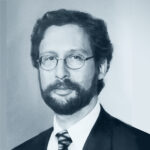
At Kazakhstan’s Nazarbayev University (NU), work is geared toward understanding the intricacies of modern science. TCA spoke to Dr. Aidos Baumuratov, the science director of the NU Collective Use Office, who discussed the importance of scientific collaboration, supported by world-class laboratories, and how Kazakhstan is aiming to nurture the next generation of scientists.

TCA: Can you tell me about the work that NU laboratories do?

Baumuratov: The laboratories have collected unique, expensive equipment from all over the university. The staff that interprets the results has been selected. In simple words, we help scientists to create science. Unfortunately, Kazakhstan cannot afford the purchase of expensive devices in large quantities, so the model is justified from an economic point of view. The model of a shared office is taken from American and European universities. Today, I manage 23 laboratories with 80 main items of equipment and about 400 additional ones. We are creating a world-class scientific infrastructure, and the laboratories are equipped accordingly.

NU scientists win grants, among other things, and consequently, they implement their developments in practice. They come to our laboratories for the missing equipment and perform most of their experiments here.

TCA: How much of NU’s research is focused on practical applications?

Baumuratov: Science is designed to solve global problems. It cannot be considered only from the point of view of immediate return. I can say that in the top global universities, where there are thousands of scientists, only a few startups occur after many years of research, which are eventually taken into development by industrial giants or IT corporations.

TCA: What should be done to make the young generation in Kazakhstan more eager to enter science?

Baumuratov: I can only express my personal opinion. Attitudes should be learned from childhood. Today, science is undeservedly in the shadows. After the collapse of the USSR, we went through difficult years; we had to fix the economy, and of course, this had an impact on who stayed. If I am not mistaken, 70-80% of scientists left after the collapse. Of those who remained, about the same number went into business, anywhere but science. It takes time to restore the potential, and it should start with schools.

When I began working at the university, I proposed an initiative to organize schoolchildren’s visits to our laboratories. The initiative was successfully implemented and is still in use today. Children from the 5th and 6th grades visit us; they see aesthetically pleasing, insanely complex equipment at the international level, the finest instruments, and they can talk to those who work here. This is very useful, as it clearly shows schoolchildren what path they can choose. They see and realize that science brings benefits to society and the country. Even the signature of a scientist under an article in a journal, where the university and Kazakhstan are mentioned, already works for the image of the country as a whole.

In addition, scientists’ general intelligence creates an appropriate environment around children. Ethical norms, the priority of education, and high standards of behavior are spreading. In other words, society is influenced in a multifactorial way.

It should be understood that science is based on academic freedom, expanding funding sources, and creating an environment where scientific ideas emerge. With an active exchange of opinions and ideas, breakthrough projects can happen. NU has such projects. Research in the post-Soviet space is making substantial developments.

TCA: What makes NU laboratories stand out?

Baumuratov: One example is that we have a laboratory of electron microscopy. It has five electron microscopes, whose main function is to capture the nanoworld. It can show what can’t be seen with a magnifying glass or even conventional microscopes. With the electron microscope, we can see up to atomic resolution. For instance, a physicist creates new materials for solar panels. Of course, they do a series of tests to validate the improvement, but publishing in highly-rated journals requires comparative images. The scientist brings us a sample, we take a picture and make a comparison. That’s how 70-90% of science works, by comparing existing prototypes with modified prototypes that the scientist is trying to implement.

This lab has the right level of staff behind the microscopes. At NU, microscopes are active; we help scientists from other universities understand the equipment. This format is unique for Kazakhstan and Central Asia, and on the scale of the CIS (Commonwealth of Independent States), there are three to five scientific centers. This is a story about only one laboratory, but we have many of them.

TCA: At the state level, there is an understanding of the importance of funding science. Unfortunately, there are not always funds in the budget. Now, there are ideas for introducing a new financing model through endowment funds, which are formed at the expense of donations. In your opinion, how realistic is introducing an additional system of financing science and universities?

Baumuratov: Endowment funds work very well in the global practice. In the U.S., this practice has proved itself perfectly. If a patron of the arts decides to donate, for instance, a million dollars to a higher education institution, an amount is deducted from their taxes, which, of course, has a favorable effect on business. Unfortunately, we do not have such mechanisms yet. Now, a private person cannot always allocate funds to an organization because, in some cases, it will be considered corruption.

However, such methods—creating boards of trustees and endowment funds—may become very effective soon. Science has no other choice in a difficult economic situation. I hope Kazakhstan will realize this potential, but we must remember that science does not always produce immediate applied results. On the contrary, years of significant investments are needed.

TCA: You have worked abroad for a long time in the USA and Europe. To what extent does the education system at NU differ from the standards in Kazakhstan?

Baumuratov: There is a tangible difference between NU and other universities in Kazakhstan. Our university interacts with professors who are directly involved in science. Accordingly, students don’t just get books but real experience of scientific activity, which is highly appreciated.

Furthermore, as I said, science is about funding, infrastructure, and academic freedom. Regarding infrastructure, at NU, one is immersed in the academic process, and later on, young people have the opportunity to engage directly in science under the guidance of their professor. In addition, the life and leisure of students are fully established: high-level living conditions, sports and cultural activities, and more than a hundred student clubs. Of course, we would like such conditions to become a common practice.

TCA: What do you think about the Ministry of Science and Higher Education’s initiative to divide universities into higher, secondary, and target leagues, and those different leagues affecting the amount of funding and the number of grants?

Baumuratov: The state should determine which specialists it needs, which spheres of education will be financed, and accordingly, which sectors of the economy will develop faster than others. This is agriculture – a vital sector of the economy on a global scale. This is medicine and biomedicine, biotechnology, and, of course, IT. Without the development of artificial intelligence, progress isn’t possible. Implementing AI means that all the areas I have mentioned will be strengthened many times over.

This division is not segregation but a redirection of the vector, as it seems to me. It would undoubtedly correspond to the world trends in the state as a whole. Today, it is necessary to consider the priorities of future generations in Kazakhstan regarding the development of science.

ADB Finances Road Reconstruction in Tajikistan

The Asian Development Bank (ADB) has approved a $86.67 million grant to help Tajikistan expand its degraded two-lane 49-km Dangara–Guliston highway to four lanes.

Commenting on the move, ADB Director General for Central and West Asia Yevgeniy Zhukov said: “ADB, in partnership with other organizations, promotes safe, accessible, and green transport infrastructure and services in our developing member countries. The Dangara–Guliston road, constructed in the 1930s and reconstructed in the 1970s, will become the first road in Tajikistan to incorporate climate adaptation and elements specific to women’s needs.”

The project will fund two pilot charging stations and develop investment frameworks to catalyze private sector investment in Tajikistan’s national charging infrastructure rollout. Safety is a high priority and to this end,  the newly reconstructed road will include dedicated cycleways, wide sidewalks for people with children and disabilities,  improved lighting and well-marked pedestrian crossings. Special toilets and changing facilities will be provided for mothers and babies, while public transport facilities will include preferential seating for people with disabilities.

In addition to the above, the fund will incorporate training programs for women living in and around the project area to open and run small businesses, and award entrepreneurship grants to selected participants.

The Tajikistan government has pledged $23 million towards the realization of the project whilst subject to its Board’s approval in early 2025, the European Bank for Reconstruction and Development (EBRD, will provide a $40 million co-financing loan.

Tajikistan’s Ministry of Transport plans to complete the project in 2030.

Afghanistan to Boost Oil Production in the Amu Darya Basin

Afghanistan plans to launch 25 new oil wells in the Amu Darya basin, increasing daily oil production to 3,000 tons.

Hamdullah Fitrat, the deputy spokesman of the Islamic Emirate of Afghanistan, shared that there are currently 24 active wells in this field, from which 1,300 tons of oil are extracted daily. According to Fitrat: “The Ministry of Mines and Petroleum plans to activate 25 more wells by the end of this year, of which 18 will be newly drilled, two will be exploratory wells, and five will be rehabilitated.”

Economic experts stress that officials should carefully plan new well drilling and attract investors to process the extracted oil.

Economic expert Abdul Zahoor Madaber stated that Afghanistan has abundant natural resources but lacks modern machinery to process them, and cooperation with other countries is needed to import this equipment.

Mohammad Asif Stanekzai, another economic expert, added: “The production and processing of natural resources can create job opportunities and have a positive impact on reducing inflation in Afghanistan.”

According to the Ministry of Mines and Petroleum, only 10% of Afghanistan’s oil needs are currently met from domestic production.

The Amu Darya is a vital river for Central Asian countries. While 72-73% of its water originates in Tajikistan, the majority is used by neighboring countries.

In April of this year, the countries of Central Asia distributed Amu Darya and Syrdarya water for the summer of 2024. Under the agreed quota, the draw on water from the Amu Darya watershed will be 56 billion cubic meters for the year, with about 40 billion cubic meters used in the April-to-October growing season. As stated in the Interstate Commission for Water Coordination (ICWC) agreement, Uzbekistan will receive 16 billion cubic meters, Turkmenistan will receive 15.5 billion cubic meters, and Tajikistan will receive 6.9 billion cubic meters.

The ICWC claims that the total number of irrigated lands in Central Asian countries is 4.3 million hectares in Uzbekistan, 2.5 million hectares in Kazakhstan, 1.9 million hectares in Turkmenistan, 1 million hectares in Kyrgyzstan, and 680,000 hectares in Tajikistan.

Rogun HPP Faces Criticism for Violating World Bank Standards

The international environmental coalition Rivers without Boundaries has released a report titled “Rogun Hydroelectric Power Plant Project: Non-Compliance Report with World Bank Requirements.”

Outlining how the Rogun HPP in Tajikistan fails to meet the World Bank’s environmental and social standards, the report highlights violations in six key areas: environmental assessment, biodiversity protection, resource efficiency, dam safety, public participation, and forced displacement. It also highlights non-compliance with the bank’s policies on financing investment projects.

The report’s authors point out that the situation worsened as a result of the World Bank taking responsibility for developing environmental and social safeguards for the Rogun HPP project on behalf of all financiers, including major banks like the AIIB, ADB, and EIB. In accepting this move, these institutions have effectively treated the World Bank’s standards as their own. Therefore, if these standards are violated, the standards of other financial institutions are also breached.

“We are convinced that the presented version of the Rogun HPP project does not comply with the social and environmental principles of the World Bank and should not be financed by international development banks in its current form,” said Evgeny Simonov, coordinator of the international environmental coalition ‘Rivers Without Borders.’ “Due to non-compliance with banking standards and procedures, the project includes many ineffective and risky elements that could lead to serious environmental and social damage during its implementation.”

The report was created under the international Rogun Alert initiative, which represents environmental organizations worldwide. Last week, it was sent to all international development banks involved in the Rogun project. On October 23, an open letter signed by 124 public organizations, including Rivers Without Borders, highlighting the risks of financing large dam projects, including Rogun, will be presented to the World Bank management.

According to the source, urgent international public consultations on the environmental and social impact of the construction of the Rogun HPP on the basin countries are planned for October 28 of this year.

Kyrgyz Blogger Jailed for Inciting Ethnic Hatred

A video blogger from the Jalal-Abad region of Kyrgyzstan has been sentenced to two years in prison for inciting ethnic hatred and propaganda related to the war in the Middle East after the Supreme Court upheld the verdict of a lower court. According to information provided by Turmush, the blogger’s name was not disclosed. The charges were brought under Part 1, Article 330 of the Criminal Code of Kyrgyzstan.

The man ran a video channel with an audience of about 400,000 subscribers, where he posted religious instructions and supported the Yakyn Inkar organization, which is banned in the country. In addition, his channel published materials stoking hatred in the Middle East. In particular, on November 1, 2023, he posted an interview with the head of a political party of the Jogorku Kenesh, who made statements calling for violence and the destruction of a specific nationality. The case was classified by the National Security Committee.

The detention of the blogger took place on November 25, 2023, and the trial took place on March 27, 2024, in the Pervomaisky District Court of Bishkek. The defense argued that the materials published did not violate the law, but the Supreme Court left the regional court’s decision unchanged. Based on the conclusions of experts and reports from staff of the 4th Main Department of the SCNS, the court ruled that the blogger’s publications provoked an increase in harmful and radical comments.

There have been several cases in Kyrgyzstan involving charges of inciting ethnic and religious hatred. In August 2023, blogger Aizhan Myrsan was fined for posting what the court deemed to be incitement to ethnic hatred. Her lawyers insisted that the video had been taken out of context and edited, but the court upheld the decision.

Another famous case is that of Omurbek Babanov, a politician who was accused of inciting ethnic hatred after a speech he delivered in 2017. His remarks at a meeting with voters became the subject of court proceedings, where experts interpreted them as potential calls for violence.

Kyrgyzstan to Introduce New Measures to Curb Noise Levels

During a parliamentary session, deputies determined that the Interior Ministry should be authorized to collect fines for excessive noise.

According to the republic’s law, fines for exceeding acceptable levels of  noise were previously issued by the Department of Health Prevention. However, according to the deputies, the department was not properly equipped to measure levels of noise on the streets or on premises. In addition, the department’s employees do not work at night, when violations are most likely to occur.

“Individuals believe their rights should not be violated if they want to invite a noisy company home to an apartment building at night, put on music, start construction or repair work, or watch television at a volume that exceeds the maximum permissible noise levels. Entertainment or construction work in one apartment can become a nightmare or sleepless nights for many living there. But complaints to the police due to the lack of the necessary law have no proper effect,” said the Kyrgyz Interior Ministry.

According to the civil code of offenses, loud noise is prohibited from 10 p.m. to 7 a.m. on weekdays and to 9 a.m. on non-working days and holidays. The only exception is during New Year’s Eve celebrations. Violation of the rules in settlements or public places is punishable by a fine of 10 thousand KGS ($120) for individuals and 28 thousand KGS ($330) for legal entities.