• KGS/USD = 0.01144 0%
  • KZT/USD = 0.00212 0%
  • TJS/USD = 0.10456 0.19%
  • UZS/USD = 0.00008 0%
  • TMT/USD = 0.28490 0%
  • KGS/USD = 0.01144 0%
  • KZT/USD = 0.00212 0%
  • TJS/USD = 0.10456 0.19%
  • UZS/USD = 0.00008 0%
  • TMT/USD = 0.28490 0%
  • KGS/USD = 0.01144 0%
  • KZT/USD = 0.00212 0%
  • TJS/USD = 0.10456 0.19%
  • UZS/USD = 0.00008 0%
  • TMT/USD = 0.28490 0%
  • KGS/USD = 0.01144 0%
  • KZT/USD = 0.00212 0%
  • TJS/USD = 0.10456 0.19%
  • UZS/USD = 0.00008 0%
  • TMT/USD = 0.28490 0%
  • KGS/USD = 0.01144 0%
  • KZT/USD = 0.00212 0%
  • TJS/USD = 0.10456 0.19%
  • UZS/USD = 0.00008 0%
  • TMT/USD = 0.28490 0%
  • KGS/USD = 0.01144 0%
  • KZT/USD = 0.00212 0%
  • TJS/USD = 0.10456 0.19%
  • UZS/USD = 0.00008 0%
  • TMT/USD = 0.28490 0%
  • KGS/USD = 0.01144 0%
  • KZT/USD = 0.00212 0%
  • TJS/USD = 0.10456 0.19%
  • UZS/USD = 0.00008 0%
  • TMT/USD = 0.28490 0%
  • KGS/USD = 0.01144 0%
  • KZT/USD = 0.00212 0%
  • TJS/USD = 0.10456 0.19%
  • UZS/USD = 0.00008 0%
  • TMT/USD = 0.28490 0%

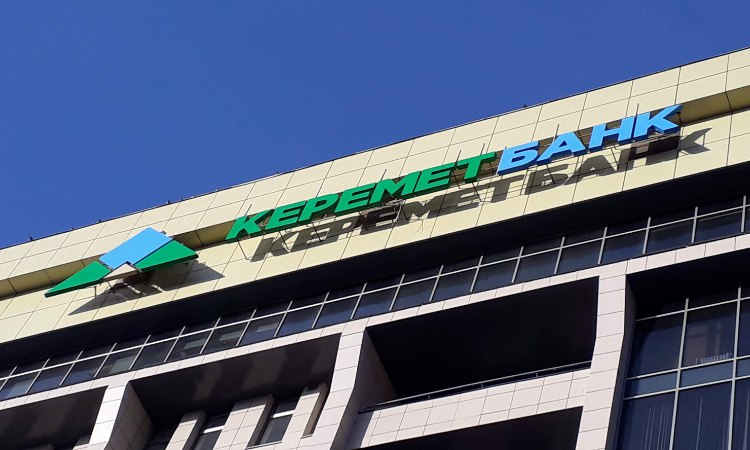
Kyrgyz Bank Hit by U.S. Treasury Department Sanctions

The U.S. Treasury Department has uncovered a secret channel allegedly used to re-export dual-use goods and imposed sanctions on Kyrgyz commercial bank Keremet for its involvement in circumventing economic restrictions against Russia, according to a statement on the department’s website.

U.S. officials allege that since the summer of 2024, Keremet Bank facilitated cross-border transactions for Russian financial institutions, including Promsvyazbank, which has been under U.S. sanctions since early 2022. Promsvyazbank, nationalized by Russian authorities in 2018, was sanctioned for its role in financing Russia’s defense sector and supporting major defense contracts. The U.S. Treasury reports that the bank has provided billions of dollars in financial support to Russia’s military-industrial complex.

The Treasury Department’s report also claims that the Kyrgyz Ministry of Finance sold a controlling stake in Keremet Bank in 2024 to a firm closely linked to a Russian oligarch with ties to the Kremlin. According to the U.S., the acquisition aimed to create a financial hub to evade sanctions, enabling payments for imports and exports.

Further allegations suggest that Moldovan opposition politician Ilan Shor, who is himself under U.S. sanctions, discussed a sanctions evasion scheme involving Keremet Bank with Russian representatives.

Keremet Bank has denied these claims, stating that it has already appealed to the U.S. Treasury’s Office of Foreign Assets Control (OFAC) to have the sanctions lifted. “The bank operates in accordance with national legislation and international law, adhering to the principles of transparency and responsibility,” the bank said in its response, published on its official website.

Keremet further emphasized that the sanctions will not impact its operations and expressed readiness to undergo an international audit to clarify the situation.


Register of Corrupt Officials to Be Created in Kazakhstan

Kazakhstan is set to establish a public register of officials convicted of bribery and other corruption-related offenses. Some parliamentary deputies are also proposing additional measures, including banning convicted individuals from leaving the country to ensure they return stolen funds.

The Kazakhstani parliament is currently reviewing amendments to anti-corruption legislation. Among the proposals, according to Albina Mautova of the Prosecutor General’s Office, is the creation of a public register of individuals convicted of corruption offenses. This registry will be accessible to all citizens through the anti-corruption agency’s website.

“This register will include individuals who have committed serious and particularly serious corruption offenses. Inclusion in the register will be based on the presence of a conviction that has entered into legal force. Removal from the register will occur only in the event of an acquittal or the expungement of the criminal record,” Mautova explained.

The legislative amendments also aim to broaden the scope of criminal liability related to bribery. According to Ulan Sarkulov, deputy chairman of the Anti-Corruption Agency, the new provisions would criminalize not only the act of receiving or giving bribes but also the promise or extortion of a bribe. Sarkulov emphasized that these measures are designed to have a preventive effect by addressing bribery at its earliest stages before damage is caused to the state.

However, Sarkulov acknowledged the challenges of enforcement. “The investigative practices of other countries show that proving the promise or extortion of a bribe is difficult. There will never be widespread prosecutions here. International experience demonstrates only a handful of such cases globally,” he noted.

Mazhilis deputy Azat Peruashev has called for an additional provision to bar convicted corrupt officials from leaving Kazakhstan. He argues that such a restriction would help recover stolen assets taken out of the country.

“As our experience in recovering capital shows, the most effective measure is a ban on traveling abroad. Major corrupt officials often don’t simply take bribes in cash; they transfer funds to offshore accounts, re-hide them, and make it nearly impossible to trace. Sometimes, even our law enforcement agencies are unaware of how much money they have or where it’s located,” Peruashev stated.

He further explained, “These individuals serve reduced sentences or pay fines, then go abroad to access the billions they’ve stolen—wealth they could never have earned legally. If they’re forced to remain in Kazakhstan, they will be more likely to return the stolen funds if they want to use them.”

The Times of Central Asia previously reported that, according to Transparency International’s 2023 Corruption Perceptions Index (CPI), Kazakhstan was ranked as the least corrupt country in Central Asia, marking a significant achievement in the region’s fight against corruption.

Trump Nominee Marco Rubio Signals Support for Normalizing Central Asia Trade

U.S. President-elect Donald Trump’s nominee for secretary of state says the Jackson-Vanik amendment, a 50-year-old law that imposes some restrictions on trade with several countries in Central Asia, is “a relic of an era that’s passed.”

U.S. Senator Marco Rubio, a Florida Republican who spoke on Wednesday during a confirmation hearing in the Senate Foreign Relations Committee, also described China, a key economic partner in Central Asia, as a threat and an adversary. Rubio, known as a hawk on national security issues, had harsh words too for what he called chaos-sowing “dictators” in Moscow, Tehran and Pyongyang.

Tough language aside, Rubio’s interactions with his fellow senators were relatively smooth, suggesting his path to the secretary of state job is open as the United States prepares for Trump’s inauguration on Jan. 20. Central Asian nations have been watching for what to expect when Trump returns for a second term in the White House, and they got an encouraging glimpse in Rubio’s testimony.

In the Washington hearing, Senator Steve Daines, a Montana Republican, told Rubio that he and Senator Gary Peters, a Michigan Democrat, have been working to rescind the Jackson-Vanik amendment in Central Asia. The 1974 law, passed at the height of the Cold War, aimed to promote human rights in countries that were part of the Soviet bloc by preventing normal trade relations with “non-market economies” that restrict emigration.

But Daines argued that it is outdated in the former Soviet republics of Kazakhstan and Uzbekistan, especially as Central Asia becomes more important because of its energy resources and geopolitical influence.

“I realize you have a lot of priorities on your plate when you will be confirmed as our secretary,” Daines said to Rubio. He added that rescinding the amendment in the region would be a big step “that Central Asia needs right now to grow.”

In response, Rubio said that permanent removal of the amendment in Central Asia would require legislative approval and he mentioned an initiative by Senators Chris Murphy (Connecticut Democrat) and Todd Young (Indiana Republican) that also seeks to peal the measure for Tajikistan, Kazakhstan and Uzbekistan.

“I think this is a relic of an era that’s passed,” Rubio said of the Jackson-Vanik amendment.

“There are some that argue that we should use it as leverage for human rights concessions, or leverage to get them to go stronger in our way” against Russia, he said. However, the Florida senator said, Kazakhstan is a market economy and therefore meets conditions for removal from the amendment’s restrictions. He added: “So we will work with you on this because I think it’s important.”

Kazakhstan became a member of the World Trade Organization in 2015, two years after Tajikistan joined the group. Uzbekistan has been signing individual agreements with countries and hopes to join the WTO by 2026.

Kyrgyzstan, Ukraine and Russia are among former Soviet states that were subject to the Jackson-Vanik amendment but later achieved normal trade relations status with the United States. Russia, however, is currently under Western sanctions because of its full-scale invasion of Ukraine in 2022.

Cyber Déjà Vu: Is Russia Spying on Kazakhstan Again?

Another espionage scandal is gaining traction in the Western media, with Kazakhstan once again at its center. Within Kazakhstan, however, the topic of Russian cyber activities against the country is receiving minimal attention in the press. While Akorda seeks to navigate its delicate relationship with the Kremlin, any overt allegations of espionage might provoke Moscow’s powerful propaganda machine, which continues to exert significant influence over public opinion in Kazakhstan.

This time, the intrigue is unfolding in cyberspace, where a hacker group identified as UAC-0063, potentially linked to the Kremlin-backed Advanced Persistent Threat (APT) group known as APT28, has been implicated in spying on diplomatic institutions across Central Asia. The group’s activities, which can be traced back to at least 2021, have targeted not only Kazakhstan, but also Kyrgyzstan, Tajikistan, and other countries. Their previous targets include diplomatic, non-profit, academic, energy, and defense organizations in Ukraine, Israel, India, and the wider Central Asian region.

According to a cyber espionage investigation by Sekoia, UAC-0063 hackers infiltrated Kazakhstan’s Ministry of Foreign Affairs by leveraging official documents, such as emails, draft memos, and internal administrative communications. These documents — likely used to deliver malware — were either stolen in prior cyber operations, obtained from open sources, or acquired through other unknown means. Sekoia identified around two dozen such documents, dating from 2021 to October 2024, which primarily addressed Kazakhstan’s diplomatic cooperation and economic relations with other countries.

The researchers suggest this campaign is part of a broader, Kremlin-backed global cyber espionage operation targeting Central Asia, with a particular focus on Kazakhstan’s foreign relations.

This latest revelation is a reminder of other episodes. One prominent ongoing case involves individuals in London who stand accused of preparing actions at the behest of Russia against Kazakhstan’s diplomatic mission in the United Kingdom and targeting President Kassym-Jomart Tokayev’s son. Even more striking is the echo of the Pegasus spyware scandal, which emerged in 2021.

An investigation by the Organized Crime and Corruption Reporting Project (OCCRP) revealed that the Israeli-developed Pegasus spyware was used to monitor a wide range of individuals in Kazakhstan, including independent journalists, activists, human rights defenders, and high-ranking officials. Among the targets were President Tokayev, then-Prime Minister Askar Mamin, former Akim of Almaty Bakytzhan Sagintayev, and several of Kazakhstan’s wealthiest business-people.

At the time, public suspicion fell upon Karim Massimov, the former chief of the National Security Committee (KNB), as the perpetrator of the Pegasus surveillance. However, the issue faded into obscurity following the unrest of January 2022, the events of which were officially described as an attempted coup d’état. To this day, no definitive answers have been provided about who orchestrated the Pegasus cyberattacks or their motives.

Now, with fresh reports of Russian-linked malware targeting Kazakhstan’s cyber-security, it appears that history may be repeating itself. The key question which remains – is this merely a case of déjà vu, or could it signal the groundwork for a new effort to destabilize Kazakhstan?

Kazakhstan Limits Payment Card Validity for Non-residents

The Agency of the Republic of Kazakhstan for Regulation and Development of the Financial Market (ARDF) has introduced new rules limiting the validity of payment cards issued to non-residents to one year. Exceptions are made for businessmen, investors, and diplomats.

The changes are intended to reduce risks associated with drug trafficking and digital asset transactions. The ARDF clarified that the new restrictions do not apply to payment cards already in use.

Under the updated regulations, banks are required to closely monitor transactions linked to drug trafficking; transfers to digital asset exchanges not affiliated with the Astana International Financial Centre (AIFC); and payments to electronic or online casinos. Banks must also scrutinize customers holding more than five cards at a single bank or three cards at three different banks.

The new measures include stricter verification requirements for beneficial owners (BO): individuals who ultimately benefit from a company or assets, even if these are registered under another name. Financial institutions are now mandated to use all available tools, including official documents and public records, to identify the actual owners of assets. Previously, beneficial ownership was determined based solely on a person holding 25% or more of a company’s authorized capital.

These reforms aim to enhance the transparency of financial transactions and prevent illegal activities, including fraud, money laundering, and other financial crimes.

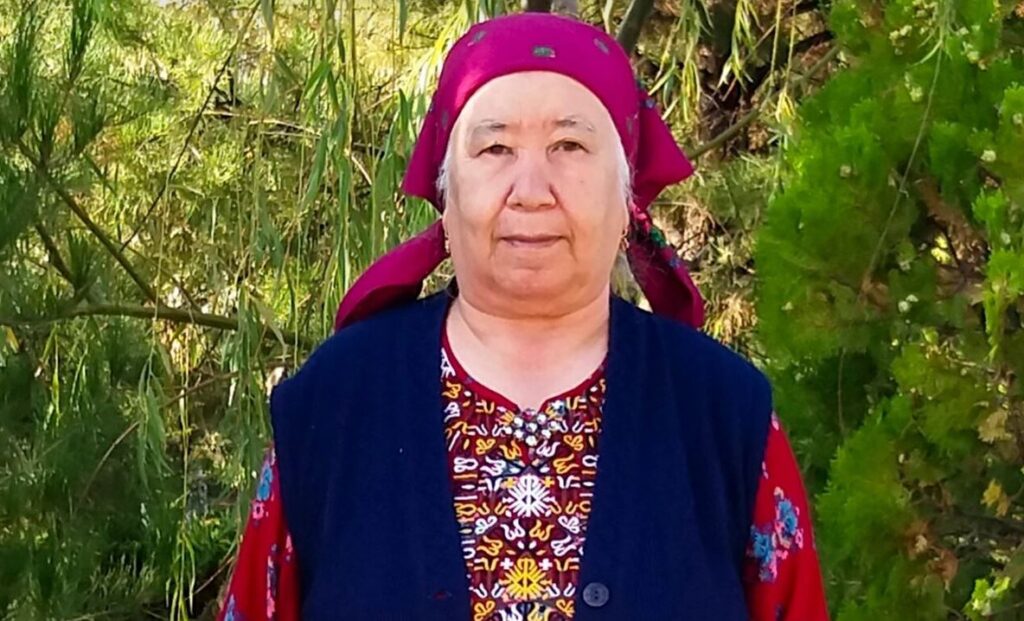
Reporters Without Borders Condemns Attack on Turkmen Journalist Soltan Achilova

Reporters Without Borders (RSF) has strongly condemned the alleged attempt on the life of independent Turkmen journalist Soltan Achilova and has called on the international community to pressure Turkmenistan to cease its repression of free press.

Achilova, a prominent journalist known for her critical reporting on Turkmenistan, stated that authorities attempted to poison her in November 2024 and later barred her from leaving the country under the pretext of an infectious disease diagnosis.

On the morning of November 20, as Achilova prepared to leave for the airport with her daughter, several individuals in medical uniforms arrived at her home. They demanded she open the door, with one forcibly snatching her key and reportedly threatening her, saying, “Why do you need a key in the other world?” As previously reported by The Times of Central Asia, despite exhibiting no signs of illness, Achilova was forcibly taken to an infectious disease center in Ashgabat, where she was held in isolation for six days and barred from communicating her whereabouts.

In a video message published by Chronicles of Turkmenistan, Achilova directly blamed Turkmenistan’s authoritarian leadership, including President Serdar Berdimuhamedov and former President Gurbanguly Berdimuhamedov, for orchestrating the incident, stating: “They will not rest until they destroy me. This is all done on their orders.”

Achilova suspects the poisoning attempt is connected to her journalistic work. Just days before she was scheduled to travel to Geneva to accept the prestigious Martin Ennals Award for human rights defenders, a man visited her home, claiming to have evidence of police corruption. He later returned with samosas, a traditional snack, which he offered as a gesture of goodwill. One of Achilova’s neighbors who sampled the food lost consciousness within 15 minutes and was rushed to the hospital, where she was placed in intensive care.

RSF has described the incident as part of a broader pattern of repression aimed at silencing dissenting voices in Turkmenistan. Jeanne Cavelier, RSF’s head of Eastern Europe and Central Asia, has expressed concern: “This attempted poisoning and systematic persecution of Soltan Achilova show that the Turkmen authorities will stop at nothing to suppress independent journalism. We call on the international community to intervene immediately to protect her life and her right to independent reporting.”

Soltan Achilova is one of the few journalists in Turkmenistan who openly engages with independent outlets, making her a frequent target of government harassment. Since beginning her work in 2006, she has faced threats, attacks, and constant surveillance. Her relatives are regularly interrogated, and her phone remains under strict monitoring.

This is not the first time authorities have obstructed Achilova’s international travel. In 2023, while attempting to travel to Geneva, border officials deliberately defaced her passport, rendering it invalid.

Turkmenistan consistently ranks among the world’s worst countries for freedom of the press, placing 175th out of 180 nations in the World Press Freedom Index. RSF continues to spotlight Achilova’s case as emblematic of Turkmenistan’s efforts to suppress independent journalism and maintain strict control over information.

RSF’s statement calls for immediate international intervention to ensure Achilova’s safety and to hold Turkmen authorities accountable for their systematic repression of journalists.