• KGS/USD = 0.01144 0%
  • KZT/USD = 0.00197 -0%
  • TJS/USD = 0.10904 0%
  • UZS/USD = 0.00008 0%
  • TMT/USD = 0.28490 0%
  • KGS/USD = 0.01144 0%
  • KZT/USD = 0.00197 -0%
  • TJS/USD = 0.10904 0%
  • UZS/USD = 0.00008 0%
  • TMT/USD = 0.28490 0%
  • KGS/USD = 0.01144 0%
  • KZT/USD = 0.00197 -0%
  • TJS/USD = 0.10904 0%
  • UZS/USD = 0.00008 0%
  • TMT/USD = 0.28490 0%
  • KGS/USD = 0.01144 0%
  • KZT/USD = 0.00197 -0%
  • TJS/USD = 0.10904 0%
  • UZS/USD = 0.00008 0%
  • TMT/USD = 0.28490 0%
  • KGS/USD = 0.01144 0%
  • KZT/USD = 0.00197 -0%
  • TJS/USD = 0.10904 0%
  • UZS/USD = 0.00008 0%
  • TMT/USD = 0.28490 0%
  • KGS/USD = 0.01144 0%
  • KZT/USD = 0.00197 -0%
  • TJS/USD = 0.10904 0%
  • UZS/USD = 0.00008 0%
  • TMT/USD = 0.28490 0%
  • KGS/USD = 0.01144 0%
  • KZT/USD = 0.00197 -0%
  • TJS/USD = 0.10904 0%
  • UZS/USD = 0.00008 0%
  • TMT/USD = 0.28490 0%
  • KGS/USD = 0.01144 0%
  • KZT/USD = 0.00197 -0%
  • TJS/USD = 0.10904 0%
  • UZS/USD = 0.00008 0%
  • TMT/USD = 0.28490 0%
08 December 2025

Lessons in Self-Defense for Kindergarten Kazakhs

From September 1, Kazakhstan will introduce “Personal Safety” lessons to the curricula of its kindergartens, schools, and colleges.

Developed by Kazakhstan’s Ministry of Education, the program of 130 training sessions aims to teach children the basics of self-defense and develop a responsible attitude towards their own and others’ safety.

According to Nasymzhan Ospanova, Chair of the Committee for the Protection of Children’s Rights, the lessons are tempered according to the children’s age and developmental level to help motivate and support participants.

Conducted in batches of weekly ten-minute classes, repeated three times a year, the training courses will include practical tips, games, interactive teaching methods, demonstrations, and videos, making the material accessible and exciting for children of all ages.

It is worth noting that over the past three years, the number of children who have committed criminal offenses has increased by 20.3%. In 2023 alone, 1,823 juveniles were convicted. In most cases, crimes are committed by teenagers 16 – 17 years old (80.4%), with about 93.6% of juvenile offenders being boys. Statistics confirm that crime is higher among those with little education and those living in difficult situations. Thus, the share of those who neither study and nor work is 51.9%, the share of those who study in colleges is 26.9%, and in schools, gymnasiums, and lyceums, 20.6%.

Silk Road Treasures: The Wild Beauty of Mangistau

Under the banner of “Silk Road Treasures”, TCA’s people -journalists, editors, authors – share their personal experiences of Central Asia and her people, and by listing their favorite places, literature, films, art, architecture and archaeological sites, alongside encounters and customs, provide pointers for readers wishing to visit the region.

Aliya Haidar, Journalist

Kazakhstan’s Mangistau Peninsula (Mangyshlak) is far from fit for human habitation. Fresh water is scarce, the air is filled with dust raised by searing desert winds, huge waves roll over the turbulent Caspian Sea, and only camels can feed on its vegetation.

Mangistau is a symbol of the triumph of nature and, simultaneously, a symbol of victorious industrialization. The balance between the two, however, is very fragile, as events on the peninsula have repeatedly confirmed. In 2000, the peninsula’s landscape still retained its wild, natural beauty but just a decade later, it was a place plagued by social conflict.

The remains of ancient nomadic sites and necropolises of Sufi missionaries illustrates that people have long been determined to tame and develop this remote and barren land but its explosive growth only occurred with the discovery of oil and uranium.  In the 1960s, geologists settled in the desert. Within ten years, cities appeared and hundreds of enterprises were established, making  Mangistau one of the gems in the Soviet Union’s crown.

Colossal desalination plants near the regional center of Aktau (former Shevchenko) resembling spaceships, are a legacy of the era of rapid development when the world’s first industrial nuclear reactor on fast neutrons, the BN-350, was built on the peninsula. The reactor was shut down after independence in the late 1990s, but conservation is ongoing. Today, few people are allowed into the gloomy catacombs, to the heart of the reactor, but the memory of the power of the atom and the payback has remained.

BN-350 is part of the Mangistau Atomic Energy Combine (MAEC), and the giant desalination plants now supply most of the peninsula with water from the Caspian Sea. But there is still insufficient capacity, and the presence of the endless row of desalination plants warns: “Beware, man. You will have to fight for every drop.”

Even in the regional center of Aktau, water cuts are not uncommon, and intensive farming is out of the question. In the bazaars of Mangistau, most of the products, especially fruit and vegetables, are imported and far more expensive than elsewhere in Kazakhstan where they grow in abundance.  And although salaries in the oil industry are higher than the national average, locals pay triple the price for just about  everything. Irresistibly attracted by the glitter of “black gold,” the population in the peninsula continues to rise. Almost 800 thousand people currently live in the Mangistau region, making it the ninth most populous region in the country. The load on the peninsula’s natural resources however, is now so disproportionate that it has become the cause of constant conflicts.

But outside the cities, it is easy to forget the harsh reality of the industrial age. In the port of Bautino, whitewashed houses rise out of the yellow desert haze like a set from a movie. Still bearing the name of a Bolshevik killed by the White Guards in 1919, the port also houses the Kazakhstani fleet and oil companies’ ships. A small icebreaker swings by the pier, poised to deal with the capricious Caspian sea when it freezes in winter.

Melting and shimmering in the grey haze of the  50-degree heat, the 150 kilometer highway separating Aktau and oil zone of Zhanaozen, is devoid of settlements and roadside stores, and the only signs of life are the  silhouettes of camels – “desert ships”-  floating by in the distance.

Apart from a modest signpost, nothing tells you that you are passing Karagye, one of the deepest dry depressions in Asia (132 meters below sea level). Also known as “Black Mouth”, it is easy to imagine that in times immemorial, the spirits of the local deserts rose from the canyon.


@Lada.kz. Karagiye is the deepest natural depression in Kazakhstan (132 meters below sea level)

Zhanaozen is another legacy of the Soviet era. Given the dry climate, the neighborhood accesses fresh water transported hundreds of kilometers from the Volga River; the result of a bold innovation by engineers after the fall of the USSR which almost turned into a disaster.

In 2000, every faucet in the city was wrapped in gauze, and the water looked like rusty liquid mud. Even in expensive hotels and oil company offices, washing was a problem. In 2011, thanks to the reconstruction of the water pipeline, the water situation improved somewhat, but nevertheless, did not deter residents from rioting.

Like all desert cities, Zhanaozen seems to appear from nowhere. There are no suburbs or groves, just cube-like houses that suddenly rise from the desiccated earth. The town is encircled by kilometers of “shakes” of the Novy Uzen (Zhanaozen) deposit, one of the oldest in Kazakhstan. Today, supplies of  Novy Uzen are close to exhaustion but that does not stop the influx of those wanting to work in the oil industry.

Due to the high cost of food, poor living conditions, and dissatisfaction with wages, a protest broke out in the town in December 2011. Protesters spent over half a year camping in tents where under the scorching sun and winter winds, they defended demands that the management of the oil company and the Akimat (mayor’s office) could not satisfy. Finally, on December 16, during Kazakhstan’s Independence Day celebrations, angry protesters started riots in Zhanaozen Square. Fifteen people died, hundreds were arrested, and dozens were convicted.
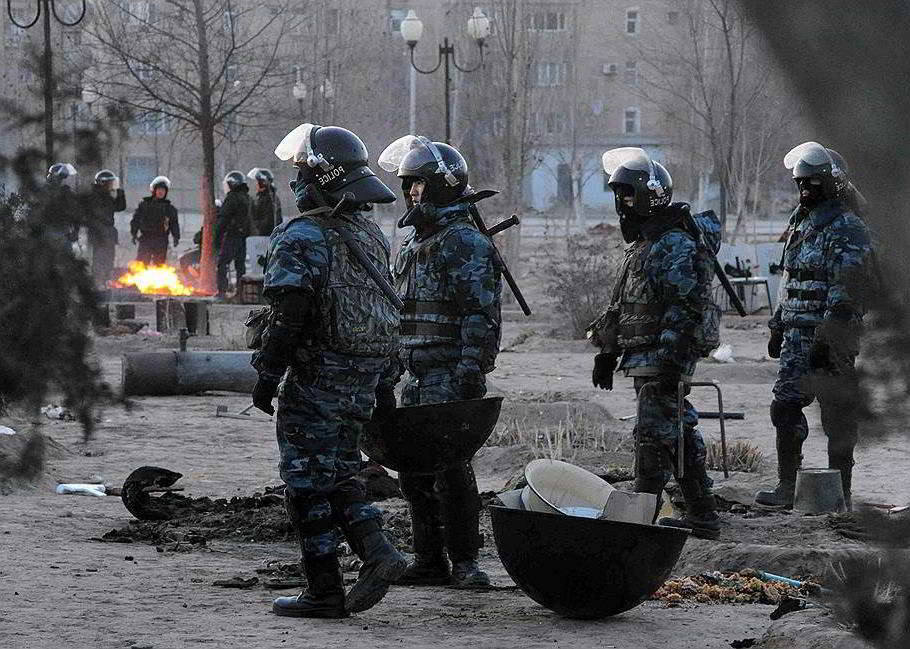

@Denvistorii. Crackdown on protesters in Zhanaozen (2011)

The oil region remains shaken. But despite the harsh nature and social cataclysms, Mangistau holds fast. In red rocks on windy plateaus, in fishing fields, in rare oases behind a rich dastarkhan, the peninsula’s inhabitants welcome guests, and the region remains the pearl of Kazakhstan.

Turkmenistan and Iran to Expand Cooperation in Natural Gas and Transport

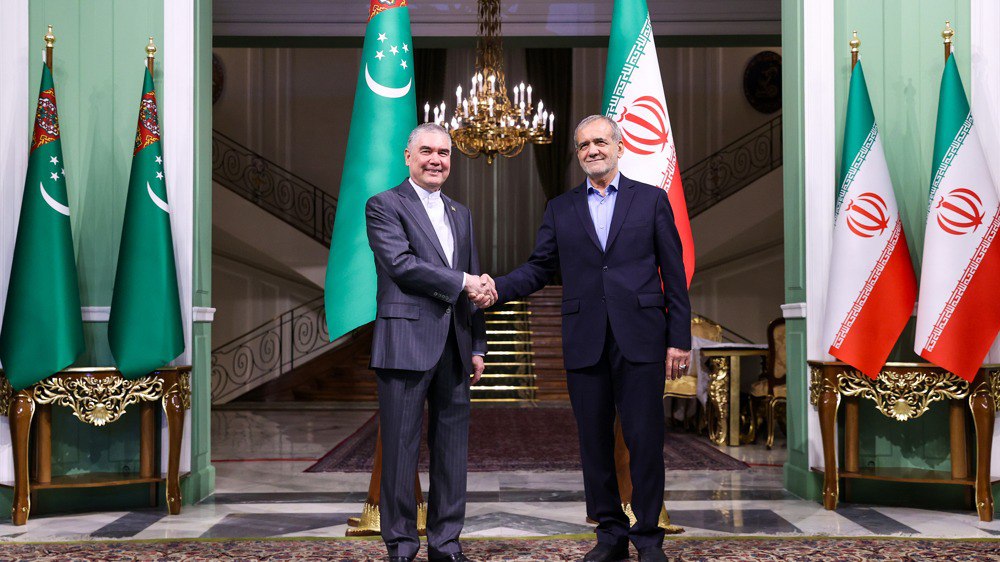
On August 28, the chairman of the Halk Maslahaty (People’s Council) of Turkmenistan, the country’s former president Gurbanguly Berdimuhamedov, visited Iran and held talks with the Iranian president Masoud Pezeshkian.

Iran’s Press TV news agency quoted Pezeshkian as describing four memorandums of understanding signed during Berdimuhamedov’s visit as “strategic,” saying that a document signed between Iran’s state gas companies and Turkmenistan will turn Iran into a regional gas transfer hub.

No details of the document have been released.

Turkmen media reported that Gurbanguly Berdimuhamedov proposed implementing joint projects with Iranian companies to increase the volume of gas supply to Iran to 40 billion cubic meters per year.

The Turkmen side also reported that the talks in Tehran discussed exporting Turkmen electricity to Iran.

Concerning cooperation in the transport sector, Berdimuhamedov urged increasing cargo transportation along the Kazakhstan-Turkmenistan-Iran railway route, while the Iranian president proposed increasing cargo flows along the Armenia-Iran-Turkmenistan-Kazakhstan route.

Turkmenistan and Iran have agreed to start negotiations for a comprehensive deal on transportation issues. The talks, expected to kick off next month, will be part of an intergovernmental committee chaired by Iran’s transportation minister.

Uzbekistan’s Largest Glacier Melts by 20 Meters in 12 Months, Expedition Finds

BBC Uzbekistan has reported, quoting the country’s Hydrometeorology Research Institute, that at the beginning of August an expedition of Uzbek and German scientists trekked to the Pakhtakor glacier, situated in the eastern part of Uzbekistan.

The study of the Pakhtakor glacier, which is extremely difficult to reach and located in the Bostonliq district of the Tashkent region, near the borders with Kyrgyzstan and Kazakhstan, started in July of last year.

The latest expedition found that Uzbekistan’s largest glacier tongue (an extension of a glacier or ice stream projecting seaward) had retreated by 20 meters in the last year. The surface of the ablation part (the initial part of the glacier where the ice melts faster) has melted by 3 meters.

Pakhtakor is one of the largest glaciers feeding the Pskom River. There are about 140 large and small glaciers in the Pskom River basin, which has a total area of 128 square kilometers.

According to the BBC report, after the collapse of the Soviet Union, studies of permafrost were rarely conducted in other Central Asian countries except Kazakhstan. Although there are few glaciers in Uzbekistan, they play an essential role in the ecosystem. In low-water years, glaciers provide up to 25% of the total flow.

Maksim Petrov, the head of the Center for Glacial Geology at the Institute of Geology and Geophysics of Uzbekistan, says the country’s glaciers are melting at different rates.

“The melting rate is almost in line with the average rate in Central Asia. However, the melting rate in our mountains in the eastern part is not high, and the glaciers have melted only up to 20%. The glaciers in Surkhandarya have melted by 40%. The most catastrophic situation is in Kashkadarya — up to 70%,” Petrov said at a roundtable discussion held by Cabar Asia in May.

Petrov added: “Large glaciers are breaking up and breaking into pieces. It seems the number of glaciers is increasing, but their area is shrinking.”

Various scientists point out that the shrinking area of glaciers has yet to seriously affect the water balance in Central Asia, and the observed water shortage is mainly caused by population and industrial growth.

But in 2015, German researchers warned that glaciers in the Tian Shan mountains, which play an essential role in maintaining the water cycle in the region, are rapidly melting. Half of the total ice mass is forecast to melt by 2050. “Today, Tian Shan is losing an amount of ice equivalent to twice the annual water consumption of all of Germany,” the 2015 study stated.

Turkmenistan Surpasses Russia in Gas Exports to China

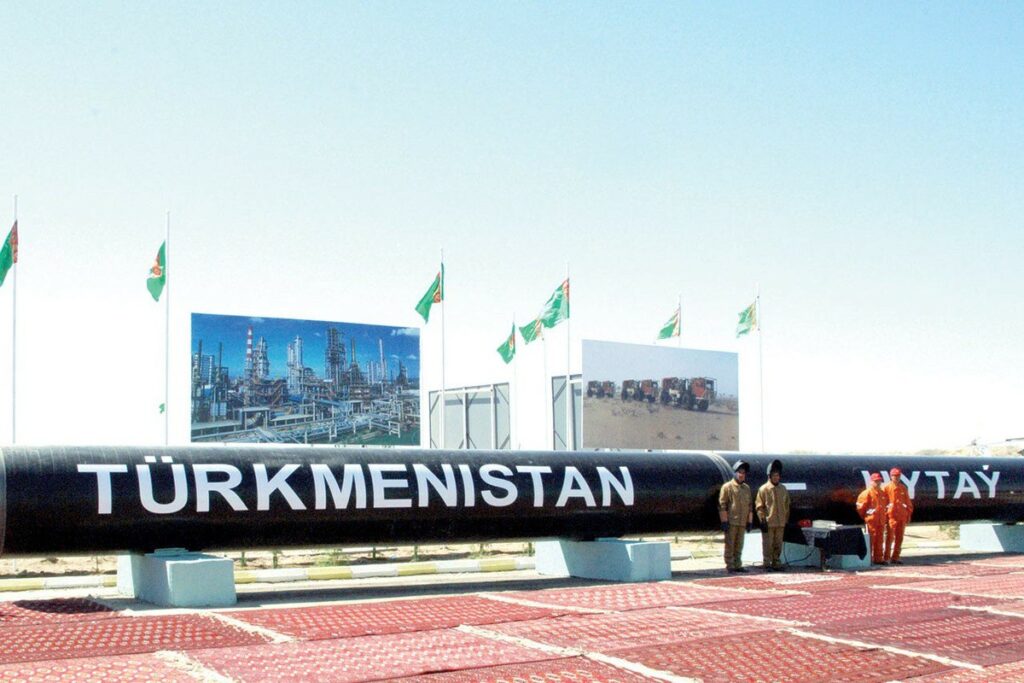
Turkmenistan now ranks ahead of Russia in terms of revenue from gas supplies to China. It is being reported that the country became the largest gas supplier to China in the first half of 2024, exporting gas worth $5.67 billion. Russia is now in second place with a trade of $4.69 billion.

At the same time, the chairman of the Halk Maslahaty (People’s Council) of Turkmenistan, the former president Gurbanguly Berdimuhamedov, said during his recent visit to Iran that Turkmenistan plans to increase the volume of gas supplies to Iran to 40 billion cubic meters per year.

Two gas compressor stations and a 125-kilometer-long gas pipeline are being planned in Turkmenistan. This will allow Iran to supply additional volumes to the “Çaloýuk” gas measuring station.

In addition, Turkmen gas will soon be exported to Iraq and Turkey under the SWAP scheme.

Although many countries are interested in Turkmenistan’s gas, the nation still struggles to organize an adequate supply to the domestic market.

Top Nuclear Expert in Uzbekistan Dies at Age 79

Behzod Yo’ldoshev, a prominent Uzbek scientist who was deeply involved in international efforts to ensure the safe use of nuclear power and was a key player in Uzbekistan’s ongoing drive to build a nuclear power plant for energy generation, has died.

Yo’ldoshev, president of the Academy of Sciences of Uzbekistan, worked as a scientific adviser at the Vienna-based International Atomic Energy Agency and “received wide international recognition in the field of high-energy physics,” the office of President Shavkat Mirziyoyev said in a statement. After Yo’ldoshev died at the age of 79 on Wednesday, Mirziyoyev visited his family at their home, where mourners prayed and recited verses of the Quran.

The Uzbek scientist collaborated with the Joint Institute for Nuclear Research, an international center in the Moscow region where he earned his PhD in physics and mathematics, and also had teaching jobs at Stanford University and the University of Washington. Yo’ldoshev published several hundred scientific papers on particle and nuclear physics and other topics, and held more than 20 patents on nuclear applications, according to Stanford.

“Uzbek science has suffered a heavy loss,” the Uzbek sciences academy said on social media.

Others paying tribute to Yo’ldoshev included the Department of Astronomy and Astrophysics of the National University of Uzbekistan, as well as Gennady Krasnikov, president of the Russian Academy of Sciences.

Uzbekistan has been planning to build a nuclear power plant with Russian help for years, but the project has encountered delays. The project got a boost in May when Russian President Vladimir Putin visited Tashkent and signed a new deal to build a smaller plant than previously envisioned.

Yo’ldoshev was involved in the fitful efforts to deliver nuclear power in Uzbekistan. In 2019, he was in Vienna to inform the International Atomic Energy Agency that the plant would be built in line with the U.N. watchdog’s requirements. In 2020, Rosatom, Russia’s nuclear energy agency, gave Yo’ldoshev a medal for his contributions to the use of atomic energy.

Over his decorated career, Yo’ldoshev contributed to international non-proliferation work, such as upgrading research reactors, developing ways to stop illicit trafficking of nuclear material, as well as the transport and securing of highly enriched spent fuel. His other roles included director of the Institute of Nuclear Physics of the Academy of Sciences of Uzbekistan and as a member of parliament.