• KGS/USD = 0.01144 0%
  • KZT/USD = 0.00196 -0%
  • TJS/USD = 0.10899 -0%
  • UZS/USD = 0.00008 -0%
  • TMT/USD = 0.28490 0%
  • KGS/USD = 0.01144 0%
  • KZT/USD = 0.00196 -0%
  • TJS/USD = 0.10899 -0%
  • UZS/USD = 0.00008 -0%
  • TMT/USD = 0.28490 0%
  • KGS/USD = 0.01144 0%
  • KZT/USD = 0.00196 -0%
  • TJS/USD = 0.10899 -0%
  • UZS/USD = 0.00008 -0%
  • TMT/USD = 0.28490 0%
  • KGS/USD = 0.01144 0%
  • KZT/USD = 0.00196 -0%
  • TJS/USD = 0.10899 -0%
  • UZS/USD = 0.00008 -0%
  • TMT/USD = 0.28490 0%
  • KGS/USD = 0.01144 0%
  • KZT/USD = 0.00196 -0%
  • TJS/USD = 0.10899 -0%
  • UZS/USD = 0.00008 -0%
  • TMT/USD = 0.28490 0%
  • KGS/USD = 0.01144 0%
  • KZT/USD = 0.00196 -0%
  • TJS/USD = 0.10899 -0%
  • UZS/USD = 0.00008 -0%
  • TMT/USD = 0.28490 0%
  • KGS/USD = 0.01144 0%
  • KZT/USD = 0.00196 -0%
  • TJS/USD = 0.10899 -0%
  • UZS/USD = 0.00008 -0%
  • TMT/USD = 0.28490 0%
  • KGS/USD = 0.01144 0%
  • KZT/USD = 0.00196 -0%
  • TJS/USD = 0.10899 -0%
  • UZS/USD = 0.00008 -0%
  • TMT/USD = 0.28490 0%
08 December 2025

New Neural Network for Kazakh Study of Snow Leopards

Kazakhstan has launched an innovative project to study and protect snow leopards supported by a new neural navigation network, Yandex Qazaqstan.

The network, developed with Kazakh-British Technical University students, scientists from the Institute of Zoology of the Republic of Kazakhstan, and the Snow Leopard Foundation, will significantly accelerate and simplify data analysis from camera traps and other sources, enabling a more effective means of tracking these rare animals’ behavior and migration routes.

The snow leopard, a symbol of Kazakhstan’s mountain ecosystems, is found in regions such as Altai, Zhetysu Alatau, Saur, and Tien Shan.

Although  Kazakhstan’s leopard population has doubled over the past 30 years, to between 141-183, their existence remains under threat from human activities and climate change, making conservation projects essential.

Yandex Qazaqstan will help optimize the monitoring of snow leopards by automatically analyzing images from camera traps and quickly identifying the presence of the animals. As a result, scientists will be able to more accurately and quickly track changes in these rare predators’ populations and migration routes.

This collaboration between scientists, students, and IT specialists demonstrates Kazakhstan’s commitment to protecting its nature and sustainable development and moreover, provide a template for the application of similar technologies in other conservation projects.

How Kazakhstan and Kyrgyzstan Have Reacted to Pavel Durov’s Arrest

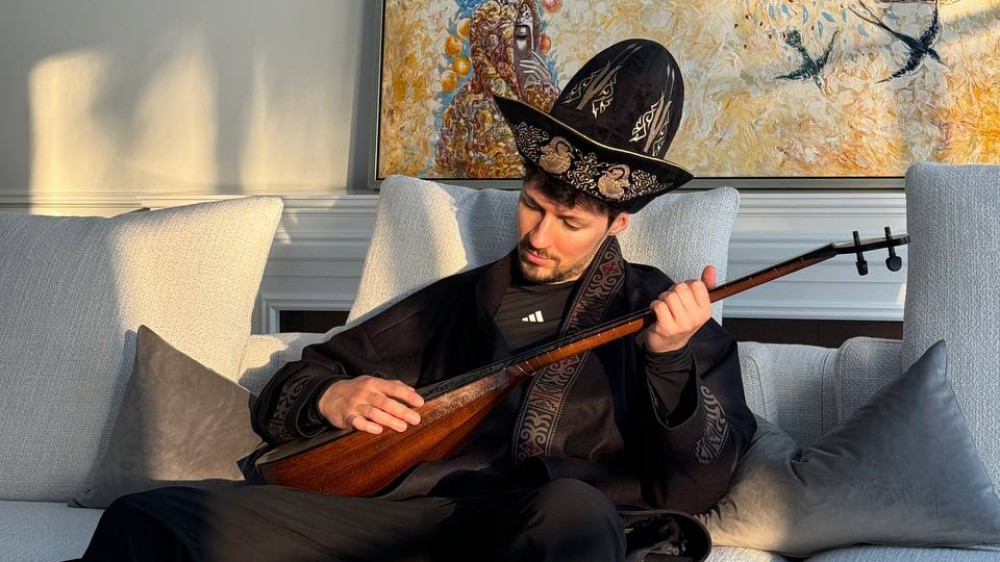
Pavel Durov, the founder of Telegram, was arrested on August 24 at Le Bourget airport in Paris. He is suspected of illegal activities including enabling drug trafficking, crimes against minors, and fraud. His arrest has been met with shock around the world, especially in countries where censorship and internet control remain pressing.

According to various sources, the French authorities suspect Durov of being involved in activities related to the distribution of illegal content through the Telegram messenger. The investigation concerns materials related to extremism, copyright infringement, and alleged assistance to criminal groups. The investigation lasted several months.

In response, Telegram said that it has always strictly complied with the law, and is ready to cooperate with French authorities to clarify the situation, expressing hope for a fair investigation and Durov’s speedy release.

In Kazakhstan, where Durov has long been known for his stance against censorship, his arrest has not gone unnoticed. The Minister of Digital Development, Innovation and Aerospace Industry, Zhaslan Madiev, made a statement that said: “We had a positive experience interacting with the Telegram team. We have often successfully and promptly resolved issues related to the leakage of personal data, the fight against drug trafficking, and the suppression of other illegal activities in the messenger. The Telegram team has always demonstrated a willingness to cooperate to ensure the safety of citizens while remaining true to its principles of protecting privacy and freedom of speech.”

He also noted that on his last visit to Kazakhstan, Pavel Durov became one of the trustees of the IQanat project, which aims to support rural children in Kazakhstan. The project has awarded 12 grants worth $365,000.

Madiev continued: “He did not just allocate money but personally participated in studying the educational process, selecting children, familiarizing himself with their lives. I am grateful to Pavel’s team for caring, and his sincere interest in the development of the children. We hope for a speedy resolution of this situation.”

The Union of Journalists of Kazakhstan also expressed support for Durov, calling on the French authorities to ensure respect for his fundamental rights and freedoms, and to conduct an objective investigation into the case.

“The detention of Telegram founder Pavel Durov has caused concern among all those who fight for freedom, democracy, and the principles of free speech. It is important to take into account that in several countries where officially registered independent democratic media regularly face persecution or cease to exist at all, where blocking of websites is regularly practiced, Telegram, created by Pavel Durov, is currently almost the only source of bringing to the public objective and reliable information free from censorship,” the statement said.

The Union of Journalists of Kazakhstan recalled that in 2018, Pavel Durov received an award from the Union of Journalists of Kazakhstan, precisely for his principled position against censorship. His arrest could negatively affect freedom of speech and human rights in developing countries with fragile democracies.

The response in Kyrgyzstan was more restrained than that of the Kazakhstani authorities. None of the government agencies commented on Durov’s detention in France.

Durov visited Kyrgyzstan in June this year – where there was significant excitement in his potential investment in a large-scale project – later writing: “I was delighted with the people and nature of Kyrgyzstan, a real hidden gem in Central Asia. The weather was great, and there were no mosquitoes, so we did a lot of hiking, horseback riding in the mountains, and walking around Lake Issyk-Kul. I noticed that Kyrgyzstan is developing very fast and creating valuable infrastructure all over the country,” Durov wrote.

Kyrgyz political analyst Bakyt Baketaev told The Times of Central Asia that Durov’s arrest shocked many politicians worldwide. “In Telegram, you can find the whole palette of worldviews. This is very important for analyzing the situation in the global space. After the arrest of Pavel Durov, of course, confidence in Telegram will decrease. Who will guarantee he will not be forced to change his editorial policy in prison? Who will guarantee that there will be no manipulation of the information that goes into the messenger?” Baketaev stated.

Silk Road Treasures: A Few of My Favorite Things

Under the banner of “Silk Road Treasures”, TCA’s people – journalists, editors, authors – share their personal experiences of Central Asia and her people, and by listing their favorite places, literature, films, art, architecture and archaeological sites, alongside encounters with customs and traditions, provide pointers for readers wishing to visit the region.

Stephen M. Bland – Senior Editor and Head of Investigations

Architecture: Bukhara – The Kalon Trinity
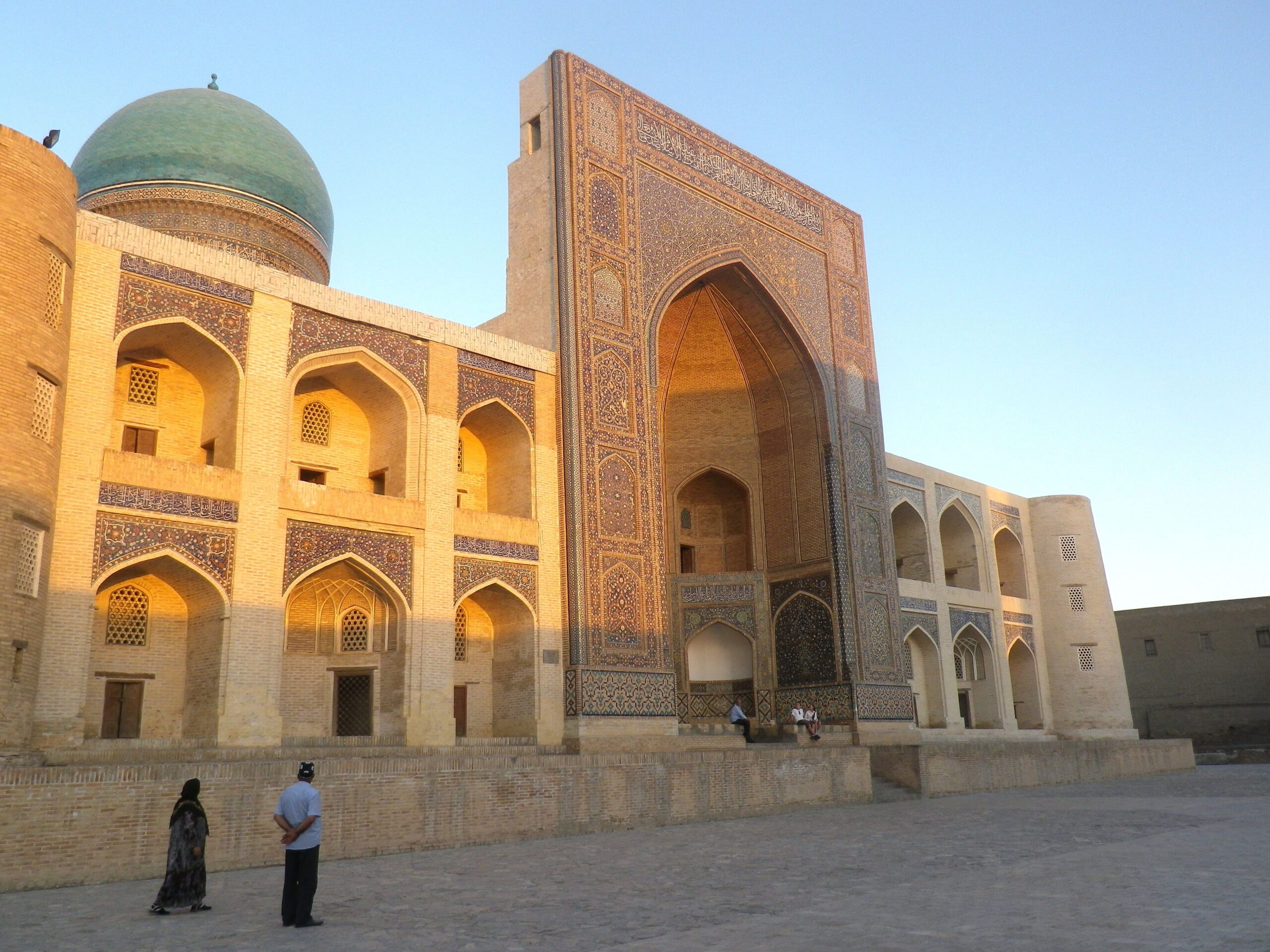
The Kalon Mosque, Bukhara; image: TCA, Stephen M. Bland


From the ninth century Pit of the Herbalists to the Ismail Samani Mausoleum and the bird market, the old town in Bukhara isn’t really about its separate sights, it’s the sum of its parts, the timeless city permeated by an air of antiquity like a window into the past. That having been said, however, the jewel in the crown of Bukhara is the trinity of the Kalon Mosque, Minaret, and the Mir-i-Arab Madrasah.

Built as an inland lighthouse for desert caravans, the Kalon Minaret – “great” in Tajik – was probably the tallest building in Central Asia upon its completion in 1127. The third minaret to have been built on this site, previous incarnations had caught fire and collapsed onto the mosque below, officially because of the “evil eye.” Also known as the “Tower of Death,” over the centuries the minaret has seen countless bodies sewn into entrail catching sacks and tossed from its 47-meter-tall lantern. Particularly popular during Manjit times, this practice survived until the 1920s.
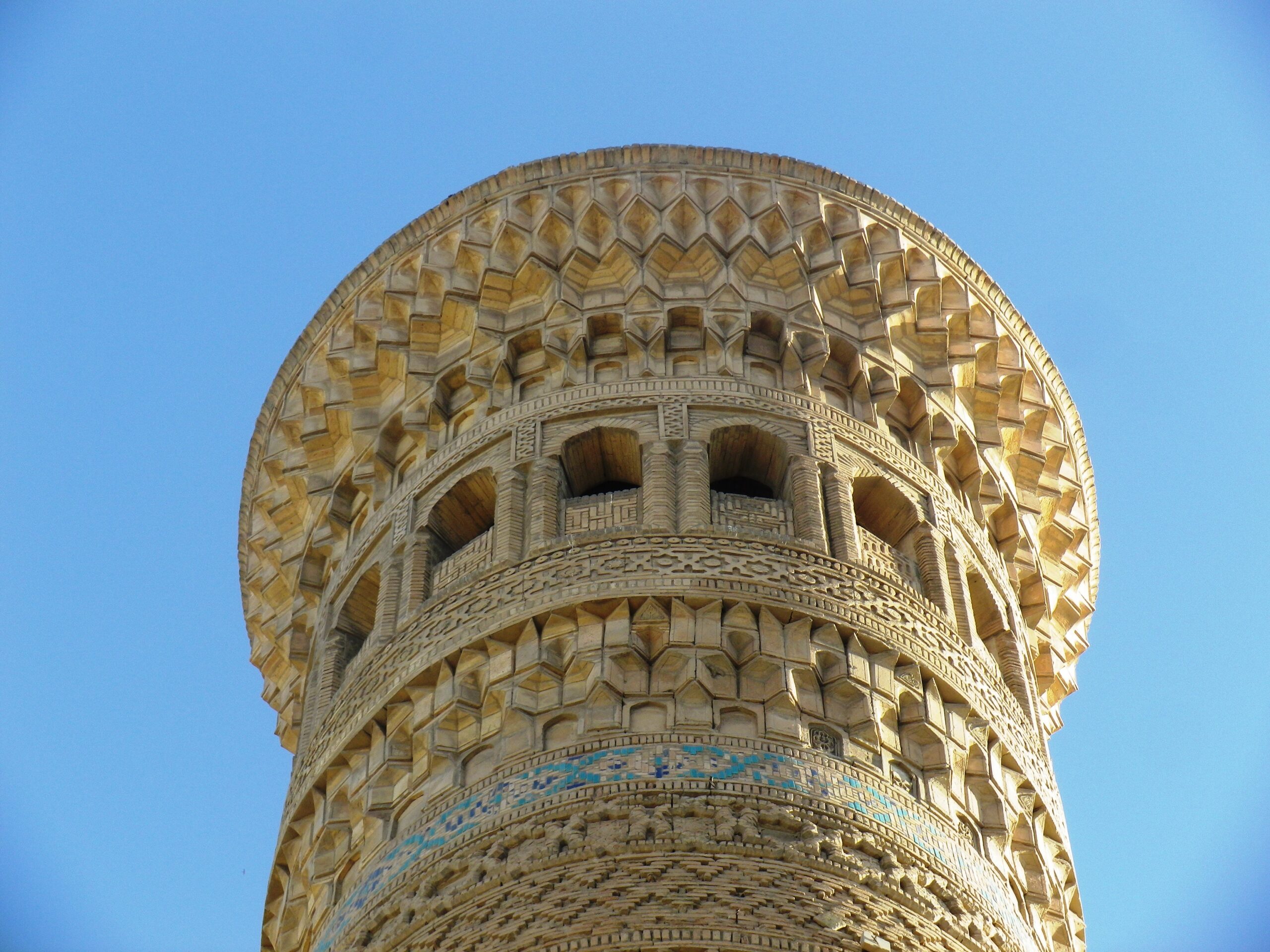
The lantern of the Kalon Minaret, Bukhara; image: TCA, Stephen M. Bland


Home of the first recorded use of the now ubiquitous blue tile in Central Asia, the 14 distinct bands of the minaret are majestic in the pink evening light, its scale and intricacy remarkable. While the sense of history lingers, everyday life continues unabated at its stout base, and when the heat of the day abates, head-scarfed babushkas sat chit-chatting on the cool stone steps of the Madrassa, while kids kick soccer balls against the ancient stones.


Art: The State Art Museum of the Republic of Karakalpakstan, Nukus
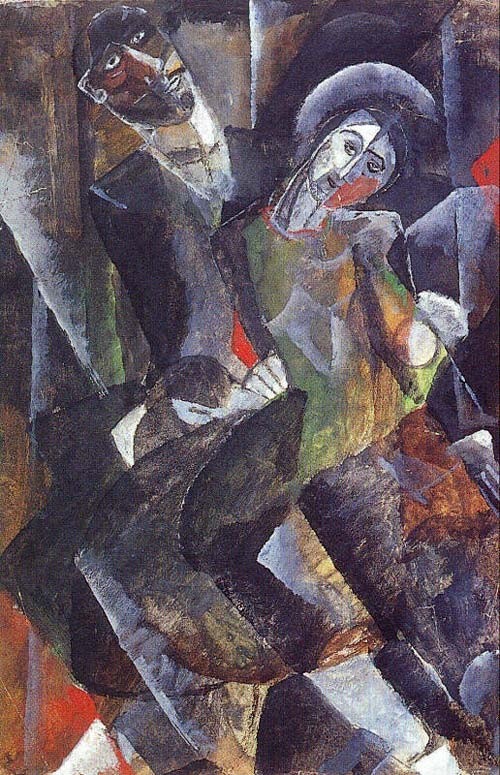
Lev Galperin – “On his Knees”


Once a thriving agricultural center, Karakalpakstan is now one of the sickest places on Earth. Respiratory illness, typhoid, tuberculosis and cancers are rife, birth defects and infant mortality rates amongst the highest in the world. The deliberate destruction of the Aral Sea for irrigation purposes has caused toxic dust storms so vast they are visible from space, ravaging a 1.5-million-kilometre square area. Spreading nitrates and carcinogens, these storms used to hit once every five years, but now come ten times a year.

Yet it is in the capital of Karakalpakstan, Nukus, that a remarkable collection of art has survived in part because of its inhospitable location. Risking denouncement as an “enemy of the people,” obsessive Ukrainian-born painter, archaeologist and art collector, Igor Savitsky spirited away thousands of avant-garde pieces banned in the Soviet Union. In this farthest-flung corner of the former empire, the State Art Museum of the Republic of Karakalpakstan houses works by a forgotten generation. A mishmash of styles and influences far removed from the purportedly uplifting romanticism which Socialist realism had permitted, many of the artists displayed here met with an unsavory end.

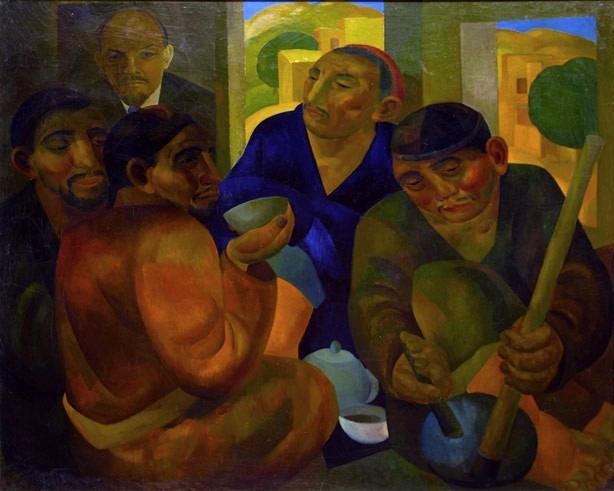
Featuring dazzling, geometric scenes of everyday Central Asian life, the oil paintings of Aleksandr Volkov are awash with color. When the campaign against free-thinking artists began in the USSR following an edict from Stalin, his Cubo-Futurist vision saw Volkov labelled a bourgeois reactionary. Fired from his posts, he lost everything. Over the course of the next three years, all of Volkov’s works were removed from the leading Russian galleries. Up until his death in 1957, upon orders from Moscow, he was isolated from any contact with artists, critics, or art lovers. To anyone who wanted to meet Volkov, they declared that the painter was too ill to see them. Still, in many ways Volkov was one of the lucky ones, for at least he avoided the gulags.

A fusion of Dada and Cubism, a piece entitled On His Knees is most likely the sole surviving work by Lev Galperin, a well-travelled painter and sculptor from Odessa. No longer permitted to leave the Motherland after returning in 1921, he eked out a meagre existence working to order on bas-reliefs. With his paintings adjudged to be counter-revolutionary, he was arrested on Christmas Day of 1934 and sentenced to five years hard labor. During his trial, Galperin dared to voice his skepticism regarding the Soviet system and the state of art in the union. His death certificate simply reads, “Cause of death: execution by shooting.”
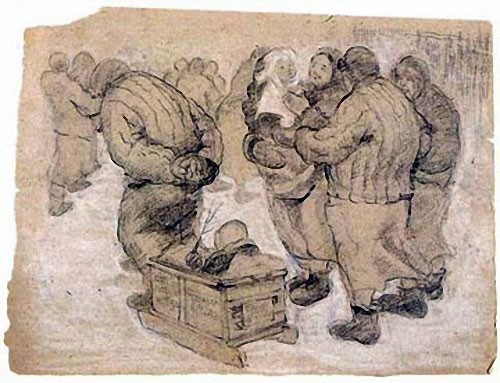
Sketch of a gulag by Nadezhda Borovaya


A series of sketches by Nadezhda Borovaya show what conditions in the gulags were like. When her husband was executed in 1938, Borovaya was sent to the Temnikov Camp, where she spent the next seven years secretly recording and smuggling out scenes of everyday life. With dazzling bravado, Savitsky procured government funding to purchase these drawings by persuading party officials they were depictions of Nazi concentration camps.


Film: The Killer by Darezhan Omirbaev
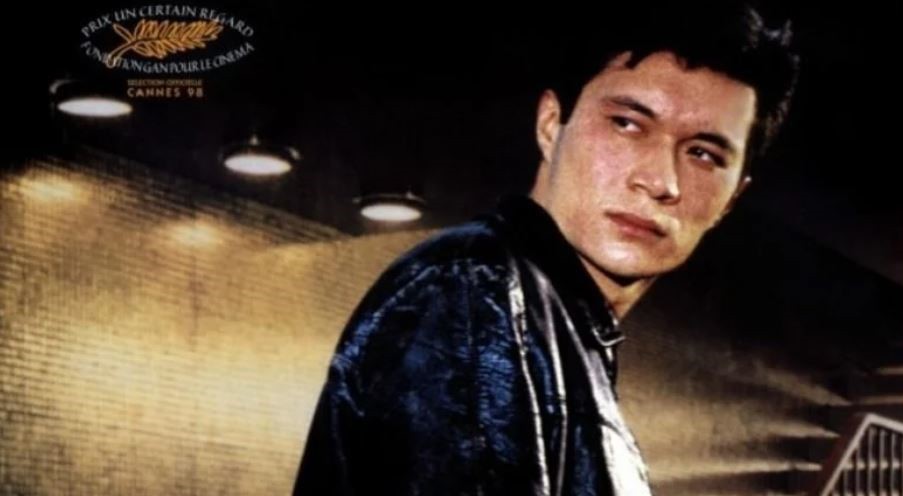
Poster for The Killer by Darezhan Omirbaev


The Killer is a crime drama from 1998 directed by minimalist Kazakh filmmaker and screenwriter, Darezhan Omirbaev, which won the Un Certain Regard Award at the 1998 Cannes Film Festival and the Don Quijote Award at the Karlovy Vary International Film Festival. A sparse, tensely-drawn, but simple tale, the film tells the story of the seemingly inevitable demise of chauffeur in Almaty, who, following a string of unfortunate events, accepts a loan from a mafia boss. Whilst unremittingly bleak, it is perfectly paced, shot, and acted, and, as noted by Variety, has “its own type of beauty”.

Banker’s Murder: Former-FBI Director Speaks in Kazakhstan Over High-Stakes Tokmadi Parole Case

Louis Freeh, former director of the U.S. Federal Bureau of Investigation (FBI), will speak at a hearing of the Almaty Oblast Court on August 23 on the case to review the early release of businessman Muratkhan Tokmadi, who in 2018 was sentenced to ten and a half years for the 2004 murder of the BTA Bank chair, Yerzhan Tatishev. On August 9, it was ruled that Tokmadi should be released on parole after serving six and a half years.

In 2017, Freeh led a team of U.S. investigators and forensic experts who were brought in by the Tatishev family to look into the death of Yerzhan Tatishev, one of the founders and co-owners of what was at the time Kazakhstan’s largest bank. On the morning of the 23rd, Freeh, who served as a U.S. district judge before becoming the fifth director of the FBI, leading the agency from September 1993 to June 2001, shared details of his investigation with the media in Kazakhstan.

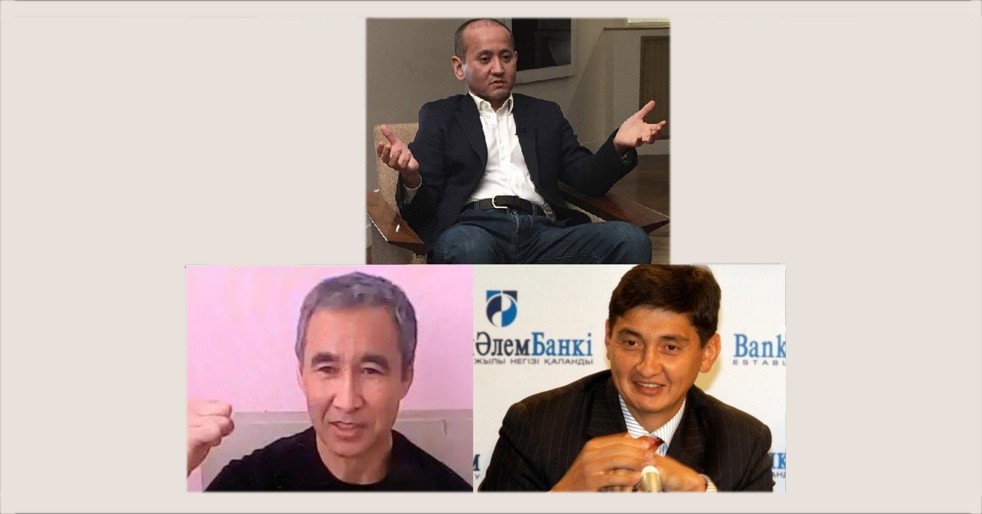
“In 2018, Murakhan Tokmadi admitted that he killed Tatishev and said that he did it because Mukhtar Ablyazov promised to pay four million dollars. Ablyazov’s goal was to gain control of BTA Bank,” Freeh told reporters. “His accidental shooting is impossible… The gun didn’t go off by itself.”

The probe and the findings of investigative firm Freeh Group International Solutions (FGIS), part of the law firm Freeh Sporkin & Sullivan LLP (FSS), since acquired by Alix Partners LLP, formed the basis of the original indictment against Tokmadi, after FSS and FGIS staff accessed documents which proved the banker’s death was willful.

The court hearing into Tokmadi’s parole was initiated by the family of the deceased.

On December 19, 2004, Yerzhan Tatishev died on a hunting trip whilst driving an SUV in the Zhambyl Region. At the car’s wheel pursuing prey across the steppe, Tatishev handed a 12-gauge shotgun to Tokmadi, who was sitting beside him. According to the defense, the SUV suddenly hit a bump, and the gun fired accidentally, with Tatishev receiving a gunshot wound to the head, the bullet passing through his left eye. At the time, the killing was ruled to be an “accident,” with Tokmadi sentenced to one and a half years for manslaughter. One of the witnesses to the incident was the banker’s security guard, Sergei Kozlikin, who swiftly fled Kazakhstan, saying he feared for his life.

In 2017, the case was reopened, and Tokmadi was charged with extortion and the illegal possession of firearms. In his 2018 testimony, Tokmadi stated that he was fulfilling an order from fugitive oligarch Mukhtar Ablyazov, who was the co-owner of BTA Bank at the time. “Each time I met [Ablyazov] he argued that Yerzhan could not at any instant keep or sustain his word,” Tokmadi testified. “He proposed to deal with the problem through the physical elimination of Yerzhan. This would happen during a hunting trip and look like an accidental death. And so it happened.”

Some of the documents relating to the investigation –  which was supervised by the National Security Committee (KNB) – were classified as “top secret.” Given that Tokmadi had attempted to escape from detention in a regional hospital prior to his trial, the former head of the KNB, Nartai Dutbayev, was questioned in the case. Tokmadi was promptly detained in the city of Taraz and taken to the pre-trial detention center of the Zhambyl Oblast Department of Internal Affairs.

In 2022, having retracted his previous testimony against Ablyazov, in a letter Tokmadi called on President Kassym-Jomart Tokayev to reconsider his case. Tokmadi claimed that he was tortured into confessing by being injected with psychotropic drugs and kept in solitary confinement by KNB employees, who were seeking Ablyazov’s extradition from France. The majority of the national security officials listed in Tokmadi’s letter have since been convicted of the attempted coup d’état in January 2022.

Fifteen years since he fled from the authorities in Kazakhstan, the plethora of international court cases involving Mukhtar Ablyazov continue to rumble on. In November 2018, Ablyazov was convicted in absentia in Kazakhstan for ordering the murder of Tatishev. Ablyazov has judgments against him totaling more than $4.4 billion in the British courts alone, from where he took flight in 2012 to avoid three concurrent 22-month sentences for a “remarkable and brazen” contempt of court. In the latest of numerous judgments against him in the U.S., in June of this year a New York court found associates acting on behalf of Ablyazov – who stands accused of having embezzled up to $10 billion – guilty on claims of conversion and unjust enrichment.


National Bank of Kyrgyzstan Comments on Suspension of Money Transfers with Russia

In regard to the  suspension by some Kyrgyz banks of money transfers between Kyrgyzstan and Russia, the National Bank explained to The Times of Central Asia that second-tier banks are working to prevent the negative impact of international sanctions.

“To minimize the risk of secondary sanctions, measures are taken to strengthen control over clients and counterparties, to conduct thorough checks to ensure that they are not on the sanctions lists,” said  representatives of the financial regulator, before adding that the National Bank is remotely supervising compliance with international sanctions.

All commercial banks in Kyrgyzstan must check their counterparties in adherence to the policy “know your client,” and request documents from clients confirming the origin of funds. It should be noted that money transfers between Kyrgyzstan and Russia are still carried out through ruble details of other Russian banks, which have not fallen under sanctions. In addition, it is possible to transfer funds through money transfer systems.

On June 12, 2024, the U.S. Treasury Department’s Office of Foreign Assets Control (OFAC) added the Moscow Exchange, the Russian Center, and the National Settlement Depository National Cleari to its sanctions list. As a result, trading in the U.S. dollar and euro was halted at the Moscow Exchange. Then, eight commercial banks from Kyrgyzstan restricted their work to Russian money transfer systems. But after a few days, work with Russian-sanctioned banks was resumed.

In April this year, Kyrgyzstan stopped accepting Russian MIR cards due to the risk of secondary sanctions. Later, the head of the Kyrgyz Cabinet of Ministers, Akylbek Japarov, said that once a processing center is created, they will continue to work with Russian banking systems. Currently, the Interbank Processing Center of Kyrgyzstan is serviced by a Latvian company providing work software.

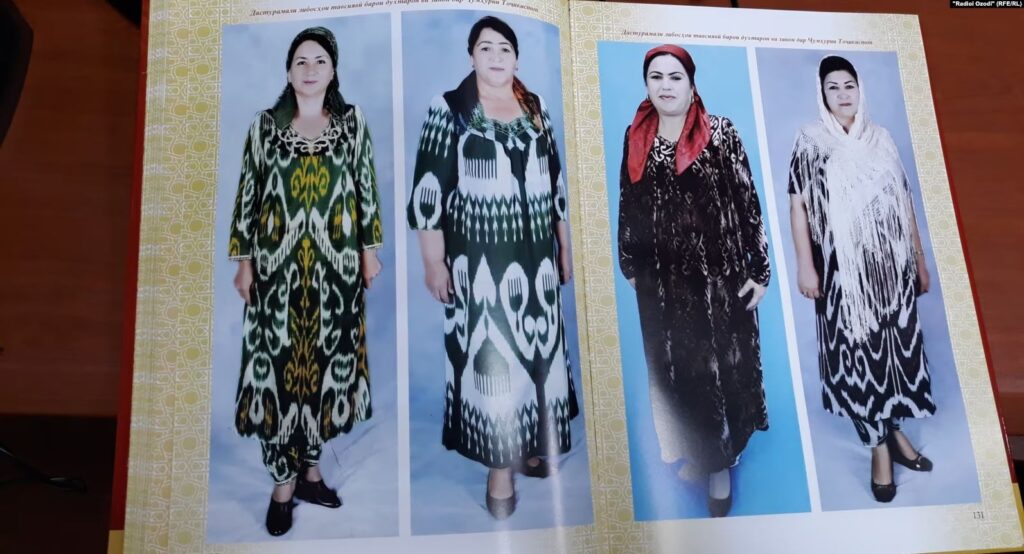
Tajikistan Urged to Reconsider Ban on ‘Alien’ Clothing

The International Partnership for Human Rights (IPHR) has called on the Tajik authorities to repeal recent amendments to the law imposing restrictions on “foreign” clothing.

According to activists, such restrictions violate international human rights, particularly the right to freedom of expression and freedom of religion.

In a statement issued on August 19, IPHR emphasized that since clothing is an important element of personal identity as well as religious and cultural beliefs, states have an obligation to protect people’s right to choose what they wear.

According to amendments to the law “On the Ordering of Traditions, Celebrations and Rites”, enforced in June this year, Tajikistan prohibits “importing, propagandizing and selling clothes that do not correspond to the national culture.” Although a precise definition of such has  yet to be provided, there has been a clear focus by authorities on “Islamic” clothing, and in particular, the issue of a fatwa by Tajikistan’s Ulema Council urging women to avoid wearing “tight, black or see-through clothing.”

Violations of the law are punishable by heavy fines or imprisonment for up to three years.

IPHR continues to stress that restrictions based on religious, cultural, or traditional values cannot justify the violation of human rights

The amendments were earlier condemned by The League of Muslim Scholars and other international organizations, and the Taliban even declared “jihad” against Tajikistan.

In response to international criticism, Tajik authorities reiterated that the new law aims to protect national values and prevent extremism.