• KGS/USD = 0.01144 0%
  • KZT/USD = 0.00194 -0%
  • TJS/USD = 0.10861 0.18%
  • UZS/USD = 0.00008 0%
  • TMT/USD = 0.28571 0%
  • KGS/USD = 0.01144 0%
  • KZT/USD = 0.00194 -0%
  • TJS/USD = 0.10861 0.18%
  • UZS/USD = 0.00008 0%
  • TMT/USD = 0.28571 0%
  • KGS/USD = 0.01144 0%
  • KZT/USD = 0.00194 -0%
  • TJS/USD = 0.10861 0.18%
  • UZS/USD = 0.00008 0%
  • TMT/USD = 0.28571 0%
  • KGS/USD = 0.01144 0%
  • KZT/USD = 0.00194 -0%
  • TJS/USD = 0.10861 0.18%
  • UZS/USD = 0.00008 0%
  • TMT/USD = 0.28571 0%
  • KGS/USD = 0.01144 0%
  • KZT/USD = 0.00194 -0%
  • TJS/USD = 0.10861 0.18%
  • UZS/USD = 0.00008 0%
  • TMT/USD = 0.28571 0%
  • KGS/USD = 0.01144 0%
  • KZT/USD = 0.00194 -0%
  • TJS/USD = 0.10861 0.18%
  • UZS/USD = 0.00008 0%
  • TMT/USD = 0.28571 0%
  • KGS/USD = 0.01144 0%
  • KZT/USD = 0.00194 -0%
  • TJS/USD = 0.10861 0.18%
  • UZS/USD = 0.00008 0%
  • TMT/USD = 0.28571 0%
  • KGS/USD = 0.01144 0%
  • KZT/USD = 0.00194 -0%
  • TJS/USD = 0.10861 0.18%
  • UZS/USD = 0.00008 0%
  • TMT/USD = 0.28571 0%
18 December 2025

Burabay National Park: A Place of Respite, Legends and Cultural Heritage

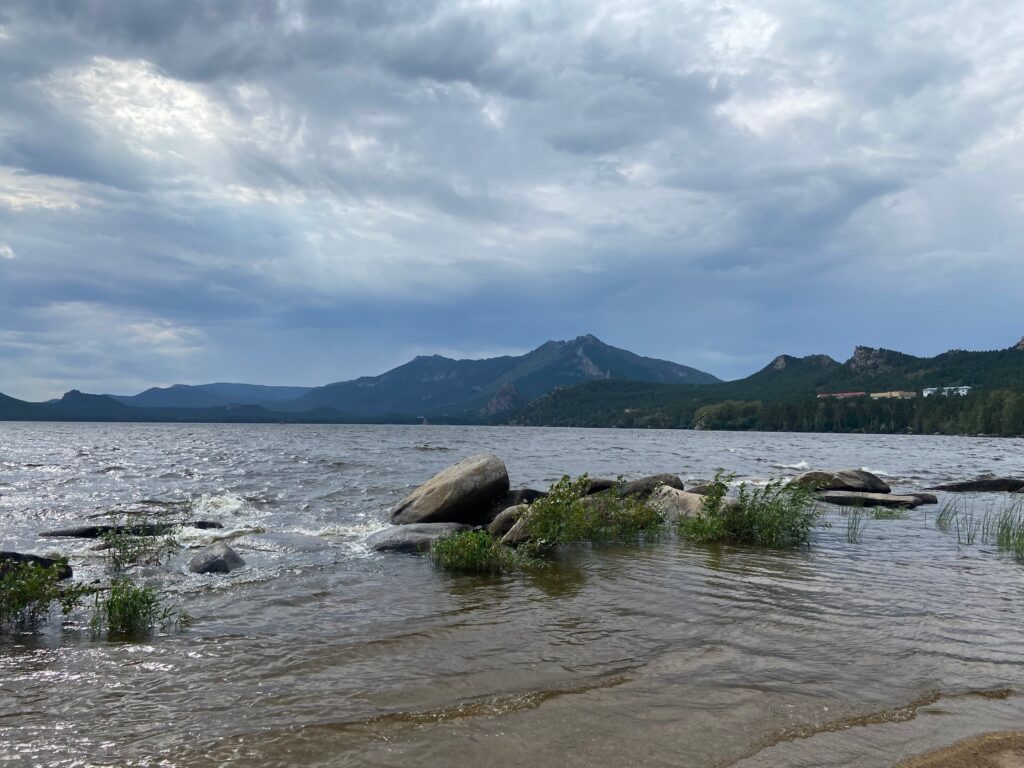
Burabay National Park, located just 250 kilometers from Kazakhstan’s capital Astana, is a place of outstanding natural beauty offering easily accessible respite from the hustle and bustle of city life.

Known by its Russian name ‘Borovoye’, from boro meaning pine forest – until 2000, the park spans 85,000 hectares on which visitors can participate in outdoor pursuits from cycling, horseback riding and skiing, to swimming, kayaking, sailing and water skiing, or simply relax and enjoy the fresh clean air and magnificent views of the hills and mountains.
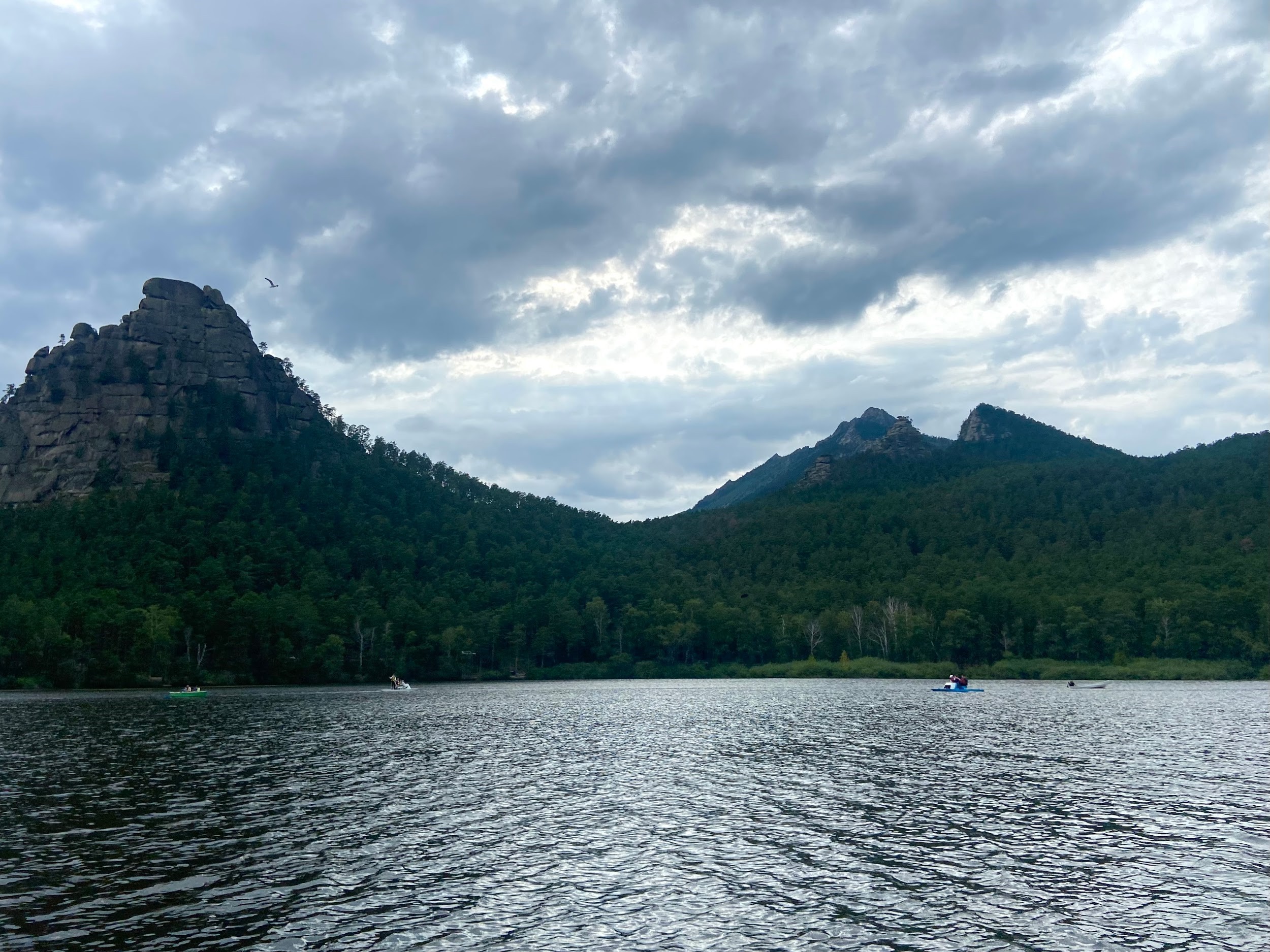
Photo: Mt Okzhetpes – TCA, Tamila Olzhbaekova


Mountaineers can test their skills on Mt Kokshetau, the highest peak standing at 957 meters. For those less experienced, The Three Sisters provide a range of gradients suited to different levels of hikers and climbers, and Mt Bolektau affords panoramic views within an easy 20-minute ascent.

For many, the pearls in Burabay’s crown are its crystal-clear lakes. The park boasts no fewer than fourteen, each with its own unique beauty and atmosphere. Amongst the best known are Maloye, Shchuchye, Chebachye, home to 300 species of fish, and the largest, Lake Borovoye, popular for its well-maintained beaches and water sports.

Burabay is also a place of great archaeological, cultural, and historic significance and both its origins and natural landmarks are steeped in legends.

Origins

Different myths tell how disappointed by its barren terrain, either Allah or Tengri decided to enhance the flat Kazakh steppe by scattering it with small mountains, lakes, and forests. The area and its settlers were guarded by a beautiful white camel; a bura in Kazakh, and hence the name, Burabay. Coveting it as a trophy, robbers shot it with an arrow but were instantly flattened when the camel turned into a rock. Today, it is but one of the park’s many legendary landmarks.
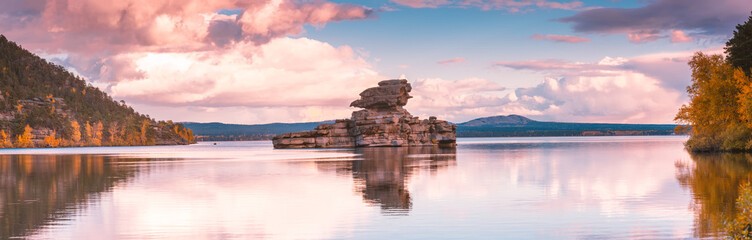
Photo: Adobe stock -Zhumbaktas


Zhumbaktas

In the center of Borovoe Lake stands a rocky outcrop known as ‘Zhumbaktas’ which translates as ‘mysterious stone’ in Kazakh. According to legend, a rich Khan sought a wealthy husband for his beautiful daughter but instead, she fell in love with a talented, roaming musician. The couple fled and pursued by the girl’s brothers, sailed to the middle of the lake. The young man, shot through the chest with an arrow, toppled into the water. The girl appealed Tengri, who granting her wish to join her beloved, turned her into a rock. From one side, the island looks like a boat, from another, a girl with her hair blowing in the wind, and when viewed from a different angle, an old woman.
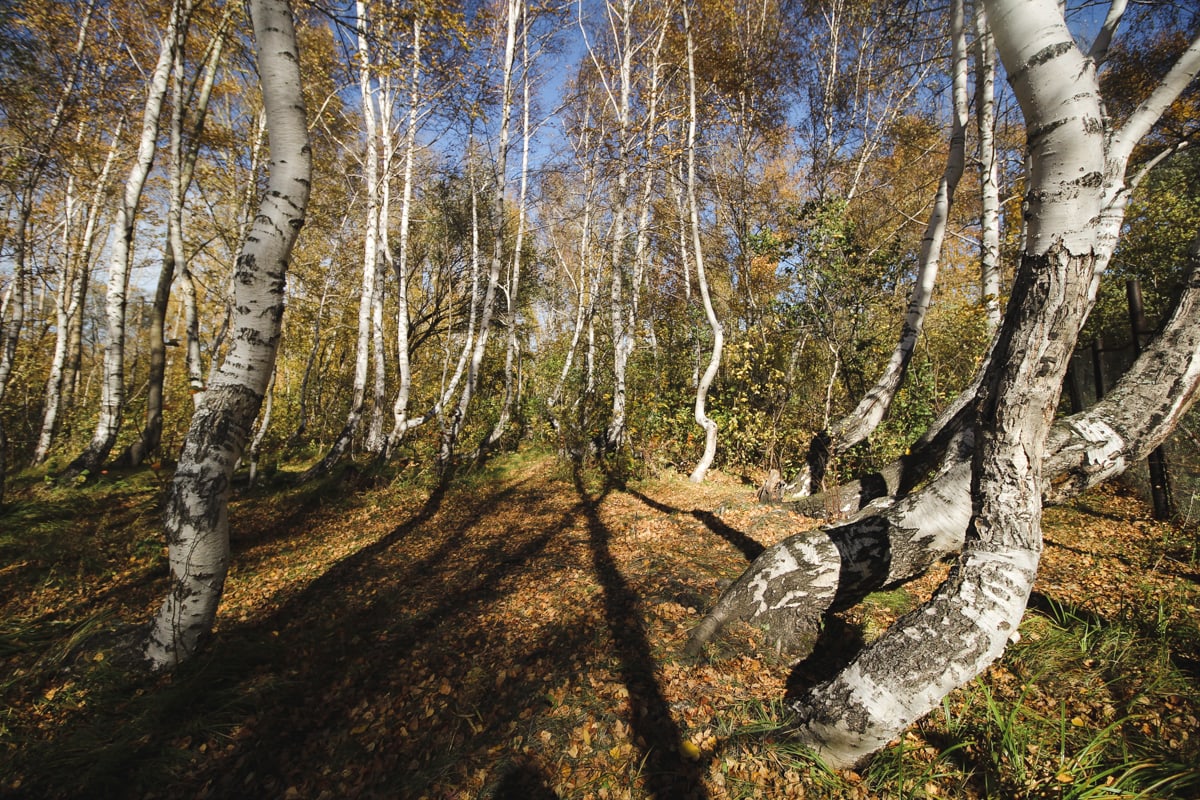
Photo: Dancing Birch Grove – TCA, Tamila Olzhbaekova


Dancing Birch Grove

Amid the park’s vast forests, stands an enchanting grove, where blown by the wind, birch trees sway and intertwine. According to legend, village girls dancing in a clearing froze in fear and turned into trees when they noticed the khan watching them.

Mount Okzhetpes

According to research by Kazakh historian Shokan Ualihanov, whilst living in Borovoye, Abylai Khan, the renowned ruler who united the 18th century Kazakh Khanate and liberated its territories from foreign invaders, led and won a war between the Kazakhs and the Zhungars. A local myth then relates that on their return, debate arose amongst the warriors concerning the division of the spoils which included a young Kalmyk maiden. To determine the matter, the khan instructed the girl to ascend Mt Okzhetpes and marry whoever managed to strike her waving kerchief with an arrow. None of the warriors succeeded and ignoring the khan’s order to come down, she leapt into Lake Auliekol and drowned. The lake known as the ‘holy lake’, symbolizes freedom of choice.
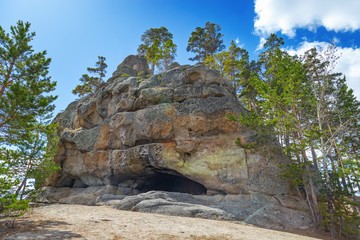
Photo: Kenesary Cave – TCA, Tamila Olzhbaekova


Cave of Khan Kenesary

The 19th century Kazakh ruler and grandson of Abylai Khan, was another famous figure who frequented the area. A keen hunter, he is said to have spent nights in the forest in what is now known as the  Kenesary Cave.

Social History

The region’s social history, both ancient and modern, can be explored in two of Burabay’s permanent attractions: the Botai-Buraby Open Air Museum focusing on ancient Botai culture dating back to 3700-3100BC, and the Jailau Ethnic Village which provides a taste of Kazakh traditional life flavoured with yurts, altybakans or swings, music, craft, national dress, food etc.


Photo: Burabay Multimedia Complex – TCA, Tamila Olzhbaekova


Burabay Multimedia complex

In addition to wandering around the above, tourists can delve deeper into the area’s rich history by visiting the park’s innovative multimedia interactive museum. Located in Abylai Khan Glade, the recently refurbished complex includes modern technologies -5D, augmented reality, light show- in nine themed spaces dedicated to Kazakhstan’s cultural, spiritual, and historical heritage:  Great Steppe Heritage, Travel to Kazakhstan, Flight of the Samruk bird, Heroes’ Land, Eternal Nation, History of the Great Steppe, Historical Figures of Kazakhstan, Corridor of Time, Abylai Khan’s Blessing. Aimed to promote cultural identity, the ‘Tree of Life’ enables all Kazakhs to trace their tribal affiliations, whilst locals and foreigners alike, can enjoy an exhilarating virtual bird’s eye view of the entire country by taking the ‘Flight of the Samurk’.
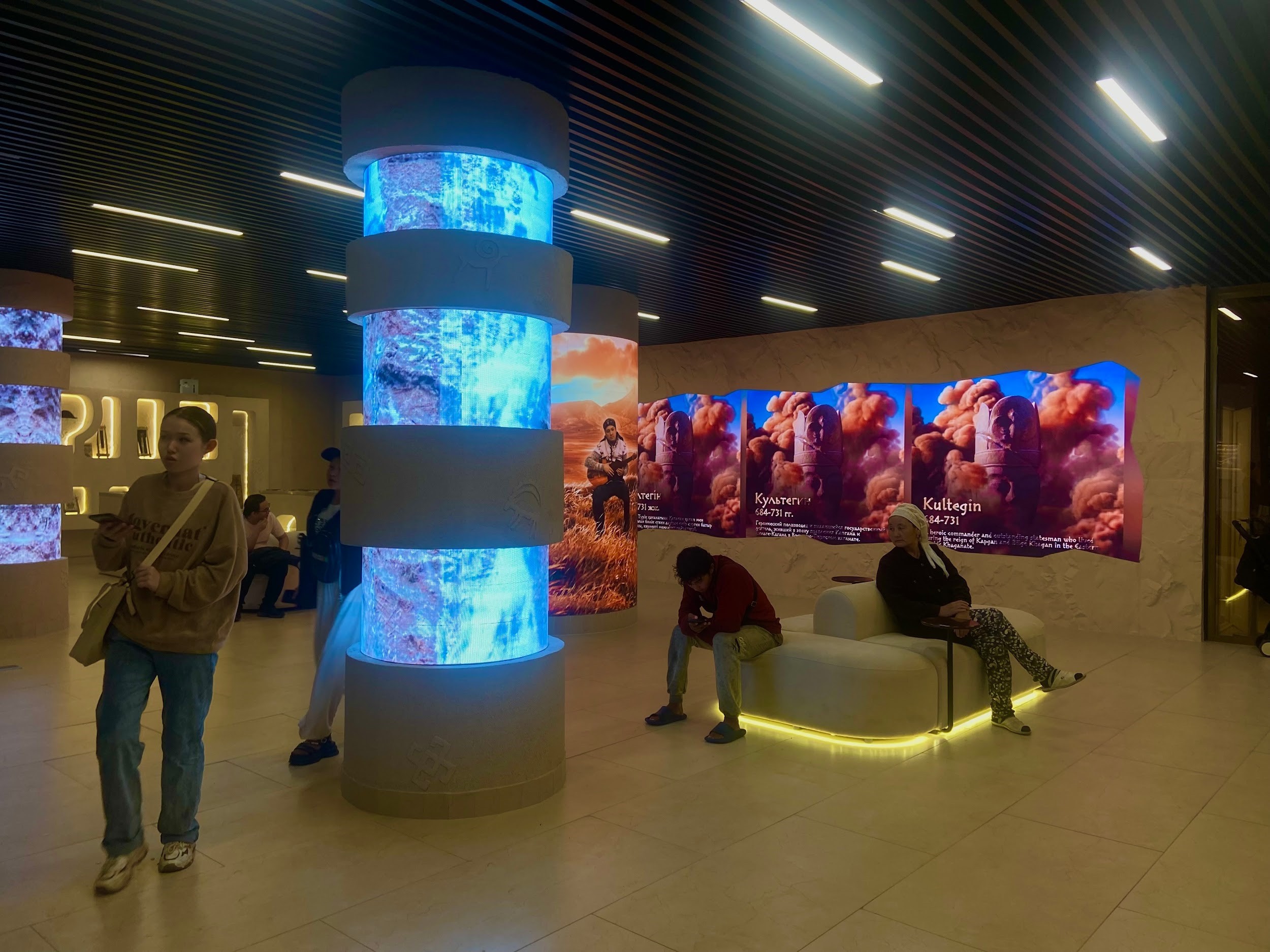
Photo: Complex interior – TCA, Tamila Olzhbaekova


Given its diverse wealth of attractions and close vicinity to Astana, Burabay provides a tantalizing glimpse of all that Kazakhstan has to offer and an experience which is bound to inspire tourists, especially those on their first visit during the Nomadic Games, to further explore the country.
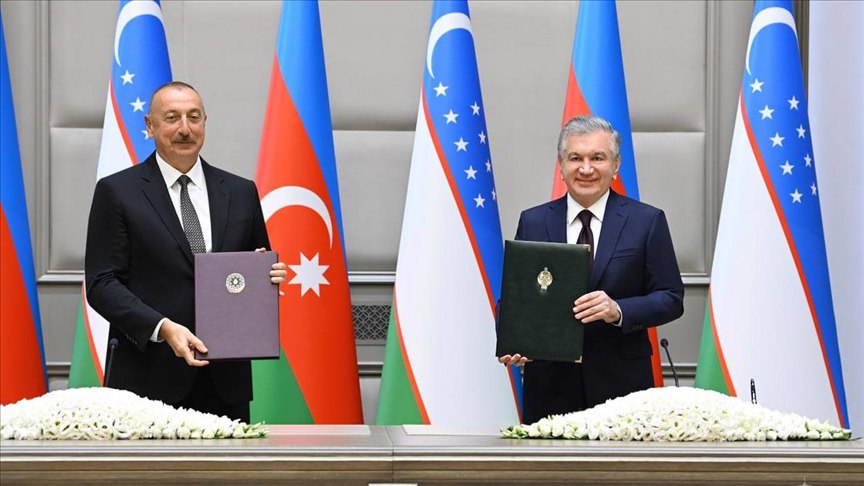

Uzbekistan and Azerbaijan Seal Lucrative Deals

On August 22, at the invitation of Shavkat Mirziyoyev, President of Azerbaijan, Ilham Aliyev, arrived in Uzbekistan on a state visit.

The event, covered by the presidential text service, included a report on a meeting between the presidents, and the first sitting of the Interstate Supreme Council on August 23, at which Mirziyoyev announced:  “Today, we will sign the Treaty on Union Relations. For several years, we have raised Uzbekistan-Azerbaijan relations to the highest level of interstate cooperation.”

The Uzbek president then referred to the 30th anniversary of diplomatic relations between Uzbekistan and Azerbaijan, to be celebrated next year and in turn,  Mirziyoyev proposed commemorating the date and declaring 2025, ‘Year of Economic Cooperation between Uzbekistan and Azerbaijan’.

As a result of the meeting, an agreement was made to adopt a comprehensive program covering 20 prioritized sectors. Cooperation on a portfolio of projects, worth over 2 billion dollars, in energy, chemistry, mining, textile, agriculture, urban development, and other areas was established, and agreement met on increasing the number of air flights, easing surface and air transport procedures, and digital solutions.

Mirziyoyev proposed establishing a mechanism for regular meetings between rectors of the two countries’ leading universities and holding a joint media forum. Prospects of building tourism and business complexes in the capitals were also discussed to increase the flow of tourists, humanitarians, and business exchanges.

In addition,  the presidents signed an Agreement on Union Relations, adopted at the first meeting of the Interstate Supreme Council. The meeting closed with a ceremonial signing of bilateral documents comprising: ¾ Intergovernmental agreement on labor activity and protection of citizens’ rights; ¾ Practical action plan for further expansion of trade, economic, and investment cooperation; ¾ Memorandum on cooperation in the fields of preschool education, vocational education, secondary special education, higher education, and science; ¾ Action plan in the field of tourism for 2024-2026; ¾ Cooperation program for 2024-2026 between the Ministry of Justice of Uzbekistan and the State Agency for Citizen Services and Social Innovation under the President of Azerbaijan; ¾ Memorandum on cooperation between the Center for Professional Development of Lawyers under the Ministry of Justice of Uzbekistan and the Academy of Justice of the Ministry of Justice of Azerbaijan; ¾ Agreement on cooperation between the National Guard of Uzbekistan and the Ministry of Internal Affairs of Azerbaijan, and ¾ Memorandum on cooperation between centers of forensic expertise.

During the event, the presidents also met with representatives of companies from both countries including Azerbaijan’s PASHA Holding, SOCAR, SOFAZ, Agalarov Development, Silk Way Group, Matanat, Sarda Group, AzerGold, Azermash, Azerbaijan Investment Holding, Azerbaijan Railways, and  Alyat Free Economic Zone.

The meeting concluded with the launch of various cooperative projects ranging from the construction of hotel and residential complexes in Tashkent and building material production in the Kashkadarya region (Uzbekistan),  to the establishment of textile clusters and a sewing factory in Azerbaijan.

To mark the end of the state visit, the two presidents and their wives attended in a concert featuring artists from the two countries.

CAREC Think Tank Development Forum to Focus on Climate Solutions

The 8th CAREC Think Tank Development Forum (CTTDF) will be held on August 27 and 28 in Almaty. Themed “The Climate Challenge: Thinking Beyond Borders for Collective Action,” the forum aims to address regional climate challenges by fostering collaborations for policy recommendations and joint research.

The CAREC Institute, the Eurasian Development Bank, the Asian Development Bank, and other partners will organize the forum, which will bring together policymakers, experts, and leaders from across Asia to advance regional cooperation on climate action.

Headquartered in Urumqi in China’s Xinjiang, the CAREC Institute is an intergovernmental organization contributing to the Central Asia Regional Economic Cooperation (CAREC) Program through knowledge generation and capacity building. The Institute is jointly shared and governed by the CAREC’s eleven member countries: Afghanistan, Azerbaijan, China, Georgia, Kazakhstan, Kyrgyzstan, Mongolia, Pakistan, Tajikistan, Turkmenistan, and Uzbekistan.

The forum participants will engage in meaningful policy discourse to identify solutions for a climate-resilient region, explore joint research opportunities, and facilitate innovative climate studies beyond mainstream agendas.

Representatives from international organizations, high-level government officials, esteemed university scholars, and experts from leading think tanks will be key speakers.

The Director of the CAREC Institute and the Vice President of the Asian Development Bank will address the opening ceremony.

The forum will include a research presentation by Arman Akhunbaev, Eurasian Development Bank’s head of the Center for Infrastructure and Industrial Research, with insights into the financial solutions to close the investment gap in Central Asia’s drinking water and sanitation infrastructure.

The forum will also feature presentations, panel discussions, case studies, and interactive sessions designed to foster dialogue and develop actionable strategies for climate resilience in the CAREC region.

Uzbekistan Builds a Religious School in Afghanistan

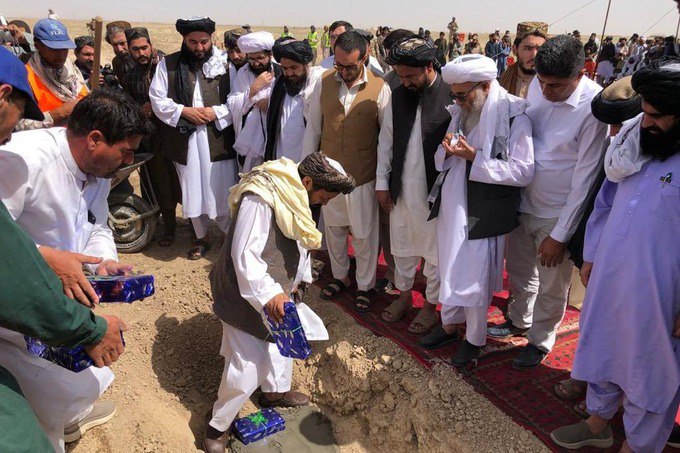
TOLOnews is reporting that Uzbekistan has agreed to finance the construction of a religious school in the Afghan city of Mazar-i-Sharif. The school, which will be built on sixty acres of land and will cost $6 million, is intended for one thousand pupils.

The Consul General of Uzbekistan in Mazar-i-Sharif, Furqat Nazarov, said that the school is being built at the request of the governor of Afghanistan’s Balkh province. Nazarov added: “We have allocated one year for this project, and it will be completed by then.”

Balkh’s Deputy Governor Nurul Hadi Abu Idris commented: “This is a sign of the coordination of the Islamic Ummah. Unity among Muslims is increasing daily.”

Afghan officials consider Uzbekistan’s establishment of this school to be a practical step in strengthening relations between the two countries. Abdul Jalil Shaheedkhil, the head of Balkh province’s education department, said: “The establishment of this school, God willing, will further strengthen relations between Afghanistan and Uzbekistan.”

Zabihullah Noorani, the head of information and culture in Balkh, said: “This will be the largest school in Afghanistan, and it will improve our education sector.”

The Consul General of Uzbekistan in Mazar-i-Sharif promised to strengthen ties with Afghanistan, and added that Uzbekistan would soon resume providing education and business visas for Afghan citizens.

Uzbekistan and Afghanistan are developing their trade relations. This year there are opportunities to increase the volume of mutual trade to $1 billion and, soon after, to $3 billion.

Uzbekistan has also finished repairing the Naibabad railway station in Afghanistan.

Kyrgyzstan Seeks to Increase Production and Export of Fish

On August 23, Bakyt Torobayev,  Minister of Water Resources, Agriculture, and Processing Industry of Kyrgyzstan, attended ceremonies to launch the construction of two fish processing plants in the country’s northern Chui region.

The first plant, to be built in the village of Leninskoye at the cost of over $4.3 million, will have an annual capacity is up to 3,000 tons of processed fish products (mainly trout) and up to 8,000 kg of black sturgeon caviar.

When operational, the second in the village of Ak-Jol, will create 45 new jobs and have an annual production capacity of 1,000 tons of chilled trout, 1,000 tons of frozen trout, 800 tons of smoked fish, and 400 tons of dried fish.

Kyrgyzstan currently produces about 30,000 tons of fish annually, of which only  5,000 tons are exported. Citing the fact that the country had conditions to produce 105 thousand tons and export 50 thousand tons of fish,  Torobayev recommended that emphasis be placed on the construction of processing enterprises.

According to official statistics, in 2023, Kyrgyzstan produced 33,600 tons of fish and exported 5,556 tons of fish and fish products, mainly to Russia, Kazakhstan, Uzbekistan, and Lithuania.

Fish (mainly trout) are produced in Kyrgyzstan at artificial ponds and fishery farms at lakes Issyk-Kul and Son-Kul.

Kazakhstan and Germany to Cooperate in Water and Agriculture

During a visit to Germany last week, Kazakhstan Deputy Prime Minister Kanat Bozumbayev met with the German Federal Ministry of Food and Agriculture to discuss the possibility of Kazakh agricultural and organic products entering the German market.

The parties agreed to draft a concept for the Regional Center for Sustainable Agriculture in Central Asia, an initiative announced by the President of Kazakhstan during his official visit to Germany back in September 2023.

Following Kazakh Deputy Prime Minister’s meeting with Boris Greifeneder, Managing Director of the German Water Partnership (GWP), a decision was made to draft an Agreement on a Water Partnership between Kazakhstan and Germany.

Cooperation  with GWP, a network of more than 300 companies in the water sector with a strong international focus, marks an essential step towards sustainable and efficient water management in Kazakhstan and will allow the use of proven new technologies.

Speaking at the roundtable “Water for Sustainable Development,” Bozumbayev noted that the consequences of the unprecedented floods experienced by Kazakhstan in spring, illustrate the need for innovative approaches to combat and prevent similar disasters in the future. To this end, he added that Kazakhstan is currently testing Talsim, a German digital flood forecasting solution, and is ready to study German cases in solving flood problems.

The Kazakh Deputy Prime Minister discussed training specialists for Kazakhstan’s water management industry and in turn, the German side expressed its readiness to identify a university to collaborate with the newly- established Kazakh National University of Water Management and Irrigation in Taraz.