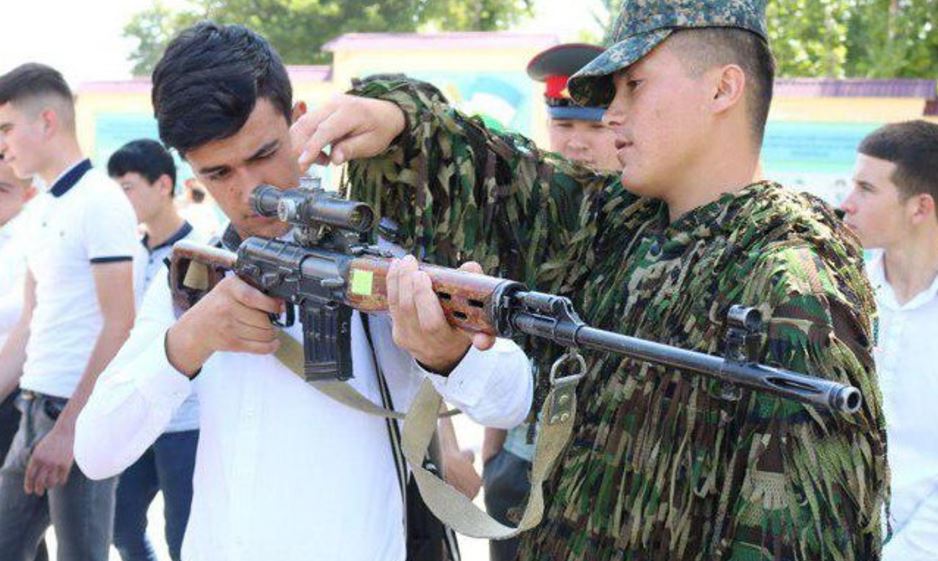
Uzbekistan’s President Shavkat Mirziyoyev signed a decree on November 15 to enhance the system of initial pre-conscription training for young citizens. As a result, one “school of courage” will be established at a school in each district and city of the country.
The primary objective of these schools is to instill patriotism, physical fitness, and spiritual growth in the younger generation. Students will receive advanced instruction in mathematics, history, physical education, foreign languages, physics, and initial pre-conscription training (IPT). Selection for the “schools of courage” will begin from the fifth grade.
These schools will feature an expanded curriculum, including robotics, medical training, legal literacy, and national sports. Practical training will be conducted biannually at military ranges and quarterly at military units. Higher military and paramilitary educational institutions will oversee the schools, providing educational and methodological support.
In other schools across the country, pre-conscription training will be taught for two hours weekly, with an additional hour for grades 10–11. Starting June 1, 2025, the position of deputy director for patriotic education will be discontinued, with its responsibilities transferred to the Ministry of Defense. In its place, a new position—head of IPT—will focus on military and patriotic training for schoolchildren.
This initiative is part of ongoing efforts to enhance patriotic education, as discussed in a recent presidential meeting. It is envisioned that the “schools of courage” will play a vital role in the national education system, fostering loyal and well-rounded citizens.
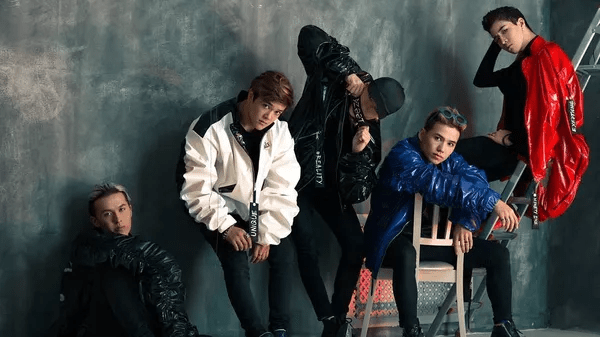
Ninety One revolutionized Kazakhstani pop music by pioneering the Q-pop genre. With their vivid images, deep lyrics and courage in expressing themselves openly. They broke gender stereotypes and inspired a new generation of artists.
How it started
Ninety One were founded in 2014, based on the “K-Top Idols” project, which sought to create Kazakhstan’s first idol group. Initially, the jury selected two participants: A.Z. (Azamat Zenkaev) and Zaq (Dulat Mukhamedkaliev). Later, after additional auditions, they were joined by Bala (Daniyar Kulumshin) and Alem (Batyrkhan Malikov). The fifth member was Ace (Azamat Ashmakyn). The producer of the group, Yerbolat Bedelkhan, sought not only to create a new musical team, but to lay the foundation for the development of a new genre – Q-pop (Qazaq pop) – to unite Kazakh culture with modern pop music and bring it to an international audience.
A challenge to society and initial successes
Released in 2015, Ninety One’s debut music video for the song “Ayyptama” (Don’t blame me), was a breakthrough. The daring style of the members – bright clothes, makeup and skirts – caused heated debates in still conservative Kazakhstani society. Many criticized the group for being “unconventional,” but young people quickly accepted the new format, seeing in it the freedom of self-expression.
Despite pressure, canceled concerts and criticism, Ninety One continued to make steady progress. Their work has been recognized both at home and abroad. The hits “Qalay Qaraisyn” (How do you look at it?), “Su Asty” (Underwater) and “Taboo” (with Irina Kairatovna) gained popularity, and the group’s albums became a cultural phenomenon.
In addition to music, the band found time to test themselves on the silver screen. On August 24, 2017, the film, Ninety One, dedicated to the history of the group and their path to success, was released. The film was directed by Askar Uzabaev, and the producers were Asel Sadvakasova and Erbolat Bedelhan. The picture entered the top three leaders at the Kazakhstan box office, reaping 32,672,000 tenge on the first weekend of its release alone.
Contributing to the fight against gender stereotypes
Ninety One broke stereotypes about how men should look and behave in Kazakhstani society. They showed that a colorful apparel, experimentation with fashion and openness to new ideas are not a weakness, but a strength.
The group inspired young people to boldly express themselves, overcome the fear of judgment, and break with outdated stereotypes. They became an inspiration for new artists, playing a key role in the development of the Q-pop industry.
Ninety One’s fan base grew so large that they gave themselves the nickname “eagles” after the symbol which was the band’s signature gesture: crossed palms representing a bird, the symbol of the national flag of Kazakhstan.
Today, Ninety One remain one of the most successful musical groups in Kazakhstan, actively touring, releasing new albums and continuing to attract the attention of international audiences. In 2023, the group released the album GAP, which became a huge hit. Among the most popular tracks is “АPEREM AI” (I’ll get the moon), which has garnered almost a million listens on Spotify. Another song on the album, “Ottegi” (Oxygen), also gained an impressive 515,000 listens.
Ninety One’s work reached beyond music to symbolize a movement for freedom of expression and cultural diversity. Ninety One remain a symbol of transformation, proving that art can change the world.
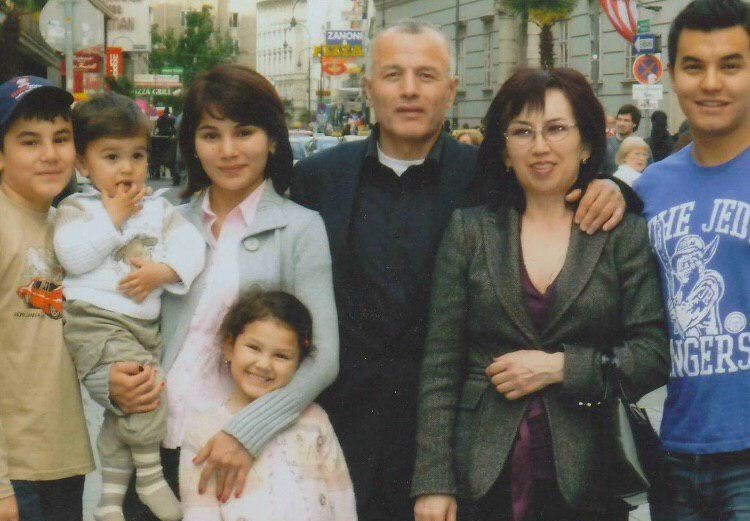
Kadyr Yusupov, a former Uzbek diplomat with a distinguished career who was convicted of treason and jailed in a case that the United Nations said had violated his rights, has died at the age of 73, an international human rights group said on Thursday.
Yusupov, who died on Nov. 14, was released from jail on June 10 after being imprisoned for five and a half years and suffering alleged torture and “deplorable” conditions during some of that time, according to the Norwegian Helsinki Committee.
While Uzbek officials denied the torture allegations, the U.N. Working Group on Arbitrary Detention concluded in a 2021 report that Yusupov had been arbitrarily detained, he should be released immediately and that the government should take action against those responsible for violating his rights. The group said that the violations included the denial of “medication and treatment for the very serious health conditions from which he suffers.”
Rights groups have said that Yusupov was suffering from a mental illness.
“In December 2018 he was arrested on charges of treason which appear to have been based on a statement he made during a psychotic episode, when he was undergoing medical treatment,” the Norwegian Helsinki Committee said. “Whilst in hospital, suffering from brain trauma and clearly confused, Yusupov reportedly said that he had been a spy for the West.”
It said there were “credible allegations” that state security officers coerced Yusupov into a confession. The former diplomat said he was treated better after being transferred from a prison in the city of Navoi to a jail in the Tashkent region.
Yusupov had worked in a series of high-profile jobs for Uzbekistan’s Ministry of Foreign Affairs. The posts included head of the ministry’s Asia and Africa department, head of the European department and, from 2006 to 2009, chargé d’affaires in Austria and permanent representative to the Organization for Security and Cooperation in Europe and United Nations organizations in Vienna.
Kyrgyzstan’s President Sadyr Japarov has signed legislative amendments introducing the status of Digital Nomad for foreign citizens working in information and communication technologies (ICT), software development, creative industries, and related areas. Digital Nomads are exempt from mandatory registration at their place of domicile in Kyrgyzstan, can obtain a personal identification number (PIN), do not need to obtain permits for work, enjoy the right to engage in entrepreneurial activity as an individual entrepreneur or a legal entity, and are allowed to open bank accounts.
According to the Ministry of Economy and Commerce, which spearheaded the amendments, this initiative aims to create favorable conditions for attracting digital nomads to Kyrgyzstan. It is expected to contribute to the development of innovative projects, the growth of high-tech industries, increased tax revenues, job creation, and tourism development.
In neighboring Kazakhstan, the Ministry of Foreign Affairs announced that as of November 18, 2024, the country has enacted updated visa regulations to attract business immigrants, skilled professionals, and tourists. Kazakhstan is introducing a Digital Nomad Visa, a single-entry electronic or multiple-entry paper visa for IT specialists, allowing long-term residence. Additionally, the Neo Nomad Visa offers extended stays to “neo-nomads” who have a verified monthly income of at least $3,000. Applicants for the Neo Nomad Visa must provide health insurance and proof of a clean criminal record.
For over 14 years, the China-Central Asia Gas Pipeline has been a vital conduit for clean energy, delivering more than 500 billion cubic meters of natural gas to China, according to a report by Xinhua, citing the West Pipeline Company of the Chinese PipeChina Corporation.
The Khorgos gas compressor station, a critical component of the pipeline, serves as the primary entry point for Central Asian gas into China. Known as the “head station” and the “heart” of China’s second and third lines of the West-to-East Gas Pipeline, the station plays a pivotal role in the system’s operation.
Since its commissioning in 2009, the Khorgos Compressor Station has operated safely and reliably for over 5,000 days, transporting over 500 billion cubic meters of natural gas. It is recognized as having the highest operational performance in Asia. With an operating pressure of 12 megapascals, the pipeline pumps more than 2,000 cubic meters of gas every second and can transport a maximum of 160 million cubic meters of gas daily.
The 522.5 billion cubic meters of natural gas transported by the pipeline is equivalent to replacing 696 million tons of standard coal, reducing emissions by 764 million tons of carbon dioxide, 25 million tons of sulfur dioxide, 379 million tons of dust, and 6.27 million tons of nitrogen oxides.
The Khorgos compressor station also contributes to green and low-carbon development. It houses China’s first electricity generation project powered by waste heat from natural gas-fired compressors. This innovation has enabled the station to achieve zero direct emissions for large gas transmission stations powered by gas compressors, with annual power generation exceeding 65 million kilowatt-hours.
From the first compressor station, natural gas travels 1,833 kilometers eastward over 84 hours, passing through central Uzbekistan and southern Kazakhstan before entering China at the Khorgos border checkpoint. The gas then feeds into the second and third lines of the West-East Gas Pipeline. With a design capacity of 60 billion cubic meters per year, the pipeline has been operational since December 2009.
The pipeline supplies natural gas to more than 500 million people across 27 provincial-level regions and the Hong Kong Special Administrative Region.
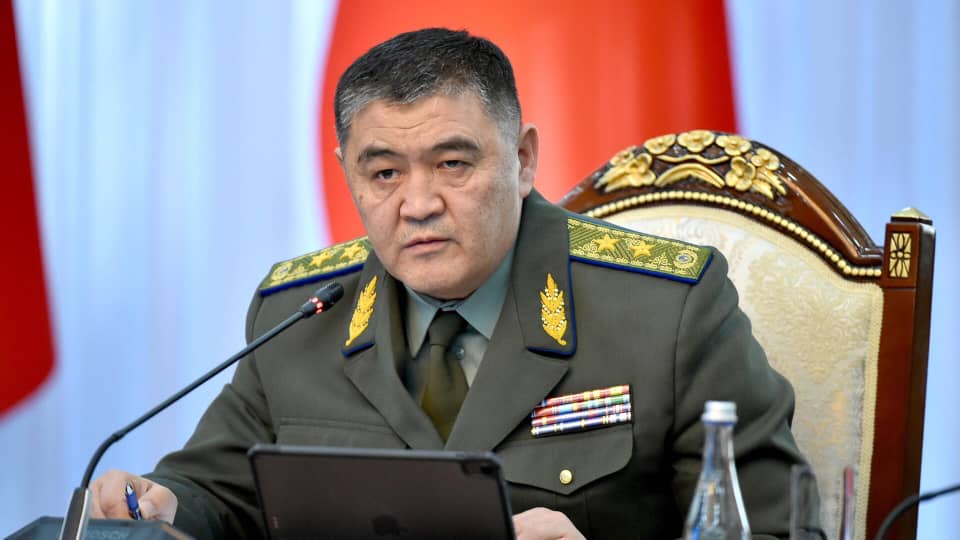
Kyrgyzstan’s State National Security Committee (GKNB) says it has prevented two assassination attempts on President Sadyr Japarov. This was reported by Kamchybek Tashiyev, Chairman of the GKNB, when speaking to journalists. Tashiyev also claimed that since taking up his post, five or six attempts on his life have been made. Tashiyev stressed that such attempts are regularly thwarted, and significant financial resources are allocated to this end.
According to Tashiyev, one of the attempts involved the planned bombing of a road he was supposed to travel on. In addition, Tashiyev described repeated threats against him and his family, in particular a threatening letter he received, which, in his opinion, bore the hallmark of foreign special services and certain oligarchs.
“The millions you offered, I did not take. You were angry that you would not be [able to operate] in our country, neither criminals nor oligarchs,” Tashiyev stated. “Maybe you’ll hurt me, but as long as I’m alive, I will not turn from the path I started.”
Born on September 27, 1968, in Barpy, a village in Jalal-Abad Oblast, Kamchybek Tashiyev is a Kyrgyz was appointed as chairman of the GKNB in October 2020, having previously served as Minister of Emergency Situations (2007–2009) and as a deputy of the Jogorku Kenesh. In 2022, he was awarded the title of Hero of the Kyrgyz Republic, and in 2024, he was elected President of the Kyrgyz Football Federation. Tashiyev is also the vice-president of the National Boxing Federation of Kyrgyzstan.