• KGS/USD = 0.01144 0%
  • KZT/USD = 0.00212 0%
  • TJS/USD = 0.10456 0.19%
  • UZS/USD = 0.00008 0%
  • TMT/USD = 0.28490 0%
  • KGS/USD = 0.01144 0%
  • KZT/USD = 0.00212 0%
  • TJS/USD = 0.10456 0.19%
  • UZS/USD = 0.00008 0%
  • TMT/USD = 0.28490 0%
  • KGS/USD = 0.01144 0%
  • KZT/USD = 0.00212 0%
  • TJS/USD = 0.10456 0.19%
  • UZS/USD = 0.00008 0%
  • TMT/USD = 0.28490 0%
  • KGS/USD = 0.01144 0%
  • KZT/USD = 0.00212 0%
  • TJS/USD = 0.10456 0.19%
  • UZS/USD = 0.00008 0%
  • TMT/USD = 0.28490 0%
  • KGS/USD = 0.01144 0%
  • KZT/USD = 0.00212 0%
  • TJS/USD = 0.10456 0.19%
  • UZS/USD = 0.00008 0%
  • TMT/USD = 0.28490 0%
  • KGS/USD = 0.01144 0%
  • KZT/USD = 0.00212 0%
  • TJS/USD = 0.10456 0.19%
  • UZS/USD = 0.00008 0%
  • TMT/USD = 0.28490 0%
  • KGS/USD = 0.01144 0%
  • KZT/USD = 0.00212 0%
  • TJS/USD = 0.10456 0.19%
  • UZS/USD = 0.00008 0%
  • TMT/USD = 0.28490 0%
  • KGS/USD = 0.01144 0%
  • KZT/USD = 0.00212 0%
  • TJS/USD = 0.10456 0.19%
  • UZS/USD = 0.00008 0%
  • TMT/USD = 0.28490 0%

Uzbek Man Suspected of Kidnapping Italian Businessman Arrested

An Uzbek citizen has been detained in Italy on charges of orchestrating the kidnapping of Italian businessman Stefano Guidotti in Moscow.

In June this year Guidotti was abducted and held hostage. According to Italian investigators, the alleged mastermind is a 44-year-old Uzbek national living near Ravenna, who holds a Russian passport. The suspect had previously worked for Guidotti’s business.

The Bologna prosecutor’s office identified the Uzbek citizen as the primary organizer of the crime. Reports indicate he also personally initiated negotiations to establish a ransom for the release of Guidotti, who serves as the general director of the Russian office of SIAD Group. SIAD is one of Europe’s largest manufacturers of industrial gases.

The kidnapping took place on the morning of June 28, when three men seized Guidotti in the courtyard of a residence in central Moscow. He was handcuffed, a bag was placed over his head, and he was forced into a car. Russian police rescued him the following day in the country’s Bryansk region.

The abductors reportedly included three Russian nationals and one foreigner.
Climate Crisis in Central Asia: Kyrgyz Geologist Spells Out Threat of Disappearing Glaciers

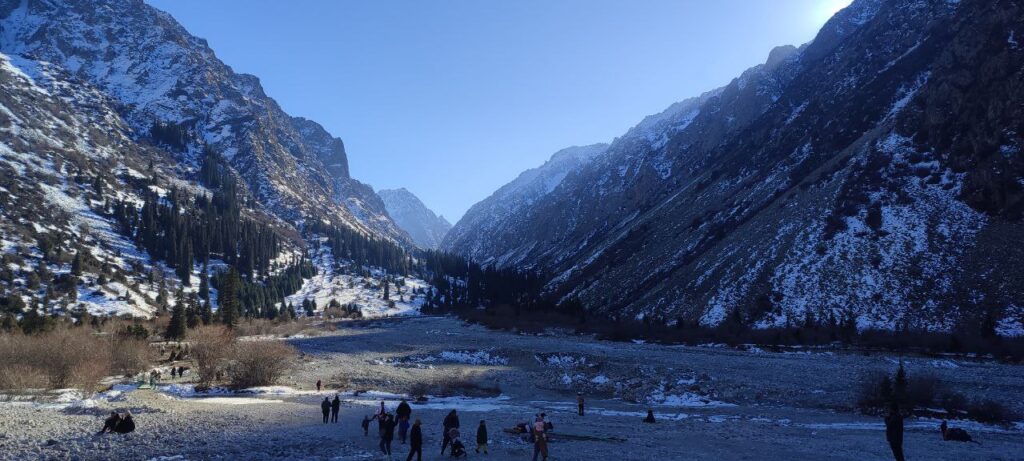
Kyrgyzstan’s President Sadyr Japarov has warned at the COP29 climate summit in Baku that Kyrgyzstan’s glaciers have shrunk by 16% over the past 70 years, a trend that could accelerate if immediate action is not taken.

Glaciers are a crucial source of drinking water for Kyrgyzstan and the broader Central Asian region. Japarov emphasized that the continued reduction in glacier size will lead to water scarcity and bring severe social, economic, and environmental consequences.

“Our region is among the most vulnerable to global warming. By 2100, we may lose more than half of all glaciers,” he said, stressing the need for regional cooperation on green projects to mitigate the impacts of climate change.

Kyrgyz glaciologists at the Institute of Geology have been monitoring the region’s glaciers since the early 1940s. Senior researcher Ilya Mezgin explained the alarming rate of glacier loss. “If you look at maps from 1943, two-kilometer glaciers were visible on the Chatkal Ridge in western Kyrgyzstan. Today, they’ve disappeared entirely from satellite images,” Mezgin told The Times of Central Asia.

The melting has worsened over time. In 1985, Kyrgyzstan had 8,200 glaciers. That number has since dropped to just 6,500. Glaciers at lower altitudes are melting the fastest, while larger glaciers are expected to last until 2100. Mezgin noted that western glaciers in the Talas region are particularly at risk of disappearing.

The mountains of the Tian Shan are composed in the main of crystalline and sedimentary rocks of the Paleozoic Era (i.e., about 540–250 million years ago). growth of the Tian Shan continued until 250 million years ago, when a large continental plate, known as Tarim, collided with Asia.

The State Agency for Geology of Kyrgyzstan has suggested that glaciers can both retreat and regrow over time. However, the current trend is one of significant retreat.

Saudi Arabia to Build Electricity Storage Systems in Uzbekistan

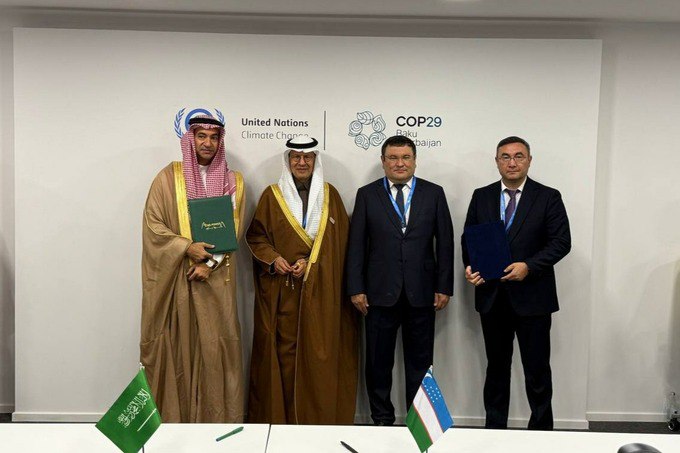
Saudi company ACWA Power has signed an agreement with Uzbekistan to construct electricity storage systems with a total capacity of 2,000 MWh. The agreement was formalized during the COP-29 climate conference in Baku, Azerbaijan.

Under the agreement, ACWA Power will collaborate with Uzbekistan’s Ministry of Energy to develop energy storage systems across the country. The implementation will be based on a comprehensive analysis of the national grid’s condition. The project will begin with feasibility studies to determine the most suitable regions for phased deployment.

The initiative is estimated to cost $1.1 billion and is expected to create over 1,000 jobs during its lifetime.

Uzbekistan has ambitious plans to expand its energy storage capacity to 4.2 GW by 2030. The first energy storage system in the country is slated for launch in early 2025 in the Fergana region.

Deputy Energy Minister Umid Mamadaminov recently noted that Uzbekistan needs to build 10 GW of backup capacity by 2030 to support the integration of renewable energy sources. He emphasized that the country’s minimum reserve should equal 50% of its solar and wind power capacity.

Kazakhstan’s Caspian Sea Ports Increase Cargo Transportation

Kazakhstan’s Ministry of Transport has announced that from January to October 2024, the country’s Caspian Sea ports transported 6.2 million tons of cargo, reflecting a 3% increase compared to the same period last year. Transit cargo shipments saw even stronger growth, rising by 18%.

Truck transshipment via the Kuryk port’s ferry complex increased by 22%, while container transportation through the Aktau port surged by 84%, with approximately 27,000 containers moved along the East-West transit route.

During the same period, the Sarzha terminal at Kuryk port handled 55,000 tons of cargo, including non-ferrous metals, fertilizers, and barley, destined for Turkey and Iran. In October, a new grain terminal with an annual capacity of 1 million tons was inaugurated at the Kuryk port.

Efforts to enhance the port’s capacity continue. The Times of Central Asia previously reported that Kazakhstan’s Ministry of Transport has undertaken dredging operations at the Kuryk port to ensure sufficient depth for ship access, bolstering the capacity of the Trans-Caspian International Transport Route (TITR).

The dredging project will support further expansion of Kuryk’s terminal capacity, currently set at 6 million tons annually—4 million tons through its railway terminal and 2 million tons via its automobile terminal.

Kyrgyzstan’s High Technology Park Confirms Indefinite Preferential Tax Regime

Kyrgyzstan’s President Sadyr Japarov has signed amendments to the Law “On the High Technology Park of the Kyrgyz Republic,” extending the Park’s preferential tax regime indefinitely.

Established in 2011, the High Technology Park was designed to foster IT businesses by drastically reducing or eliminating tax burdens for companies exporting digital goods and services.

Previously, the High Technology Park offered tax exemptions for export-oriented IT companies for a 15-year period, set to expire in 2026. Under the new amendments, this regime is now permanent.

Currently, resident companies of the Park benefit from exemptions on sales tax, profit tax, and value-added tax (VAT). Employees of these companies enjoy a reduced income tax rate of 5%, while the social insurance tax is 12% of their average monthly wage.

The amendments also grant the Park’s supervisory board the authority to independently elect its chairperson, a change expected to enhance the Board’s efficiency.

This move significantly boosts the Park’s appeal to both domestic and international IT businesses. Kyrgyzstan’s IT sector is among the country’s fastest-growing industries.

In 2021, Kyrgyzstan established the Ministry of Digital Development, tasked with advancing e-government initiatives and expanding the range of government services available online.

Chinese Companies to Purchase Uranium Concentrates from Kazatomprom for $2.5 Billion

Shareholders of Kazatomprom, Kazakhstan’s national uranium producer, have approved agreements with two Chinese partners: CNNC Overseas and China National Uranium Corporation (CNUC). These agreements include a spot contract with CNNC Overseas and a long-term contract with CNUC.

Under the terms of these deals, Kazatomprom plans to supply uranium concentrates to China valued at approximately KZT1.25 trillion (around $2.5 billion). While the company has not disclosed specific delivery timelines or volumes, the agreements mark a significant development in Kazakhstan-China nuclear energy cooperation.

CNNC Overseas registered in Hong Kong, and CNUC, based in China, are both subsidiaries of the China National Nuclear Corporation, a state-owned entity responsible for operating nuclear power plants across China.

Kazatomprom has been deepening its ties with China in the nuclear energy sector. In May 2023, a ceremony at the Fangchenggang Nuclear Power Plant marked the acceptance of fuel assemblies produced by Ulba-TVS LLP, a Kazakh-Chinese joint venture in Ust-Kamenogorsk. These assemblies, made from Kazakhstani uranium feedstock, are destined for use in Chinese nuclear power facilities.