• KGS/USD = 0.01144 0%
  • KZT/USD = 0.00193 -0%
  • TJS/USD = 0.10811 -0.28%
  • UZS/USD = 0.00008 0%
  • TMT/USD = 0.28490 0%
  • KGS/USD = 0.01144 0%
  • KZT/USD = 0.00193 -0%
  • TJS/USD = 0.10811 -0.28%
  • UZS/USD = 0.00008 0%
  • TMT/USD = 0.28490 0%
  • KGS/USD = 0.01144 0%
  • KZT/USD = 0.00193 -0%
  • TJS/USD = 0.10811 -0.28%
  • UZS/USD = 0.00008 0%
  • TMT/USD = 0.28490 0%
  • KGS/USD = 0.01144 0%
  • KZT/USD = 0.00193 -0%
  • TJS/USD = 0.10811 -0.28%
  • UZS/USD = 0.00008 0%
  • TMT/USD = 0.28490 0%
  • KGS/USD = 0.01144 0%
  • KZT/USD = 0.00193 -0%
  • TJS/USD = 0.10811 -0.28%
  • UZS/USD = 0.00008 0%
  • TMT/USD = 0.28490 0%
  • KGS/USD = 0.01144 0%
  • KZT/USD = 0.00193 -0%
  • TJS/USD = 0.10811 -0.28%
  • UZS/USD = 0.00008 0%
  • TMT/USD = 0.28490 0%
  • KGS/USD = 0.01144 0%
  • KZT/USD = 0.00193 -0%
  • TJS/USD = 0.10811 -0.28%
  • UZS/USD = 0.00008 0%
  • TMT/USD = 0.28490 0%
  • KGS/USD = 0.01144 0%
  • KZT/USD = 0.00193 -0%
  • TJS/USD = 0.10811 -0.28%
  • UZS/USD = 0.00008 0%
  • TMT/USD = 0.28490 0%
10 December 2025

Kazakhstan Responds to Claims It Has Abandoned Ethnic Kazakhs in Afghanistan

Recent claims circulating on social media have accused the Kazakh government of abandoning ethnic Kazakhs in Afghanistan, with posts often alleging that thousands of Kazakhs have been left to fend for themselves, painting an emotionally charged but factually questionable picture. The Times of Central Asia set out to verify these claims and found a far more complex reality.

Historical Background

Kazakh migration to Afghanistan dates back over a century. In the late 19th and early 20th centuries, some groups of Kazakhs arrived via Xinjiang, China. Later waves followed during the 1930s, prompted by famine and Stalinist repression in the USSR. Some speculate that early migrants may have included supporters of Kenesary Khan, but this remains the subject of academic debate.

While there are no official Afghan census records, estimates suggest that by the mid-20th century, the number of Kazakhs in Afghanistan may have reached 20,000-24,000. However, the repatriation programs of the 1990s drastically reduced these numbers.

Since Kazakhstan’s independence, approximately 13,000 Kazakhs have returned from Afghanistan, part of a broader national effort that has repatriated over 1.15 million ethnic Kazakhs from abroad.

Even after the Taliban takeover, repatriation efforts continued. In September 2021, for example, 35 ethnic Kazakhs were airlifted to Kazakhstan on a specially arranged flight.

Disputed Numbers

According to Kazakhstan’s Foreign Ministry and as confirmed by its embassy in Kabul, the number of ethnic Kazakhs remaining in Afghanistan is about 200 people, or roughly 15 families.

In contrast, some self-proclaimed “cultural centers” and online activists claim there are “thousands” of families, with some estimates as high as 3,600 people. These figures are not substantiated by either official data or independent research.

Verifying Ethnic Identity

The Kazakh embassy in Kabul maintains contact with community representatives to track and verify the status of ethnic Kazakhs. Yet, confirming identities is a serious challenge in Afghanistan due to the absence of a comprehensive population registry.

Since 2018, Afghan identity cards (e-Tazkira) have included a “nationality” field, but filling it is optional and based primarily on self-declaration or statements by local elders. This system is vulnerable to manipulation. The embassy reports cases where individuals from other ethnic backgrounds have falsely identified as Kazakh in the hope of qualifying for repatriation programs.

Additional complications include limited access to remote provinces, weak administrative oversight, and security concerns. The embassy thus relies on field visits, trusted local contacts, and cautious verification to produce its population estimates.

Mixed Marriages and Assimilation

One of the biggest challenges in identification is interethnic marriage. Over the decades, many Kazakhs in Afghanistan have assimilated into surrounding Uzbek, Turkmen, or Tajik communities. Many no longer speak Kazakh, and identity is maintained through fragmentary knowledge of family genealogies (shezhire), often insufficient for verification.

The embassy also raised concerns about “disputed applicants”, individuals attempting to exploit Kazakhstan’s earlier, more lenient kandastar (ethnic repatriation) policy. In the absence of rigorous documentation, ethnicity in Afghanistan has often been based on verbal claims, creating openings for abuse and corruption.

Why Not Use DNA?

Some social media users have suggested resolving the issue through DNA testing. However, this method is neither ethical nor practical for determining ethnicity.

The UNHCR uses DNA only as a last resort for confirming biological family relationships, not for verifying nationality. The European Union and the International Organization for Migration (IOM) follow similar standards, emphasizing interviews, documents, language skills, and cultural knowledge over genetic tests. Attempts to use genetics for nationality screening, such as in the UK in 2009, were widely condemned and quickly abandoned.

Kazakhstan’s verification process, in line with international norms, includes interviews based on shezhire, language assessments, biometric data, and cross-checks with relatives in Kazakhstan or neighboring countries such as Pakistan and Iran.

Those Who Remain

The claim that Kazakhstan has “abandoned thousands of Kazakhs” in Afghanistan is not supported by verifiable evidence. Approximately 200 people remain, and many of the broader community have already repatriated. While conditions in Afghanistan are difficult, the Kazakh government continues to engage with the remaining families through diplomatic channels.

While the humanitarian concerns are real, emotionally driven narratives circulating online oversimplify a complex issue. The Kazakh community in Afghanistan today represents a small, residual group, not a full-fledged diaspora. Their welfare matters, but policy must remain grounded in realism and security imperatives, not speculation.

Kazakhstan Highlights Its Literary Heritage at the 2025 Frankfurt Book Fair

From October 15 to 19, Kazakhstan took part in the 2025 Frankfurter Buchmesse in Germany – one of the world’s most prominent and influential international book fairs. At its national stand, the country presented a diverse selection of new publications from leading Kazakh publishers to a global readership. 

Celebrating its 77th edition, this year’s Frankfurt Book Fair featured more than 30 delegates from Kazakhstan, from major publishing houses such as Mektep, Almatykitap, Atamura, ARMAN-PV, Steppe & World Publishing, Evero, Kazformoms, and AmalBooks.

@TCA

The national pavilion became an important hub for expanding international publishing partnerships. Approximately 350 Kazakh titles were showcased, spanning a wide range of genres from literary fiction and scholarly works to educational and children’s books.

 Book Presentations and Highlights

Several notable book launches took place during the fair. Of particular interest was the multilingual edition Abai’s “Words of Wisdom: Legacy for Generations”, translated into seven languages and presented with the participation of German writer Anja Tuckermann. Another major highlight was a creative presentation of Mirzhakyp Dulatov’s timeless novel “Unfortunate Jamal”, regarded as one of the classics of Kazakh literature.

@TCA

The Consul General of Kazakhstan in Frankfurt am Main, Tauboldy Umbetbayev, visited the national pavilion to show support for the Kazakh delegation and to emphasize literature’s vital role in promoting cultural diplomacy.

Throughout the fair, publishers from Canada, China, Turkey, Azerbaijan, Denmark, Germany, Singapore, and several other countries met with Kazakh representatives to discuss potential collaborations.

U.S. Backs Private Bid for Kazakhstan’s Tungsten

The United States is facilitating a private American bid by Cove Kaz Capital Group LLC for Kazakhstan’s Upper Kairakty and North Katpar tungsten deposits, in competition with state-backed Chinese bidders. Tungsten is not a rare earth element, but it is a critical raw material. In particular, it underpins armor-piercing ammunition, penetrators, and high-temperature tooling used across aerospace and industrial manufacturing. Reporting indicates direct engagement by senior U.S. officials and active coordination with Kazakhstan’s sovereign-wealth ecosystem.

The metal’s significance elevates the commercial negotiation into a strategic policy. The policy driver is diversification away from China’s dominance along the mine-to-powder supply chains. China accounts for well over four-fifths of global tungsten production and processing, and tightened export controls in 2025 have upset pricing and availability. The U.S. has established a procurement deadline of 2027 to avoid sourcing from China or Russia for covered defense uses. All this adds urgency to securing non-Chinese volumes. Kazakhstan’s revived tungsten sector includes a newly opened processing plant, with destinations not yet announced for the concentrate to be produced. The country thus offers a practical non-Chinese source of tungsten.

Strategic Stakes and Principal Actors

The American role would be one of facilitation and financing, rather than ownership. The administration has supported talks linking Cove Kaz to Kazakhstan’s Samruk-Kazyna and relevant mining entities. Commerce Secretary Howard Lutnick is mentioned as a key interlocutor. Potential financial tools include the U.S. International Development Finance Corporation (DFC) and the Export-Import Bank. Insurance (EXIM), guarantees, or direct loans from these institutions would offset pricing and risk advantages historically offered by Chinese bidders. The U.S. government’s approach is to enable a private operator to compete without placing federal equity as an asset.

Kazakhstan’s Samruk-Kazyna and its mining arm Tau-Ken Samruk coordinate with the national exploration company Qazgeology. Kazakhstan has pursued a wider critical-minerals investment agenda, signaling its openness to joint ventures and privatization pathways under a special legal regime that provides a familiar legal and compliance framework for Western partners. That structure streamlines licensing and dispute resolution and has already been used for joint ventures in other critical minerals projects.

China remains the current market leader, dominating tungsten mining, ammonium paratungstate (APT) conversion, and downstream powders and carbides. Beijing’s 2025 export controls cover tungsten, tightening an already narrow global market and raising the policy value of non-Chinese options. Reports of Chinese interest in Vietnam’s Nui Phao tungsten complex underscore that non-Chinese sources face active competition, framing Kazakhstan’s appeal to Western buyers.

The Assets and Kazakhstan’s Capacity Rebuild

Kazakhstan suspended tungsten production after the 1990s but has moved over the past several years to re-establish a mine-to-processing base, with corporate and ministerial communications emphasizing the strategic nature of these deposits for long-term development. Upper Kairakty (also rendered as Verkhneye or Upper Kayrakty) and North Katpar sit in the Karaganda Region and feature repeatedly in Samruk-linked materials as the top tungsten prospects. Upper Kairakty is by itself the world’s largest tungsten deposit, and represents over two-thirds of the total tungsten reserves across the ex-Soviet territories.

One report places combined reserves above 40,000 tons of tungsten at North Katpar and Upper Kairakty together, while other public commentary sometimes cites a multi-million-ton national endowment across numerous deposits. Estimates can vary depending on whether sources report ore tonnage or contained tungsten, which among different legitimate reporting standards they use, and what cut-off grade they assume.

Kazakhstan’s rebuilding of capacity on the processing side has been significant. In November 2024, the first tungsten processing plant in the Almaty Region was launched, implemented with Chinese partners. Government, trade-press, and regional outlets consistently describe design throughput of about 3.3 million tons of ore per year, producing a 65% concentrate at steady state. That facility creates domestic value-add and export options that were not present during the long post-Soviet hiatus.

Beyond tungsten, other projects are advancing. Signaling extends beyond tungsten. The Luxembourg-based Eurasian Resources Group, 40% owned by the Kazakhstan government with the remainder split evenly among the families of the three Kazakhstani founder-shareholders, plans to begin gallium production in 2026. This would add a non-Chinese source for a semiconductor input that has largely come from China. In practice, additional mineral projects make it easier to fund and run the transport links and services a tungsten mine needs.

Deal Mechanics, the 2027 Clock, and Financing Paths

The 2027 U.S. defense-sourcing deadline creates a practical cut-off for primes and suppliers. Every tungsten-bearing component will face tighter origin checks. As the date approaches, compliant, auditable supply gains value, and contracts tied to Chinese or Russian feedstock become less acceptable. Early, verifiable offtake from Kazakhstan would therefore carry both policy and price advantages in U.S. defense procurement.

Financing is the step that makes production and delivery possible. DFC and EXIM can supply political-risk insurance, direct loans, loan guarantees, and buyer credits that reduce the cost of capital and counter concessional terms from Chinese institutions. A structured package aligned with environmental and social safeguards can support mine development, processing, and dedicated transport, without U.S. public ownership. Properly arranged, such a stack can also accelerate project timelines to intersect with the 2027 window.

The near-term watchlist for project implementation includes definitive agreements with Samruk-Kazyna and Tau-Ken Samruk, pre-feasibility updates, and any non-binding documents outlining the key financial terms (hence technically called “term sheets”) and conditions of a potential loan or other financing arrangement. Term sheets typically set the groundwork for future, legally binding contracts, and indicate that a project has passed initial reviews and is moving toward final approval.

Precedent exists for how U.S. private capital can work with Kazakhstan’s state entities under the legal framework of the Astana International Financial Centre (AIFC), a special legal regime based on the law of England and Wales, including joint ventures in adjacent critical minerals domains. AIFC law includes regulations on company incorporation, corporate governance, intellectual property, and financial services that can shorten the learning curve for a tungsten joint venture and clarify dispute-resolution pathways. In a competitive tender against Chinese state-backed bidders, procedural speed and regulatory clarity can matter as much as headline price.

A Tungsten Pathway

If completed, a Cove Kaz-led development of Upper Kairakty and North Katpar would constitute a credible, scalable non-Chinese tungsten pathway in Central Eurasia. It would align U.S. diversification policy with Kazakhstan’s industrial strategy, connect to an emerging domestic processing base, and begin to shift allied tungsten procurement away from a single dominant source. The policy timing is tight but actionable if financing and governance align.

Risks are real and should be explicit. Resource and grade dispersion require additional work; capital intensity and operating inputs must be benchmarked against international peers; permitting and environmental review must be thorough; and Chinese commercial and diplomatic pushback should be assumed. Even so, the combination of processing capacity, policy alignment, and institutional financing tools gives this bid a foundation that earlier efforts lacked. The next twelve months will show whether this opportunity becomes signed agreements and pilot shipments in time to meet the 2027 constraint.

The lens of “strategic transactionalism” reveals that a Kazakhstan tungsten deal is not about new blocs or security guarantees. Rather, it is a practical bargain between sovereign actors to trade value for market access, finance, and predictability, without asking anyone to subordinate their identity or policies. This approach matches Washington’s current habit of favoring specified, commercial deliverables over open-ended commitments, and it suits Astana’s preference to diversify partners while keeping decisions at home. The U.S. role is that of a facilitator and buyer, not a garrison power.

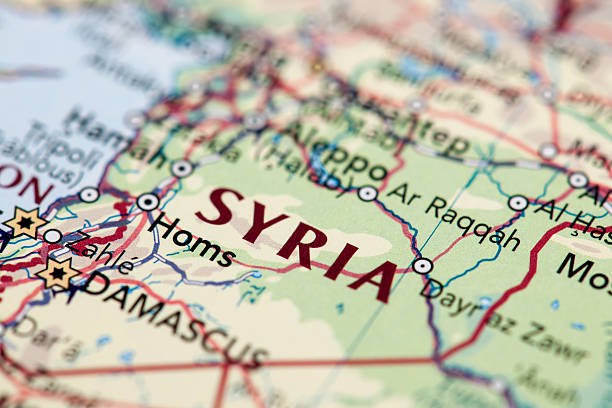
Uzbek Militants Become Mediators in Syria Stand-Off

Brandishing assault rifles, the Uzbek fighters in Syria arrived ready to fight. They ended up helping to mediate an end to a confrontation between another group of militants and government security forces. 

Fighting broke out early last week when Syrian forces raided a stronghold of the Islamic militant group Fiqrat al-Ghuraba, whose leader, identified as Omar Diaby, is a French national of Senegalese origin. Authorities accused the group of kidnapping and other crimes, though some analysts say the government is under international pressure to rein in foreign fighters who helped oust former leader Bashar al-Assad last year but have resisted integration into the military of Syria’s new, relatively moderate leadership.

The confrontation erupted in the city of Harem in Idlib province in northern Syria. Ethnic Uzbek fighters deployed to the area, saying they were prepared to reinforce the so-called French jihadis. Uzbek combatants play a prominent role in two groups of foreign fighters in Syria that are known by the acronyms KIB and KTJ and retain ties to al-Qaida and the Taliban, according to a recent West Point analysis.

But the Syrian Observatory for Human Rights, which tracked the country’s long civil war, said an agreement to end the fighting was reached with the mediation of Uzbek fighters and members of the Turkistan Islamic Party, a mostly Uyghur extremist movement. As part of the deal, heavy weapons were to be withdrawn from the region and the mediators were “entrusted to track the fate” of Omar Diaby, according to the observatory. 

While the agreement resolved the local stand-off, it didn’t address the broader question of how the Syrian government will deal with the many foreign militants who joined the fight against al-Assad and remain, with their weapons, in the country. At least in the short term, the deal seemed to benefit the extremists who demonstrated leverage in their talks with authorities.

Foreign fighter groups had shared the same goal as Hayat Tahrir al-Sham, a group with al-Qaida roots that led the rebel push to overthrow al-Assad and whose leader, Ahmed al-Sharaa, is now trying to project an inclusive image as Syria’s president. 

The French-led extremists have accused Syrian authorities of collaborating with France to detain them and turn them over to French authorities. China, which is concerned about Uyghur militants, has also urged Syria’s transitional government to crack down on designated terror groups.

Kyrgyzstan Advances Digital Asset Strategy with Support from Binance

The second meeting of Kyrgyzstan’s National Council for the Development of Virtual Assets and Blockchain Technologies was held in Bishkek on October 24, with the participation of President Sadyr Japarov and Changpeng Zhao, founder of Binance, the world’s largest cryptocurrency exchange.

Following the meeting, Zhao, who serves as a public adviser to Japarov on digital asset development and is a member of the Council, announced on X that Kyrgyzstan’s national stablecoin, the KGST, has officially launched on @BNBChain. The KGST is pegged to the Kyrgyz som. Zhao also confirmed the creation of a National Cryptocurrency Reserve and the full localization of the Binance app for Kyrgyz-speaking users.

Japarov and Zhao previously met in May to discuss the digital future of Kyrgyzstan. Their agenda included developing a national digital asset ecosystem, integrating blockchain into public administration, and strengthening cybersecurity. Zhao pledged Binance’s support through training and expertise for specialists working on the country’s digital currency initiative.

As part of this collaboration, the National Council and Binance are preparing to launch an online educational platform in the Kyrgyz language, aimed at providing basic knowledge about virtual assets. The platform will be accessible to the general public.

During the Council meeting, Japarov underscored Kyrgyzstan’s pioneering role in the region, highlighting that the country has enacted legislation to regulate virtual assets and is actively pursuing a coherent government policy in the sector. He noted the national market is expanding, with an increasing number of licensed participants, a stronger regulatory framework, and new infrastructure projects emerging.

Japarov pointed to several national advantages, including a flexible institutional environment, a motivated and tech-savvy youth population, and the ongoing digitalization of public services, as key factors driving Kyrgyzstan’s ambition to become a regional hub for digital finance.

“The combination of these factors makes the goal of transforming the country into a regional hub for virtual assets realistic and achievable,” he stated.

Melis Turgunbaev, Chairman of the National Bank of Kyrgyzstan, announced that the digital som project has entered its practical implementation phase. The initiative aims to create a fully regulated blockchain-based payment system under the control of the National Bank, which will oversee the issuance and circulation of the digital currency.

Dinosaur Fossils Unearthed in Uzbekistan and Tajikistan Illuminate Central Asia’s Prehistoric Past

Rare dinosaur remains estimated to be around 75 million years old have been uncovered in Uzbekistan’s Karakalpakstan region, according to the State Geological Museum. The discovery adds to a growing body of paleontological evidence shedding light on Central Asia’s ancient ecosystems.

On October 12, Akhmadjon Akhmedshaev, Director of the State Geological Museum, visited the excavation site near the Khodzhakul foothills in the Sultan Uvays mountain range, where the “Uzbek Geologiya Qidiruv” expedition had uncovered fossilized dinosaur bones during a geological survey. Found at a depth of approximately three meters, the remains are believed to belong to a large dinosaur from the Cretaceous period, dating back roughly 65-75 million years. The fossils include fragments of vertebrae, ribs, and leg bones, all remarkably well preserved.

Scientists believe the find could offer valuable insights into the types of dinosaurs that once inhabited what is now western Uzbekistan. The region is thought to have been a humid, coastal environment during the late Cretaceous. The fossils are currently undergoing analysis at the State Geological Museum to determine their species and any potential connections to previously identified dinosaurs from Central Asia.

Meanwhile, paleontologists from St. Petersburg State University have announced a second significant find, this time in Tajikistan. Researchers uncovered a well-preserved fragment of a duck-billed dinosaur skull. According to spbdnevnik.ru, the fossil’s exceptional condition may enable scientists to accurately identify the species and potentially describe a new genus. Comparative analysis is now underway with fossil collections from other countries to trace its evolutionary lineage.