• KGS/USD = 0.01144 0%
  • KZT/USD = 0.00213 0%
  • TJS/USD = 0.10714 0.09%
  • UZS/USD = 0.00008 0%
  • TMT/USD = 0.28571 0%
  • KGS/USD = 0.01144 0%
  • KZT/USD = 0.00213 0%
  • TJS/USD = 0.10714 0.09%
  • UZS/USD = 0.00008 0%
  • TMT/USD = 0.28571 0%
  • KGS/USD = 0.01144 0%
  • KZT/USD = 0.00213 0%
  • TJS/USD = 0.10714 0.09%
  • UZS/USD = 0.00008 0%
  • TMT/USD = 0.28571 0%
  • KGS/USD = 0.01144 0%
  • KZT/USD = 0.00213 0%
  • TJS/USD = 0.10714 0.09%
  • UZS/USD = 0.00008 0%
  • TMT/USD = 0.28571 0%
  • KGS/USD = 0.01144 0%
  • KZT/USD = 0.00213 0%
  • TJS/USD = 0.10714 0.09%
  • UZS/USD = 0.00008 0%
  • TMT/USD = 0.28571 0%
  • KGS/USD = 0.01144 0%
  • KZT/USD = 0.00213 0%
  • TJS/USD = 0.10714 0.09%
  • UZS/USD = 0.00008 0%
  • TMT/USD = 0.28571 0%
  • KGS/USD = 0.01144 0%
  • KZT/USD = 0.00213 0%
  • TJS/USD = 0.10714 0.09%
  • UZS/USD = 0.00008 0%
  • TMT/USD = 0.28571 0%
  • KGS/USD = 0.01144 0%
  • KZT/USD = 0.00213 0%
  • TJS/USD = 0.10714 0.09%
  • UZS/USD = 0.00008 0%
  • TMT/USD = 0.28571 0%

IPO as a Lifeline: Who Will Pay for Kazakhstan Railways’ Growing Debt?

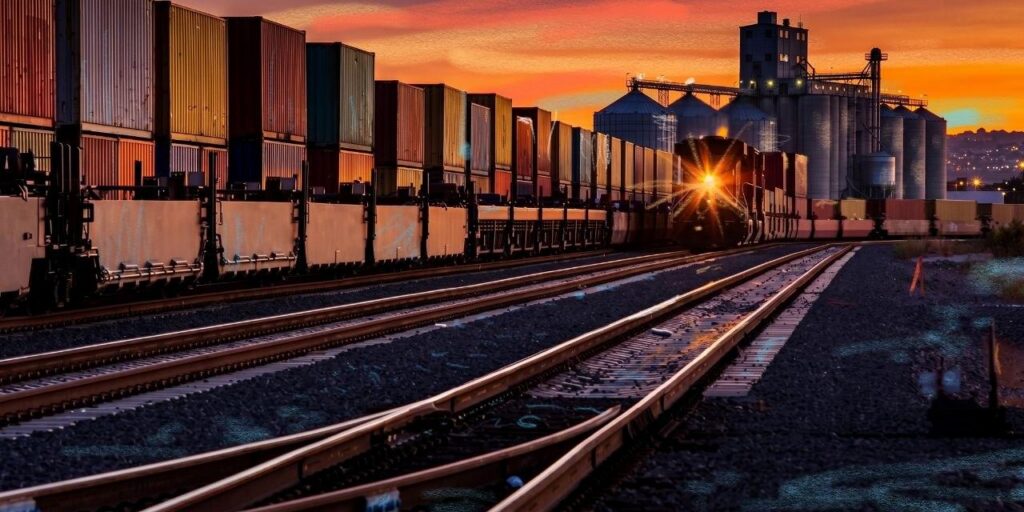
The planned IPO of Kazakhstan’s national railway operator, Kazakhstan Temir Zholy (KTZ), once presented by the authorities as one of the largest public offerings in Central Asia, is increasingly being viewed as an attempt to stabilize the company’s balance sheet amid rapidly rising debt. The share sale, expected in late 2026, may turn out to be less a growth story than a mechanism for refinancing the obligations of the state-owned carrier.

During parliamentary hearings on April 24, company executives acknowledged that one of the key objectives of the IPO is to raise funds to service KTZ’s growing debt burden.

According to official company and government data, KTZ’s nominal debt has risen sharply. It stood at about $5.7 billion in early 2024, and roughly $8 billion by 2025. By April 2026, it had reached 4.7 trillion tenge, or about $10.4 billion. The increase reflects heavy borrowing for rolling stock, infrastructure modernization, and the expansion of Kazakhstan’s transit capacity, including projects linked to the Middle Corridor. It also reflects the cost of maintaining below-market tariffs for socially important domestic freight.

Kazakhstan’s Supreme Audit Chamber warned as early as 2024 about risks related to the company’s financial sustainability. However, the authorities and KTZ management argue that large-scale borrowing was necessary to prevent an infrastructure crisis.

According to official estimates, borrowed funds include about $4.9 billion for renewing rolling stock, including locomotives and railcars, and about $2.3 billion for modernizing railway infrastructure.

The currency structure of the debt represents an additional vulnerability. More than half of the company’s obligations are denominated in foreign currencies, making KTZ highly sensitive to fluctuations in the tenge. Any weakening of the national currency automatically increases debt servicing costs and reduces the operator’s profitability.

Potential investors face another challenge: historically, KTZ has served not only as a commercial company but also as an instrument of state social policy. A substantial share of revenues from China-Europe transit freight is used to subsidize unprofitable domestic passenger transport and the transportation of socially important goods within Kazakhstan.

This cross-subsidization mechanism limits the company’s ability to generate free cash flow. Grain transportation under regulated tariffs alone generated losses of approximately $95 million (44 billion tenge) for KTZ in 2024.

In an effort to improve the company’s attractiveness ahead of the IPO, KTZ has initiated large-scale tariff increases for mainline railway services. Beginning in April 2026, transportation tariffs for coal, grain, and iron ore were doubled.

However, the move risks adding to costs in Kazakhstan, where railway tariffs directly affect the cost of food, electricity, and industrial goods. Annual inflation stood at 12.2% in January 2026, adding to concerns that higher railway tariffs could feed into wider price pressures.

Additional inflationary pressure may come from the expiration of the government’s moratorium on utility tariff increases, after which household utility bills in some regions could rise by 10-20%.

Against this backdrop, analysts do not rule out a return to tighter state regulation of tariffs, a development that could once again limit the ability of natural monopolies to generate returns on investment.

The planned KTZ listing is therefore increasingly perceived as an attempt to spread financial risk beyond the state rather than as a classic growth-oriented IPO. In practice, the burden could fall on investors, freight customers facing higher tariffs, consumers exposed to price increases, and the state, which remains responsible for politically sensitive transport services.

The involvement of minority shareholders could provide the sovereign wealth fund Samruk-Kazyna with additional political justification for unpopular reforms, including further tariff liberalization and efforts to improve the company’s commercial efficiency.

The main investment thesis will likely center on KTZ’s role in the Trans-Caspian International Transport Route, the so-called Middle Corridor. The route links China and Europe through Kazakhstan, the Caspian Sea, Azerbaijan, Georgia, and onward routes through Turkey or the Black Sea. Interest has increased since Russia invaded Ukraine, as shippers and governments look for alternatives to northern routes through Russia.

That gives KTZ a credible growth story. Middle Corridor freight volumes have risen, and international lenders have identified Kazakhstan as one of the countries that could benefit from better rail, port, and logistics links. But the same corridor also requires heavy spending on infrastructure, equipment, coordination, and bottleneck removal. In other words, the Middle Corridor is both the main reason investors may look at KTZ and one reason the company still needs capital.

Nevertheless, KTZ’s high debt levels, ongoing capital expenditure needs, and continued state control may limit investor appetite. As long as the government remains the majority shareholder, the company will have to balance commercial profitability against its social obligations.

For investors, KTZ offers exposure to one of Eurasia’s most important transit networks. But unless Kazakhstan separates the company’s commercial operations from its social obligations and creates clearer compensation mechanisms for regulated transport, the IPO may look less like a straightforward bet on the Middle Corridor than an invitation to help refinance a state company’s problems.
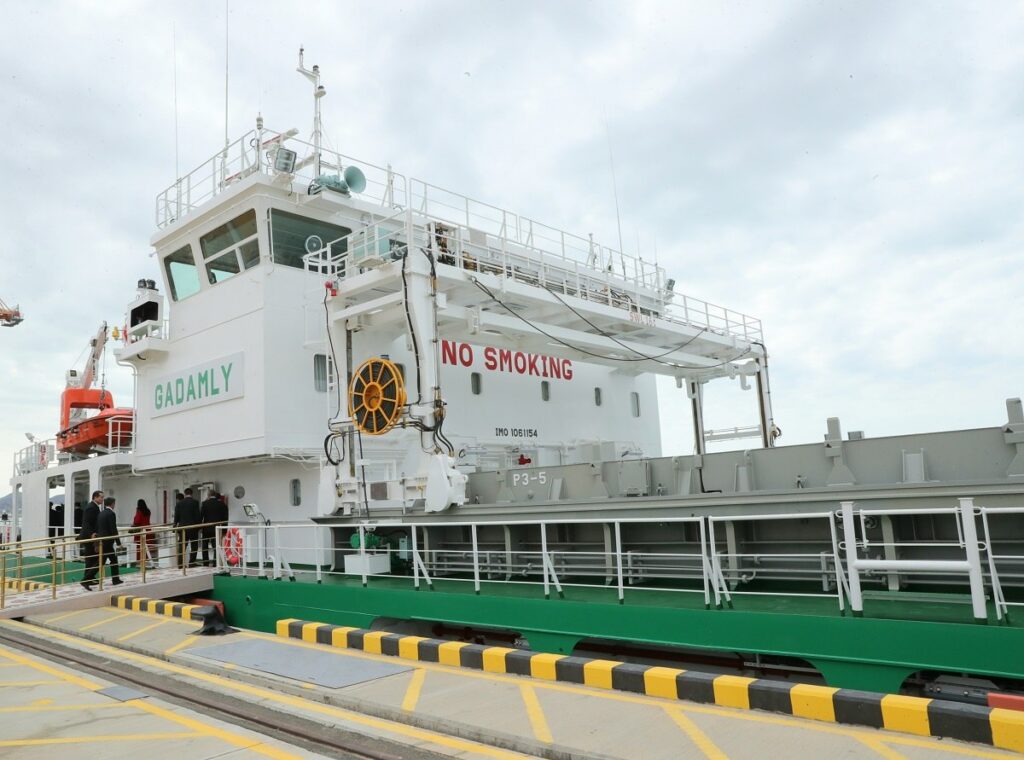

Turkmenistan Launches First Locally Built Dry Cargo Vessel

Turkmenistan has launched its first dry cargo vessel built at the Balkan Shipbuilding and Repair Yard.

According to the state news agency TDH, the new ship has been named Gadamly. The vessel is designed to transport dry cargo and has a carrying capacity of 6,100 tons. It can also transport up to 240 20-ton containers.

The project was implemented jointly by local specialists and the South Korean company Koryo Shipbuilding Industry Technology. During the launch ceremony, the company’s head, Choi Young Wook, presented the shipyard with international certificates recognizing its engineering development and construction quality standards.

Additional certification confirming compliance with international standards, including environmental requirements, was awarded by the French company Bureau Veritas Marine & Offshore.

State media coverage of the event focused on the project’s industrial significance as well as the traditional customs associated with launching a new vessel. According to TDH, respected elder women scattered white flour over the ship as part of the traditional blessing ritual “ak zat alnyňa ýagşy,” while an aladja, a traditional protective talisman, was tied to the ship’s wheel. A festive sadaka, or charitable offering for people in need, was also held.

Turkmenistan has announced plans to continue cooperation in shipbuilding. President Serdar Berdimuhamedov said another cargo vessel, Menzil, is expected to enter service in the near future.

Opened in 2018, the Balkan Shipbuilding and Repair Yard is part of the Turkmenbashi International Seaport complex. The Turkmen government reportedly invested around $1.5 billion in the port project. The shipyard is designed to build four to six vessels annually.

Kazakhstan Ready to Become Key Food Hub in Eurasia

Tajikistan is hosting the 35th Session of the FAO Regional Conference for Europe from May 11 to 15, bringing together members of the Food and Agriculture Organization (FAO) of the United Nations from Europe and Central Asia for discussions on regional food security and agricultural development priorities.

The conference has gathered agriculture ministers from Azerbaijan, Kazakhstan, Kyrgyzstan, Tajikistan, Turkmenistan, and Uzbekistan to address the most pressing challenges facing the sector, review FAO activities in Europe and Central Asia in 2024-2025, and outline priorities for 2026-2027.

Speaking at the conference, Kazakhstan’s Minister of Agriculture Aidarbek Saparov said the country occupies a strategically important position in the global food security system and remains among the world’s leading grain producers.

According to Saparov, Kazakhstan harvested around 27 million tons of grain for the second consecutive year in 2025, along with nearly 5 million tons of oilseeds and approximately 1 million tons of legumes.

During the latest agricultural season, the country exported 15.3 million tons of grain.

Kazakhstan currently ranks 10th globally in grain exports, second in flour exports, and eighth in sunflower oil exports, supplying agricultural products to around 50 countries.

“Against the backdrop of population growth, climate change, and instability in global markets, food security is becoming a key factor in the sustainable development of states. Under these conditions, Kazakhstan is capable of occupying a strategic niche as a regional center for the production, storage, processing, and supply of grain products,” Saparov said.

The minister added that Kazakhstan is implementing a comprehensive livestock development plan for 2026-2030 aimed at increasing livestock numbers and expanding the sector’s export potential.

Saparov said Kazakhstan possesses the resources necessary to strengthen its position as one of Eurasia’s key food hubs and is prepared to ensure stable, rapid, and cost-effective supplies of grain and processed grain products to Central Asia, the Middle East, Europe, and other regions.

Kazakhstan Rules Out Fines for Not Voting in Elections

Kazakhstan does not plan to introduce compulsory voting or impose fines on citizens who fail to participate in elections and referendums, Central Election Commission (CEC) Secretary Shavkat Utemisov said.

Speaking on the sidelines of a joint session of parliament, Utemisov acknowledged that declining voter participation, particularly among young people, remains a challenge in Kazakhstan. He said, however, that the country does not intend to adopt practices used in some states where voting is mandatory.

Utemisov added that some countries have lowered the voting age, citing Belgium, while others impose penalties, including fines, on citizens who fail to appear at polling stations.

“But Kazakhstan is not taking that path at the moment; for us, this issue is not as pressing as it is in the West,” he said.

Kazakhstan’s most recent major electoral event was the constitutional referendum held on March 15. According to the CEC, approximately 12.4 million citizens were eligible to vote, while more than 9.1 million cast ballots, a turnout of 73.12%.

The next major political event will be elections to Kazakhstan’s new unicameral parliament, the Kurultai, which President Kassym-Jomart Tokayev previously said would take place in August.

Utemisov stressed that draft amendments to the Constitutional Law “On Elections,” adopted by the outgoing parliament, contain no provisions introducing mandatory voting.

According to him, the CEC also has no plans to initiate such amendments in the near future.

The election official added that ensuring voter turnout should be the responsibility of political parties participating in campaigns.

At the same time, he warned that any attempts to encourage participation through cash payments or gifts could be interpreted as voter bribery.

During the joint parliamentary session, lawmakers also approved the Constitutional Law “On the Kurultai of the Republic of Kazakhstan and the Status of Its Deputies,” which will enter into force on July 1.

The new parliament will consist of 145 deputies, compared to the current bicameral legislature, which includes 148 members, 98 deputies in the Mazhilis and 50 senators. 

Deputies in the Kurultai will serve five-year terms. Elections will be held exclusively under a proportional representation system based on party lists.

“The draft law defines the place of the Kurultai within the system of state authorities, the principles of its operation, its structure, the procedure for its formation, and the mechanisms for exercising its powers,” Mazhilis deputy Aidos Sarym said.

According to Sarym, the legislation also establishes the powers of the new parliament to adopt laws, participate in the formation of state bodies, and conduct parliamentary oversight.

A separate provision states that the Kurultai will become the legal successor to the current parliament.

The Times of Central Asia previously reported that the August vote will become Kazakhstan’s first parliamentary election in which citizens vote exclusively for political parties rather than individual candidates.

Uzbekistan and Mongolia Target $100 Million Trade Turnover

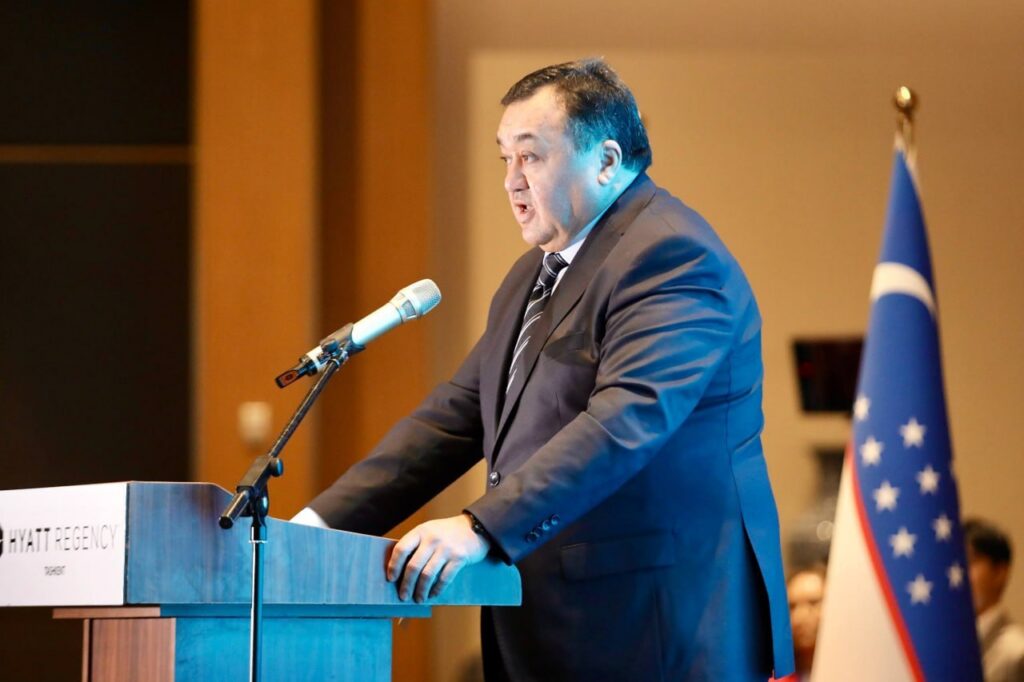
Uzbekistan and Mongolia discussed expanding cooperation in mining, agriculture, transport, and industrial production during the Uzbekistan-Mongolia Business Forum held in Tashkent, according to Uzbekistan’s Ministry of Investment, Industry and Trade.

More than 70 companies from the two countries took part in the forum, which brought together government officials, business representatives, and investors seeking to deepen economic ties between Central Asia and Northeast Asia. The delegations were led by Uzbekistan’s Deputy Minister of Investment, Industry and Trade Ilzat Kasimov, Mongolian Ambassador to Uzbekistan Dadanhuu Batbaatar, and Mongolian parliament member Sukhbaatar Erdenebat.

One of the main topics was cooperation in geology and mining. The ministry said Uzbekistan’s Ministry of Geology has already started practical work on developing mineral deposits through its representative office in Ulaanbaatar.

The sides also reviewed growing trade figures. Uzbekistan’s exports to Mongolia increased by 15.6% in the first quarter of 2026, and both governments set a target of raising annual bilateral trade turnover to $100 million.

Industrial cooperation focused heavily on processing Mongolian wool and cashmere in Uzbekistan for export markets. In agriculture, officials discussed plans to increase the number of Mongolian sheep raised in Uzbekistan to one million by 2029, while Uzbek irrigation technologies may also be introduced in Mongolia.

Transport and logistics were another key area of discussion. Participants explored launching freight transportation along the Uzbekistan-Kyrgyzstan-China-Mongolia corridor, which could improve trade routes between Central and East Asia.

The forum included B2B and G2B negotiations involving companies such as Suzur Health Med, Prime Nomadic Meat, and Tsamkhag Construction. According to the ministry, the talks resulted in the formation of a package of investment projects and the creation of a permanent mechanism to monitor joint initiatives.

Economic ties between the two countries have been growing from a relatively small base. Bilateral trade totaled about $14 million in 2023 but nearly doubled year-on-year, driven by what analysts describe as complementary economies. Uzbekistan exports automobiles, textiles, and agricultural products, while Mongolia supplies livestock products, wool, leather, and minerals.

Opinion: Kazakhstan, Oil, the Iran War and Dutch Disease

In 1977, The Economist coined a new term for the (potential) negative consequences of a short-term boom in natural resources: “Dutch disease.” The phenomenon got its name from an analysis of the decline of the manufacturing sector in the Netherlands following the 1960s natural gas discoveries at Groningen, in the northeastern Netherlands. The theory was that a surge in the price of a natural resource like oil or gas would likely cause currency appreciation, making imports cheaper and other sectors, like manufacturing, less competitive.

Whether the recent spike in oil prices will contribute to Dutch disease in oil-rich Kazakhstan will likely depend on the length of the Iran war’s effect on oil prices (which could last well beyond the end of the conflict itself) and the government’s stewardship of Kazakhstan’s economy.

President Kassym-Jomart Tokayev deserves credit for the government’s efforts to diversify the national economy. Investing in the nation’s manufacturing base, especially SMEs, educating the Kazakh workforce, and improving healthcare are all helping broaden the Kazakh economy and reduce the country’s dependence on oil.

But oil is the main driver of Kazakhstan’s wealth, and while other sectors are increasing their share of Kazakhstan’s economy, oil and the wider extractive sector remain central to public finances, accounting for over 40% of government revenues.

So, let’s do a deep dive on Kazakhstan’s oil.

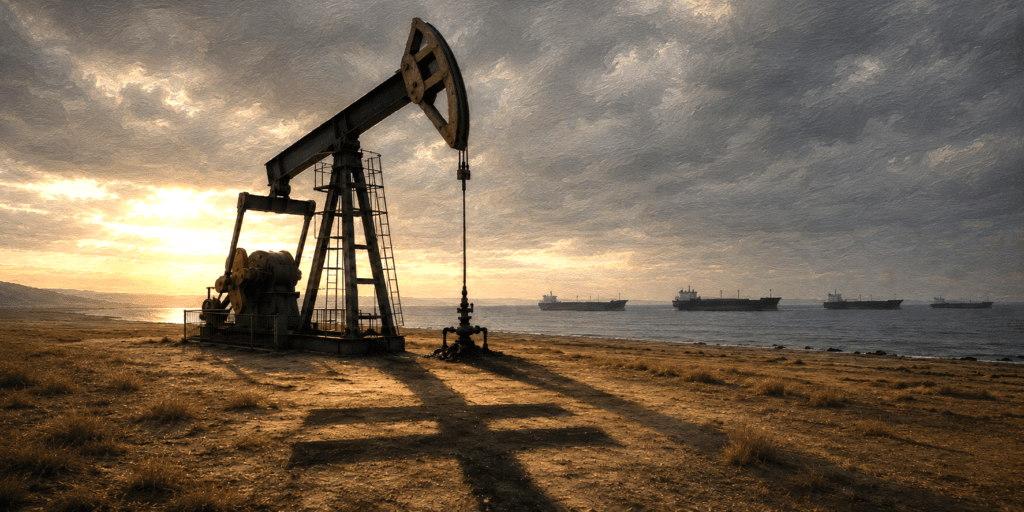
Most of Kazakhstan’s oil comes from the west of the country, including the Tengiz field near the Caspian Sea and the offshore Kashagan field in the northern Caspian. The Tengiz oil field is one of the deepest and largest oil fields in the world, while Kashagan, an offshore deposit, ranks as one of the largest global oil discoveries since the 1960s. Kazakhstan’s main export blend, CPC Blend, is a light, sweet crude, a desirable oil type that’s easy to refine into gasoline and diesel.

Because the Iran war and restrictions around the Strait of Hormuz have disrupted tanker traffic and raised fears of supply shortages, global oil prices have climbed. And while high oil prices are generally a net positive for Kazakhstan, the current price – Brent crude was trading above $100 per barrel in mid-May 2026 – could present problems.

In the short term, high oil prices tend to boost government revenues and budget surpluses. They can increase inflows to Kazakhstan’s National Fund, depending on production, tax receipts, transfers, and government withdrawal policy, and provide resources for government spending on infrastructure and social programs. They can also stimulate demand in related sectors, boosting Kazakhstan’s oil-related industries. And since oil exports typically make up more than half of the nation’s export revenues, high oil prices generally lead to a rise in Kazakhstan’s GDP.

So far, so good.

But high oil prices also carry risks. For one thing, they can strengthen the tenge and add to domestic demand, especially if higher revenues feed into faster government spending. Which is where Dutch disease comes in.

As the stronger currency makes non-oil exports less competitive, capital and labor shift toward the energy sector. Kazakhstan’s manufactured goods become more expensive and less competitive, and the nation’s economic diversification initiatives get moved to the back burner. Politically, high oil prices can also lead to rising expectations for wealth redistribution, fuel subsidies, and wage increases that could be hard to sustain if, or when, oil prices fall.

That’s why some economists and policymakers tend to view moderate oil prices as easier for Kazakhstan to manage than a sharp boom-and-bust cycle. At that price, the Kazakh economy can continue to grow. Inflation – though already too high – can remain manageable, political expectations from an “oil bonanza” can be mitigated, and the government can continue its efforts to diversify Kazakhstan’s oil-dominated economy.

But Kazakhstan does not set global oil prices or control the Strait of Hormuz. So what can the government do to benefit from $100+ per barrel prices in the short term, while avoiding Dutch disease and other negative consequences if oil prices remain high for the remainder of 2026 and beyond?

It turns out that the government of Kazakhstan has been aware of this problem for a long time, but the current spike in prices has sparked new attention to the dangers of Dutch disease. In light of the surge in energy prices, the government’s response can be understood through five broad policy initiatives.

The first pillar of the government’s strategy amounts to the use of the National Fund to “sterilize” oil revenues. Instead of spending all of the oil bonanza on domestic programs, the government is investing a large proportion in foreign assets, with the idea that this will reduce pressure on the tenge and help prevent the Kazakh economy from overheating. But the government has been pursuing this strategy – unevenly, it must be said – for decades. It will need to follow a disciplined approach if oil prices remain high for a sustained period.

The second pillar addresses the currency problem directly. Because the tenge isn’t pegged to the dollar, it “floats,” which can lead to excessive currency appreciation when oil prices are high. The government and the National Bank have sought to manage exchange-rate volatility and maintain reserves, but non-oil exporters remain exposed to appreciation, cost pressures, and weak competitiveness.

The third pillar is an obvious one: economic diversification. Since the early 2000s, Kazakhstan’s government has launched repeated industrial diversification programs designed specifically to reduce the nation’s dependence on oil. In the current crisis, the government is adding programs focused on manufacturing, logistics, digital technology, and transport corridors, targeting sectors like machine-building, chemicals, food processing, mining equipment, renewable energy, uranium processing, IT, fintech, and – significantly – artificial intelligence (AI). The government has also pushed to position Kazakhstan as a Eurasian transit hub between China, Turkey, Europe and the Caspian region, which is important because transport and trade services are less vulnerable to oil price cycles.

In light of the above, pillar four might seem counterintuitive since it involves investments in the oil industry. But the government has come to appreciate the fact that by simply exporting crude oil, Kazakhstan is missing profitable opportunities to capitalize on its primary natural resource. As a result, Kazakhstan is seeking more “local content” and downstream industry, and encouraging investments in petrochemicals, refining, pipelines, oilfield services and equipment manufacturing. So instead of oil wealth crowding out industry (the Dutch disease problem), oil wealth will be used to create industry.

Pillar five is key to the entire economic diversification project: invest in the development of human capital and higher education. The government’s goal is to transition Kazakhstan from a resource-export economy into a knowledge-based, Middle Power economy by framing economic diversification as a human capital issue rather than just an industrial one. As President Tokayev often states, the nation’s priorities are innovation, education, digitization, and non-resource growth.

In this, the president is aided by his longest-serving cabinet officer, the Minister of Science and Higher Education, Sayasat Nurbek. Minister Nurbek has implemented strategic investments in technical universities, foreign university partnerships, digital education and STEM training, and is now following the president’s directive by making substantial government investments in AI. All of this is aimed at educating the nation’s workforce of the future, and represents a significant competitive advantage for Kazakhstan among its Central Asian neighbors.

If we were to grade Kazakhstan’s efforts to exploit high oil prices while mitigating the negative effects of Dutch disease, we might give a solid B+. Kazakhstan has preserved stronger macroeconomic buffers than many resource exporters, but recent IMF and World Bank assessments also point to overheating, expansionary fiscal policy, and continued dependence on oil-linked growth. The government has also preserved – and increased – the nation’s sovereign wealth savings and developed a more sophisticated financial system than its Central Asian neighbors, and has taken the lead among them in human capital development.

But oil still represents a large share of government revenue and much of Kazakhstan’s foreign investment. The country’s manufacturing sector remains relatively small compared to the size of the hydrocarbon economy, indicating that Dutch disease is still a problem for the economy.

The International Maritime Organization has said around 1,500 ships and 20,000 crew members were trapped in the Persian Gulf because of the Strait of Hormuz crisis. Politicians and economists seem certain that this crisis will end someday, but no one can predict when. All seem to agree, however, that the effects of this energy disruption will last well beyond the end of the current conflict.

Managing the “good news” of high oil prices while mitigating the negative pull of Dutch disease will remain a central challenge for Kazakhstan’s leaders. Like negotiating an end to the war itself, managing Kazakhstan’s economy in the midst of this crisis is an ongoing work in progress. But on balance, the Tokayev administration deserves high marks for its understanding of the problem and its far-sighted and disciplined approach to steering Kazakhstan’s economy to a prosperous and sustainable future.


The views expressed in this article are those of the author and do not necessarily reflect the official policy or position of the publication, its affiliates, or any other organizations mentioned.