• KGS/USD = 0.01144 0%
  • KZT/USD = 0.00214 0%
  • TJS/USD = 0.10508 0.48%
  • UZS/USD = 0.00008 0%
  • TMT/USD = 0.28571 0%
  • KGS/USD = 0.01144 0%
  • KZT/USD = 0.00214 0%
  • TJS/USD = 0.10508 0.48%
  • UZS/USD = 0.00008 0%
  • TMT/USD = 0.28571 0%
  • KGS/USD = 0.01144 0%
  • KZT/USD = 0.00214 0%
  • TJS/USD = 0.10508 0.48%
  • UZS/USD = 0.00008 0%
  • TMT/USD = 0.28571 0%
  • KGS/USD = 0.01144 0%
  • KZT/USD = 0.00214 0%
  • TJS/USD = 0.10508 0.48%
  • UZS/USD = 0.00008 0%
  • TMT/USD = 0.28571 0%
  • KGS/USD = 0.01144 0%
  • KZT/USD = 0.00214 0%
  • TJS/USD = 0.10508 0.48%
  • UZS/USD = 0.00008 0%
  • TMT/USD = 0.28571 0%
  • KGS/USD = 0.01144 0%
  • KZT/USD = 0.00214 0%
  • TJS/USD = 0.10508 0.48%
  • UZS/USD = 0.00008 0%
  • TMT/USD = 0.28571 0%
  • KGS/USD = 0.01144 0%
  • KZT/USD = 0.00214 0%
  • TJS/USD = 0.10508 0.48%
  • UZS/USD = 0.00008 0%
  • TMT/USD = 0.28571 0%
  • KGS/USD = 0.01144 0%
  • KZT/USD = 0.00214 0%
  • TJS/USD = 0.10508 0.48%
  • UZS/USD = 0.00008 0%
  • TMT/USD = 0.28571 0%

Foreign Capital Inflows to Tajikistan Jump by One-Third, Approaching $7 Billion

Foreign investment in Tajikistan increased sharply in 2025, rising by more than one-third compared to the previous year, as the authorities also announced new investment agreements and long-term development strategies extending to 2040.

Speaking at a press conference, Sulton Rahimzoda, chairman of the State Committee for Investment and State Property Management of the Republic of Tajikistan, said that by the end of 2025, total foreign capital inflows had reached $6,925.3 million. This represents an increase of $1,798.6 million, or 35.1%, compared to 2024. In absolute terms, the economy attracted nearly $1.8 billion more in foreign investment than a year earlier.

According to the committee, $3,031.0 million of the total came from post-Soviet states in 2025, accounting for 43.8% of overall foreign investment. At the same time, countries outside the former Soviet Union accounted for the majority share. Tajikistan received $3,894.3 million from these countries, or 56.2% of total inflows. Investment from this group increased by $731.3 million year over year, or 23.1%.

Authorities attributed the growth in foreign capital to improvements in the regulatory framework. On the initiative of the State Committee, a new version of the Law of the Republic of Tajikistan “On Investments and Stimulation of Investment Activity,” dated May 14, 2025, No. 2173, was adopted.

Additional momentum came from the International Investment Forum “Dushanbe Invest – 2025,” held on October 14-16, where more than 50 cooperation agreements worth a combined $4.1 billion were signed.


Uzbekistan Approves Feasibility Study for Trans-Afghan Railway

President Shavkat Mirziyoyev has approved an intergovernmental agreement on the joint development of a feasibility study for the construction of the Trans-Afghan railway, which will link Uzbekistan, Afghanistan, and Pakistan.

According to the presidential resolution, the agreement between Uzbekistan’s Ministry of Transport, Afghanistan’s Ministry of Public Works, and Pakistan’s Ministry of Railways provides for the preparation of technical and economic documentation for a new railway line from Naibabad to Kharlachi. The document formalizes cooperation on the next stage of the long-discussed regional transport corridor.

Under the resolution, Uzbekistan’s Ministry of Foreign Affairs has been instructed to notify the Afghan and Pakistani sides that all necessary domestic procedures required for the agreement’s entry into force have been completed.

The Trans-Afghan railway project was first proposed by Tashkent in December 2018 as a strategic initiative to provide Central Asia with direct access to Pakistani seaports. The original concept envisaged extending Afghanistan’s rail network from Mazar-i-Sharif through Kabul and Logar province before crossing into Pakistan. An earlier proposed route was expected to pass through Nangarhar province and the Torkham border crossing into Peshawar.

In July 2023, however, Uzbekistan, Pakistan, and Afghanistan agreed on a revised alignment. The updated route will run from Termez to Naibabad, then through Maidan Shahr and Logar to Kharlachi, excluding the previously discussed Torkham crossing. Once connected to Pakistan’s railway network, cargo will be able to reach the Pakistani ports of Karachi, Gwadar, and Qasim.

The railway is expected to stretch approximately 647 kilometers. According to recent statements by Uzbek officials, the estimated construction cost is $6.9 billion, although earlier projections ranged from $4.6 billion to $7 billion.

The project is regarded by the participating countries as a key component of efforts to strengthen regional connectivity and expand trade routes between Central and South Asia.

Uzbekistan and Russia to Develop Nuclear Medicine Strategy Ahead of 2026 Center Opening

Uzbekistan will develop a roadmap and long-term strategy for the advancement of nuclear medicine, according to the press service of the Atomic Energy Agency under the Cabinet of Ministers, Uzatom.

The announcement followed a working meeting held on February 10 at Uzatom to discuss prospects for expanding nuclear medicine in the country. The meeting brought together representatives of the Ministry of Health, the Healthcare Projects Center, the Committee for Industrial, Radiation and Nuclear Safety, the Institute of Nuclear Physics of the Academy of Sciences, the state enterprise Radiopreparat, leading medical centers, and experts from Rosatom’s engineering division, underscoring growing cooperation between Uzbekistan and Russia in the sector.

During the discussions, the Russian side presented its experience in building modern nuclear medicine infrastructure, including cyclotron complexes, radiopharmaceutical production facilities, and PET/CT diagnostic centers, as well as implementing turnkey international projects.

Following the talks, the parties agreed to jointly draft a roadmap and strategy that will provide a framework for technology transfer, specialist training, and improvements in healthcare services. The initiative is intended to strengthen early cancer diagnosis and expand access to advanced treatment methods based on nuclear technologies.

The construction of a Nuclear Medicine Center in Tashkent has begun. The center is scheduled to be equipped in 2026 with PET/CT scanners, a cyclotron, a radiopharmaceutical laboratory, as well as Gamma Knife and CyberKnife systems. The broader program also involves upgrading oncology services, promoting early cancer detection, training medical personnel to international standards, and deepening cooperation with Russia and Rosatom.

Uzatom stated that it will continue to support the introduction of advanced technologies aimed at improving access to modern cancer diagnostics and treatment.

As previously reported by The Times of Central Asia, citing IQVIA data, Uzbekistan’s pharmaceutical market reached $2.14 billion in the twelve months to September 2025, reflecting continued expansion and rising demand for medical services.

Kazakhstan Ratifies Agreement to Modernize Four Resort Facilities on Issyk-Kul

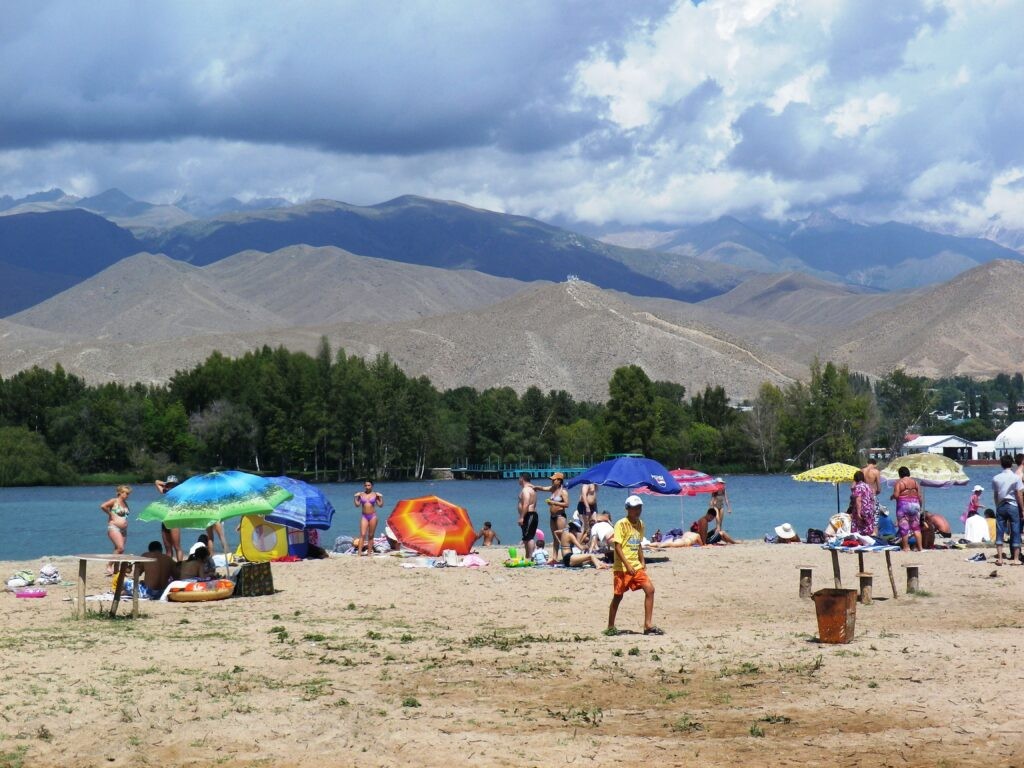
Kazakh investors are set to modernize four resort facilities on Lake Issyk-Kul in Kyrgyzstan after the Senate ratified an intergovernmental agreement regulating property rights and project implementation, Senator Nuria Niyazova has said. On February 12, the upper house of Parliament approved the agreement between the governments of Kazakhstan and Kyrgyzstan on the settlement of Kazakhstan’s property rights to resort and recreational facilities in the Issyk-Kul region.

The document had previously been endorsed by the Mazhilis. Under its terms, Kazakhstan undertakes to upgrade the facilities to the standards of three- and four-star hotels operating year-round by the end of 2029. Kyrgyzstan will lease land plots totaling 58.8 hectares to Kazakhstan for 49 years. The Kyrgyz side has guaranteed the inviolability of the facilities and committed not to initiate their seizure for state ownership.

The largest project involves the reconstruction of the Kazakhstan sanatorium, overseen by the Presidential Administration of Kazakhstan. The facility is scheduled for commissioning in the fourth quarter of 2026. Plans include preserving the historic building known as Dacha No. 1 of Dinmukhamed Kunaev, who led the Kazakh SSR until 1986, as a house-museum.

The Samal resort renovation is being carried out under a joint activity agreement between Satbayev University and a private investor. Initial data are being collected to prepare design and cost documentation, with construction scheduled to begin in the fourth quarter of 2026.

Al-Farabi Kazakh National University is drafting technical specifications for the reconstruction of its sports and recreation camp. Once calculations are finalized, the project’s budget and projected payback period will be determined. According to the senator, alternative funding sources, including extrabudgetary funds, are being considered.

The fourth facility, the Olymp Sports and Health Center, is being prepared by the Ministry of Tourism and Sports of Kazakhstan, which is developing design documentation and investment agreement parameters for the project.

Following approval by both chambers of Parliament, the agreement will be submitted to President Kassym-Jomart Tokayev for signature.

As previously reported by The Times of Central Asia, Kazakhstan and Kyrgyzstan have established a joint working group to explore a shorter road route from Almaty to Issyk-Kul, a project that could significantly reduce travel time between the two destinations.

Telephone Scammers in Kyrgyzstan Begin Using AI Tools

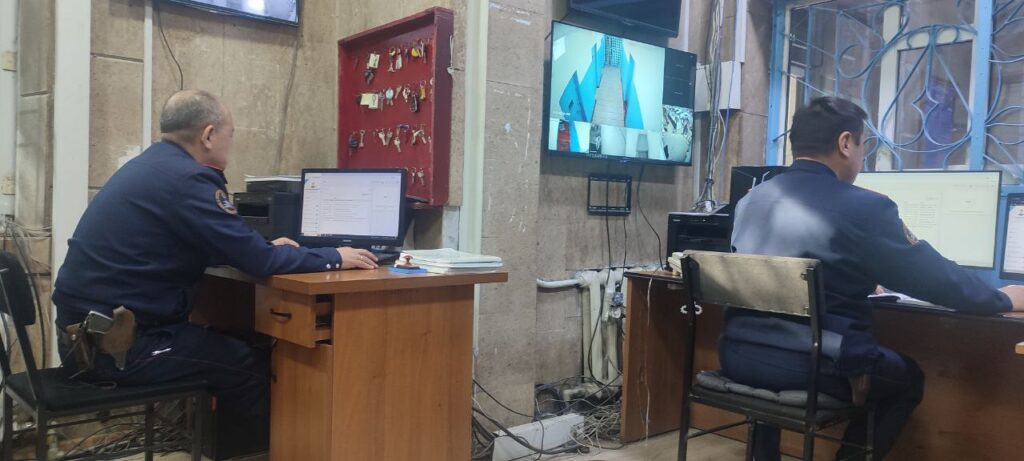
Kyrgyzstan has recorded an increase in telephone fraud cases involving AI. According to law enforcement agencies, dozens of citizens have fallen victim to such schemes, with total losses amounting to millions of soms. Fraudsters use AI tools to imitate voices and images, posing as law enforcement officers, representatives of the National Bank, or acquaintances of their targets.

Police say international criminal groups most often target pensioners and public sector employees, including teachers, doctors, and other government workers, whom they consider more susceptible to social engineering tactics. Complaints are received on a regular basis, but in most cases the transferred funds cannot be recovered.

Ulan Berdibayev, head of the Internal Affairs Department of Bishkek’s Leninsky district, told The Times of Central Asia that the schemes are organized and cross-border in nature. According to him, the networks involve multiple actors, including psychologists, call operators, and recruiters of so-called “droppers.” The latter are responsible for withdrawing funds and registering bank cards and SIM cards in their own names to facilitate the transit of money.

A dropper is an individual whose bank details are used to transfer and cash out stolen funds. They are typically offered a small reward for their participation, while the bulk of the proceeds goes to the organizers of the scheme.

Law enforcement officials acknowledge that apprehending the organizers, who are usually located abroad, is extremely difficult. After passing through several bank transfers, the funds are often converted into cryptocurrency, making them even harder to trace. At the same time, police report that several droppers have been detained within Kyrgyzstan. They face charges under Article 209 of the Criminal Code, which stipulates penalties including fines or imprisonment with terms ranging from five to ten years, depending on the scale of the damage.

A recent case drew particular attention when fraudsters used AI to generate a fake image of former State Committee for National Security head Kamchibek Tashiev and circulated messages urging people to install a pirated application that granted access to users’ banking services.

Kazakhstan’s Largest Coal Mine to Increase Production from 2026

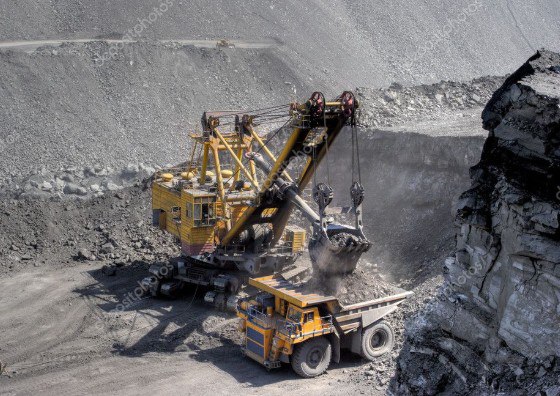
Bogatyr Kömir LLP, the operator of Kazakhstan’s largest coal mine in Ekibastuz, in Pavlodar region, plans to gradually increase production beginning in 2026, the Ministry of Energy reports.

The company, which uses open-pit mining, is the country’s largest supplier of coal to the domestic market, accounting for about 38% of total coal output. According to the ministry, coal production in Kazakhstan reached 120.5 million tons in 2025. With balance reserves estimated at 2.4 billion tons, the company is positioning itself for long-term growth.

Under current plans, output is expected to rise from 42.7 million tons in 2024 to 45.2 million tons by 2026, reaching 56.5 million tons annually by 2032.

The expansion will be backed by a $733 million investment program for 2026-2032. Funds will be allocated to capital construction and technological upgrades, including the introduction of cyclic-flow technology at the Severny open-pit mine and the development of new spoil tips. The company also plans to modernize its mining transport fleet and reconstruct and overhaul existing facilities to ensure stable fuel supplies to the energy sector.

The Ministry of Energy links the production increase to the implementation of a national project to expand coal-fired power generation. The Pavlodar region already plays a central role in the country’s energy system, accounting for about 42% of Kazakhstan’s total electricity generation last year.

Key elements of the program include expanding the Ekibastuz GRES-2 power plant, increasing its installed capacity from 1 GW to 2.1 GW; constructing a new Ekibastuz GRES-3 power plant with a capacity of 2.64 GW using “clean coal” technologies; and modernizing the GRES plant in Aksu. According to the ministry, a significant increase in power generation requires advance expansion of the raw material base.

Additional electricity demand is also expected from digital infrastructure projects. As previously reported by The Times of Central Asia, authorities plan to create a “valley” of data centers in the Pavlodar region focused on digitalization and high-performance computing.