• KGS/USD = 0.01144 0%
  • KZT/USD = 0.00212 0%
  • TJS/USD = 0.10454 -0.1%
  • UZS/USD = 0.00008 0%
  • TMT/USD = 0.28571 0.28%
  • KGS/USD = 0.01144 0%
  • KZT/USD = 0.00212 0%
  • TJS/USD = 0.10454 -0.1%
  • UZS/USD = 0.00008 0%
  • TMT/USD = 0.28571 0.28%
  • KGS/USD = 0.01144 0%
  • KZT/USD = 0.00212 0%
  • TJS/USD = 0.10454 -0.1%
  • UZS/USD = 0.00008 0%
  • TMT/USD = 0.28571 0.28%
  • KGS/USD = 0.01144 0%
  • KZT/USD = 0.00212 0%
  • TJS/USD = 0.10454 -0.1%
  • UZS/USD = 0.00008 0%
  • TMT/USD = 0.28571 0.28%
  • KGS/USD = 0.01144 0%
  • KZT/USD = 0.00212 0%
  • TJS/USD = 0.10454 -0.1%
  • UZS/USD = 0.00008 0%
  • TMT/USD = 0.28571 0.28%
  • KGS/USD = 0.01144 0%
  • KZT/USD = 0.00212 0%
  • TJS/USD = 0.10454 -0.1%
  • UZS/USD = 0.00008 0%
  • TMT/USD = 0.28571 0.28%
  • KGS/USD = 0.01144 0%
  • KZT/USD = 0.00212 0%
  • TJS/USD = 0.10454 -0.1%
  • UZS/USD = 0.00008 0%
  • TMT/USD = 0.28571 0.28%
  • KGS/USD = 0.01144 0%
  • KZT/USD = 0.00212 0%
  • TJS/USD = 0.10454 -0.1%
  • UZS/USD = 0.00008 0%
  • TMT/USD = 0.28571 0.28%

Small but Always Present: Kyrgyzstan at the Winter Olympics

Since independence in 1991, Kyrgyzstan has sent just one or two athletes to every edition of the Winter Olympics, a reflection of its modest stature in winter sports as well as its persistence in being represented among the world’s best every four years. 

This year is no different. Alpine skier Timur Shakirov and cross-country skier Artur Saparbekov, both 19 years old, will compete for Kyrgyzstan at the games that run from February 6 to February 22 in Milan, Cortina d’Ampezzo in the Dolomites and other locations in northern Italy.

Shakirov will participate in the giant slalom and slalom at the Bormio resort, while Saparbekov will also compete in two disciplines – the classic sprint and the 10-kilometer freestyle – at Val di Fiemme.

The athletes recently showed off their national uniforms for the games – a dark blue one for training and a white one with a white kalpak, the traditional Kyrgyz headgear, for ceremonial events. 

Kyrgyzstan’s National Olympic Committee said it had provided the athletes with Olympic scholarships worth $21,000, starting in November 2023. 

“A coaching workshop on skiing was also held in 2025, and in 2026, a biathlon workshop aimed at upgrading specialists and developing winter sports in the country is planned,” the committee said. 

Kyrgyzstan’s mountainous terrain offers potential for the development of winter sports, but limited funding and a lack of top-level training facilities has held back progress. 

After the collapse of the Soviet Union, Kyrgyzstan first participated in the Winter Olympics at the 1994 games in Lillehammer, Norway, with Yevgeniya Roppel competing in the biathlon, a sport that involves cross-country skiing and rifle shooting. The country of about seven million people has sent a delegation to the games every four years since then, a notable feat because athletes have to get through qualifying rounds. The first Winter Olympics were held in 1924. 

With a delegation of three-dozen athletes, Kazakhstan is sending the biggest team from Central Asia to the Games in Italy. Uzbekistan planned to send four athletes, but a figure-skating pair is unable to compete because of an injury. Tajikistan and Turkmenistan are not participating. 

Inspired by Golovkin, Young Kazakhstani Skier Heads to Winter Olympics

A 16-year-old Kazakhstani freestyle skier who won silver in the mixed team aerials event at the 2025 Asian Games is among athletes from Central Asia who will compete at the Olympic Games in Italy this month.

With a 36-member team, Kazakhstan is sending the largest contingent from the region to the games, which run from February 6 to February 22 in Milan, Cortina d’Ampezzo in the Dolomites and other locations in northern Italy. The youngest member of the team is Asylkhan Assan, who also took tenth place for Kazakhstan at a World Cup event in China a year ago and has competed in other international competitions.

“The most important thing is to perform well. To fully demonstrate my potential and not make mistakes during the jump,” Assan said in an interview posted on the the Olympic.kz website.

The teen athlete said he got into sports when he was five years old and, with the encouragement of his grandmother, followed his sister into freestyle skiiing. The acrobatic sport features flips, twists and somersaults after skiiing off a steep jump and concludes with a hopefully clean landing on a downhill slope.

“I had injuries during my career, but my family always supported me,” he said. “I did not break down physically or psychologically.”

Assan said his role model is Gennady Golovkin, the former middleweight world champion from Kazakhstan, and that he used to wake up early to watch the boxer’s fights. Golovkin, head of Kazakhstan’s National Olympic Committee, was named president of World Boxing at the federation’s inaugural congress in Rome in November.

Freestyle skiing emerged in the 1960s at a time of social change and a push for “more more freedom of expression, even in sports,” the Olympics organization said. It was “initially called ‘hotdogging’ because it involved a mix of acrobatic moves, aerials, and adrenaline,” it said.

The International Ski Federation recognised freestyle as a discipline in 1979, introduced guidelines to make it safer and held the first events in the following year. It made its Olympic debut as a demonstration sport at the games in Calgary, Canada in 1988.

The town of Livigno will host the freestyle skiiing and snowboarding events at this year’s Winter Olympics.

Opinion – Qosh Tepa Canal: Transboundary Impacts Without a Transboundary Mechanism

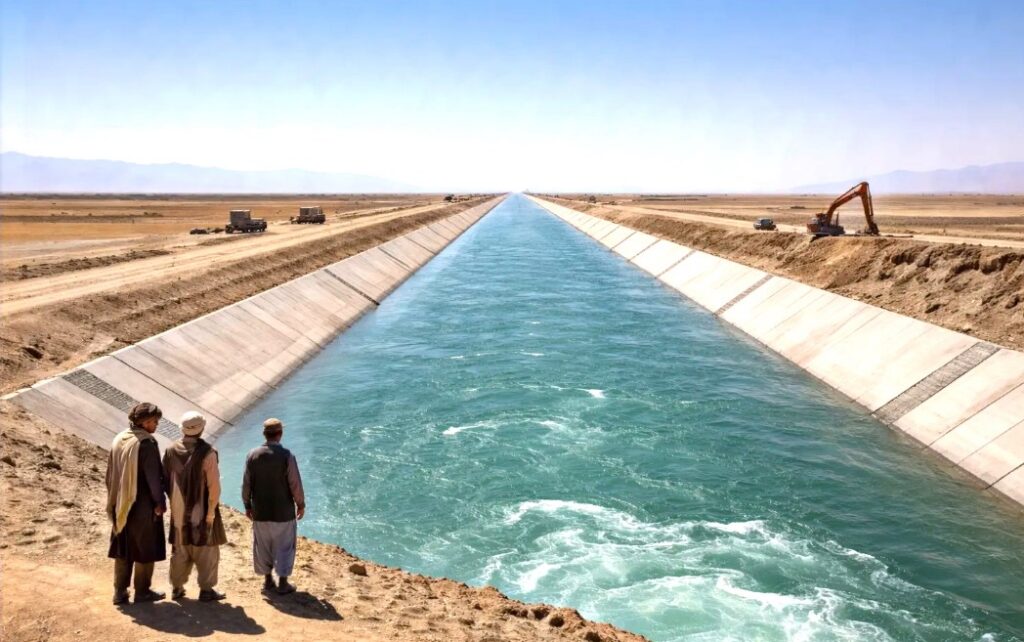
In recent months, media attention has increasingly focused on infrastructure projects underway in Afghanistan. Chief among them is the Qosh Tepa Canal, widely seen not only as an irrigation initiative but as a development with significant transboundary implications for the Amu Darya River basin.

The canal draws water from one of Central Asia’s most critical transboundary rivers. For downstream countries, primarily Uzbekistan and Turkmenistan, the Amu Darya is a vital water source, directly linked to agricultural output and the sustainability of rural communities. As such, the conversation surrounding Qosh Tepa extends well beyond Afghanistan’s domestic agenda.

Concerns voiced by experts and analysts stem from both the scale of the project and the absence of an inclusive, basin-wide mechanism that includes Afghanistan, which is not a party to the main post-Soviet Amu Darya allocation frameworks. As a result, discussions regarding the canal’s potential impacts are taking place largely outside formal multilateral frameworks.

One positive development is the increasing presentation of Qosh Tepa within a broader context, where water flow management is recognized as a factor shaping regional political and economic relations. However, these assessments often highlight not the canal’s stated purpose, but rather the absence of a sustainable mechanism for coordinating discussion of its cross-border effects.
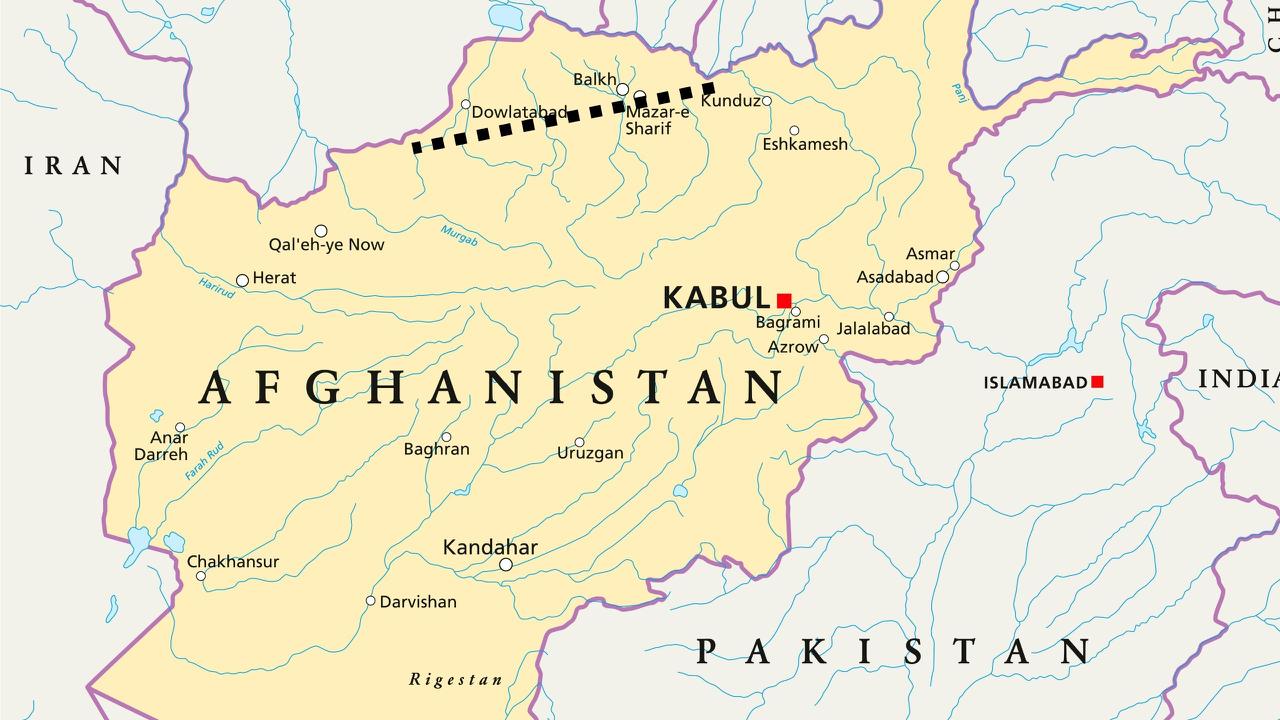
Image: TCATCA

A recurring concern among experts is the lack of a structured multilateral platform that enables early-stage evaluation of such projects before they are perceived as risks. Infrastructure development in the region frequently outpaces the establishment of mechanisms for joint impact assessment and management.

In this light, Kazakhstan’s initiative to establish a specialized structure within the UN system, the International Water Organization, acquires particular relevance. This proposal is not about building a theoretical global agenda but about addressing a specific institutional gap: the lack of a neutral forum for technical and expert discussion of transboundary water projects at an early stage.

The Qosh Tepa Canal, currently a unilateral infrastructure undertaking rather than the result of an international agreement, could serve as a test case for such a preventive mandate. While the project is already underway and its transboundary implications are actively being discussed among experts, it has not yet escalated into a regional dispute. This creates an opportunity for professional dialogue, without entanglement in political or status-related debates.

The present situation can be summarized as one of “transboundary implications without a transboundary mechanism.” The project, while entirely within Afghan territory, objectively affects the interests of downstream states, yet it remains disconnected from any multilateral framework for consultation or agreement.

Is it in Afghanistan’s interest to engage in multilateral formats? Though the question is often left unanswered, the answer is a clear “yes.” Such engagement would help dispel suspicion not only among Central Asian states, but also in Iran and Pakistan, both of which have voiced concerns over shared water resources.

First, it would reduce negative external rhetoric. Currently, Qosh Tepa is largely discussed via external media with alarmist scenarios and with little to no Afghan participation. This reinforces the image of Afghanistan as a unilateral actor, whose intentions are open to interpretation.

Second, involvement in regional dialogue would help the Islamic Emirate legitimize its flagship project, even in the absence of formal political recognition. This could help mitigate the risk of diplomatic or political pressure.

Third, multilateral engagement would enhance the long-term sustainability of the canal. Without regional coordination and an international mechanism, the risk of water disputes and broader politicization of water will rise, making the Qosh Tepa project itself increasingly vulnerable.

Some may ask whether this would amount to a “water for recognition” deal. The answer is, most likely not. The Taliban has generally rejected framing recognition as something to be traded for concessions. But Kabul must understand that water is a strategic resource, not a bargaining chip. The more likely outcome is a pragmatic calculation: reducing external risk surrounding the canal project while maintaining a firm stance on sovereignty.

Ultimately, the Qosh Tepa situation calls not for media dramatization, but for institutional dialogue rooted in technical cooperation and involving Afghanistan in regional water governance.

For the countries of Central Asia, Afghan participation in multilateral water frameworks could help reduce risks, not create new ones. Strengthening Afghanistan’s food and water security serves the interests of the entire region. Within the C5 format, a stable Afghanistan is not an end in itself but a prerequisite for long-term development, deeper connectivity, and a stronger, more autonomous regional position in a shifting global landscape.


The views expressed in this article are those of the author and do not necessarily reflect the official policy or position of the publication, its affiliates, or any other organizations mentioned.

Kazakhstan’s Water Ministry Approves Roadmap to Eliminate the “Black Market” for Water

Kazakhstan’s Ministry of Water Resources and Irrigation, in coordination with the General Prosecutor’s Office, has unveiled a comprehensive action plan to combat illegal water abstraction, commonly referred to as the “black market” for water. The roadmap was presented at an interdepartmental meeting earlier this week.

The plan outlines systematic measures, including a nationwide audit of water resources, the mapping of regions vulnerable to illegal abstraction, and a review of state funding allocated for water infrastructure development. It also calls for the adoption of water-saving technologies and the implementation of anti-corruption mechanisms. Interdepartmental working groups will be established at both national and regional levels, incorporating law enforcement representatives with investigative authority.

A central component of the strategy is the digital transformation of irrigation water distribution. This will include the deployment of satellite and digital monitoring systems, centralized accounting tools, and mandatory interdepartmental data-sharing. Special emphasis will be placed on ensuring compliance with water use quotas and promoting crop diversification among farmers.

Minister of Water Resources and Irrigation Nurzhan Nurzhigitov emphasized that eradicating the shadow water trade demands coordinated efforts from government institutions and law enforcement, with the prosecutor’s office playing a leading role. “No lawbreaker should escape responsibility,” he said.

According to ministry estimates, the black market accounts for 5-10% of Kazakhstan’s agricultural water consumption. The country’s total annual water usage is approximately 25 billion cubic meters, with the agricultural sector consuming about 60%, roughly 15 billion cubic meters.

In a recent address to the nation, President Kassym-Jomart Tokayev called for the complete elimination of illegal water trafficking.

As previously reported by The Times of Central Asia, Kazakhstan’s water legislation already includes provisions for the gradual tightening of regulations on legal water users. Authorities have stated that immediate action will be taken to dismantle the illicit segment of the market.

Bishkek’s Air Pollution Crisis Comes Under Parliamentary Scrutiny

On February 2, Kyrgyzstan’s parliamentary committee on ecology and environmental protection convened to hear reports from senior officials on the worsening air pollution and winter smog in the capital.

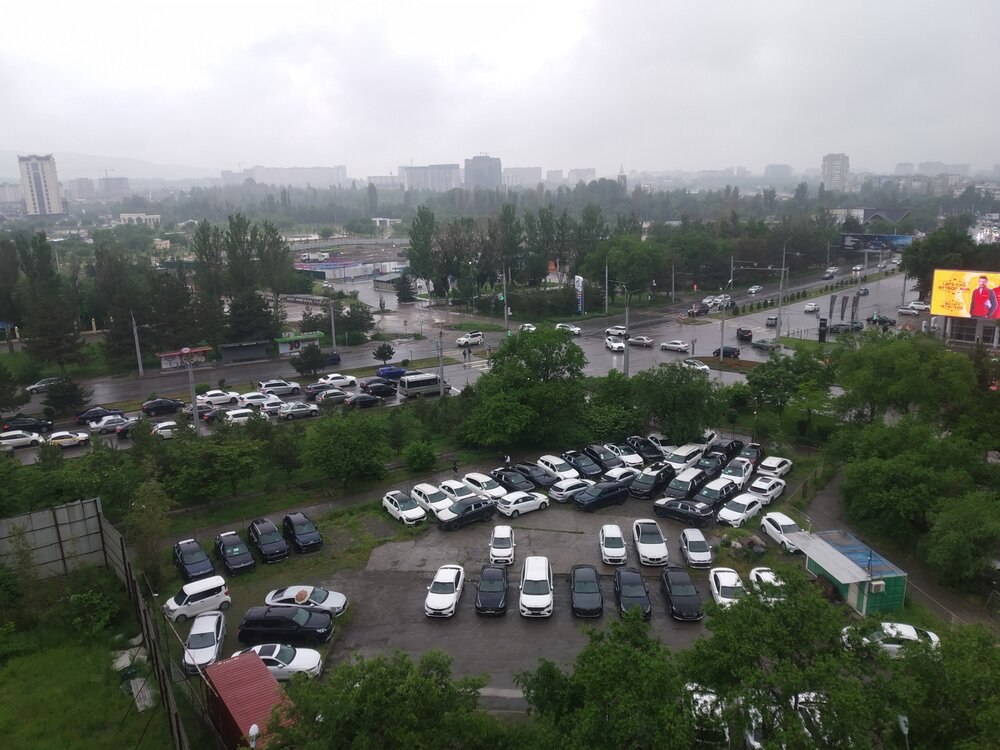
Air pollution remains a chronic challenge in Bishkek, a city of over one million residents. Conditions worsen sharply in winter, when widespread coal burning for heating and emissions from an aging vehicle fleet accumulate in the city’s basin-like topography. Bishkek consistently ranks among the world’s 10 most polluted cities on IQAir’s global air quality index. In January 2026 alone, the city appeared in the top five on at least eight separate days.

Minister of Natural Resources, Ecology, and Technical Supervision Meder Mashiev told lawmakers that the primary sources of pollution are household coal burning (40%), vehicle emissions (30%), the city’s coal-fired thermal power plant (15%), wind-blown dust (13.5%), and industrial activity (1.5%).

Mashiev underscored that vehicle emissions are a particularly significant contributor to the city’s smog.

According to Mashiev, Kyrgyzstan has more than 1.9 million vehicles, a 13% increase compared to 2024. Of these, 972,000 run on gasoline, 339,000 on diesel, 56,900 on gas, and 37,000 are hybrids. Electric vehicles make up just 0.8% of the total, numbering around 15,200.

An estimated 600,000-700,000 vehicles, more than 30% of the national total, are located in Bishkek. More than half are over 15 years old, contributing significantly to harmful emissions.

Jarkynbek Kasymbekov, Director of the National Institute of Public Health, outlined the health implications. He reported a 2.5-fold increase in allergic rhinitis cases nationwide, particularly among young people, a trend he linked directly to poor air quality. While long-term studies are lacking, the rise in respiratory illnesses is well documented.

Mashiev highlighted several measures taken in 2025 to address the crisis. Fifty-four residential areas in Bishkek were connected to natural gas, enabling more than 51,000 households to switch from coal heating. This transition is estimated to have reduced coal consumption in the capital by 100,000 tons.

He also reported the long-awaited extinguishing of Bishkek’s decades-old smoldering landfill. A new waste-to-energy facility has been launched at the site, now generating electricity by incinerating solid waste.

Additional efforts are underway to modernize urban transport and expand green spaces.

“Work is currently underway to transition to environmentally friendly transport. A total of 1,447 gas-powered eco-buses and 120 electric buses now operate in Bishkek. There are already more than 100 electric charging stations in the city, and over 2,000 applications for new stations are under review,” Mashiev said.

Bishkek Mayor Aibek Junushaliev added that 18,000 trees were planted in the capital last year, with plans to plant another 50,000 in 2026.

Parliamentary committee chairman Bakyt Tentishev raised concerns about vehicles operating without catalytic converters. Kyrgyzstan is preparing to tighten environmental regulations on motor vehicles. A draft law currently under public discussion would mandate the presence and functionality of catalytic converters in vehicles originally manufactured with them. The absence of these devices significantly increases toxic emissions and fuel consumption, posing direct risks to public health.

Kazakhstan Has Selected a Site for Its Second Nuclear Power Plant

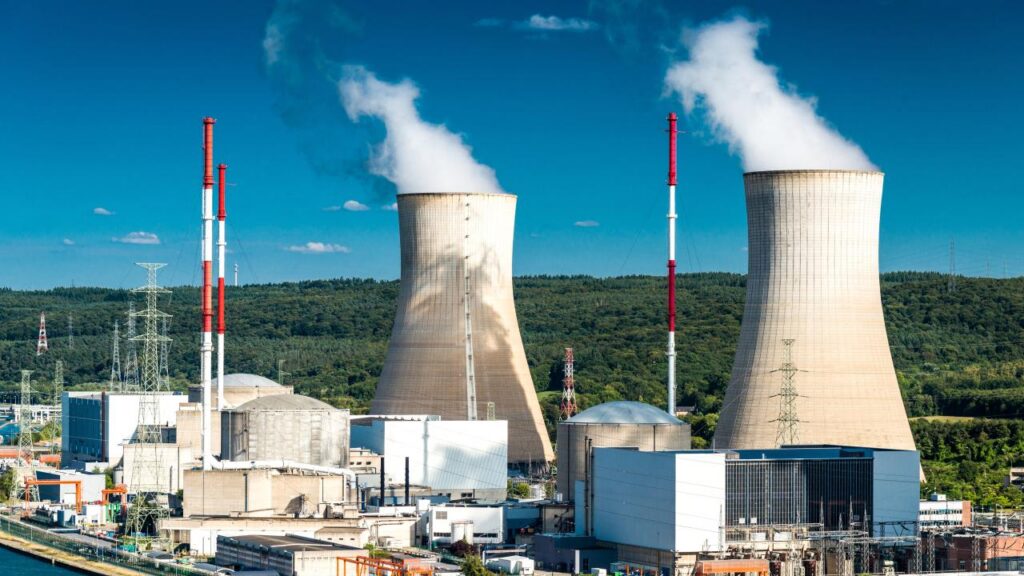
The Kazakh government has approved the location for its second nuclear power plant. According to an official decree, the facility will be constructed in the Zhambyl district of the Almaty region, adjacent to the site selected for the country’s first nuclear plant.

The Ministry of Justice published Government Resolution No. 40, dated January 26, 2026, titled On the Construction and Construction Site of the Nuclear Facility “Second Nuclear Power Plant”, in the Adilet system of regulatory legal acts. The resolution came into effect on the day of its signing.

Nuclear projects typically proceed through feasibility studies, environmental review, and financing arrangements, and timelines can shift as plans move from preliminary approval to full construction.

Earlier reports indicated that contracts for the construction of Kazakhstan’s second and third nuclear plants were awarded to China’s CNNC, with the first plant being developed by the Russian state corporation Rosatom. Its site is located in the village of Ulken, also in Zhambyl district, on the shore of Lake Balkhash, approximately 400 km northwest of Almaty. Thus, Kazakhstan’s first two nuclear power facilities will be concentrated in the country’s southern region.

The design capacity of the first plant is 2.4 GW, comprising two VVER-1200 reactors, each with a capacity of 1.2 GW. Rosatom has already begun preparatory work on the site. The foundation is scheduled to be poured in 2029, with commissioning planned for 2035.

Previously, Kurchatov in the Abai region, near the former Semipalatinsk nuclear test site, was considered as a possible location for one of the three planned plants. This site was reviewed with International Atomic Energy Agency participation. However, the current government decision confirms a focus on the Almaty region.

The Kazakh authorities view nuclear energy as a strategic solution to the country’s growing electricity shortage. At the same time, in January, Energy Minister Yerlan Akkenzhenov stated that Kazakhstan would be able to fully meet domestic energy demand by the end of the first quarter of 2027, without nuclear power, and by 2029, the country is expected to reach a surplus and begin electricity exports.