• KGS/USD = 0.01143 -0%
  • KZT/USD = 0.00192 -0%
  • TJS/USD = 0.10820 0.19%
  • UZS/USD = 0.00008 0%
  • TMT/USD = 0.28575 0%
  • KGS/USD = 0.01143 -0%
  • KZT/USD = 0.00192 -0%
  • TJS/USD = 0.10820 0.19%
  • UZS/USD = 0.00008 0%
  • TMT/USD = 0.28575 0%
  • KGS/USD = 0.01143 -0%
  • KZT/USD = 0.00192 -0%
  • TJS/USD = 0.10820 0.19%
  • UZS/USD = 0.00008 0%
  • TMT/USD = 0.28575 0%
  • KGS/USD = 0.01143 -0%
  • KZT/USD = 0.00192 -0%
  • TJS/USD = 0.10820 0.19%
  • UZS/USD = 0.00008 0%
  • TMT/USD = 0.28575 0%
  • KGS/USD = 0.01143 -0%
  • KZT/USD = 0.00192 -0%
  • TJS/USD = 0.10820 0.19%
  • UZS/USD = 0.00008 0%
  • TMT/USD = 0.28575 0%
  • KGS/USD = 0.01143 -0%
  • KZT/USD = 0.00192 -0%
  • TJS/USD = 0.10820 0.19%
  • UZS/USD = 0.00008 0%
  • TMT/USD = 0.28575 0%
  • KGS/USD = 0.01143 -0%
  • KZT/USD = 0.00192 -0%
  • TJS/USD = 0.10820 0.19%
  • UZS/USD = 0.00008 0%
  • TMT/USD = 0.28575 0%
  • KGS/USD = 0.01143 -0%
  • KZT/USD = 0.00192 -0%
  • TJS/USD = 0.10820 0.19%
  • UZS/USD = 0.00008 0%
  • TMT/USD = 0.28575 0%
13 December 2025

Turkmenistan May Supply Gas, Electricity to Kazakhstan, Azerbaijan and Turkey

Former President of Turkmenistan, Gurbanguly Berdimuhamedov said in his speech at the 15th meeting of the Council of Elders of the Organization of Turkic States (OTS) in Ashgabat that the country may start exporting gas to Kazakhstan, further stating that Turkmenistan has all the necessary resources to also supply Turkmen natural gas and electricity to Azerbaijan and Turkey.

“We are ready to continue to assist the brotherly countries in ensuring energy security. Turkmenistan, which is one of the largest producers of energy resources, is ready to supply them to brotherly countries and increase the volume of such supplies,” Berdimuhamedov said.

Turkmenistan currently exports electricity to Uzbekistan and Kyrgyzstan, and has ambitious plans to send natural gas to the east with the cooperation of these two countries. Berdimuhamedov said that Turkmenistan considers it necessary to create an effective, reliable and self-sufficient model of partnership in the unstable world energy markets in order to meet the growing demand for electricity in neighboring countries.

Currently, Turkmen gas is exported through three branches of the Turkmenistan-China gas pipeline, via Uzbekistan and Kazakhstan. The Republic sends 40 billion cubic meters of the fuel annually, and the capacity of the gas pipeline is 55 billion cubic meters. The spare capacity could be used to send Turkmen gas to China, Uzbekistan and Kazakhstan.

In order to provide southern Kazakhstan with gas, the national company QazaqGaz, which is owned by the national welfare fund Samruk-Kazyna, has signed an agreement with Uzbekistan. Under the terms of the deal, Uzbek gas from western fields crosses Karakalpakstan to the southern region of Kazakhstan. Also, Kazakhstan pumps Uzbek gas to supply Tashkent with fuel. This agreement was extended until the end of 2025, following President Tokayev’s recent visit to Uzbekistan. However, over this time period, Kazakhstan must find time to build the second branch of the Beineu-Bozoi-Shymkent gas pipeline, the capacity of which will be 15 billion cubic meters per year.

QazaqGaz is the largest supplier of natural gas in Kazakhstan. The national company often notes an increase in domestic consumption of natural gas and a decrease in exports. By supplying gas at higher export prices to China, QazaqGaz subsidizes cheap fuel for the domestic market. Last year, the company’s losses amounted to $391 million.

Air Asia, Malaysia Airlines to Receive Fifth Degree Air Freedom in Kazakhstan

Negotiations between the chairman of Kazakhstan’s Civil Aviation Committee, Saltanat Tompieva, and the director general of the Civil Aviation Authority of Malaysia (CAAM), Norazman Bin Mahmud, took place in In Kuala Lumpur, and were also attended by the heads of flagship carrier Malaysia Airlines and low-cost airline Air Asia X, alongside employees of the Aviation Administration of Kazakhstan and representatives of the Embassy of Kazakhstan in Malaysia.

During the talks, the Kazakh delegation declared its readiness for further cooperation with Malaysia, and is also prepared to expand the geography of flights for Air Asia X and Malaysia Airlines to the cities of Kazakhstan. Also under consideration is the option of granting Malaysia the International Civil Aviation Organization (ICAO) fifth degree of Freedom of Air. This means that Kazakhstan will allow Malaysian airlines to perform  inbound flights originating in a third country, stopping in Kazakhstan, provided that the final destination will be the airline’s home country.

The Kazakh delegation also visited Kuala Lumpur International Airport. Currently, the airport’s passenger traffic amounts to more than 60 million passengers a year, receiving flights from more than 60 world airlines. The first direct flight between Almaty and Kuala Lumpur is expected to be launched this month.

World Bank Supports Economic Reforms in Kazakhstan

Approval was granted on March 14th for the loan of $600 million to Kazakhstan by the World Bank’s Board of Executive Directors.

The loan will be used to implement the first phase of a series of reforms aimed to promote sustainable growth in the country and support Kazakhstan’s transition to a more competitive, greener, and inclusive economy. As a carbon-intensive economy, Kazakhstan has ambitions to scale-up action on tackling climate change and reduce reliance on the extraction of natural resources. The reforms aim to increase renewable energy generation, gradually phase out fossil fuel subsidies, improve energy efficiency, and protect poor and vulnerable households. These measures are integral to Kazakhstan’s Nationally Determined Contributions, which are committed to reducing harmful emissions by 25 percent by 2030.

“This new partnership with the Government of Kazakhstan supports tangible measures to advance a low-emissions development strategy as part of the global fight against climate change,” said Andrei Mikhnev, World Bank Country Manager for Kazakhstan.

Funding provided by the World Bank, with a low-cost and long-term repayment option, will support the government’s reforms in the following areas:

In developing greener and more efficient energy, the program implements key recommendations by the Country Climate and Development Report (CCDR) to support the reduction of Kazakhstan’s carbon footprint and contribute to global efforts to combat climate change.

In developing more competitive digital and financial markets and promoting transparent procurement practices, the program aims to enable more firms to provide digital services, develop safeguards essential for a digital economy, allocate credit to support productivity and increase transparency in procurement practices.

In targeting the poor and supporting regional development, reforms aim to strengthen the social protection system and enhance regional development, as part of broader efforts to enhance inclusion and provide greater opportunities nationwide.

Manufacture of Chevrolet Onix Cars Launched in Kazakhstan

March 14th marked the official beginning of CKD manufacture of Chevrolet Onix cars at the Allur plant in Kostanay, Kazakhstan.

The launch was attended by Kanat Sharlapaev Minister of Industry and Construction of Kazakhstan and managers from both General Motors and UzAuto Motors, the Uzbek company that manufactures and sells Chevrolet cars in Uzbekistan.

The opening was the long-awaited result of an agreement drawn up with General Motors and signed by Kazakh President Kassym-Jomart Tokayev and Uzbek President Shavkat Mirziyoyev in December 2022.

The Kazakh plant will produce 30, 000 vehicles per annum. State of the art robotic laser welding technology will ensure that manufacture meets General Motors’ standards, and a plastic painting workshop, again featuring modern robotic equipment, is currently under construction. Work is also underway to establish the country’s first Localization Centre for auto component production.

Speaking at the opening ceremony, Minister Sharlapaev stated that collaboration with leading global manufacturer General Motors would dynamically spur the development of Kazakhstan’s automotive industry.

Shilpan Amin, president of General Motors International, also applauded the initiative, saying, “We have managed to increase production to 50,000 vehicles per year. Kazakhstan now ranks seventh worldwide in terms of Chevrolet market size. This is a testament to our successful partnership.”

Kyrgyzstan Tightens Control Over Foreign-Funded NGOs

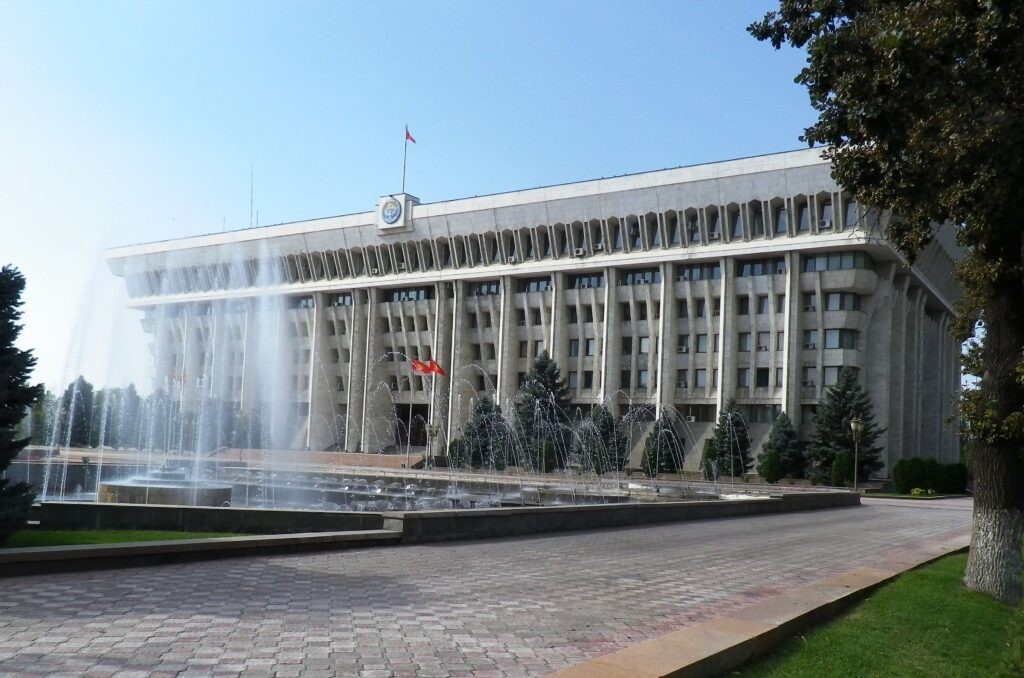
BISHKEK, Kyrgyzstan – Kyrgyzstan´s parliament has passed a law that tightens control over foreign funded non-governmental organizations despite international concerns that the measure would further erode rights and access to basic services in the Central Asia country.

Supporters of the law have characterized the law as a way to ward off foreign interference in Kyrgyzstan, while critics say it represents a slow-moving crackdown that rolls back efforts to develop civil society with the help of international governments and other institutions.

The Jogorku Kenesh, or parliament, approved the law by a vote of 66-5 on Thursday. The government has said the law would assign the status of a foreign agent to NGOs, media and other institutions, as well as individuals in some cases, that are financed from abroad. Furthermore, materials posted on behalf of foreign principals on the Internet will be required to contain the phrase: “Materials (information) were produced, distributed and (or) sent by a non-profit organization performing the functions of a foreign representative.” Violations of the law could lead to criminal penalties.

President Sadyr Japarov of Kyrgyzstan has said that “only a small number, but a [quite] vociferous group, of these structures financed by foreign states… is a source of inaccurate information for their grantors”. Last month, Japarov pushed back against concerns about the draft law that were expressed by U.S. Secretary of State Antony Blinken in a written response emphasizing that the draft law – which MPs initiated and adopted in its first reading – “is close to the Foreign Agents Registration Act (FARA) adopted in 1938 in the United States”. “My only request is that you do not interfere in the internal affairs of our country,” Japarov said.

Some opponents claim it is based on Russia´s “foreign agents” law and could be used as an instrument of oppression.

Members of non-governmental groups and other critics strongly opposed the draft law as it moved toward ratification in the parliament. On March, 15 groups wrote to four international finance institutions that are backing projects in Kyrgyzstan and asked them to join their efforts to block it.

“The law would inevitably create a climate of fear, preventing people, including workers, human rights defenders and civil society organizations, from speaking out due to fear of reprisals,” the groups said in their letter to the Asian Development Bank, European Bank for Reconstruction and Development, European Investment Bank and World Bank.

Separately this week, the government in Kyrgyzstan withdrew a draft law on the media that critics said would have restricted free speech. Among the terms of the measure was the right of government agencies to revoke a journalist’s accreditation if it disapproved of the reporter’s coverage of an issue.

High-Profile Speakers Open B5+1 Forum in Almaty

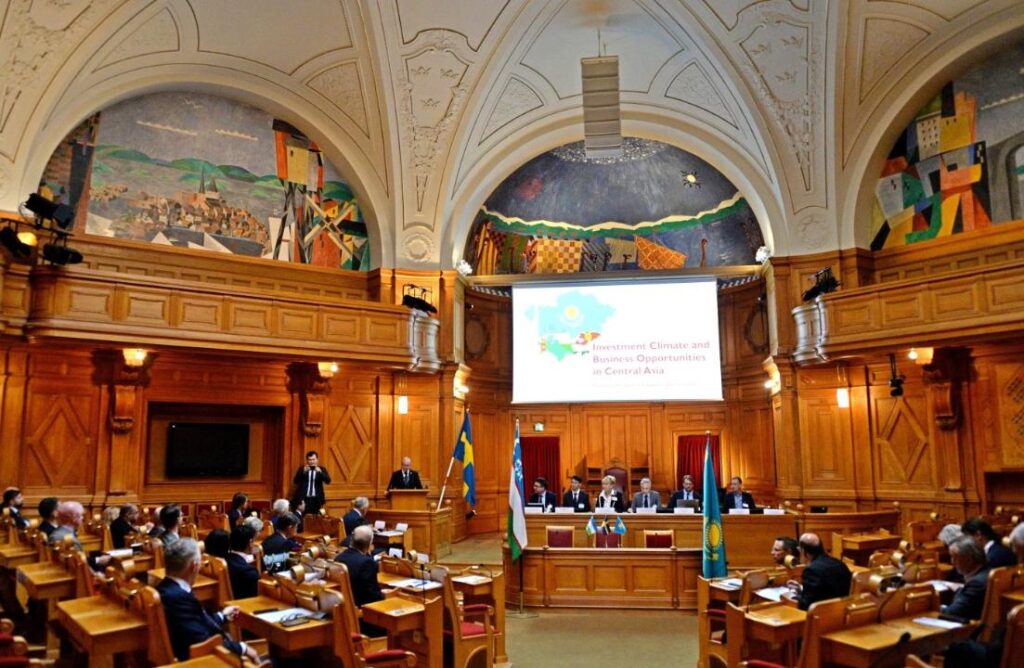
The ‘B5+1’ platform – a group of countries comprising the five Central Asian republics and the United States – took an important step forward today, with the launch of the inaugural B5+1 Forum in Almaty. 

Instrumental in the formation of the B5+1 group has been the Center for International Private Enterprise (CIPE), which aims to develop public-private partnerships in the Central Asia region. This new business platform has been created to help international and local companies to capitalize on opportunities in global business and trade – while assisting the six governments in attracting more direct foreign investment. 

The theme of the opening day was “Looking within Central Asia”. It began with a panel discussion on boosting economic integration in the Central Asia region, drawing from the area’s distinctive context, and successful examples like ASEAN and the EU. Recommendations, from panelists including Richard E. Hoagland of the Caspian Policy Center and Alisher Shaykhov from Uzbekistan’s National Venture Capital Fund, included integrating the region’s value chain into the global economy, and promoting collaborative investment initiatives.

The second panel offered perspectives from Central Asia’s business leaders. Panelists including B5+1 representatives Aziza Shuzheyeva (Kazakhstan, e-commerce) and Manusurjon Rasulev (Uzbekistan, agribusiness) gave insights into the region’s high-profile industries. Speakers advocated for policy synchronization in these sectors, as well as in tourism and trade, as a means to boost regional growth. 

For the third panel, government officials voiced their support for enhancing public-private dialogue. Tajikistan was represented by its deputy minister for economy Ahliddin Nuriddinzoda; his counterpart Ainura Usenbekova spoke on behalf of Kyrgyzstan, and Turkmenistan’s minister of finance Serdar Jorayev also spoke at length. Their focus was on national reforms and regional integration.

The B5+1 Forum forms part of CIPE’s program called “Improving the Business Environment in Central Asia” (IBECA). CIPE themselves are affiliated to the US Chamber of Commerce – the catalyst behind the B7 and B20 platforms – and receive funding from the US Department of State. The B5+1 Forum continues tomorrow, Friday 15 March, with a thematic day dedicated to “Central Asia’s place in the world economy”.