• KGS/USD = 0.01144 0%
  • KZT/USD = 0.00196 -0%
  • TJS/USD = 0.10899 -0%
  • UZS/USD = 0.00008 -0%
  • TMT/USD = 0.28490 0%
  • KGS/USD = 0.01144 0%
  • KZT/USD = 0.00196 -0%
  • TJS/USD = 0.10899 -0%
  • UZS/USD = 0.00008 -0%
  • TMT/USD = 0.28490 0%
  • KGS/USD = 0.01144 0%
  • KZT/USD = 0.00196 -0%
  • TJS/USD = 0.10899 -0%
  • UZS/USD = 0.00008 -0%
  • TMT/USD = 0.28490 0%
  • KGS/USD = 0.01144 0%
  • KZT/USD = 0.00196 -0%
  • TJS/USD = 0.10899 -0%
  • UZS/USD = 0.00008 -0%
  • TMT/USD = 0.28490 0%
  • KGS/USD = 0.01144 0%
  • KZT/USD = 0.00196 -0%
  • TJS/USD = 0.10899 -0%
  • UZS/USD = 0.00008 -0%
  • TMT/USD = 0.28490 0%
  • KGS/USD = 0.01144 0%
  • KZT/USD = 0.00196 -0%
  • TJS/USD = 0.10899 -0%
  • UZS/USD = 0.00008 -0%
  • TMT/USD = 0.28490 0%
  • KGS/USD = 0.01144 0%
  • KZT/USD = 0.00196 -0%
  • TJS/USD = 0.10899 -0%
  • UZS/USD = 0.00008 -0%
  • TMT/USD = 0.28490 0%
  • KGS/USD = 0.01144 0%
  • KZT/USD = 0.00196 -0%
  • TJS/USD = 0.10899 -0%
  • UZS/USD = 0.00008 -0%
  • TMT/USD = 0.28490 0%
08 December 2025

Pavel Durov’s Telegram Launches AI Laboratory at Alem.ai in Astana

Telegram founder Pavel Durov has announced the launch of a dedicated artificial intelligence laboratory in Astana, housed within the newly inaugurated International Artificial Intelligence Center, Alem.ai.

The Alem.ai center was officially opened on Thursday during the Digital Bridge 2025 forum in Kazakhstan’s capital. At the opening ceremony, President Kassym-Jomart Tokayev described the center as a future global hub for the effective and ethical application of artificial intelligence. The initiative will bring together both domestic and international developers, with Telegram among the first companies to establish operations at the site.

“A year ago, we opened our first regional office in Kazakhstan, and today we are pleased to launch a specialized AI laboratory inside Alem.ai,” Durov said.

“This is a joint project between Telegram and Kazakhstan’s national supercomputer cluster, established by the Ministry of Artificial Intelligence. The technology will allow more than one billion people to use AI functions privately, transparently, and efficiently. We hope that Kazakhstan’s supercomputer cluster will become the first major provider of computing power for this network.”

As previously reported by The Times of Central Asia, Kazakhstan launched the region’s most powerful supercomputer earlier this year. At the Digital Bridge 2025 forum, President Tokayev announced plans for a second cluster. On the sidelines of the event, he also met with Pavel Durov to discuss cooperation in education, artificial intelligence, and cybersecurity, according to the presidential press service.

“The President highly appreciated Telegram’s contribution to advancing Kazakhstan’s digital agenda: the company officially joined Astana Hub, opened an office in Kazakhstan, and launched AI laboratories at Alem.ai,” the statement said. “For his part, Pavel Durov briefed Tokayev on prospects for joint projects in artificial intelligence.”

Tokayev also discussed venture investment opportunities and the development potential of Kazakhstani AI startups with Stanford University professor Ilya Strebulaev.

In addition, Tokayev held meetings with Omar Al Olama, UAE Minister of State for Artificial Intelligence, Digital Economy, and Remote Work Applications, and Mansoor Ibrahim Al Mansoori, Chairman of Abu Dhabi’s Department of Health and former COO of G42. The talks focused on expanding Kazakh-Emirati cooperation in AI, including the ongoing Smart City project, which Tokayev called a milestone in bilateral relations.

Tokayev also announced plans to establish an Artificial Intelligence University in Kazakhstan, with a strong focus on research and development. According to the presidential press service, he noted the importance of drawing on the UAE’s experience, where the world’s first IT-focused university is already in operation.

Small Firms Power Kyrgyz Construction Surge

The turnover of small and medium-sized enterprises (SMEs) in Kyrgyzstan’s construction sector has increased 2.5 times over the past five years, according to national statistics.

Medium-sized and small businesses have become key drivers of growth in one of the country’s most important economic sectors. In 2020, the volume of work performed by SMEs in construction amounted to 70 billion KGS ($802 million). By the end of 2024, this figure had risen to 185 billion KGS ($2.1 billion).

Role of Individual Entrepreneurs

More than half of total construction output in 2024 was attributed to individual entrepreneurs. Their main advantage lies in the ability to respond quickly to shifting demand in the housing and infrastructure markets. Their contribution was estimated at 95 billion KGS ($1.08 billion).

Small construction firms also recorded substantial growth, tripling their output to 65 billion KGS ($745 million) in 2024. Medium-sized companies posted the fastest expansion: in 2022, they delivered projects worth 7.8 billion KGS ($90 million), rising to 25.2 billion KGS ($289 million) in 2024.

Sector Growth Outpaces the Economy

The Eurasian Economic Commission previously reported a 40% increase in Kyrgyzstan’s construction sector during the first half of 2025. In the first five months of the year alone, construction volumes nearly doubled compared to the same period in 2024.

As previously reported by The Times of Central Asia, Kyrgyz authorities have designated construction as a strategic priority for national development. Investment in residential housing, infrastructure, and social facilities quadrupled in the first five months of 2025, reaching $800 million.

Kyrgyzstan’s GDP grew by 11.5% in the first seven months of 2025, with construction contributing 3 percentage points and the services sector accounting for approximately 5 percentage points.

Tajikistan’s Rogun Dam to Triple Forests Under No Net Loss Plan

The construction of Tajikistan’s massive Rogun Hydropower Plant (HPP) will proceed under strict environmental conditions, guided by what experts describe as a “No Net Loss” (NNL) approach to nature. According to Asia-Plus, the updated Environmental and Social Impact Assessment (ESIA) for the project outlines a series of measures to offset ecological damage, including large-scale forest restoration.

The report states that 262 hectares of land, including 185 hectares of juniper forest and 77 hectares of floodplain, will be lost due to construction. To compensate, authorities plan to restore 786 hectares of new forest, tripling the area impacted. The reforestation effort will prioritize juniper, riverside, and fruit and nut forests, while also establishing new protected areas to reinforce local ecosystems. Tajikistan’s Forestry Agency has already allocated nearly 7,600 hectares of land for these efforts. Reforestation is expected to cost over $7.5 million, with annual maintenance costs projected at approximately $10,500.

The ESIA outlines a phased strategy. From 2025 to 2030, specific restoration sites will be identified. Practical implementation, including planting and ecosystem protection, is scheduled to begin in 2031. The NNL principle aims to ensure that long-term ecological gains outweigh short-term environmental disruptions.

Once completed, the Rogun HPP will have an installed capacity of 3,780 megawatts, making it the largest hydropower facility in Central Asia. Its six turbines, each with a capacity of 630 MW, are expected to generate over 14.5 billion kilowatt-hours of electricity annually once the plant becomes fully operational in 2029. Two units, launched in 2018 and 2019, are already producing power at reduced capacity. In 2024, the plant generated 1.22 billion kWh, accounting for 5.5 percent of Tajikistan’s total electricity output.

However, the project has not escaped controversy. The World Bank’s Inspection Panel recently agreed to review a formal complaint filed by residents of Uzbekistan and Turkmenistan, supported by the regional coalition Rivers Without Boundaries. The complaint questions the adequacy of the project’s environmental assessments, which critics argue fail to fully account for downstream impacts on communities and ecosystems along the Amu Darya basin.

Despite these concerns, Tajik officials maintain that Rogun will enhance national energy independence while also helping position Central Asia as a hub for renewable energy.

Kazakhstan Oil Output Projected to Reach 100 Million Tons Annually

Kazakhstan is projected to reach an annual oil production level of 100 million tons in the coming years and sustain that output over the long term, according to Askat Khasenov, Chairman of the Board of the national oil and gas company KazMunayGas (KMG).

The Ministry of Energy initially forecast oil production at 96.2 million tons for 2025, later adjusting the estimate to 96 million tons. In 2024, Kazakhstan produced 87 million tons of oil, with growth driven by the Tengiz expansion and the development of the Karachaganak and Kashagan projects in western Kazakhstan and the Caspian shelf.

In November 2024, the ministry announced plans to surpass 100 million tons annually starting in 2026. KMG believes this level can be maintained for the foreseeable future.

“The government officially plans to produce more than 100 million tons of oil per year, and I believe this plateau will last for a long time. New geological projects will allow us to maintain this level in the long term,” Khasenov said during Kazakhstan Energy Week 2025 in Astana.

“Our company is actively developing exploration under a strategy focused on the sustainable replenishment of the country’s mineral resource base. Currently, KMG’s portfolio includes 13 exploration projects, implemented both independently and in partnership with international companies such as Eni, Lukoil, CNOOC, Sinopec, and Tatneft. Our goal is to achieve an increase in reserves of up to 200 million tons of oil in the short term.”

Khasenov also noted that KMG is conducting geological studies in underexplored regions of Kazakhstan, with eight new projects already initiated. The overall potential of ongoing exploration is estimated at 800 million tons of oil equivalent. In parallel, the company is applying enhanced oil recovery techniques to sustain production at mature fields.

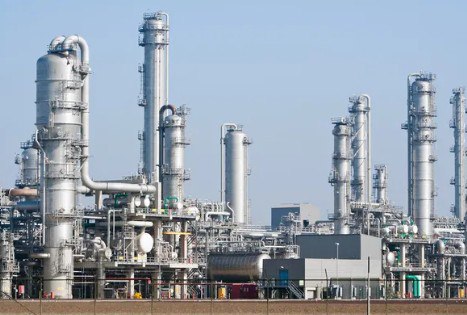
Another strategic priority for KMG is oil refining. The company aims to fully meet domestic demand for gasoline, diesel, and other fuels while expanding its petrochemical footprint to produce polymers and carbamide, boosting Kazakhstan’s non-resource exports.

Temirlan Urkumbaev, Director of the Department of Petrochemistry and Technical Regulation at the Ministry of Energy, emphasized that petrochemicals are becoming a cornerstone of economic diversification.

“Petrochemistry is not just about new sources of revenue. It brings new jobs, export income, and sustainable development. For Kazakhstan, the transition from a raw-material model to deep processing is a strategic necessity,” Urkumbaev said.

The ministry has developed a 2024-2030 Roadmap for the petrochemical industry, which includes six major projects worth approximately $15 billion and expected to create more than 19,000 jobs. Among these is a polyethylene plant with an annual capacity of 1.25 million tons, scheduled to begin operations in 2029. The facility will produce over 20 grades of polyethylene, including premium types, and is projected to account for around 1% of the global market. Other planned projects include the production of butadiene, carbamide, and alkylate.

In 2022, Kazakhstan launched one of the world’s largest polypropylene plants KPI Inc. with an annual capacity of 500,000 tons.

As previously reported by The Times of Central Asia, the Kazakh government approved a long-term refining strategy for 2025-2040 earlier this year, significantly increasing projections for fuel exports.


Uzbekistan Signs $5.9 Billion Deal to Build Central Asia’s First Green Aviation Fuel Plant

Allied Biofuels FE LLC Uzbekistan has signed key land and water agreements with the Khorezm regional government, marking a significant step toward building Central Asia’s first integrated biorefinery for zero-carbon aviation fuel.

The announcement was made during the International Investment Forum in Khiva, where Khorezm Governor Jurabek Rakhimov met with a company delegation led by Chairman and Managing Director Alfred Benedict.

The $5.9 billion project will be located in Tuproqqal’a district in the city of Khorezm, and aims to establish a climate-aligned aviation fuel supply chain in Uzbekistan. Once operational, the facility is expected to produce 382,000 tonnes of Sustainable Aviation Fuel (SAF), 152,000 tonnes of Electro-Synthetic SAF (e-SAF), and 11,000 tonnes of renewable green diesel annually. The refinery will be supported by 2 GW of PEM electrolysers, making it one of the largest initiatives of its kind in the region.

Benedict described the agreements as “a landmark moment for Allied Biofuels and for Khorezm,” emphasizing that the project combines international expertise with local support to help Uzbekistan achieve its net-zero emissions target by 2030. “This facility will not only supply sustainable aviation fuel at scale but also foster economic growth in the region,” he said.

Uzbekistan has committed to becoming carbon-neutral by the end of the decade, and the Khorezm biorefinery is expected to play a central role in that transition. By producing zero-carbon fuels for transport and industry, the project aims to reduce fossil fuel dependency and lower greenhouse gas emissions.

Rakhimov welcomed the decision to site the project in Khorezm, highlighting its significance for regional development. He stated that the initiative will create hundreds of skilled jobs, strengthen Khorezm’s position as a hub for green energy, and boost the local economy. Rakhimov also pledged to personally oversee the allocation of land and infrastructure needed to ensure successful implementation.


Central Asia and Regional Integration: Logistics, Water, Energy

Central Asia is undergoing a profound transformation, where questions of domestic development and the region’s ability to act in a coordinated way are coming to the forefront. For many years, Central Asian states were viewed as fragmented, each pursuing separate strategies that often put them in competition. Today, however, shared challenges and growing interdependence are making gradual convergence increasingly likely.

The region now confronts common pressures such as water scarcity, energy imbalances, environmental degradation, and the fallout of instability in Afghanistan — issues that no single country can effectively address in isolation. Increasingly, regional platforms such as the Interstate Commission for Water Coordination (ICWC) are being leveraged to mediate water-energy tradeoffs, while joint initiatives in transport, transit, and energy infrastructure foster new integration. Moreover, leading actors like Kazakhstan and Uzbekistan are pushing coordinated strategies — modernizing rail and aviation links, coordinating transboundary water allocations, and exploring nuclear cooperation — that point toward a more interconnected regional future.

Shared Challenges and Points of Convergence

The region faces problems that no country can solve alone. These include water shortages, energy imbalances, environmental risks, and instability in Afghanistan. Such challenges can be seen as both threats and opportunities, since they also represent areas of overlapping interest. Joint action in these fields can deliver more than fragmented national strategies.

Water is particularly important, remaining one of the most sensitive issues in interstate relations. Yet it also offers opportunities for coordinated action through existing regional platforms, such as the Interstate Commission for Water Coordination of Central Asia. The “water for energy” model is increasingly seen as a practical tool, already under discussion and applied in bilateral and multilateral projects.

Environmental issues are similarly shared. The disappearance of the Aral Sea, land degradation, air pollution, and glacier melt create threats that transcend national borders. Joint monitoring, data exchange, and coordinated adaptation measures, particularly within the United Nations Regional Centre for the Sustainable Development Goals for Central Asia and Afghanistan, opened in August 2025 in Almaty, could become a new direction for regional cooperation.

Afghanistan remains another risk factor that affects the security of the entire region. At the same time, transportation and energy projects linking Central Asia with South Asia through Afghan territory can turn a challenge into an opportunity. Reducing instability and integrating Afghanistan into regional trade and transit networks serves the interests of all Central Asian states.

Kazakhstan and Uzbekistan as leading forces

To understand how closer integration might work in practice, it is useful to examine the strategies of the region’s two key players: Astana and Tashkent. The major agreements concluded by Kazakhstan and Uzbekistan with the United States in transport and aviation should be viewed not as isolated deals, but as evidence of the complementary strengths of the two largest economies in Central Asia.

Kazakhstan signed its largest locomotive contract to date with U.S. company Wabtec, a $4.2 billion agreement for 300 TE33A freight locomotives to be assembled at the Wabtec Kazakhstan plant in Astana, along with servicing support. This will modernize Kazakhstan’s rail fleet as part of large-scale infrastructure investment, including plans to upgrade 11,000 kilometers of track by 2029.

These projects aim to shorten transit routes from hubs such as Khorgos, Almaty, and Astana to the port of Aktau, while creating new Northern and Middle corridors to complement the Western Europe–Western China route. Kazakhstan already handles more than 80 percent of cargo transit from China to Europe. Its strategy gives priority to developing the Middle Corridor across the Caspian Sea and the Caucasus, offering faster and more cost-effective freight options than traditional routes.

Meanwhile, Uzbekistan Airways has signed a contract with Boeing for 14 Boeing 787-9 Dreamliner aircraft, with an option for eight more. Deliveries are set to begin in 2031.

By modernizing its fleet and investing in aviation, Tashkent is positioning itself as a central hub for passenger and cargo traffic. For a landlocked country, air transport is a vital complement to overland routes. An expanded widebody fleet will increase passenger capacity, improve schedule reliability, and broaden the route network to link Central Asia with North America, Europe, the Middle East, and the Asia-Pacific.

Together, these two strategies form the basis of a combined model of regional integration: rail and air transport reinforce each other rather than compete. Kazakhstan anchors land transit, while Uzbekistan anchors air connectivity. Together, these strategies point to growing opportunities for regional cooperation.

Prospects for gradual convergence

Step-by-step cooperation in transport, energy, and water management is shaping broader regional collaboration, with tangible results already visible.

The water ministries of Kazakhstan and Uzbekistan are coordinating on transboundary distribution. From October 2024 to October 2025, Uzbekistan is set to supply about 16 billion cubic meters of water to Kazakhstan, which is 1.8 billion cubic meters directed to the North Aral Sea, 120 million cubic meters more than originally projected.

Energy cooperation is also expanding. Kazakhstan is advancing two nuclear power plants: one with Russia’s Rosatom at Ulken and another under preparation with China’s CNNC. Uzbekistan is pursuing a program with Rosatom that combines large-capacity reactors and small modular units, including in the Jizzakh Region. In August 2025, the two countries met in Tashkent to discuss nuclear energy development and a joint emergency response mechanism for energy facilities.

Together, Kazakhstan and Uzbekistan account for the majority of Central Asia’s GDP and act as the region’s main decision-making centers. Their cooperation reduces competition for investment and strengthens Central Asia’s bargaining power with China, Russia, the U.S., Turkey, and the European Union.

It is too early to discuss a single political body, but gradual coordination in practical areas may lead to flexible new formats of cooperation that serve all Central Asian states. The key task is to turn shared problems into drivers of convergence. Integrating logistics, energy, and water management can enhance resilience, strengthen the region’s bargaining position, and help Central Asia move from being an object of external competition to an independent player shaping its own agenda in global politics.
In conclusion, Central Asia’s path toward integration is incremental but tangible. The overlapping dangers of drought, border water disputes, energy shortfalls, environmental threats, and regional instability — especially linked to Afghanistan — are shifting incentives toward cooperation. Kazakhstan and Uzbekistan, as the largest economies and transit hubs, are already aligning policies in transport, aviation, water sharing, and nuclear energy to reduce competition and strengthen their collective bargaining power.
Cross-border infrastructure and energy projects (from modern rail corridors to synchronized nuclear planning) are concrete testbeds for deeper collaboration. While a formal political union remains off the table, these functional alliances may evolve into flexible governance formats offering all Central Asian states a means to act collectively. If sustained, this convergence could help the region transcend external pressures, bolster resilience, and chart a course as a more coherent actor in global affairs.