• KGS/USD = 0.01144 0%
  • KZT/USD = 0.00212 0%
  • TJS/USD = 0.10523 0%
  • UZS/USD = 0.00008 0%
  • TMT/USD = 0.28530 0%
  • KGS/USD = 0.01144 0%
  • KZT/USD = 0.00212 0%
  • TJS/USD = 0.10523 0%
  • UZS/USD = 0.00008 0%
  • TMT/USD = 0.28530 0%
  • KGS/USD = 0.01144 0%
  • KZT/USD = 0.00212 0%
  • TJS/USD = 0.10523 0%
  • UZS/USD = 0.00008 0%
  • TMT/USD = 0.28530 0%
  • KGS/USD = 0.01144 0%
  • KZT/USD = 0.00212 0%
  • TJS/USD = 0.10523 0%
  • UZS/USD = 0.00008 0%
  • TMT/USD = 0.28530 0%
  • KGS/USD = 0.01144 0%
  • KZT/USD = 0.00212 0%
  • TJS/USD = 0.10523 0%
  • UZS/USD = 0.00008 0%
  • TMT/USD = 0.28530 0%
  • KGS/USD = 0.01144 0%
  • KZT/USD = 0.00212 0%
  • TJS/USD = 0.10523 0%
  • UZS/USD = 0.00008 0%
  • TMT/USD = 0.28530 0%
  • KGS/USD = 0.01144 0%
  • KZT/USD = 0.00212 0%
  • TJS/USD = 0.10523 0%
  • UZS/USD = 0.00008 0%
  • TMT/USD = 0.28530 0%
  • KGS/USD = 0.01144 0%
  • KZT/USD = 0.00212 0%
  • TJS/USD = 0.10523 0%
  • UZS/USD = 0.00008 0%
  • TMT/USD = 0.28530 0%

Why Workers Are Leaving the Çalık Enerji Power Plant Construction Site in Turkmenistan

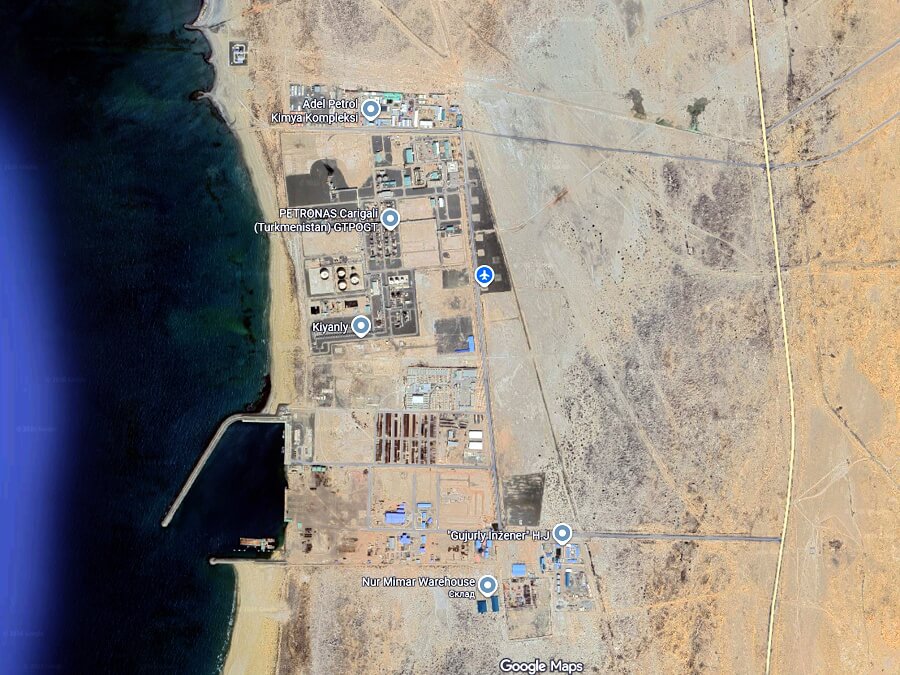
One of Turkmenistan’s largest combined-cycle power plants is currently under construction on the Caspian coast. Despite offering record-high wages by local standards, the site is experiencing persistent staff turnover.

The project is being led by the Turkish company Çalık Enerji, which is building a 1,574 MW combined-cycle gas turbine (CCGT) power plant in the village of Kiyanly in Turkmenistan’s Balkan region. While the workforce is largely made up of local residents, retaining staff has proven difficult.

According to former workers, even unskilled laborers can earn up to $2,856 per month, an exceptionally high salary for the region. This has attracted a steady stream of job seekers. However, many employees say the pay does not adequately compensate for the harsh realities of working on-site.

The primary reason cited for resignations is the extreme natural environment. The construction site lies between the Caspian Sea and an open expanse of steppe, where strong winds are a near-constant presence. Conditions worsen in winter, when workers endure eight-hour shifts outdoors in cold and windy weather, conditions that many find intolerable beyond a few months.

In addition to environmental challenges, workers point to strained relations with site management and internal conflicts among staff. They describe a lack of mutual trust between workers and middle managers, as well as growing tensions within crews.

Some have also reported interethnic clashes, particularly between Turkmen and Azerbaijani workers, despite both groups being Turkmenistani citizens residing in the same region. These disputes have occasionally escalated into physical altercations, further contributing to resignations.

Çalık Enerji signed a contract with the state-owned utility Turkmenenergo to carry out the Kiyanly project. The power plant will feature two units equipped with 9F.04 gas turbines, each with a capacity of 288 MW, and a D12 steam turbine produced by GE Vernova.

Kyrgyzstan Seeks End to Extra Transit Fees for Its Citizens Crossing Uzbekistan

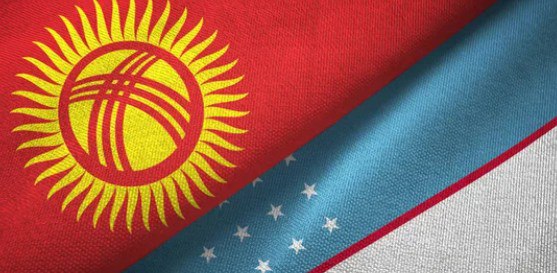
Kyrgyzstan has formally requested that Uzbekistan eliminate additional fees imposed on Kyrgyz citizens transiting through Uzbek territory, including charges for vehicle insurance and window tinting.

The matter was raised during a session of the Jogorku Kenesh (parliament), where Deputy Foreign Minister Almaz Imangaziev confirmed that negotiations with Uzbek authorities are ongoing. According to Imangaziev, the request is currently under internal review in Uzbekistan.

“When Kyrgyz citizens transit through Uzbekistan, mainly en route to the southern regions of our country, they are required to purchase car insurance and pay additional fees if their windows are tinted. On our side, no such requirement exists,” said lawmaker Dastan Bekeshev, who called on the Foreign Ministry to advocate for the removal of these rules.

Imangaziev affirmed that Bishkek has already submitted a formal request to Tashkent. He added that if Uzbekistan fails to eliminate the fees, Kyrgyzstan may consider imposing reciprocal measures on Uzbek citizens transiting through Kyrgyz territory.

The development comes amid broader regional concerns over trade and transit barriers. On January 17, Uzbek Deputy Prime Minister Jamshid Khodjaev addressed similar frustrations during a meeting in Tashkent with entrepreneurs, ambassadors, and government officials. He pointed to challenges faced by Uzbek exporters to Tajikistan, citing excessive procedures and additional customs fees that reportedly raise the price of Uzbek goods by approximately 15%, undermining their competitiveness.

Khodjaev warned that unless such restrictions are lifted, Uzbekistan may introduce symmetrical measures in response.

Tax Reform in Kazakhstan Could Lead to Drug Shortages

Kazakhstan’s new tax policy has triggered concerns over potential disruptions in the supply of medicines and medical devices. Industry leaders warn that complexities in administering value-added tax (VAT), along with legal inconsistencies in the updated Tax Code, could destabilize the country’s pharmaceutical market.

Ruslan Sultanov, chairman of Kazakhstan’s Association of Pharmaceutical and Medical Product Manufacturers, raised concerns during an online meeting with government and business representatives. He said the changes have already led distributors to refuse purchases of several essential medicines.

Last year, Kazakhstan adopted a new Tax Code that increased the VAT rate from 12% to 16%. It also introduced zero and reduced VAT rates for specific sectors. During parliamentary discussions, lawmakers proposed exempting essential medicines from VAT and reducing the tax burden on medical institutions. 

Ultimately, authorities agreed to fully exempt more than 3,000 medicines purchased under the Guaranteed Volume of Free Medical Care (GVFMC) and Compulsory Social Health Insurance (CSHI) programs from VAT. However, Sultanov said these exemptions have not been sufficient to stabilize the market.

According to him, the pharmaceutical sector is facing unprecedented administrative pressure. One of the most critical problems is the inconsistent taxation of medical devices procured under the GVFMC and CSHI frameworks. While medical services are completely exempt from VAT, a 5% VAT rate is still applied to medical devices.

“As a result, hospitals are in a situation where they cannot offset the tax when purchasing medical equipment. After factoring in administrative costs, companies are losing 5-7%. This affects both domestic and foreign manufacturers,” Sultanov explained.

The lack of clear guidance from government agencies has further complicated matters. Socially significant medicines, which were previously taxed at 5%, are now VAT-exempt but ambiguity around the new rules has led to widespread reluctance among distributors to place orders.

“The confusion has created a bottleneck. For example, paracetamol is physically available in warehouses, but its movement is being blocked. Without timely clarification, we will face a shortage,” Sultanov warned.

To resolve the issue, he proposed eliminating the fragmented VAT structure currently applied to the pharmaceutical sector.

Sultanov also highlighted the risks associated with the under-declaration of customs values for imported drugs. He stated that customs officials continue to rely on outdated price data from a year ago, ignoring current market rates. This, combined with delays in approving maximum retail prices by the Ministry of Health, threatens the viability of long-term drug supply contracts signed before January 2026, particularly those involving medicines not produced domestically.

His concerns are echoed by pharmacy industry leaders. Talgat Omarov, Chairman of the Kazakhstan Association of Independent Pharmacies, confirmed that the organization has submitted formal appeals to President Kassym-Jomart Tokayev and Senate leadership, calling for the complete exemption of the pharmaceutical sector from VAT, not just medications supplied under state programs.

“Every day, customers come into pharmacies, see new price tags, complain, and leave. We hear this negativity constantly. Medicines are socially significant goods, and applying additional taxes in the current climate is dangerous,” Omarov said.

To cope with increased taxes and rising labor costs, pharmacies may be forced to raise markups to 30%, he warned. This would make medicines unaffordable for many citizens, reduce sales volumes, and potentially lead to mass closures of pharmacies.

Timur Zharkenov, Deputy Chairman of the Board of the National Chamber of Entrepreneurs of Kazakhstan, also called for immediate government intervention.

“We must act urgently there is no time left. Several issues require rapid solutions, and in the longer term, the tax structure for the healthcare sector must be reviewed within the framework of the new Tax Code,” he stated during the meeting.

As The Times of Central Asia previously reported, Kazakhstan has already experienced drug shortages and sharp price increases since the fall of 2025. 

Kazakhstan Expects to Double Influx of Foreign Gambling Tourists

Kazakhstan’s Ministry of Tourism and Sports expects the number of foreign gambling tourists to double following the planned opening of new casinos in four regions of the country.

Gambling tourists are foreign nationals who travel specifically to visit casinos and other gambling establishments. Currently, gambling is legally permitted only in two designated zones: the city of Konaev in the Almaty region and the Shchuchinsk-Burabay resort area in the Akmola Region. These facilities are open to both Kazakh and foreign citizens.

The government is considering a significant expansion of the gambling sector’s footprint. Plans are underway to open new casinos that will be accessible exclusively to foreign tourists.

Deputy Minister of Tourism and Sports Baurzhan Rapikov said the proposed locations for the new facilities include the East Kazakhstan, Almaty, Mangistau, and Zhetysu regions. He added that the expected economic impact includes about 500 jobs per casino, annual tax revenues of $4 million to $8 million, and an increase in gambling tourists from 100,000 to 200,000 per year.

In parallel, Kazakhstan is prioritizing the digitalization of its tourism sector. Beginning in February, the ministry will launch the development of a unified digital tourism ecosystem based on the Kazakhstan.Travel platform. 

The upgraded system will feature an intelligent, AI-powered route planner, online booking tools, and optimal travel date suggestions. A new feature, KazTuristBot, will provide personalized recommendations and 24/7 support for travelers.

For businesses, the platform will offer a showcase of tourism products, demand analytics, and digital tools for accessing government support. Authorities will also gain access to real-time data on tourist flows, enabling targeted infrastructure development in high-demand regions.

As previously reported by The Times of Central Asia, Kazakhstan emerged in 2025 as one of the fastest-growing destinations in Central Asia for South Korean tourists. Data from the Agoda platform showed a 295% increase in travel interest between January and October.

Kazakhstan’s Foreign Minister Yermek Kosherbayev in Washington: Critical Minerals Cooperation

Foreign Minister Yermek Kosherbayev will travel to Washington, DC, to attend the Critical Minerals Ministerial on 3–4 February. A meeting with the Department of State and other rare earth element (REE) supplier countries will take place on 3 February.

This will be Kosherbayev’s first official visit to the United States as foreign minister. A career diplomat, he assumed office on 26 September 2025. Prior to his appointment as foreign minister, he served as Kazakhstan’s ambassador to the Russian Federation, governor of the East Kazakhstan Region, and, earlier in 2025, as deputy prime minister, combining senior diplomatic experience with executive and regional governance roles.

His visit will include engagement with Ambassador Yerzhan Kazykhan, appointed as the President’s first-ever Special Envoy to the United States on 13 January 2026, reflecting the priority Kazakhstan places on engagement with Washington.

U.S.–Kazakhstan Strategic Convergence on Critical Minerals

The visit follows a period of sustained diplomatic engagement beginning in November, marked by intensified trade and investment discussions. Since then, Presidents Kassym-Jomart Tokayev and Donald Trump have met twice in person and held one phone call, during which an invitation was extended for the G20 meeting scheduled for 14–15 December 2026. During this period, Kazakhstan also acceded to the Abraham Accords, a signature foreign policy initiative of the Trump administration.

This diplomatic momentum has converged with U.S. strategic priorities on critical minerals. Rare earth elements (REEs) are a core component of the U.S. critical minerals strategy. While the United States maintains domestic REE production, it continues to pursue supply-chain diversification to enhance resilience. In this context, Kazakhstan’s identified REE deposits and resource potential—including elements not currently produced at scale in the United States—position it as a relevant partner in broader diversification efforts.

This alignment has been formalized through a memorandum of understanding on cooperation in critical minerals, signed by President Tokayev. The agreement is intended to strengthen supply chains and deepen economic ties related to strategic raw materials and has been complemented by engagement from U.S. and Kazakh stakeholders, including Amont, interest from U.S. investors such as Cove Capital, and potential financing support from the Export-Import Bank of the United States, which has issued a letter of interest for up to $900 million.

These signals reflect growing momentum at an early stage. Letters of interest and initial investor engagement lay the groundwork for defining commercial structures, offtake agreements, and development timelines, with progress ultimately driven by effective project sequencing and alignment between public support and private-sector risk appetite.

Kazakhstan’s growing cooperation with the United States on critical minerals takes place within a well-established multi-vector foreign policy framework. Astana’s approach prioritizes stability and pragmatic engagement across a broad set of economic partners. Within this context, additional compliance and due-diligence requirements to support resilient supply chains are likely to remain part of project development, representing a manageable—but non-trivial—consideration for stakeholders.

Kazakhstan’s Full-Value-Chain Advantage in Rare Earths

Unlike many prospective rare earth element suppliers to the United States, Kazakhstan is not a greenfield destination limited to upstream extraction. The country already possesses established processing and refining capabilities across multiple strategic metals, enabling participation across the REE value chain rather than serving solely as a source of raw materials.

These capabilities are rooted in Kazakhstan’s Soviet-era industrial and metallurgical base and have been expanded and modernized since independence. Today, Kazakhstan operates integrated production chains in copper, uranium, chromium, zinc, aluminum, titanium, gold, and other critical metals. This industrial base provides the infrastructure, technical expertise, and energy capacity required to support downstream REE processing and separation.

Kazakhstan also has a decades-long track record of working with global blue-chip companies, including Chevron and Exxon Mobil, particularly on large-scale, capital-intensive resource projects. These partnerships demonstrate Kazakhstan’s ability to execute complex projects within international commercial and regulatory frameworks, reducing execution and supply-chain risk for U.S. partners.

Despite these advantages, Kazakhstan’s development as a reliable rare earth supplier is still at an early and promising stage. The country’s substantial geological potential offers a strong foundation, even as several identified REE deposits continue to move through exploration and evaluation phases. Continued progress on regulatory clarity, permitting processes, and coordination across mining, environmental, and industrial policy will be important in supporting timely and commercially viable project development. For U.S. stakeholders, these evolving factors—alongside resource endowment—will shape assessments of Kazakhstan’s long-term role in supply diversification.

The Test of Execution

In critical minerals diplomacy, signaling intent is easy; execution is not. Turning shared priorities into functioning supply chains requires sustained engagement, capital, and delivery on the ground. The State Department–hosted meeting during Kosherbayev’s visit is a step toward that harder work. Kazakhstan’s high-level participation, combined with emerging ventures and investor activity, points to a country moving beyond expressions of interest and toward the practical requirements of becoming a supplier of choice for rare earths as U.S. diversification efforts shift from strategy to implementation.

Jackson-Vanik Repeal Gains Momentum as U.S. Courts Central Asia

For many years, U.S. relations with Central Asia were primarily political in nature, while economic ties developed slowly. However, in the past year, engagement has intensified significantly, with recent agreements suggesting the U.S. is poised to strengthen its economic presence in the region. A recent statement by U.S. Secretary of State Marco Rubio reinforces this outlook. Calls to repeal the outdated Jackson-Vanik trade restrictions have been framed by U.S. officials as a way to facilitate trade with Central Asia and strengthen U.S. energy security.

The Jackson-Vanik Amendment

The Jackson-Vanik Amendment, enacted in 1974, restricts trade with countries that limit their citizens’ right to emigrate. At the time of its passage, Central Asia was still part of the Soviet Union. 

The amendment prohibits granting most-favored-nation (MFN) status, government loans, and credit guarantees to countries that violate their citizens’ right to emigrate, and allows for discriminatory tariffs and fees on imports from non-market economies.

The amendment was repealed for Ukraine in 2006, and for Russia and Moldova in 2012. However, it remains in effect for several countries, including Azerbaijan, Kazakhstan, Tajikistan, Turkmenistan, and Uzbekistan, which continue to receive only temporary normal trade relations.

In May 2023, a bill proposing the establishment of permanent trade relations with Kazakhstan, which included repealing the Jackson-Vanik Amendment, was introduced in the U.S. Congress. A follow-up bill with similar provisions was submitted in February 2025.

Then-nominee and now Secretary of State Marco Rubio previously noted that some policymakers viewed the amendment as a tool to extract concessions on human rights or to push Central Asian states toward the U.S. and away from Russia. However, he characterized such thinking as outdated, stating that, “In some cases, it is an absurd relic of the past.” 

Rubio has consistently supported expanding U.S. ties with Central Asia.

Expanding Cooperation

In 2025, relations between the U.S. and Central Asia deepened significantly, particularly with Kazakhstan and Uzbekistan, which are seen by analysts as the primary beneficiaries of this cooperation.

In late October 2025, U.S. Deputy Secretary of State Christopher Landau and U.S. Special Representative for South and Central Asia Sergio Gor visited Kazakhstan and Uzbekistan.

One of the year’s major events was the Central Asia-U.S. (C5+1) summit held in Washington on November 6. Leaders of the five Central Asian states met with President Donald Trump and members of the U.S. business community. Uzbekistani President Shavkat Mirziyoyev also met with U.S. Senator Steve Daines, co-chair of the Senate Central Asia Caucus, with both sides focusing heavily on economic cooperation.

At the summit, Uzbekistan finalized major commercial agreements with U.S. companies, including aircraft orders by Uzbekistan Airways and deals spanning aviation, energy, and industrial cooperation.

Kazakhstan signed agreements worth $17 billion with U.S. companies in sectors including aviation, mineral resources, and digital technologies. This included a deal granting American company Cove Kaz Capital Group a 70% stake in a joint venture to develop one of Kazakhstan’s largest tungsten deposits, an agreement valued at $1.1 billion. 

Further agreements were signed on critical minerals exploration. Kazakhstan and the U.S. committed to joint development of these resources, while Uzbekistan signed similar agreements with Denali Exploration and Re Element Technologies. 

Central Asia holds nearly 170 identified rare earth element occurrences. Experts argue the region’s largely untapped reserves could provide a viable alternative to China’s near-monopoly on the global supply chain.

Strategic Balancing

In November 2025, Kazakhstan announced its accession to the Abraham Accords. The Foreign Ministry stated that this move aligns with Kazakhstan’s strategic interests and commitment to a fair resolution of the Middle East conflict. 

The Abraham Accords, initially signed in 2020, normalized relations between Israel and several Arab nations, including the UAE, Bahrain, and Morocco, with the U.S. acting as mediator.

In January 2026, Kazakhstan, Uzbekistan, and Azerbaijan joined the Trump-initiated Board of Peace as founding signatories. According to the draft charter, extended or permanent membership may require significant financial contributions.

An Economic Shift Toward Central Asia

Central Asia was long a peripheral concern for U.S. foreign and economic policy. That began to change following the outbreak of the war in Ukraine and amid rising concerns over China’s control of rare earth markets.

Kazakhstan has identified at least 15 rare earth deposits and occurrences, many of which are crucial for modern technologies. Kazakhstan hosts some of the world’s largest undeveloped tungsten deposits. The U.S. approach to regional cooperation has shifted significantly under President Trump, who has prioritized deal-making and economic interests.

Still, the extent to which Kazakhstan and Uzbekistan are prepared to help the U.S. compete with China remains unclear. Beijing remains Central Asia’s largest economic partner, even surpassing Russia.

In 2025, trade between China and Central Asia totaled $106.3 billion, a 12% increase year-on-year.  In contrast, U.S. trade with Kazakhstan, its top regional partner, amounted to around $5.5 billion in 2024, making Kazakhstan by far the United States’ largest trade partner in Central Asia.

While recent agreements may improve this imbalance, closing the gap with China will be a long-term challenge. Nonetheless, repealing the Jackson-Vanik Amendment could mark a pivotal step.

“From an economic point of view, the Jackson-Vanik amendment has not directly restricted U.S. trade with Central Asian countries in recent years,” political commentator Janibek Suleev told The Times of Central Asia. “Most already enjoy normal trade relations.”

However, Suleev noted that a full repeal of the amendment could offer several upgrades, most importantly, an improved investment climate.

“This is particularly relevant for hydrocarbon projects, energy, transport infrastructure, and the processing of critical minerals. The regional economy could also access new markets beyond China and Russia,” he stated.

Suleev argued that the political significance of any repeal outweighs the economic effect.

“Central Asia has become a stage for strategic rivalry between China, Russia, and the West. A new model is now emerging. From recent developments, it appears Washington is aiming to expand bilateral ties without formal alliances,” he said, cautioning that a dramatic increase in U.S. investment should not be expected.

“Still, the shift is clear. For most of the post-independence period, U.S. engagement focused heavily on promoting human rights and democratic norms,” Suleev concluded. “Today, relations are taking a more pragmatic turn.”