• KGS/USD = 0.01144 0%
  • KZT/USD = 0.00209 0%
  • TJS/USD = 0.10523 0%
  • UZS/USD = 0.00008 0%
  • TMT/USD = 0.28530 -0.14%
  • KGS/USD = 0.01144 0%
  • KZT/USD = 0.00209 0%
  • TJS/USD = 0.10523 0%
  • UZS/USD = 0.00008 0%
  • TMT/USD = 0.28530 -0.14%
  • KGS/USD = 0.01144 0%
  • KZT/USD = 0.00209 0%
  • TJS/USD = 0.10523 0%
  • UZS/USD = 0.00008 0%
  • TMT/USD = 0.28530 -0.14%
  • KGS/USD = 0.01144 0%
  • KZT/USD = 0.00209 0%
  • TJS/USD = 0.10523 0%
  • UZS/USD = 0.00008 0%
  • TMT/USD = 0.28530 -0.14%
  • KGS/USD = 0.01144 0%
  • KZT/USD = 0.00209 0%
  • TJS/USD = 0.10523 0%
  • UZS/USD = 0.00008 0%
  • TMT/USD = 0.28530 -0.14%
  • KGS/USD = 0.01144 0%
  • KZT/USD = 0.00209 0%
  • TJS/USD = 0.10523 0%
  • UZS/USD = 0.00008 0%
  • TMT/USD = 0.28530 -0.14%
  • KGS/USD = 0.01144 0%
  • KZT/USD = 0.00209 0%
  • TJS/USD = 0.10523 0%
  • UZS/USD = 0.00008 0%
  • TMT/USD = 0.28530 -0.14%
  • KGS/USD = 0.01144 0%
  • KZT/USD = 0.00209 0%
  • TJS/USD = 0.10523 0%
  • UZS/USD = 0.00008 0%
  • TMT/USD = 0.28530 -0.14%

Manufacture of Chevrolet Onix Cars Launched in Kazakhstan

March 14th marked the official beginning of CKD manufacture of Chevrolet Onix cars at the Allur plant in Kostanay, Kazakhstan.

The launch was attended by Kanat Sharlapaev Minister of Industry and Construction of Kazakhstan and managers from both General Motors and UzAuto Motors, the Uzbek company that manufactures and sells Chevrolet cars in Uzbekistan.

The opening was the long-awaited result of an agreement drawn up with General Motors and signed by Kazakh President Kassym-Jomart Tokayev and Uzbek President Shavkat Mirziyoyev in December 2022.

The Kazakh plant will produce 30, 000 vehicles per annum. State of the art robotic laser welding technology will ensure that manufacture meets General Motors’ standards, and a plastic painting workshop, again featuring modern robotic equipment, is currently under construction. Work is also underway to establish the country’s first Localization Centre for auto component production.

Speaking at the opening ceremony, Minister Sharlapaev stated that collaboration with leading global manufacturer General Motors would dynamically spur the development of Kazakhstan’s automotive industry.

Shilpan Amin, president of General Motors International, also applauded the initiative, saying, “We have managed to increase production to 50,000 vehicles per year. Kazakhstan now ranks seventh worldwide in terms of Chevrolet market size. This is a testament to our successful partnership.”

Kyrgyzstan Tightens Control Over Foreign-Funded NGOs

BISHKEK, Kyrgyzstan – Kyrgyzstan´s parliament has passed a law that tightens control over foreign funded non-governmental organizations despite international concerns that the measure would further erode rights and access to basic services in the Central Asia country.

Supporters of the law have characterized the law as a way to ward off foreign interference in Kyrgyzstan, while critics say it represents a slow-moving crackdown that rolls back efforts to develop civil society with the help of international governments and other institutions.

The Jogorku Kenesh, or parliament, approved the law by a vote of 66-5 on Thursday. The government has said the law would assign the status of a foreign agent to NGOs, media and other institutions, as well as individuals in some cases, that are financed from abroad. Furthermore, materials posted on behalf of foreign principals on the Internet will be required to contain the phrase: “Materials (information) were produced, distributed and (or) sent by a non-profit organization performing the functions of a foreign representative.” Violations of the law could lead to criminal penalties.

President Sadyr Japarov of Kyrgyzstan has said that “only a small number, but a [quite] vociferous group, of these structures financed by foreign states… is a source of inaccurate information for their grantors”. Last month, Japarov pushed back against concerns about the draft law that were expressed by U.S. Secretary of State Antony Blinken in a written response emphasizing that the draft law – which MPs initiated and adopted in its first reading – “is close to the Foreign Agents Registration Act (FARA) adopted in 1938 in the United States”. “My only request is that you do not interfere in the internal affairs of our country,” Japarov said.

Some opponents claim it is based on Russia´s “foreign agents” law and could be used as an instrument of oppression.

Members of non-governmental groups and other critics strongly opposed the draft law as it moved toward ratification in the parliament. On March, 15 groups wrote to four international finance institutions that are backing projects in Kyrgyzstan and asked them to join their efforts to block it.

“The law would inevitably create a climate of fear, preventing people, including workers, human rights defenders and civil society organizations, from speaking out due to fear of reprisals,” the groups said in their letter to the Asian Development Bank, European Bank for Reconstruction and Development, European Investment Bank and World Bank.

Separately this week, the government in Kyrgyzstan withdrew a draft law on the media that critics said would have restricted free speech. Among the terms of the measure was the right of government agencies to revoke a journalist’s accreditation if it disapproved of the reporter’s coverage of an issue.

High-Profile Speakers Open B5+1 Forum in Almaty

The ‘B5+1’ platform – a group of countries comprising the five Central Asian republics and the United States – took an important step forward today, with the launch of the inaugural B5+1 Forum in Almaty. 

Instrumental in the formation of the B5+1 group has been the Center for International Private Enterprise (CIPE), which aims to develop public-private partnerships in the Central Asia region. This new business platform has been created to help international and local companies to capitalize on opportunities in global business and trade – while assisting the six governments in attracting more direct foreign investment. 

The theme of the opening day was “Looking within Central Asia”. It began with a panel discussion on boosting economic integration in the Central Asia region, drawing from the area’s distinctive context, and successful examples like ASEAN and the EU. Recommendations, from panelists including Richard E. Hoagland of the Caspian Policy Center and Alisher Shaykhov from Uzbekistan’s National Venture Capital Fund, included integrating the region’s value chain into the global economy, and promoting collaborative investment initiatives.

The second panel offered perspectives from Central Asia’s business leaders. Panelists including B5+1 representatives Aziza Shuzheyeva (Kazakhstan, e-commerce) and Manusurjon Rasulev (Uzbekistan, agribusiness) gave insights into the region’s high-profile industries. Speakers advocated for policy synchronization in these sectors, as well as in tourism and trade, as a means to boost regional growth. 

For the third panel, government officials voiced their support for enhancing public-private dialogue. Tajikistan was represented by its deputy minister for economy Ahliddin Nuriddinzoda; his counterpart Ainura Usenbekova spoke on behalf of Kyrgyzstan, and Turkmenistan’s minister of finance Serdar Jorayev also spoke at length. Their focus was on national reforms and regional integration.

The B5+1 Forum forms part of CIPE’s program called “Improving the Business Environment in Central Asia” (IBECA). CIPE themselves are affiliated to the US Chamber of Commerce – the catalyst behind the B7 and B20 platforms – and receive funding from the US Department of State. The B5+1 Forum continues tomorrow, Friday 15 March, with a thematic day dedicated to “Central Asia’s place in the world economy”.

UAE’s Masdar to Build Four Pumped-Storage Power Plants in Uzbekistan

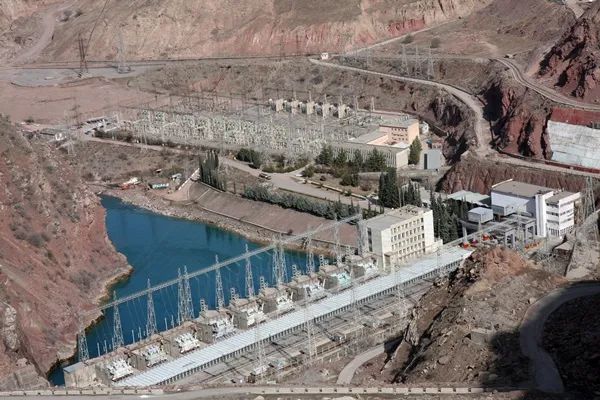
According to a memorandum of understanding (MoU) signed at the eighth international Congress, Hydropower. Central Asia and the Caspian held in Tashkent, Masdar will build four pumped-storage power plants in Uzbekistan with a capacity of 1,600 MW. The MoU signed by Masdar (UAE) and JSC Uzbekhydroenergo will give Uzbekistan its first hydropower plants that use gravity-driven water flow that’s been pumped uphill to generate electricity when it’s released. Thanks to the plant, Uzbekistan will be able to better manage issues with interruptions to its electricity supply.

The large-scale hydropower project will be the first of its kind in Central Asia. Facilities built in the regions of Jizzak, Karakalpakstan, and Tashkent will have a total capacity of 1,600 MW capable of generating 2.8 gigawatt-hours (GWh) of electricity.

Uzbekistan has been collaborating with Masdar for several years in the fields of solar and wind energy. According to the International Hydropower Association (IHA), pumped-storage hydroelectric power plants account for more than 90% of the world’s installed energy storage capacity. By 2030, their total global capacity is forecast to reach 240 GW.

in regard to the country’s prospects on hydropower, Nodirbek Akchaboev, a department head at JSC Uzbekhydroenergo, stated, “Uzbekistan is striving to create a long-term and sustainable energy system. Uzbekhydroenergo acts as a locomotive to achieve these goals. We have set a goal to increase capacity up to 6,000 MW by 2030, and increase the hydro share in the generation of electricity 25% to 40%.”

During the congress, Uzbekhydroenergo outlined plans to build 18 new hydroelectric power plants with a capacity of 1,630 MW in addition to 28 small and micro-hydropower plants with a capacity of 28 MW. Fifteen existing hydro plants will be modernized. Thus, the total capacity of Uzbekistan’s hydropower assets will rise to almost 6,000 MW; 3.7 times higher than the current output.

Hydropower has now become the most widespread type of renewable energy and provides almost a quarter of the world’s energy consumption. It therefore generates enough sustainable energy for over one billion households and 90% of the top 25 nations by population depends on this system. Furthermore, the development of the energy-transmission grid is becoming increasingly critical under current climate change conditions that require increased use of alternative energy sources.

Kazakh IT Companies Seek to Expand Operations in Uzbekistan

At the BIT-2024 forum in Almaty, Kapital.uz reported on the Chairman of the Board of the International Alliance of Independent IT Experts, Amir Yerzhanov’s claim that Kazakh information technology (IT) companies are actively relocating to Uzbekistan in order to engineer their IT products for exportation overseas.

Mr. Yerzhanov’s proposal to cut taxes for these businesses was endorsed by other players keen to accelerate the expansion of Uzbekistan’s IT sector. One representative of a software distribution company made particular reference to how their enterprise was prospering in Uzbekistan, where following the pandemic, the market was experiencing robust growth.

Uzbekistan will soon launch a program called Zero Risk aimed at attracting more IT companies. Benefits on offer include the waiver of fees for the use of state facilities and equipment, and the provision of partial reimbursement of wages and personnel training costs.

Authorities are also planning a program to assist domestic IT companies in breaking into international markets by offering financial support to attend international exhibitions and harness the expertise of foreign specialists.

Statistics indicate that the average monthly pay for IT professionals in Kazakhstan ranges from 5.4 million Uzbek som ($431.12) to 13.1 million som ($1,045.86), and in Uzbekistan, between 3.1 million som ($247.49) and 7.6 million som ($606.76).

Starting salaries for new IT workers in Kazakhstan can reach up to 8.6 million som ($686.59) and in Uzbekistan up to 4.4 million som ($351.28).

Uzbekistan’s Uranium Deposits Attract Foreign Investors

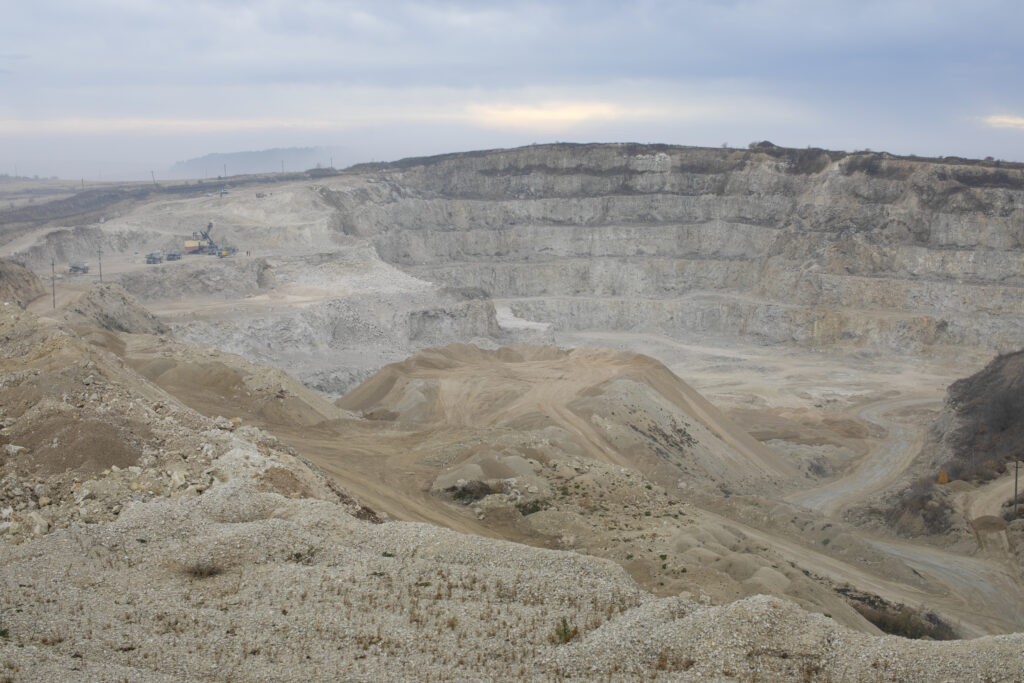
Representatives of the China Nuclear Uranium Corporation (CNUC) met with the general director of state company Navoiuran, Jamal Faizullaev, to discuss the possibility of mining black shale uranium at the Jantuar and Ma’danli deposits in the Navoi region of Uzbekistan. Samples have already been taken from the deposits to complete geological studies.

According to the International Atomic Energy Agency (IAEA), Uzbekistan ranks seventh in the world in terms of uranium reserves, and fifth in terms of uranium production. Until 1991, all uranium mined and processed in Uzbekistan was shipped to Russia, but since 1992, virtually all Uzbek uranium has been exported to the U.S. and other countries through Nukem Inc. In 2008, South Korea’s Kepco signed agreements to purchase 2,600 tons of uranium over six years through 2015 for about $400 million. In May 2014, China’s CGN agreed to purchase $800 million worth of uranium through 2021.

In November 2023, state-owned Navoiuran and China National Nuclear Corporation (CNNC) signed a memorandum of cooperation on uranium mining and processing. CNNC is the main investor in Chinese nuclear power plants. The company currently has 22 operating units, six units under construction, and is the largest uranium producer in China.

Besides Chinese investors, Uzbek uranium reserves continue to attract other major market players. In January 2006, Russia’s Techsnabexport, a subsidiary of JSC Atomredmetzoloto, signed a memorandum of understanding with Navoi Mining and Metallurgical Combine (NMMC) and the State Committee on Geology (Goskomgeologiya) to establish a joint venture for uranium mining at the (JV) Aktau deposit. The JV was originally scheduled to begin operations in late 2006, but after four years of negotiations, no agreement was reached, and Russia withdrew in mid-2010.

In October 2007, Japan’s Itochu Corporation agreed with NMMC to develop technology for the extraction and processing of black shale uranium  at the Rudnoye deposit. In mid-2008, Mitsui & Co. signed a basic agreement with Goskomgeologiya to establish a JV for geological research in the development of black shale uranium resources at the Zapadno-Kokpatasskaya mine, 300 km northwest of Navoi. Then, in mid-2009, Goskomgeologiya and the Japan Oil, Gas and Metals National Corporation (JOGMEC) signed an agreement on exploration for uranium and rare-earth metals in the Navoi region with the stipulation that JOGMEC receive 50% of the extracted raw materials. In August 2013, JOGMEC received a license for uranium exploration at two sandstone deposits for a period of five years.

During the November 2023 state visit by French President Emmanuel Macron to Uzbekistan, President Shavkat Mirziyoyev held a meeting with Orano Chairman, Claude Imoven. The meeting discussed the prospects of cooperation with the French company in the field of geological exploration and uranium mining in Uzbekistan. France’s Orano is the world’s largest producer of uranium and nuclear fuel, with assets totaling 29 billion.

Uzbekistan’s uranium production increased to 3,560 tons in 2022 from 2,385 tons in 2015. Furthermore, President Mirziyoyev has approved an ambitious uranium production target of 7,100 tons in 2030.