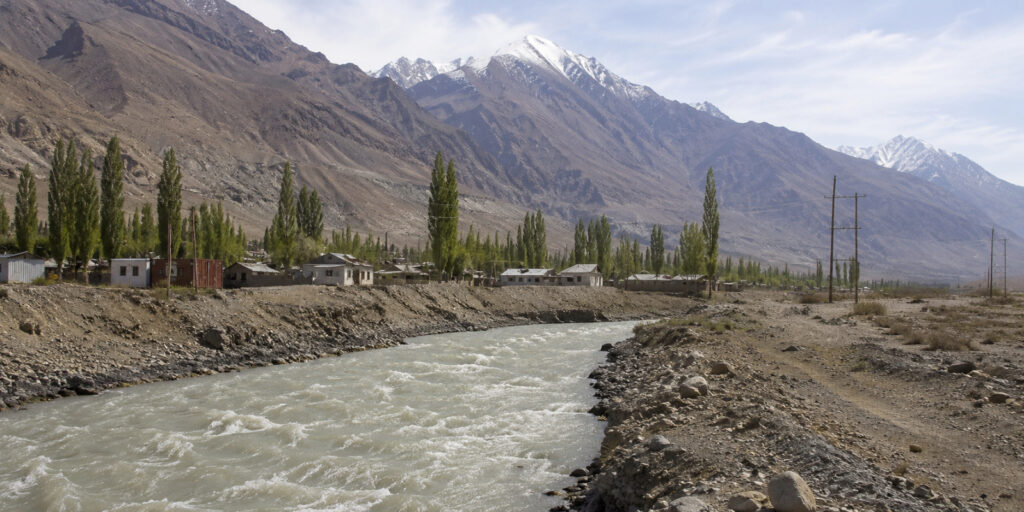
Tajikistan’s government is warning people in several mountainous regions about the threat of “localized and glacial mudflows” in the next few days, highlighting the hazards faced by some communities in a country where glaciers are becoming increasingly vulnerable to climate change.
The warning comes days after a landslide and the collapse of part of a glacier set off catastrophic flooding in Nepal that, according to the official figures on Tuesday, killed more than 1,000 people and left about 4,000 people missing. While the likelihood of a similar event occurring in Tajikistan is difficult to gauge, authorities there are aware of the instability of ice formations in some high-altitude areas and are working with international help to improve monitoring systems.
The government’s current warning extends from September 2 to September 4, covering parts of the Districts of Republican Subordination, extending east and north of Dushanbe; the Sughd region, which is further north of the capital; and western parts of the Gorno-Badakhshan Autonomous Region, which covers nearly all of eastern Tajikistan.
“Citizens are advised to take precautions against the effects of changing weather conditions,” warned the hydrometeorology agency of the state Committee for Environmental Protection.
The hydrometeorology agency, which monitors weather and water, hosted a workshop on August 21 for state scientists and other specialists to learn about an automated tool that can potentially identify emerging lakes in some glacier basins in Central Asia, helping to assess the threat of possible flooding.
The tool, which is called Transient Hydrologic Anomalies Weekly, or THAW, uses satellite data and the Google Earth Engine platform to monitor bodies of water.
“The tool can draw attention to a potential outburst-hazard and can support the timely identification of lakes requiring further monitoring,” the Tajik agency said in a report on the workshop. The event was jointly organized with the UNESCO regional office in Almaty, Kazakhstan, and the University of Zurich in Switzerland as part of a regional initiative called Glacier Lake Outburst Floods in Central Asia, or GLOFCA.
The threat of flooding from a glacial lake is a different hazard from the sudden collapse of rock and glacial ice that occurred in Nepal. But GLOFCA warns that Central Asia’s glaciers are shrinking at a rate of 0.2–1% per year by volume, increasing the possibility of unstable glacial lakes and related flooding. While many mountainous areas are sparsely populated, experts are concerned about the impact of flooding on vulnerable communities living downstream.
GLOFCA says more than 1,000 “high-risk” lakes have been identified in Central Asia, and encourages regional collaboration on monitoring systems. The initiative supports the implementation of early warning systems not only in Tajikistan, but also Kazakhstan, Kyrgyzstan, and Uzbekistan.
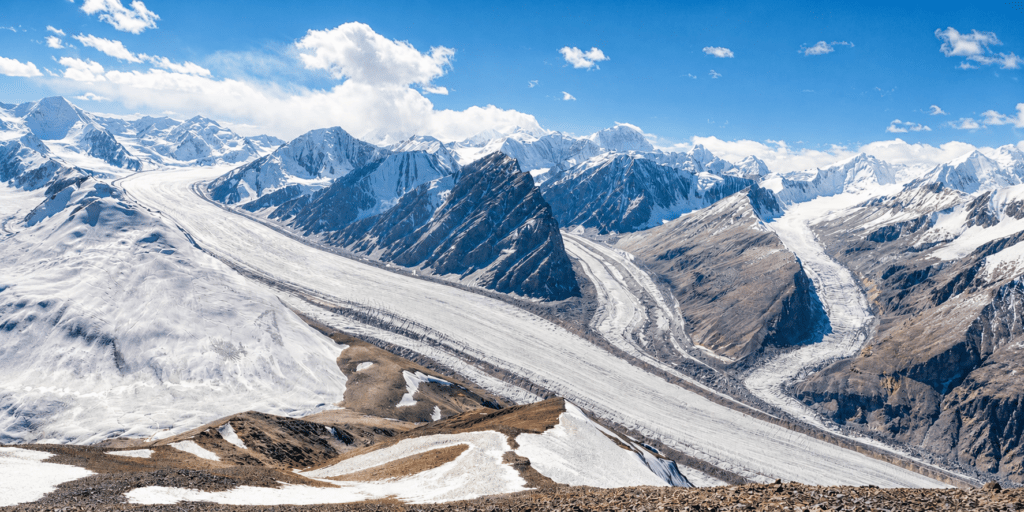
Tajikistan has more than 60 per cent of Central Asia’s glaciers, covering about 6 percent of the country and providing fresh water to the region, according to the United Nations Development Programme. However, many glaciers in Tajikistan have disappeared in recent decades and rising temperatures threaten many more, posing the threat to mountain communities of “floods, landslides, and mudflows linked to extreme weather and glacial retreat,” the U.N. said.
It also said a large section of the Ismoil Somoni glacier reportedly broke away in Tojikobod district in east-central Tajikistan in October 2025. Local media said there were no casualties or significant damage.