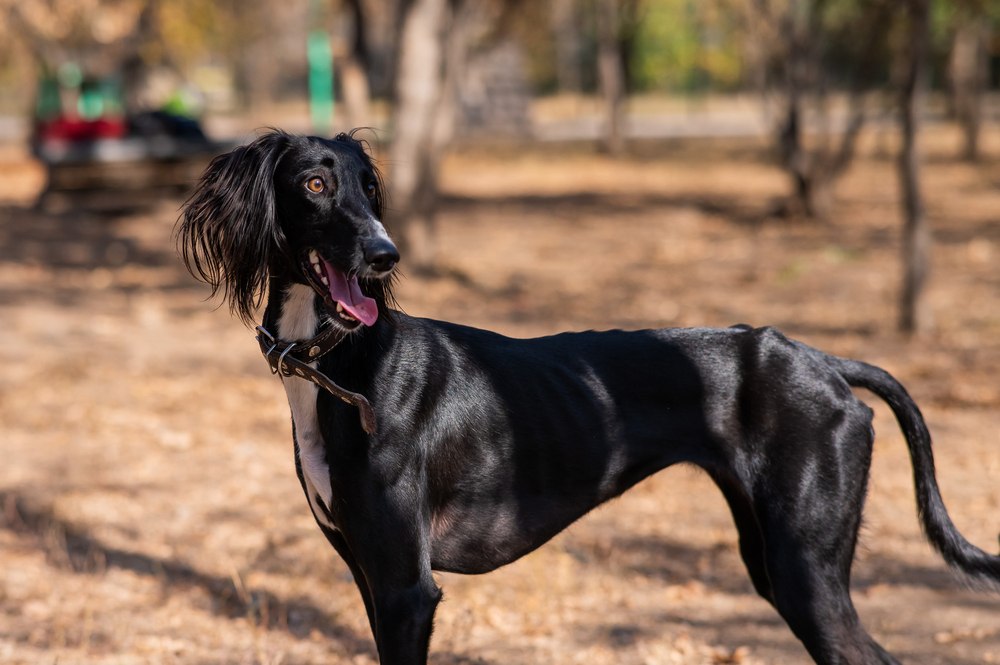
Kazakhstan is marking Tazy and Tobet Day for the first time on September 3, celebrating two indigenous dog breeds that performed very different roles on the nomadic steppe for centuries. The swift Tazy accompanied hunters, while the large Tobet guarded livestock and encampments. Kazakhstan is now seeking greater international recognition for both: the Tazy has already received provisional recognition from the Fédération Cynologique Internationale (FCI) and made its debut at the World Dog Show, while geneticists are studying the origins of the Tobet.
The new commemorative date was established in 2026 and will be observed annually on September 3. The date coincides with the anniversary of the FCI’s decision to provisionally recognize the Kazakh Tazy. On September 3, 2024, the organization accepted the breed on a provisional basis, published its official standard, and designated Kazakhstan as its country of origin.
The FCI is a Belgium-based international federation of national canine organizations whose standards are used at major international dog shows. For Kazakhstan, its decision was also significant because it formally identified Kazakhstan as the Tazy’s country of origin.
Provisional recognition does not yet amount to definitive recognition. The Tazy is listed in the FCI nomenclature under number 372 and belongs to Group 10, Sighthounds. The breed can already compete at international FCI shows and is eligible for World and Section Winner titles, but Certificat d’Aptitude au Championnat International de Beauté (CACIB) awards, which are required for the International Beauty Champion title, will become available only after definitive recognition.
The Tazy is a light hunting sighthound adapted to Central Asia’s vast open spaces and sharp temperature fluctuations. On the steppe, it was used to hunt hares, foxes, and other game, often alongside horses and birds of prey.
The value of a good hunting dog extended far beyond its practical role. The Tazy is associated with the Kazakh concept of Zheti Qazyna, or the “Seven Treasures,” a traditional idea encompassing some of a person’s most important companions and possessions. There is no single historically fixed list of the seven, but a hunting dog appears in many of its commonly cited versions.
A year after receiving provisional recognition, the breed reached one of the world’s biggest international stages. In August 2025, eight Tazy dogs from Kazakhstan traveled to Helsinki for the World Dog Show, the FCI’s flagship international gathering. Held on August 8-10, the event marked the Kazakh Tazy’s first official presentation at the World Dog Show following its new international status.
The Tobet represents a different side of life on the steppe. It is a large livestock guardian dog, adapted to living alongside herds and protecting them from predators. The work demanded endurance, independence, and the ability to operate across great distances in extreme heat and cold.
Unlike the Tazy, the Tobet does not yet have separate recognition as an FCI breed. In recent years, however, its origins have become the subject of genetic research.
In 2024, an international group of scientists studied 107 Tobet dogs from Kazakhstan and Mongolia. The research, published in Scientific Reports, found high genetic diversity among the dogs and a shared genetic heritage with livestock guardian breeds from Central and West Asia. The findings also supported the hypothesis that the population has ancient origins.
Archaeological and written evidence traces the tradition of large livestock guardian dogs much further into the past. Researchers point to depictions of large dogs in petroglyphs from Central Kazakhstan dating to the Bronze Age. A large shepherd dog is also described in a 13th-century Turkic-Arabic dictionary. These animals cannot automatically be identified with the modern Tobet, but the evidence points to a long history of similar dogs being used in the region.
A broader study published in BMC Biology in 2025 placed the Tobet in the wider genetic landscape of Eurasian dogs. Researchers identified a shared genetic component between the Tobet and two Central Asian sighthounds: the Kazakh Tazy and the Taigan, a traditional breed from neighboring Kyrgyzstan. The findings point to the long-term development of local dog populations within a shared Central Asian environment.
Ahead of the first Tazy and Tobet Day, a photo exhibition titled “Tazy – Faster Than the Wind” was held in Brussels. Among the guests was FCI Executive Director Yves De Clercq. The location was symbolic: the federation is headquartered in the Belgian city of Thuin.
Another effort to secure international recognition for this tradition is proceeding through UNESCO. Kazakhstan has nominated the ancient practice of Salburyn for inscription on the Representative List of the Intangible Cultural Heritage of Humanity as part of the 2026 cycle.
Salburyn is a tradition of collective outings and competitions combining horsemanship, hunting with Tazy dogs, and the use of birds of prey, particularly golden eagles. UNESCO lists the ongoing nomination as “Salburyn, equestrian Festival with Tazy dogs and Burkyt birds.”