The United States and Israel’s war with Iran began on February 28, 2026. The intensity of the conflict has fluctuated, but daily reports of missile strikes and explosions are increasingly resonating across Central Asia. Meanwhile, Russia’s latest war against Ukraine has continued for 1,466 days since it began on February 24, 2022.
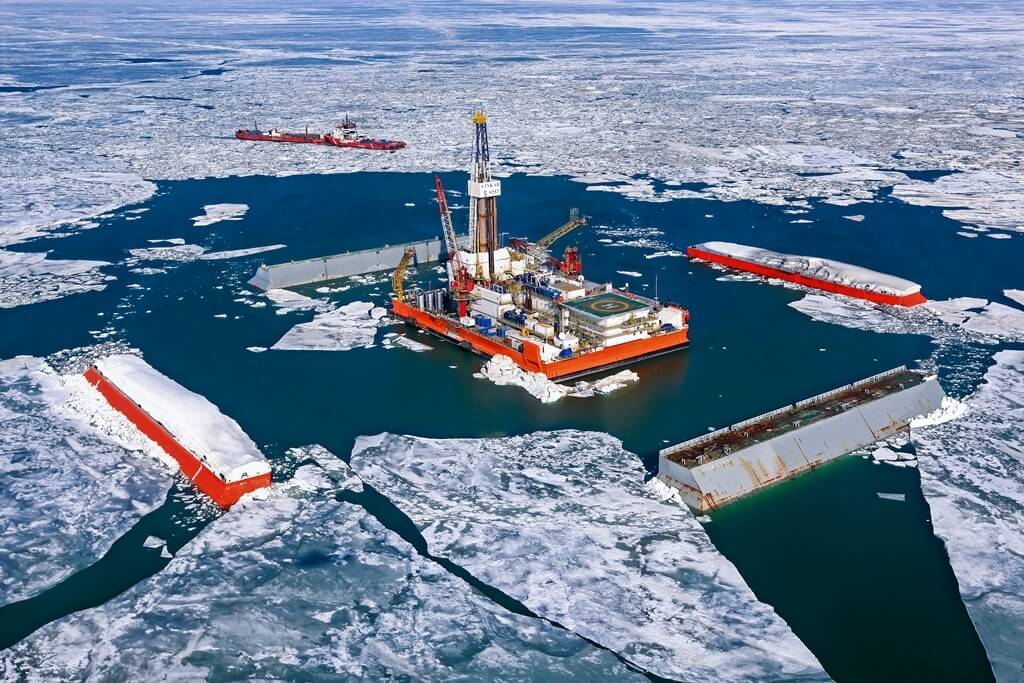
Late last year, Ukrainian drones reportedly struck a Russian oil platform at the Filanovsky field in the Caspian Sea, more than 700 kilometers from Ukraine’s nearest border. Ukraine also said the operation targeted the patrol ship Okhotnik, although the extent of the damage was not independently verified.
The war in Ukraine has also created serious challenges for Kazakhstan’s oil exports via the Caspian Pipeline Consortium (CPC). Repeated attacks and disruptions have threatened export flows, increased logistical risks, and added pressure on Kazakhstan’s budget revenues. The war against Iran has now brought military action to the Caspian coast of Iran, raising concern for energy producers and transit routes across the wider region.
On March 5, Azerbaijan’s Ministry of Foreign Affairs stated that drones launched from Iranian territory struck the Nakhchivan Autonomous Republic. According to the ministry, one drone hit the terminal building at Nakhchivan International Airport, while another crashed near a school in the village of Shekerabad. Azerbaijan demanded a thorough investigation. Iran later stated that it had promised to investigate the incident. Azerbaijan’s Prosecutor General’s Office subsequently opened a criminal case. As of now, tensions remain high, with both sides continuing to exchange accusations, and Azerbaijan maintaining heightened alert measures.
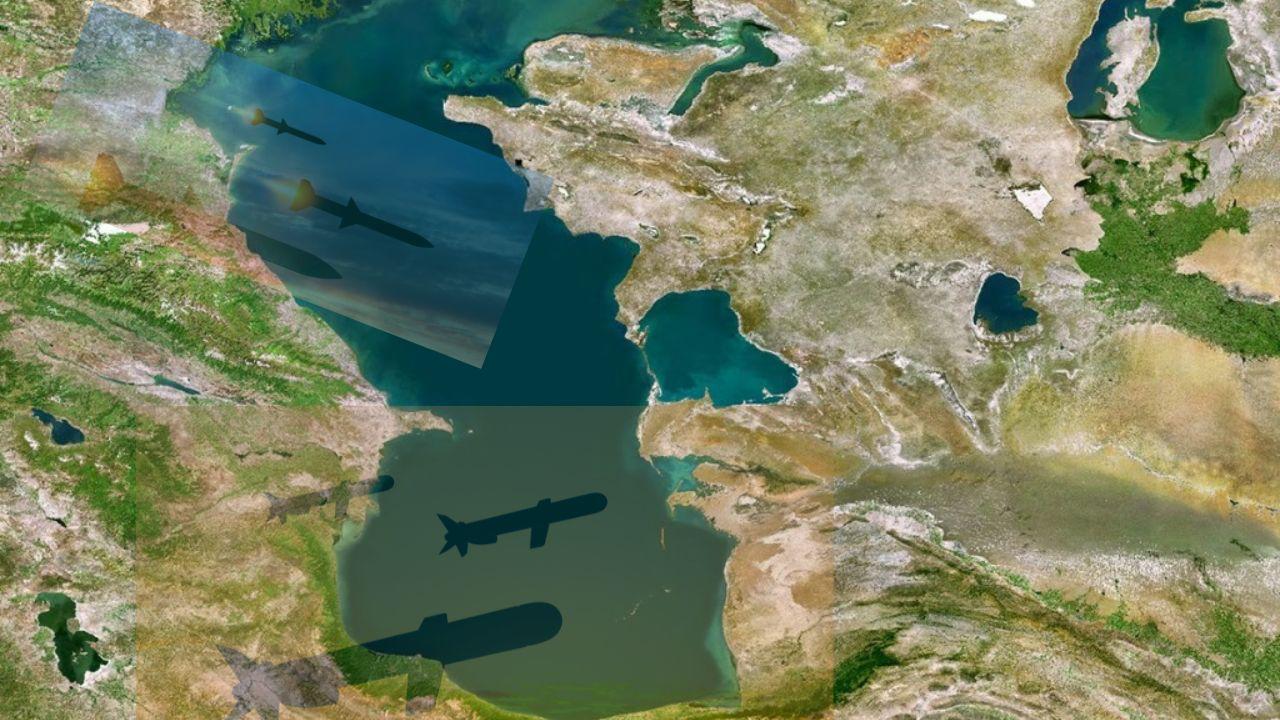
More recently, the Israeli Defense Forces confirmed carrying out airstrikes in northern Iran, targeting naval vessels in the port city of Bandar-Anzali on the Caspian coast. The straight-line distance from Bandar-Anzali to Azerbaijan’s capital, Baku, is just over 300 kilometers, and approximately 420 kilometers to Turkmenbashi, a major international seaport and the center of Turkmenistan’s oil-refining industry. The resort zone of Avaza is also located there. By comparison, the distance from Israel to Bandar-Anzali exceeds 1,300 kilometers.
These developments are contributing to rising economic uncertainty across Central Asia. The consequences extend beyond transportation and logistics disruptions, with broader implications for regional economies.
The U.S. and Israel have not always appeared aligned on what would constitute victory, meaning the measure of success remains difficult to gauge. While the United States and Israel have repeatedly stated that significant damage has been inflicted on Iran’s military infrastructure (including destroying a substantial part of the Iranian navy), there is no publicly available, independently verified evidence confirming the extent of the damage to Iran’s leadership structure following the death of Ali Khamenei, Ali Larijani and other senior Iranian figures, or on Iran’s ability to mount an effective defence. Analysts have described Iran’s military resilience as decentralized, sometimes using the term “mosaic defense,” meaning units can continue operating under standing orders even when senior leadership is hit.
It is understood that, as part of this strategy, the Iranian military has spent decades refining its ability to operate as independent nodes, each equipped to conduct strikes under preexisting standing orders. This means that each unit is effectively equipped to strike autonomously, irrespective of what is taking place in Tehran. The resilience of this strategy was demonstrated again today, when the Mina al-Ahmadi refinery in Kuwait was struck.
While the U.S. and Israel claim to have degraded Iran’s overall military capability, Iran has continued to strike energy infrastructure across the Gulf. Iran has also shown it can severely disrupt traffic through the Strait of Hormuz and strike Gulf energy infrastructure. Given that neither the U.S. nor Israel currently appears to be willing to compromise or state clearly what would constitute ‘victory’ – absent a collapse of the regime in Tehran – forecasts about the duration of the conflict vary widely and remain speculative at best. These range from expectations of a rapid conclusion of hostilities to predictions that the war could continue for months. For now, despite sustained attacks, many have argued that Iran’s governing system appears relatively stable, and expectations of swift political change have failed to materialize.
However, there may be internal tensions within Iran’s leadership. This possibility was raised by Kazakhstan’s President, Kassym-Jomart Tokayev, during a press conference held in connection with a constitutional referendum. Tokayev stated: “As for Iranian President Pezeshkian, he recently paid us an official visit and made a very favorable impression. He is a man of secular views. I welcomed his statement that Iran would not attack the Arab Gulf states. He even expressed apologies on behalf of Iran in this regard. But then his statements were disavowed, effectively nullified. Iran has attacked and continues to attack the Arab Gulf states. This suggests that the President of Iran does not wield full authority. That is a fact.”
For Central Asia, the significance of the conflict lies not in direct involvement but in proximity, exposure, and dependence. The Caspian Sea, long treated as a relatively insulated energy and transit space, is no longer peripheral to regional security calculations. What were once distant conflicts are now unfolding within operational reach of key infrastructure, shipping routes, and export corridors.
The combination of instability in the Middle East, continued disruption from the war in Ukraine, and uncertainty over Iran’s internal cohesion is creating a layered risk environment for the region. Energy flows, investor confidence, and transport reliability are all increasingly vulnerable to developments beyond Central Asia’s control.
For governments in the region, the challenge will be to preserve stability while navigating an external environment that is becoming more volatile, less predictable, and harder to hedge against.