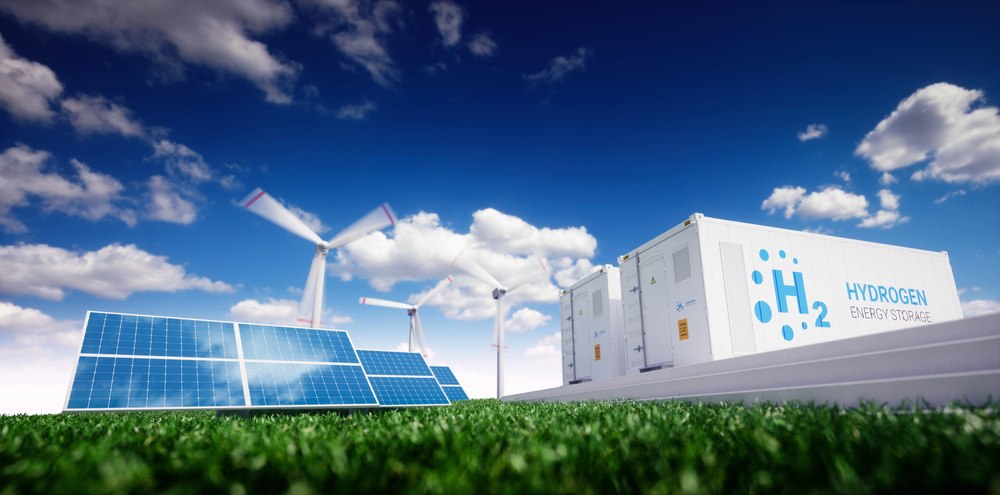
South Korea’s YPP Corporation is considering building a green hydrogen and ammonia complex in the East Kazakhstan Region at an estimated cost of $2 billion. The project, outlined in a memorandum signed during President Kassym-Jomart Tokayev’s visit to South Korea, could produce up to 55,000 metric tons of green hydrogen or 310,000 metric tons of green ammonia annually.
Green ammonia is made by combining nitrogen with hydrogen produced using renewable electricity. Most ammonia is currently used to make fertilizer, but it is also being developed as a low-carbon fuel and as a way of transporting hydrogen, which is more difficult and expensive to move over long distances in its pure form.
For South Korea, which depends heavily on imported energy, ammonia is part of a wider effort to reduce emissions from power generation and industry. Its latest electricity plan envisages clean hydrogen and ammonia supplying 6.2% of electricity generation by 2038.
Kazakhstan’s Ministry of Energy, the regional authorities, and YPP signed a memorandum covering cooperation on the Green Energy Complex project. It envisages around 1 GW of renewable generation, including wind and solar power. The Ministry of Energy says the project would proceed if it proves economically viable.
YPP, a South Korean energy engineering company, signed a framework agreement with Kazakh Invest to develop the Green Energy Complex in July 2025.
The project was initially conceived on a larger scale. A 2025 proposal envisaged investment of up to $3.1 billion and 2 GW of renewable power, with annual hydrogen production of as much as 75,000 metric tons. Under the latest version, the estimated cost is about $2 billion, with renewable capacity of around 1 GW. Hydrogen production is now projected at up to 55,000 metric tons a year, while planned ammonia production remains unchanged at up to 310,000 metric tons.
Kazakhstan has some obvious attractions for such a project: ample space for large renewable-energy developments and an established industrial base. East Kazakhstan is one of the country’s main metallurgical and power-producing regions. It also contains a significant share of Kazakhstan’s water resources, an important consideration because producing green hydrogen by electrolysis requires both electricity and water.
The harder question is whether Kazakhstan can turn those advantages into ammonia that is competitive on international markets. Green ammonia remains substantially more expensive to produce than conventional ammonia. The International Energy Agency estimated in 2025 that ammonia made using electrolysis cost about three times as much on average before policy support and carbon pricing were taken into account.
Competition for Asian buyers is also growing. Samsung C&T, which was named in 2025 as a potential buyer for the project in Kazakhstan, signed a binding 15-year agreement with India’s Reliance Industries in March 2026 for green ammonia produced in India. The deal is worth more than $3 billion, with supplies due to begin in the second half of fiscal year 2029.
Kazakhstan also faces a geographical disadvantage. The country is landlocked, and ammonia produced in East Kazakhstan for South Korea or other overseas markets would have to travel long distances by rail to reach a seaport. That adds another cost for a product whose commercial viability already depends heavily on cheap renewable electricity and transport.
The project’s prospects will therefore depend on whether YPP can convert Kazakhstan’s green hydrogen into ammonia and deliver it to Asian buyers at a competitive price.