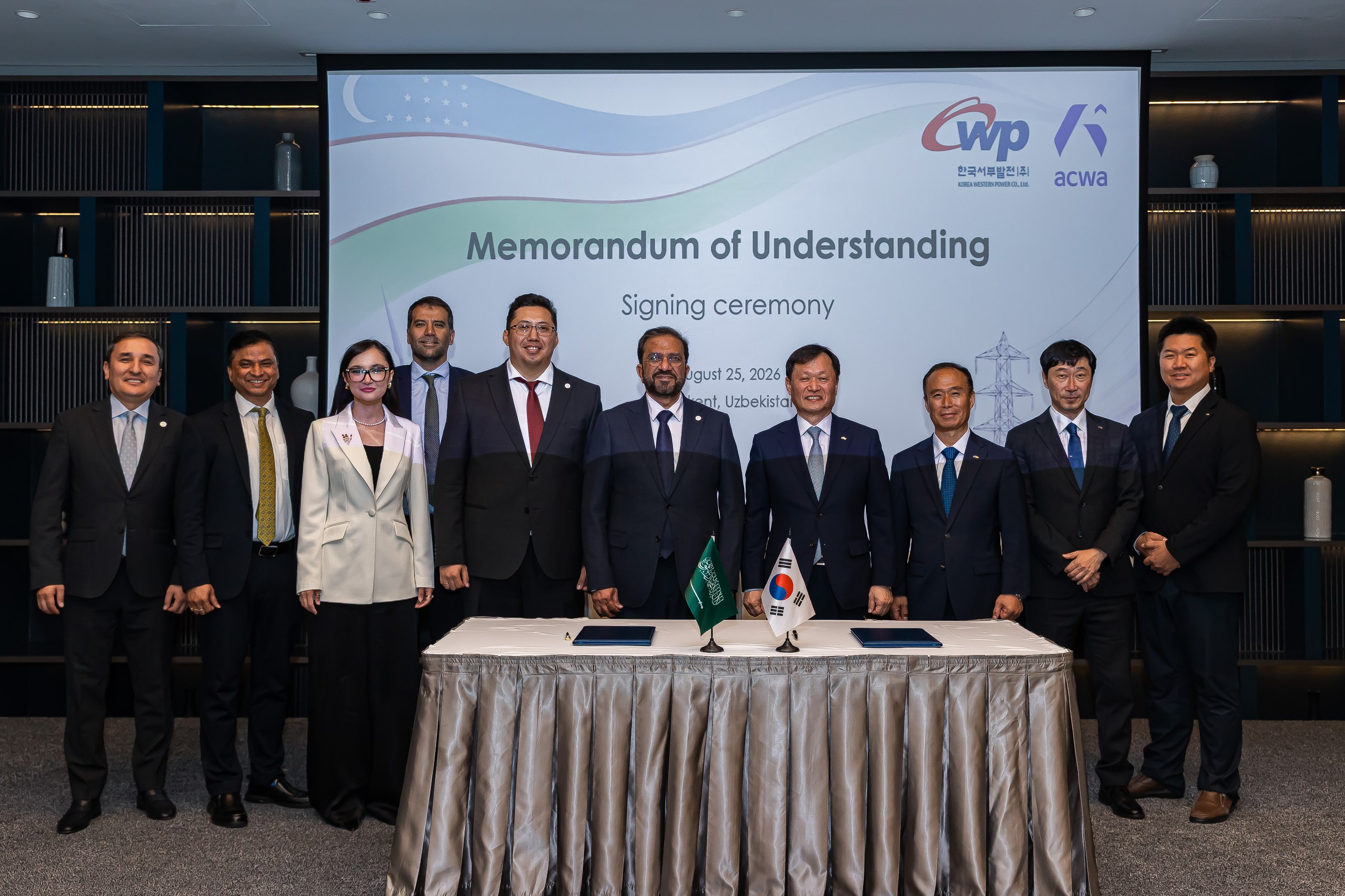
South Korea’s KOWEPO, which is wholly owned by state-controlled Korea Electric Power Corporation (KEPCO), is moving into Uzbekistan’s rapidly expanding green energy market alongside Saudi Arabia’s Acwa, one of the market’s largest players. No specific projects have been announced yet, but the companies will explore opportunities in renewable generation and energy storage while considering the possibility of attracting South Korean financing.
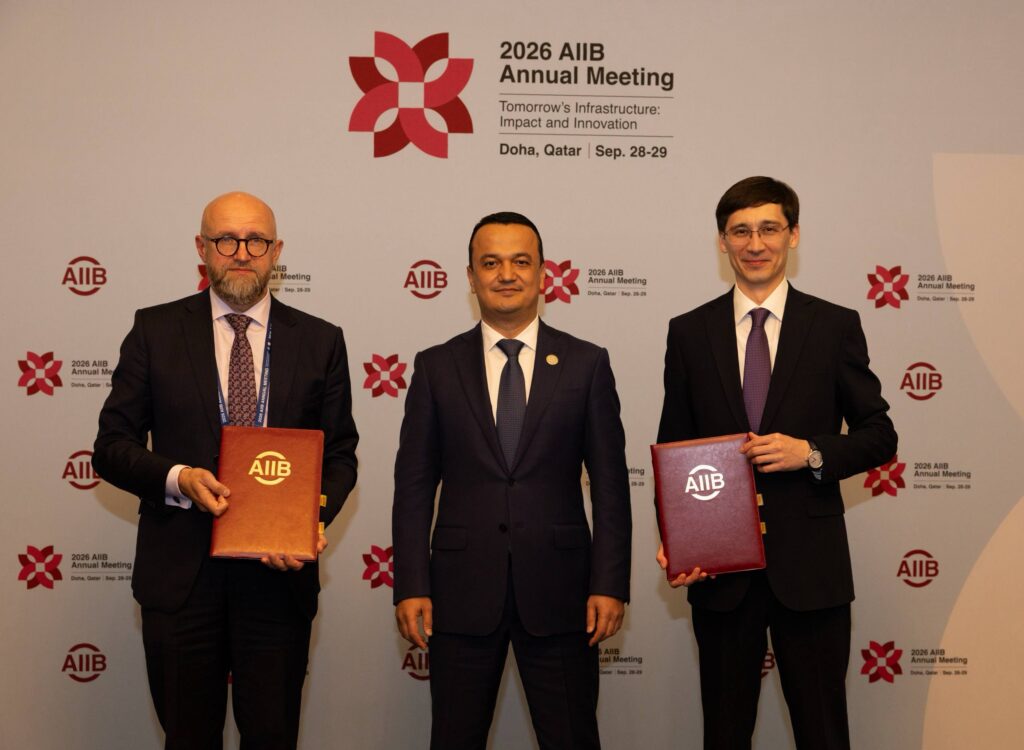
The memorandum was signed in Tashkent on August 25. For KOWEPO, the agreement offers an opportunity to bring to Central Asia the experience it has gained through projects in the Middle East totaling 3.5 GW of renewable capacity and 877 MW of gas-fired generation. For Acwa, Uzbekistan has already become its second-largest market after Saudi Arabia. The company has operated there since 2019 and is developing 19 projects with a combined capacity of more than 10 GW and potential investment estimated at $15 billion.
Abid Malik, Acwa’s president for Central Asia, said the companies would also seek to “facilitate engagement with Korean financial institutions” as they assess potential projects.
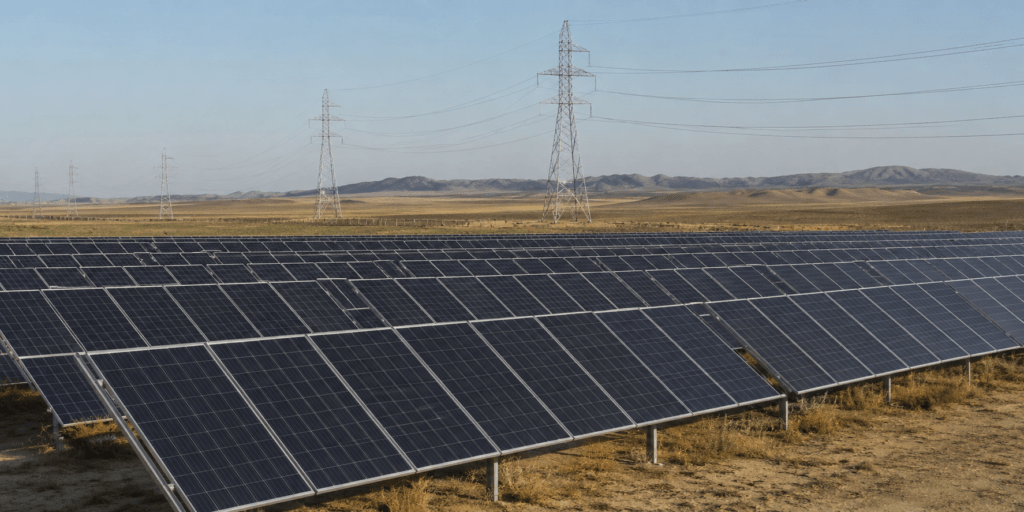
Acwa’s portfolio in Uzbekistan includes solar and wind power, conventional generation, green hydrogen, and energy storage. Storage is becoming increasingly important as the share of solar and wind grows because utility-scale batteries can store surplus electricity and return it to the grid when renewable generation falls.
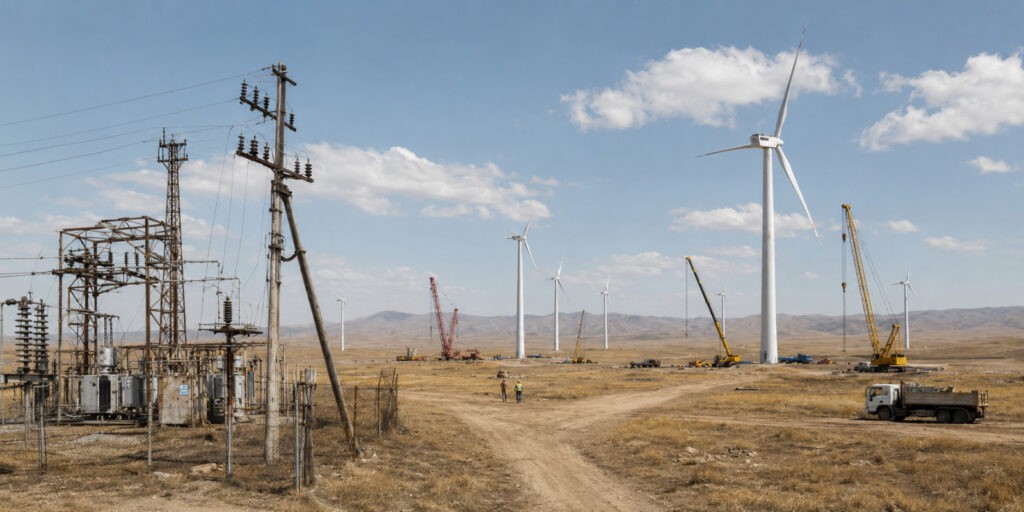
Uzbekistan aims to expand renewable energy capacity to around 25 GW by 2030, with renewables targeted to account for 54% of electricity generation. The rapid construction of solar and wind farms comes as electricity demand rises and Uzbekistan seeks to modernize a power system that has historically relied heavily on gas-fired generation.
Acwa has already secured contractual priority to develop up to 2 GWh of new battery energy storage capacity in the country. KOWEPO could therefore provide additional expertise and capital.
Uzbekistan’s energy transition has already attracted major investors from Saudi Arabia, the United Arab Emirates, China, and elsewhere.
For now, the agreement with KOWEPO remains a framework arrangement, with the capacity, cost, locations, and timelines of any joint projects yet to be announced. Its practical significance will become clearer if the companies move from exploring opportunities to concrete investment decisions.