Central Asia Recalculates as the Iran War Enters a New Phase

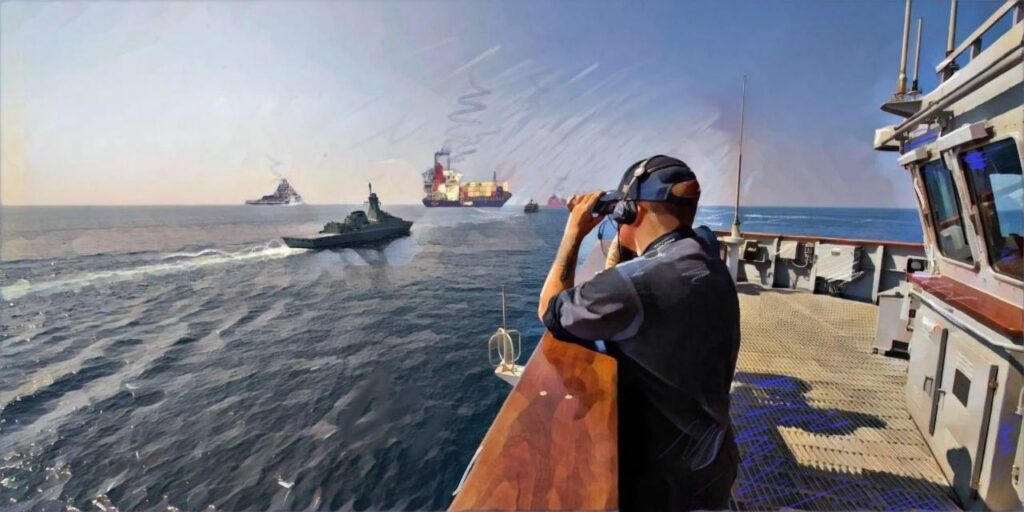
Central Asia’s first response to the Iran war was public and urgent. Governments organized evacuations, welcomed a ceasefire, and watched the Strait of Hormuz because the region’s trade routes, fuel costs, and food prices were already under pressure. The next phase looks different. Following the April 12 collapse of U.S.-Iran talks in Islamabad, Washington moved to block maritime traffic entering and leaving Iranian ports. That step does not formally close Hormuz to all shipping, but it pushes the crisis into a more serious phase for any country or company still treating Iran as a viable corridor.
That distinction is important in Central Asia because the region does not need a formal legal closure of Hormuz to feel the shock. It only needs insurers, banks, freight forwarders, airlines, and traders to decide that the southern option has become too risky for routine planning. That process was already underway. The route through Iran had come under strain in southern corridor traffic, food systems, and in the wider pricing of regional connectivity. A U.S. move against Iranian ports is likely to reinforce that view.
Official statements across Central Asia still reflect the ceasefire moment more than the latest escalation. On April 8, Kazakhstan’s President Kassym-Jomart Tokayev welcomed the truce and said he hoped it would support global trade and prosperity. Kyrgyzstan’s Foreign Ministry also welcomed the ceasefire and praised efforts to reduce tensions. Uzbekistan’s Foreign Ministry did the same, calling the truce an “important step toward de-escalating tensions,” and stressing that it should serve as a pathway to a broader political settlement. Tajikistan’s Foreign Ministry also welcomed the ceasefire agreement between Iran and the United States. Turkmenistan, meanwhile, had already taken a practical line, saying on March 4 that it was keeping all international checkpoints open and providing passage for foreign citizens, vehicles, and rail stock across the Turkmen-Iranian border.
Since then, public messaging has lagged behind the latest escalation. By April 13, Qazinform’s foreign news flow had shifted to the failed Islamabad talks and Trump’s blockade order, while the latest publicly visible official positions elsewhere in the region still reflected the April 8 ceasefire. That does not mean backchannel diplomacy has stopped, but it does suggest that Central Asian governments prefer caution in public as the conflict shifts from direct strikes to pressure on shipping and trade.
For the region, the economic logic is now clearer than the politics. Approximately 20% of global oil supplies and one-third of global fertilizer trade move through the Strait of Hormuz, while urea prices surged by almost 46% between February and March 2026. The World Bank’s April Europe and Central Asia Economic Update said growth in the developing economies of Europe and Central Asia is expected to slow to 2.1% in 2026, down from 2.6% in 2025, as the Middle East conflict, wider geopolitical tension, and trade fragmentation weigh on the region. Those pressures were already significant. The collapse of the main post-ceasefire diplomatic effort, followed by oil rising back above $100 a barrel, has made them harder to absorb.
Across Central Asia, higher prices do not bring gains for most of the region. Kazakhstan can benefit from stronger crude prices at the export level, and there is already discussion of whether it can supply more petroleum products to Asian markets. However, the broader regional picture is far tighter. Uzbekistan, Kyrgyzstan, and Tajikistan are all exposed to imported inflation through fuel, transport, and fertilizer channels. Even where shortages do not appear, margins tighten and household budgets worsen, turning a foreign war into a domestic economic problem.
Air routes show the same structural shift. On April 9, the European Union Aviation Safety Agency extended its conflict-zone bulletin for the Middle East and Persian Gulf through April 24. That leaves airlines with fewer safe and efficient corridors between Europe and Asia. Russian airspace remains unavailable to most Western carriers, and Iranian airspace remains extremely high risk. Therefore, traffic keeps moving toward the northern arc through the South Caucasus and Central Asia. That has already increased the strategic importance of Kazakhstan and Azerbaijan, and the latest escalation makes this shift look less temporary.
Central Asian governments have spent years trying to widen access to world markets through Iran, the South Caucasus, and, in some cases, Afghanistan and Pakistan. That strategy was meant to reduce dependence on northern routes and give the region more paths to global markets. With its 1,148-kilometer border with Turkmenistan, Iran still matters geographically. It still connects Central Asia to Gulf markets and the Indian Ocean. But geography does not keep a corridor usable if it is no longer insurable, financeable, and predictable. After the failure of talks in Islamabad and Washington’s move against Iranian ports, the southern route looks less like routine infrastructure and more like a contingency option.
That leaves Central Asia in a familiar but narrowing position. No government in the region wants to be pulled into a direct U.S.-Iran confrontation, but none can ignore what happens when the map of usable trade routes shrinks again. The practical answer is caution in public and recalculation in private. The first phase of the war brought evacuation plans, official statements, and visible coordination. The next phase is bringing something quieter and more important: a growing sense that the Iranian corridor may still exist on paper, but no longer belongs at the center of Central Asia’s planning map.