Central Asia’s biggest debtor is not necessarily its most vulnerable. Kazakhstan accounts for roughly two-thirds of the region’s external liabilities, but much of that debt sits on corporate balance sheets rather than the government’s. Tajikistan owes a fraction of the amount, yet remains at high risk of debt distress.
The contrast highlights the Central Asia debt divide. Kyrgyzstan and Tajikistan rely more heavily on sovereign and concessional borrowing, while Uzbekistan’s external liabilities are now split almost evenly between the public and corporate sectors.
Based on the latest available figures from national authorities and international financial institutions, the combined external debt of Kazakhstan, Kyrgyzstan, Tajikistan, and Uzbekistan approached $275 billion in early 2026. Turkmenistan has not been included in the estimate because the country does not publish comprehensive official external debt statistics that can be directly compared with those of its regional neighbors.
The total is an approximate calculation compiled from national statistics rather than a regional aggregate published by a single institution. The countries also release their debt data for different reporting dates and use different classifications, requiring caution when making direct comparisons.
Total external debt includes obligations owed to non-residents by governments, central banks, commercial banks, private companies, and, in some countries, local subsidiaries of foreign corporations. Government external debt is a narrower measure covering liabilities that are directly serviced or guaranteed by the state.
China remains an important bilateral creditor, particularly in Kyrgyzstan and Tajikistan, while multilateral institutions provide much of the region’s infrastructure and public-sector financing.
Kyrgyzstan: Rising Debt, but a Broader Creditor Base
Kyrgyzstan’s public debt has risen alongside increased infrastructure spending and domestic borrowing, although its creditor base has become more diversified. A smaller share is now owed to a single bilateral lender, while multilateral financing and the domestic securities market have grown in importance.
According to the Kyrgyz Ministry of Finance’s public debt data, the country’s total public debt stood at approximately $8.94 billion as of May 31, 2026, including around $6.1 billion in external obligations.
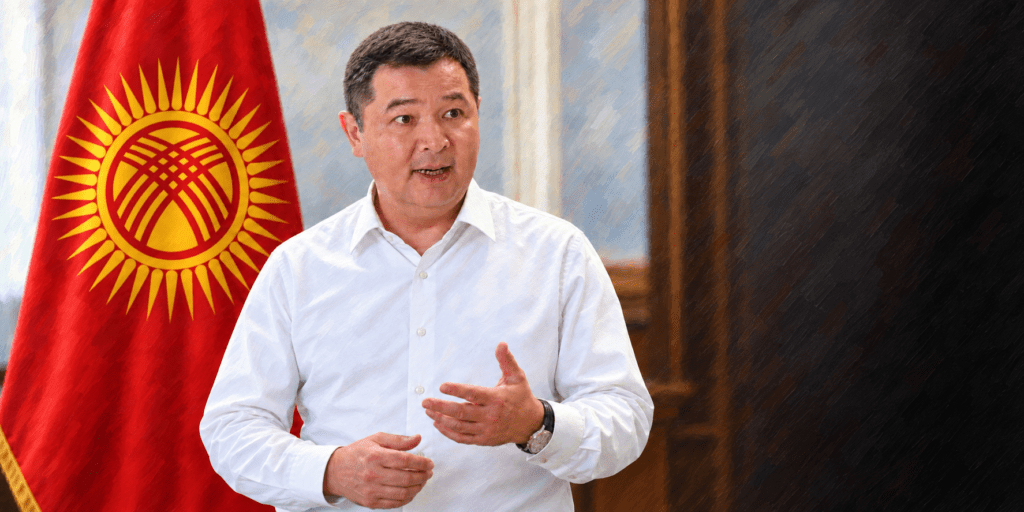
The debt debate has also become part of President Sadyr Japarov’s broader economic narrative. In an interview with the Kabar national news agency published on October 8, 2025, Japarov said his government was continuing to borrow but argued that new loans were being directed toward commercial projects expected to repay their own financing rather than place an additional burden on the state budget. He also said Kyrgyzstan intended to repay its older debts by 2035.
The International Monetary Fund said in its 2026 Article IV consultation that Kyrgyzstan had recorded strong economic growth for a fourth consecutive year, giving the authorities an opportunity to strengthen fiscal buffers and accelerate structural reforms. It also warned that the outlook remained exposed to significant downside risks.
Kazakhstan: A Large External Debt, but a Different Risk Profile
Kazakhstan accounts for the largest share of Central Asia’s external debt, but its headline figure can be misleading. Unlike several of its neighbors, the country’s external liabilities are dominated by corporate and intercompany borrowing rather than direct obligations of the government.
According to the National Bank of Kazakhstan, the country’s gross external debt stood at $182.8 billion as of April 1, 2026, an increase of $900 million during the first quarter.
The National Bank defines external debt as all outstanding liabilities of Kazakhstan’s residents to non-residents. This includes the government, the central bank, commercial banks, private companies, and intercompany loans between foreign parent companies and their subsidiaries operating in Kazakhstan.
A substantial share of these liabilities is connected to foreign investment in the oil, gas, and mining industries, where multinational companies frequently finance their Kazakh operations through loans from parent corporations. Such obligations are recorded as external debt under international statistical standards but are normally serviced from corporate revenue rather than directly from the national budget.
To provide a clearer picture of public exposure, the National Bank publishes a separate indicator covering public-sector external debt in an expanded definition. This includes the general government, the National Bank, state-controlled financial and non-financial corporations, and external obligations guaranteed by the government.
As a result, Kazakhstan’s headline external debt overstates the government’s direct exposure, since much of the liability sits on corporate rather than public balance sheets.
This structure creates a different set of vulnerabilities. Lower commodity prices, tighter international financing conditions, or reduced access to foreign capital could affect the ability of major companies to refinance their liabilities, with potential consequences for investment, exports, and financial stability.
Uzbekistan: Corporate Borrowing Drives Debt Growth
Uzbekistan has become the region’s second-largest external borrower as economic expansion and infrastructure investment have increased demand for foreign financing.
According to the Central Bank of Uzbekistan, the country’s total external debt reached $82.2 billion at the end of the first quarter of 2026. Public external debt amounted to $40.5 billion, while corporate external debt stood at $41.7 billion.
The figures illustrate a gradual change in Uzbekistan’s financing model. The government continues to attract international funding for infrastructure and social development, while banks, state-owned enterprises, and private companies are assuming a larger share of borrowing to finance expansion.
The growing corporate component does not necessarily represent a direct liability for the state. However, borrowing by state-controlled enterprises and banks may still create contingent risks if companies cannot service their obligations without government assistance.
The IMF said in its 2026 Article IV consultation that Uzbekistan’s economy continued to perform strongly and assessed its risk of external debt distress as low, while urging tighter oversight of state-owned enterprises, public-private partnerships, and other contingent liabilities.
Tajikistan: Lower Debt, Higher Vulnerability
Tajikistan has one of the smallest external debt stocks in Central Asia, but its limited export base and restricted access to private capital make it more vulnerable to repayment pressures.
According to the World Bank’s International Debt Statistics, Tajikistan’s total external debt stood at approximately $4.1 billion at the end of 2024, the latest internationally comparable figure available.
Most of Tajikistan’s external financing comes from official creditors. Multilateral institutions finance much of the country’s public investment, while bilateral lenders, including China, have backed major infrastructure projects.
The IMF concluded in its latest Debt Sustainability Analysis that Tajikistan’s public debt remained sustainable, but the country continued to face a high risk of external debt distress. The assessment reflected projections that repayments on government and government-guaranteed external debt would consume an excessive share of export earnings, particularly between 2025 and 2027.
Debt Quality Matters More Than Debt Size
The Central Asia debt divide shows why headline borrowing figures can be misleading. Kazakhstan’s liabilities are largely corporate, while Kyrgyzstan and Tajikistan remain more dependent on sovereign and concessional financing. Uzbekistan lies between the two.
Future debt sustainability will depend less on the headline totals than on whether these economies can generate enough foreign-currency income to meet repayments. Because most external obligations are denominated in foreign currencies, the central question is who is borrowing, on what terms, and whether the resulting investments produce the export earnings needed to service the debt.