In Kyrgyzstan, much of the country’s plastic waste remains unsorted and ends up in landfills, while recycling infrastructure is limited. A growing number of local initiatives are treating discarded plastic as a usable material. One of them is UpKel, a circular design project that turns plastic waste into custom accessories and home decor.
The Times of Central Asia spoke with UpKel founder Chinara Sultanalieva about plastic recycling in Kyrgyzstan and how design and local production can support a circular economy. She also discussed the obstacles holding back the sector.
TCA: Tell us a bit about UpKel. How did the project start, and when did you realize you wanted to work in plastic recycling?
Chinara: For almost 10 years, I worked in the corporate sector. I liked my job. I analyzed complex financial, management, and economic data and presented it to lenders, investors, and local communities. I also prepared sustainability reports, which let me see how the value created by a business could be distributed in the interests of employees and affected communities. Still, I always wanted to do something more meaningful.
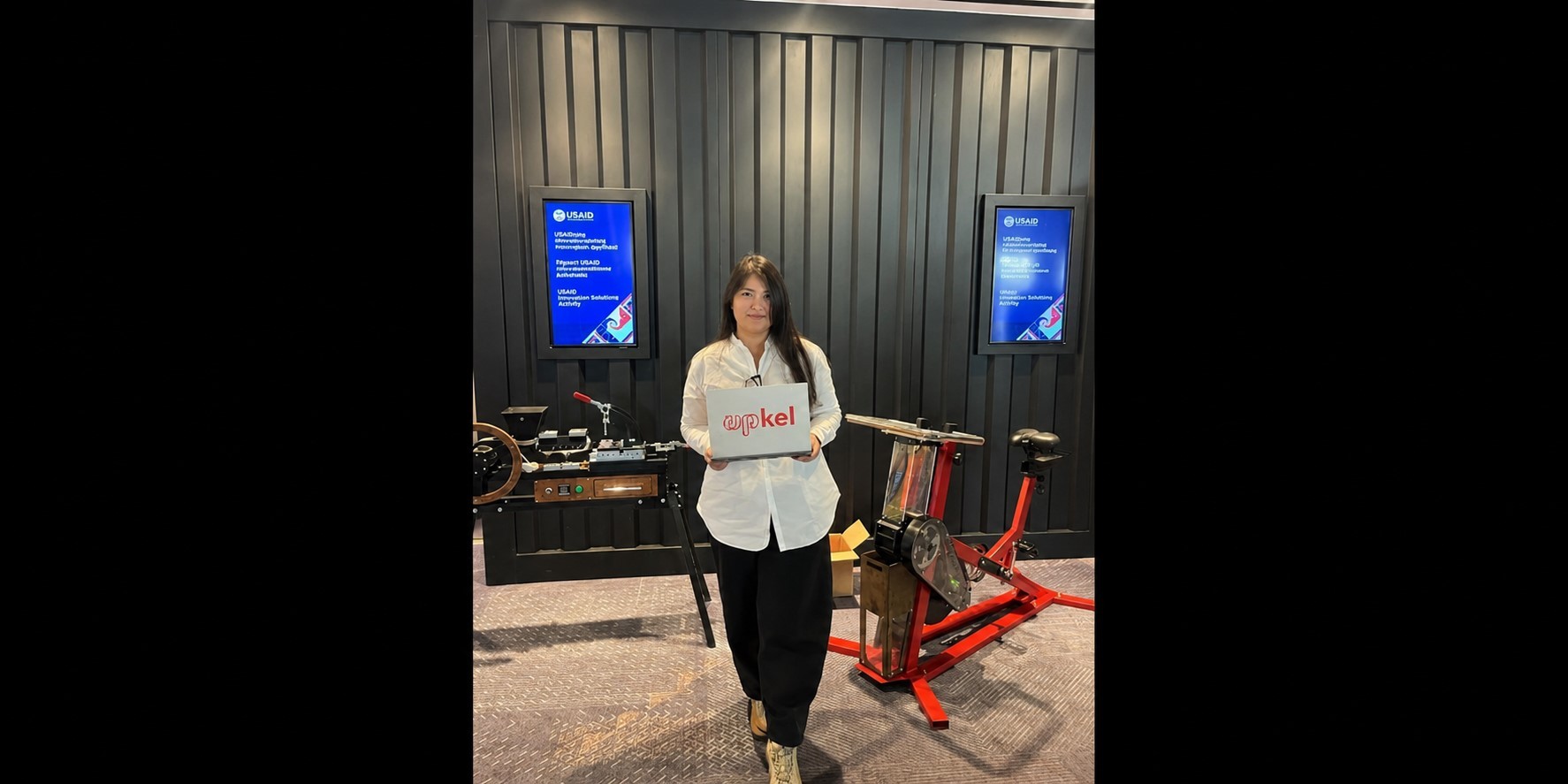
In 2019, I was selected to take part in the Community Solutions Program in the U.S. and spent four months at an environmental NGO in Seattle, Washington. I was struck by how much importance is placed there on environmental protection and public health, and by how local organizations support environmental initiatives and, importantly, keep people informed about upcoming changes in legislation.
I was also impressed by the waste management system in the U.S. For example, Washington state alone had more than 80 organic waste recycling facilities. In one nearby city, compost was made from sludge produced by the wastewater treatment system, and the local zoo composted animal manure. I was especially interested in composting toilet systems, which I later introduced in Kyrgyzstan.
At the same time, I understood that working directly with organic waste would be difficult and would likely face resistance from society. So I decided to start with plastic waste recycling. Plastic is visible, easier to measure, and recycling markets for it already exist, unlike for organics or mixed materials. Also, with this material, even a small-scale production operation can create a local circular economy without needing heavy industrial infrastructure.
TCA: Why did you choose plastic specifically, and how did the UpKel model take shape?
Chinara: Plastic waste remains a major part of environmental pollution. It is highly visible and can take hundreds of years to break down, possibly even longer than current estimates suggest. I was already familiar with the international Precious Plastic movement and had visited Rocket Plastic in Almaty, which operates on that model. So after returning to Kyrgyzstan, I founded the public foundation EcoFem to promote responsible resource use and gender equality.
With support from a U.S. Embassy grant, I launched the country’s first workshop producing items from recycled plastic based on the Precious Plastic model. The workshop was set up to process four types of plastic waste. There are seven plastic categories in total, but three of them are generally considered difficult or economically unviable to recycle.
As part of the project, we tested several approaches to organizing a closed loop from waste collection to finished product manufacturing. After several years of experimentation and learning from our own mistakes, we focused exclusively on plastic bottle caps. We only accept clean, washed, and dried material.
TCA: What makes the plastic waste problem especially visible in Kyrgyzstan, and is people’s attitude toward waste changing?
Chinara: One of Kyrgyzstan’s main problems is the lack of infrastructure for separate waste collection at the source. Although there is political will to improve the waste management system, this momentum needs to be turned into sustainable, practical solutions.
At the same time, many people are still not sufficiently aware of the environmental and health consequences of plastic pollution. That is why raising public environmental awareness is an important step toward implementing an effective separate waste collection system.
TCA: How does plastic make its way through UpKel from cap to finished product and how does design help people see recycled material as a beautiful, quality product?
Chinara: UpKel’s core principle has always been to produce items only to order. This means we rarely keep finished products in stock.
A few years ago, we became partners in a project run by the United Nations World Food Programme, aimed at expanding earning opportunities for waste recyclers in Osh and Batken. These enterprises mainly recycle PET bottles and treat caps as a byproduct material. We helped equip them with upgraded equipment that allows them to produce plastic sheets from caps.
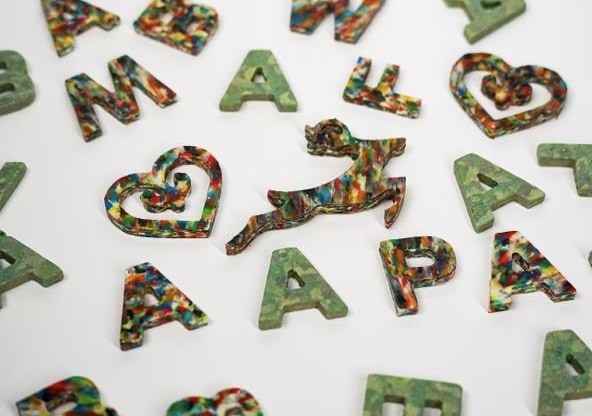
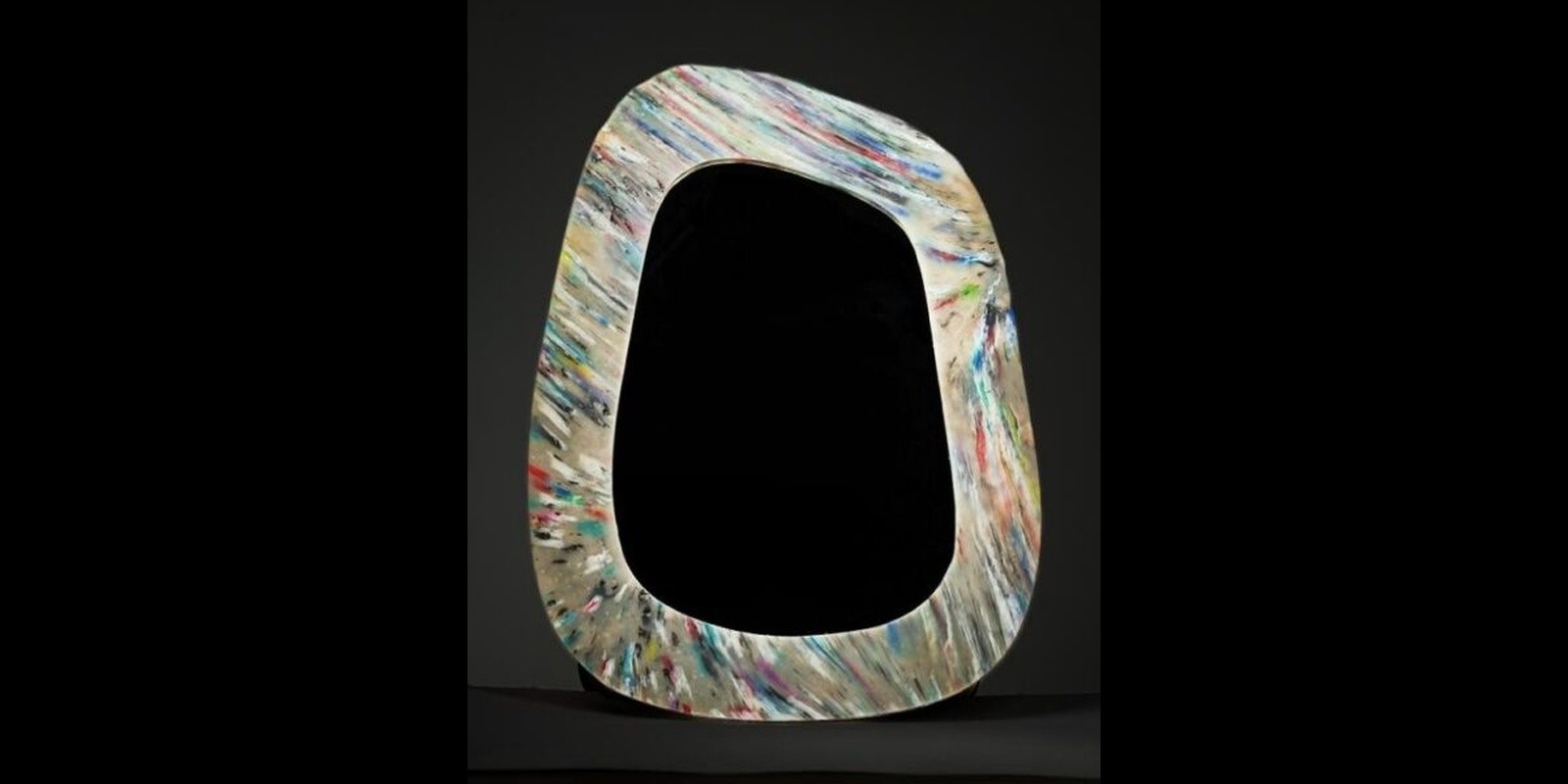
These sheets are then turned into a wide variety of items from pendants and keychains to tabletops and interior design elements. We also work with women artisans who use textile waste from the garment industry to create details that are combined with items made from recycled plastic. In addition, we work with local designers and develop our own product lines.

Many of our clients come to us with their own ideas and sketches because they support our mission, showing that products made from recycled plastic can be beautiful and fashionable. Every item carries a simple message, plastic is not garbage; it is a resource.
Today, in my view, the moment has come for a more systematic and strategic approach to waste management policy, not only in Kyrgyzstan, but across Central Asia as a whole. Building a regional market for secondary materials could significantly strengthen the sector and improve its economic resilience.
TCA: Which stages of plastic recycling and processing are the most difficult today from collection and sorting to cleaning, process economics, and public engagement?
Chinara: From a recycler’s perspective, one of the most serious challenges remains the contamination of raw material. A single dirty item can ruin an entire batch of recycled material, which is why thorough washing is essential. For waste collection companies, contaminated raw material increases capital costs because it requires additional equipment, such as industrial hot-washing systems.
Many people do not understand the economics of recycling. Recyclers earn very little per kilogram of processed material, and without a stable supply of raw material, businesses struggle to survive. Many production facilities shut down during the winter months.
In addition, plastic recycling in Kyrgyzstan largely comes down to exporting secondary raw material rather than manufacturing finished products domestically. This leads to a loss of added value and economic opportunity.
Waste collectors do much of the essential work in the recycling chain, yet they still struggle to gain legal recognition and official status. At the same time, it is hard to persuade people to sort their waste when the corresponding infrastructure is practically non–existent.
TCA: Can it be said that UpKel sits at the intersection of ecology, design, and local production?
Chinara: UpKel is not just about plastic recycling. We also want to show that a creative economy can be built on sustainable principles. In addition, we conduct research into waste management practices in rural areas, analyze waste flows, and study legislation in order to support the development of the sector.
TCA: What kind of support is lacking for initiatives like this, and how do you see the future of recycling and eco-design in Kyrgyzstan and Central Asia?
Chinara: We believe that an effective waste management system requires specialists who understand both international best practices and local realities. Building this kind of expertise is essential for creating sustainable waste management systems that will work in Kyrgyzstan and across the entire Central Asian region.