Standing before a court in Aktobe in June, 35-year-old Azat Konys apologized to “the entire Kazakh people” for insulting one of the country’s most cherished cultural symbols. Two months earlier, during a TikTok livestream, he had declared the dombra forbidden under Islam, compared the two-stringed instrument to part of the devil’s anatomy and called clerics from Kazakhstan’s official Islamic authority “dogs of hell.”
Konys asked the court not to imprison him. The judge instead sentenced him to three years and six months for inciting religious and national hatred.
The controversy began when Konys cited the Hanafi school of Sunni Islamic jurisprudence, the dominant legal tradition among Muslims in Kazakhstan, to argue that the dombra and other stringed instruments, including the guitar and balalaika, were haram, meaning forbidden under Islamic law. The remarks caused particular anger because the dombra is more than a musical instrument in Kazakhstan: it has accompanied oral poetry and storytelling for generations and is officially celebrated as a symbol of cultural heritage and national identity. Police identified Konys after clips from the livestream circulated on social media and detained him in April.
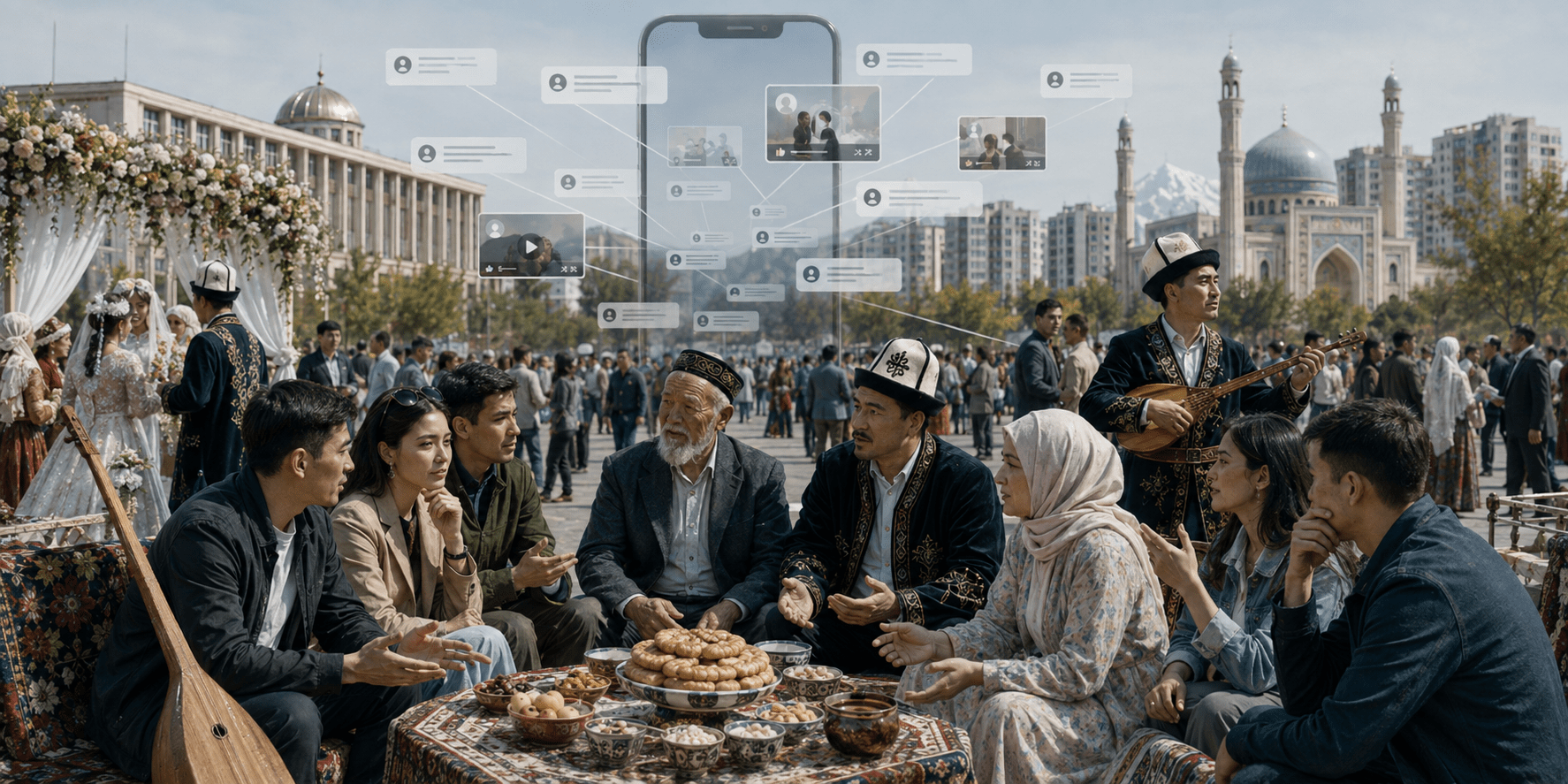
The case is an unusually stark example of how online religious disputes are spilling into legal and political life across Central Asia. Arguments that might once have remained within mosques or religious communities are now spreading through social media, forcing governments and official Islamic authorities alike to decide where religious expression ends and attacks on national culture begin.
A more recent controversy arose in Kazakhstan’s Turkestan Region, where a 66-year-old guest at a toi, a traditional wedding feast, called for stricter adherence to Islamic law. He urged the organizers to separate men and women and remove music and alcohol from the celebration, while describing musicians as “heralds of Satan.” The video spread rapidly on social media, prompting nationwide debate.
The man was detained and placed in a temporary detention facility for incitement of religious and social hatred. In a statement, the Ministry of Internal Affairs said that freedom of expression does not extend to statements that degrade the dignity of others or could provoke religious or social hostility.
The Spiritual Administration of Muslims of Kazakhstan (SAMK), the country’s main official Muslim body, later issued its own response. It stated that Islam does not prohibit music in itself and stressed that publicly insulting artists or women is inconsistent with Islamic ethics.
Another controversy centered on Nauryz, the spring equinox holiday celebrated throughout Central Asia and across much of the Turkic and Iranian cultural world. In March, a blogger in the Almaty Region described the holiday as “non-Muslim” and argued that it should not be celebrated. Police opened a criminal case against him on suspicion of inciting religious hatred.
Kazakhstan’s Prosecutor General’s Office subsequently warned of legal liability for statements attacking Nauryz and other national traditions. The SAMK, meanwhile, publicly celebrated Nauryz as a national holiday promoting social harmony and charitable acts.
The debate soon spread beyond social media into politics and the entertainment industry. Producer and television presenter Bayan Alaguzova said religious content online was eroding Kazakh traditions and called on the National Security Committee to act against what she described as religious fanaticism. First Vice Minister of Culture and Information Kanat Iskakov responded that Kazakh law does not define “religious propaganda,” although extremist content and material that incites hatred can already be prosecuted.
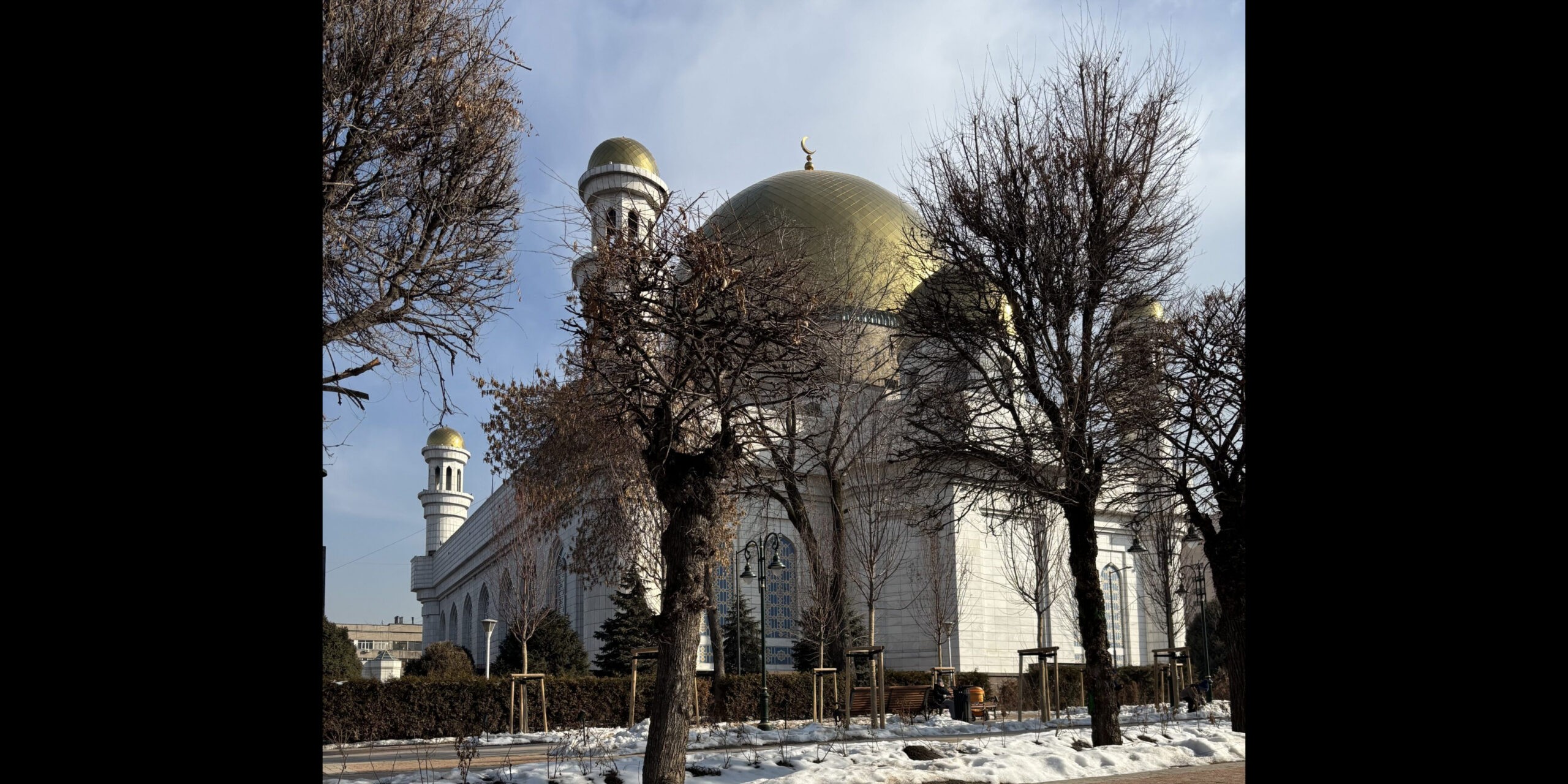
Almaty’s Central Mosque. Credit: Joe Luc Barnes/TCA
Policing Religious Dress
The struggle over religion’s place in public life is also being written into laws governing how people dress across the region.
Kazakhstan prohibited clothing that prevents facial identification in public places in July 2025. The restriction covers clothing that fully conceals the face, but does not apply to hijabs or other religious head coverings that leave the face visible.
Tajikistan has gone considerably further and has sought to regulate religious appearance for years. In 2015, police in the southern Khatlon Region said nearly 13,000 men had been shaved because their beards were considered excessively long, while authorities also pressured women to abandon hijabs in favor of state-approved Tajik styles.
President Rahmon made the policy explicit during a meeting with religious leaders in March 2024. Faith, he said, should be carried in the heart, “not in a hijab, not in a big turban, not in a long beard”.
Three months later, he signed legislation prohibiting the sale and public wearing of clothing that authorities regard as alien to the country’s national culture.
In August 2025, when local officials and police in the Sughd Region carried out raids and “awareness campaigns” reminding residents of the legislation. The campaign underlined that the restrictions extend beyond face coverings and leave officials to determine which forms of clothing are sufficiently consistent with Tajik national culture.
In Kyrgyzstan, the government has introduced restrictions covering face-concealing clothing. After a new law on religion took effect on February 1, 2025, police began holding what authorities called “preventive conversations” with women wearing the niqab in public.
The government later clarified that the restrictions do not apply to the traditional Muslim headscarf, only garments that completely conceal a person’s face and make identification impossible.
Uzbekistan introduced a similar identification-based restriction in October 2023. The law imposes fines on people whose faces are concealed in public to the extent that they cannot be identified, subject to limited exceptions. It does not prohibit the hijab or other head coverings that leave the face visible.
Taken together, the cases show some religious activists challenging national customs in the name of Islam, while secular governments assert the power to determine how faith may be expressed in public. The distinction between protecting national culture and policing personal belief is becoming an increasingly public and legal contest across Central Asia.