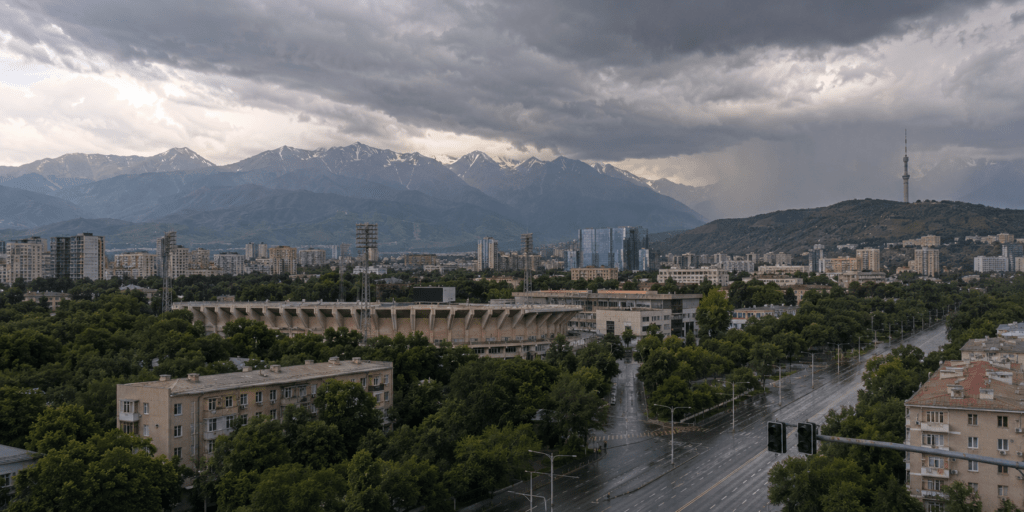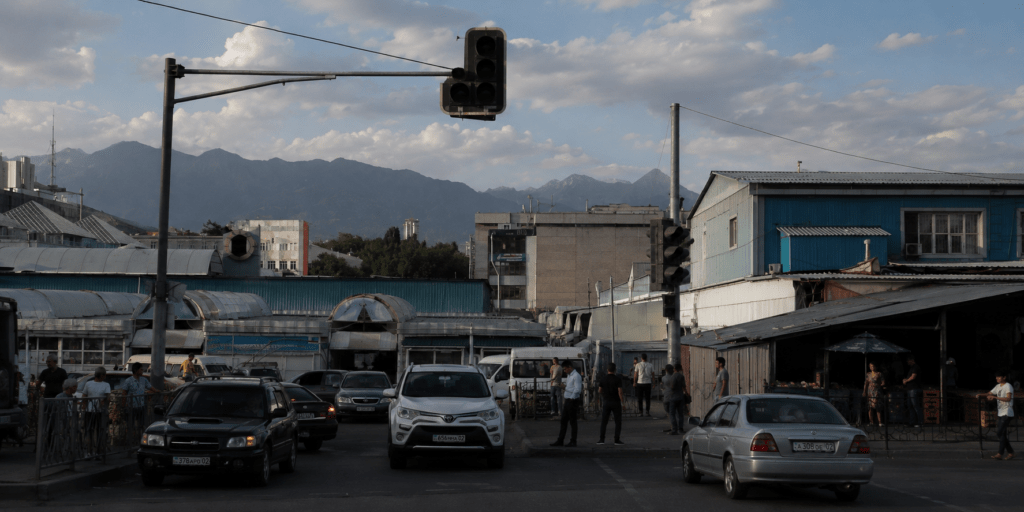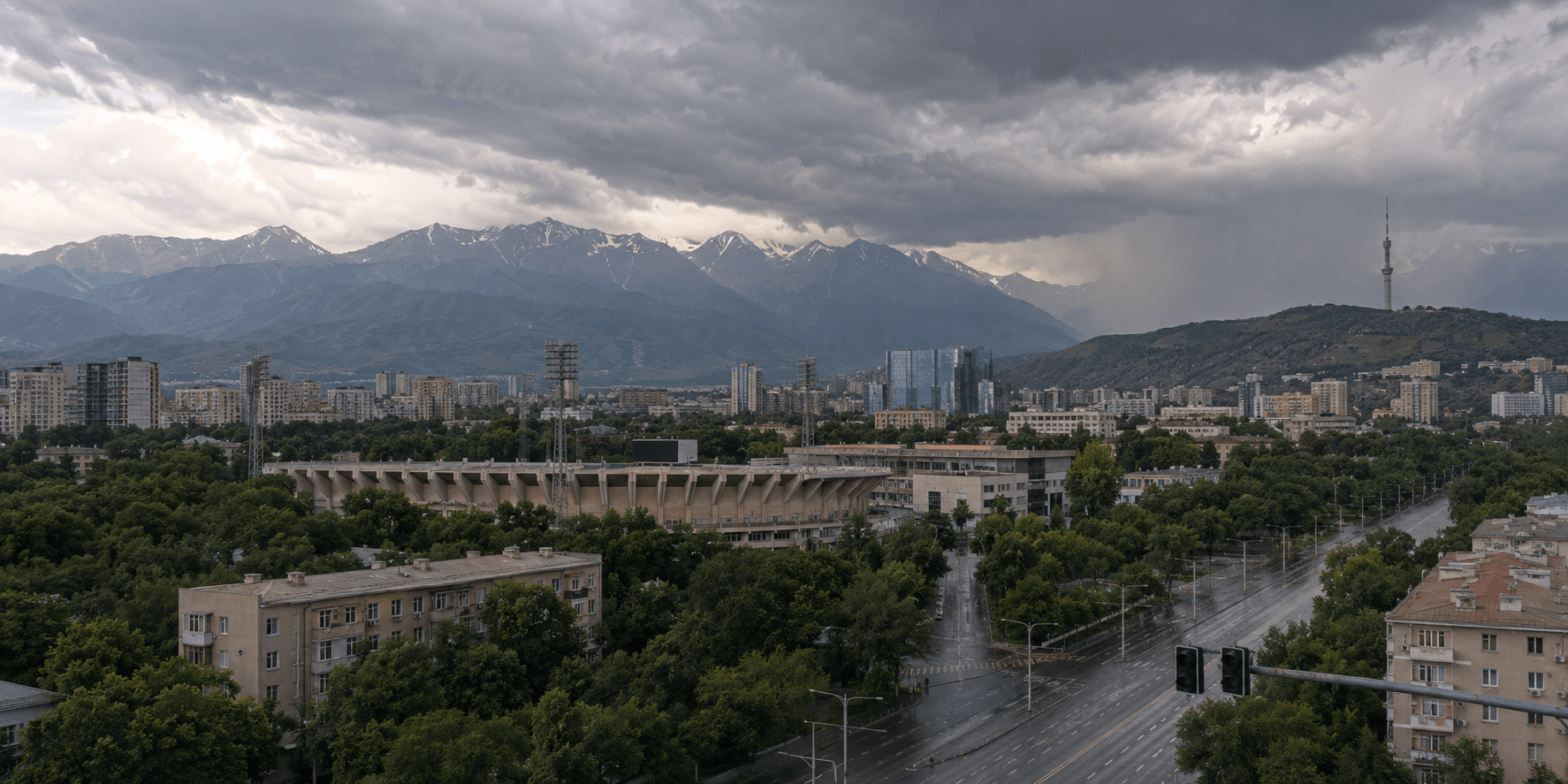
A major power failure affected parts of Kazakhstan, Kyrgyzstan, Uzbekistan, and Tajikistan on August 14. In Almaty, electricity went out at 2:38 p.m. local time in four districts, disrupting transport and traffic in Kazakhstan’s largest city.
Traffic lights stopped working and some businesses closed. The metro suspended service, and passengers still underground were evacuated. At several busy intersections, motorists and delivery couriers began directing traffic themselves.
In Kyrgyzstan, outages affected parts of Bishkek and Issyk-Kul Region.
“An accident in the power system of a neighboring country affected the Central Asian power grid. As a result, power supply disruptions were observed in the Surkhandarya region and several other regions,” Uzbekistan’s Energy Ministry said.
In Tajikistan, electricity went out in Dushanbe at about 3 p.m. and in numerous other cities and districts. Later that day, the Ministry of Energy and Water Resources said it had formed a working group to determine the cause. The ministry also denied reports of an accident at the Nurek Hydropower Plant.
The Kazakhstan Electricity Grid Operating Company (KEGOC) later issued a preliminary account attributing the blackout to an emergency at Kyrgyzstan’s Toktogul Hydropower Plant.
“Due to the emergency shutdown of two hydropower units with a combined capacity of 600 megawatts at the Toktogul HPP in the Kyrgyz Republic, there was a power surge on the North-South transit line, causing an overload and its disconnection by emergency protection systems. As a result, Kazakhstan’s southern zone was separated from the country’s unified power system,” KEGOC explained.
Kyrgyz energy officials offered a different account. They said an external outage occurred at 3:34 p.m. Kyrgyzstan time on a high-voltage transmission line connecting northern and southern Kazakhstan. The disturbance split the Central Asian grid into isolated sections, leaving Kyrgyzstan temporarily operating autonomously while automatic protection safeguarded equipment.
Both accounts illustrate the interdependence of the Central Asian Power System (CAPS). The Soviet-era network connected the region’s electricity systems across borders that were then internal. It was part of a regional water-and-energy arrangement in which hydropower releases from upstream republics supported irrigation downstream.
Cross-border power exchanges declined after the Soviet Union collapsed. In 1999, the governments of Kazakhstan, Kyrgyzstan, Tajikistan, and Uzbekistan signed a parallel-operation agreement. Turkmenistan disconnected from CAPS in 2003, while Tajikistan was disconnected from Uzbekistan in December 2009.
Tajikistan and Uzbekistan signed an electricity-trade agreement in March 2018. The southwestern section of Tajikistan’s grid reconnected to CAPS in June 2024, but the northern connection was still under development in July 2026. Turkmenistan remains outside the system.
In an assessment published on August 16, Zhakyp Khairushev, chairman of the Public Council under Kazakhstan’s Ministry of Energy, called the incident a serious test of the country’s southern power system. He said emergency protection contained the disruption and allowed electricity to be restored in stages.
Power restrictions in Kazakhstan were lifted by 5 p.m., but Kazakhstan and Kyrgyzstan continued to disagree over where the failure began.