A small refinery in western Kazakhstan is preparing to process Russian crude and send most of the resulting petrol and diesel back to Russia as Moscow struggles with fuel shortages. The arrangement was confirmed on August 25, the same day that separate incidents occurred at two of Kazakhstan’s three major refineries.
On August 19, Russian Deputy Prime Minister Alexander Novak said that, given the situation on the fuel market, the government was “keeping its finger on the pulse” and monitoring supplies daily with companies and regional authorities.
According to Novak, Russia had already imposed export restrictions and begun importing petroleum products. Several refineries were also expected to return from repairs, increasing domestic supplies.
Russia’s Fuel Shortage
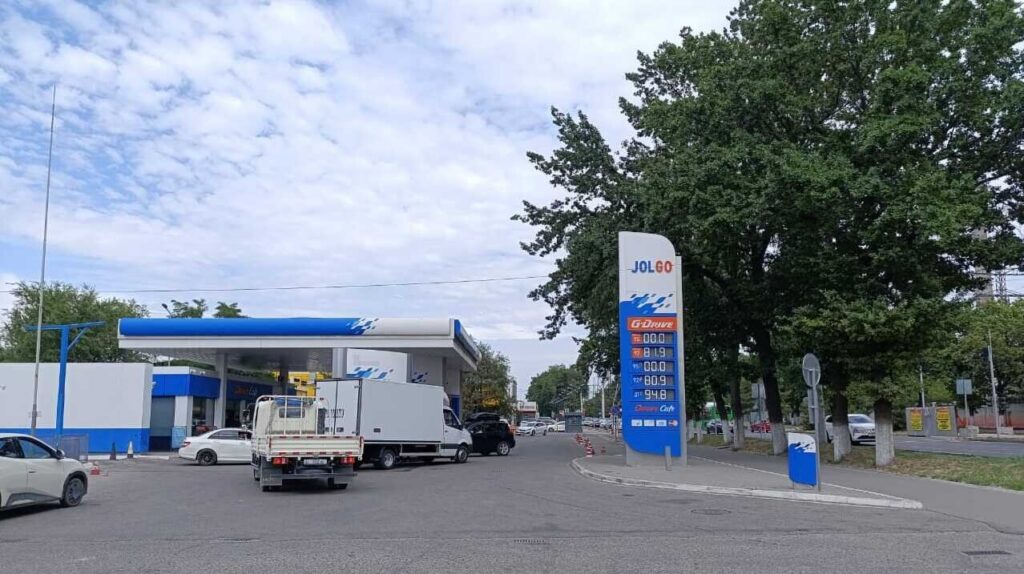
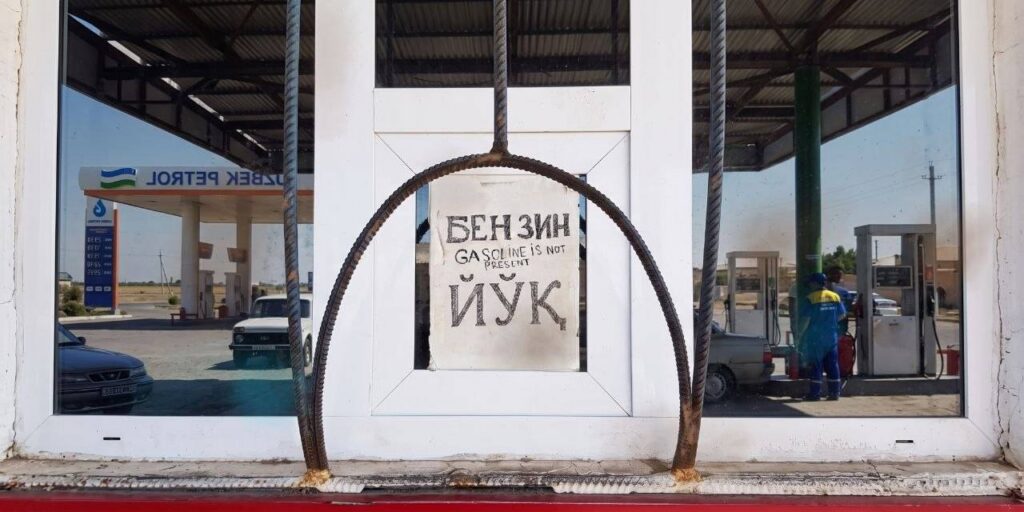
The pressure on Russia’s fuel market is illustrated by data published by the industry portal InfoTEK. According to its August 24 snapshot, AI-95 petrol, the widely used 95-octane grade, was available at only 5,620 of Russia’s 26,098 operating filling stations, or 22%. Even in Moscow, it could be found at 161 of 786 operating stations, about 20%.
Russia has also temporarily relaxed restrictions on lower environmental grades of fuel, including Euro 4, Euro 3 and Euro 2, known in the Russian classification as K4, K3 and K2. Since 2016, only fuel meeting at least the Euro 5 standard had generally been permitted.
Russian economist Boris Grozovsky estimates that, given the refining capacity knocked out by Ukrainian strikes and the number of plants undergoing repairs, Russia is currently short of roughly one-third of the petrol needed at peak demand. August is traditionally a high-demand month because of summer travel and agricultural work.
“If it were November now, the situation would be a little easier for the Russian government. Russia is trying to bring in petrol from India, Morocco, Turkey, Kazakhstan and Azerbaijan, but imports also have limitations. The petrol brought in from India turned out to be too expensive,” Grozovsky said.
Kazakh Refinery Steps In
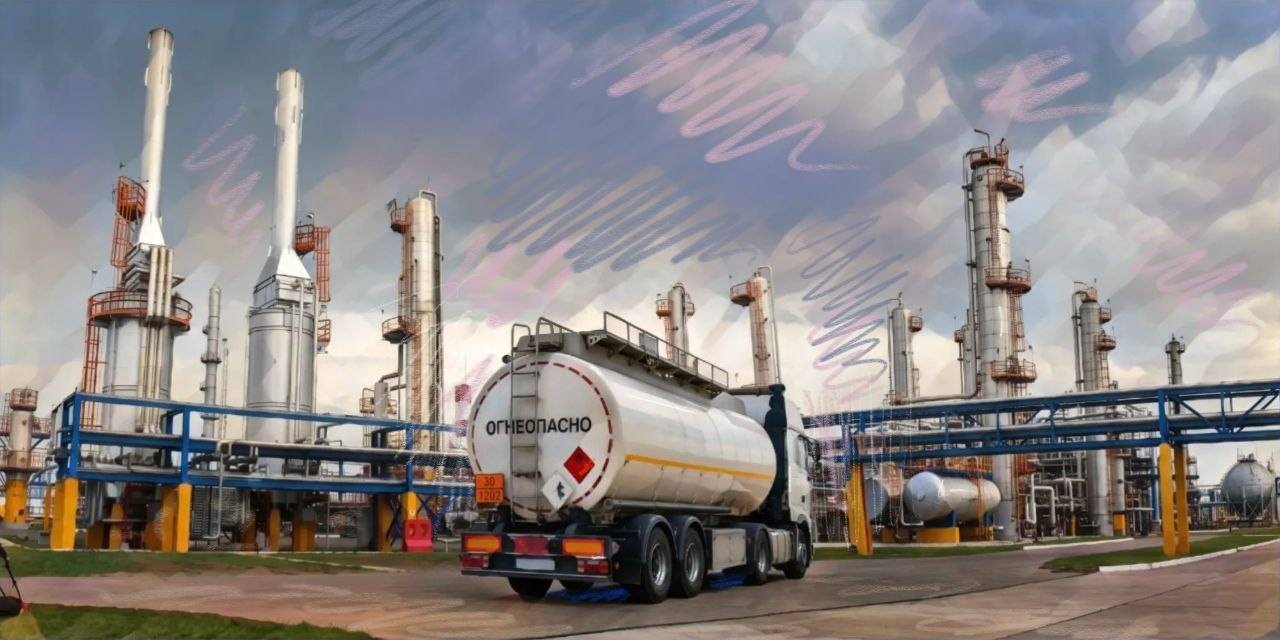
Speaking at a government briefing on August 25, Kazakhstan’s Energy Minister Yerlan Akkenzhenov said that the small Condensat refinery in Aksai, West Kazakhstan Region, would process Russian crude, with around 70% of the petrol and diesel it produces sent to Russia.
Up to 30% will remain on the Kazakh market, while the refinery also retains the right to export products outside the Eurasian Economic Union.
“Under the agreement we currently have, up to 30% of the petroleum products in demand, petrol and diesel, will remain in Kazakhstan, while the rest will be shipped to the Russian Federation,” the minister told reporters.
Akkenzhenov said the arrangement reflected Condensat’s location close to the Russian border. The refinery is not connected by pipeline to either country’s main oil network, meaning both crude deliveries and fuel exports depend on rail capacity.
Akkenzhenov also stressed that the refinery’s owner is not under sanctions and said the Energy Ministry did not see sanctions risks for the project. He said the arrangement would also bring investment and preserve jobs at a refinery that has struggled financially.
Condensat’s Financial Troubles
Condensat was established in 1992 and for years processed unstable gas condensate from the Karachaganak field. Its supply dwindled after Karachaganak developed its own processing facilities, leaving the refinery struggling to secure sufficient feedstock.
For the first stage of the upgrade, which included production of K5-standard petrol, the Development Bank of Kazakhstan provided $120 million. The modernization was completed by 2018, but shortages of crude continued, and the company struggled to service its debt. The dispute ended in a settlement, with the repayment schedule extended until 2028.
In 2024, Condensat began processing crude supplied by Russia’s Tatneft on a tolling basis and received a quota to export the petrol it produced.
The refinery’s ownership also has indirect links to Tatneft. Its main shareholder, Birinshi Shina Kompaniyasy LLP, is co-owned by Dubai-based Osprey Investment L.L.C.
Osprey is also a co-owner of Mining Development Company Ltd., whose other shareholder is Turkish fuel distributor Aytemiz Akaryakıt Dağıtım A.Ş., which is wholly owned by Tatneft. The Development Bank of Kazakhstan currently lists Dzintars Puzaks as Condensat’s ultimate beneficiary; according to Kursiv, he represents Osprey and previously worked for Tatneft.
Sanctions and Refinery Incidents
The arrangement comes as Ukraine’s European allies discuss tightening restrictions on energy supplies to Russia through third countries. On August 24, French President Emmanuel Macron called on allies to prevent their companies from selling Russia oil, gas or diesel fuel. He said sanctions should increasingly target cases in which Russian companies buy fuel through “Swiss and other foreign companies.”
“It is very important that we introduce this new series of sanctions. Until recently, this did not exist because Russia was an exporter. But now, thanks to our actions, Russia is importing,” Macron said.
No sanctions targeting Condensat over the arrangement have been announced. Akkenzhenov said the refinery’s owner is not on sanctions lists and that the government sees no sanctions risk.
The timing nevertheless added to an already nervous backdrop. On the same day the minister confirmed the plan, incidents occurred at two of Kazakhstan’s three major refineries.
A fire broke out at the Atyrau Oil Refinery’s treatment facilities at 12:35 p.m. on August 25, when oil sludge caught fire inside an enclosed mechanical treatment facility. The refinery said no work was being carried out there when the fire began. No injuries were reported and the refinery continued operating normally.
Later, the Shymkent refinery, operated by PetroKazakhstan Oil Products, suffered a voltage drop from an external 220 kV KEGOC power line. PetroCouncil.kz reported that the refinery’s catalytic cracking complex shut down automatically. KazMunayGas confirmed that one processing unit was being restarted but said the disruption had not affected daily fuel production or shipments.
The third major refinery, in Pavlodar, had attracted attention a day earlier because of motorists’ complaints about petrol quality. Akkenzhenov said an inspection had begun, with representatives of the Energy Ministry and the Committee for Technical Regulation and Metrology sent to the refinery.
There is no evidence that the incidents at Atyrau and Shymkent, the complaints concerning Pavlodar, or the Condensat arrangement are connected. Their coincidence in time, however, has produced an unusually tense backdrop for a decision that was already politically sensitive because of Russia’s fuel shortages and renewed discussion in Europe of sanctions on energy supplies to the country.