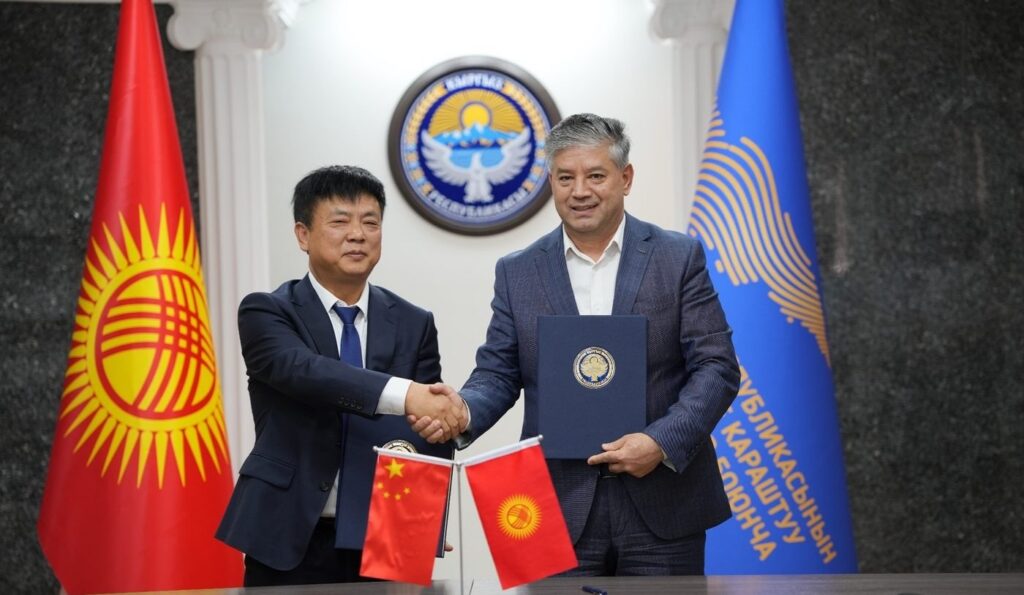
Kyrgyzstan has signed a $25 million investment agreement for a new oil refinery in Kochkor-Ata, in the southern Jalal-Abad Region, as the country seeks to expand domestic production and reduce its heavy dependence on imported fuel.
The agreement between the Cabinet of Ministers and Central Asian Energy LLC covers the construction and operation of the refinery. It was signed on July 20 by Minister of Economy and Commerce Bakyt Sydykov and the company’s general director, Shao Peipei.
The plant is expected to have a planned annual output of 450,000 tons of petroleum products and create at least 300 jobs. The agreement stipulates that Kyrgyz citizens should account for at least 90% of its workforce.
Sydykov said the project would support industrial development, create jobs, introduce modern technology, and strengthen Kyrgyzstan’s energy security.
Shao said the company would invest $25 million under the agreement. The investor said the plant would produce gasoline and diesel in the K-5 and K-6 environmental classes, as well as bitumen and motor oils. The reference to K-6 is unclear because current Eurasian Economic Union fuel regulations classify motor fuels only through K-5.
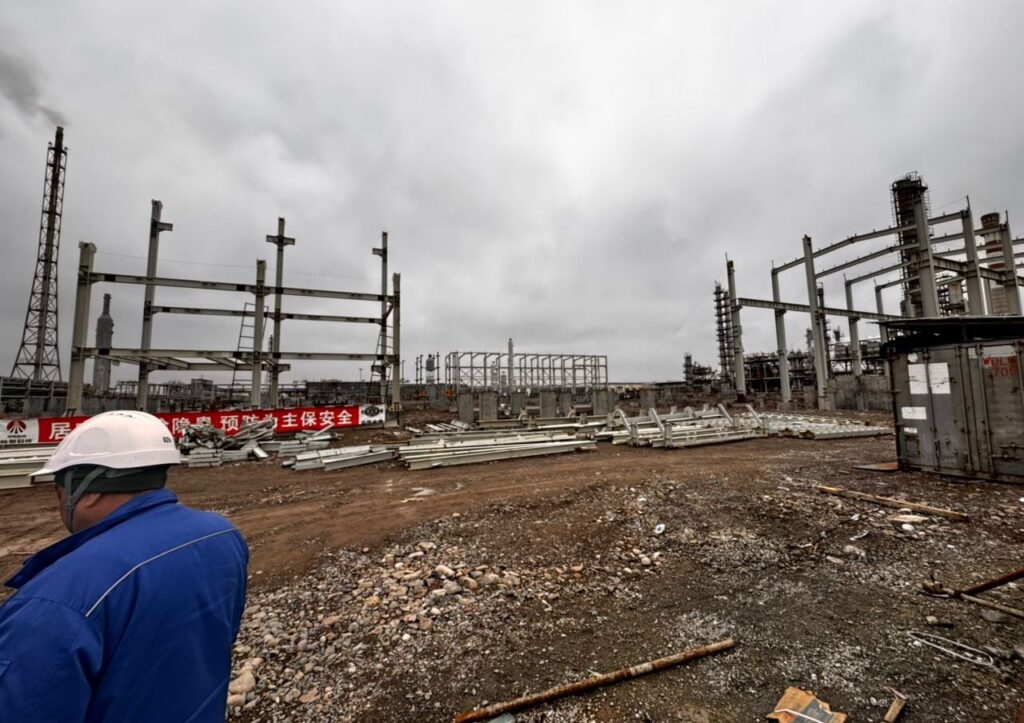
The Ministry of Economy and Commerce said construction was already underway and that the project’s first phase was expected to enter operation by the end of 2026. The ministry did not disclose the source of crude oil or explain whether the $25 million represents the refinery’s full cost, the investment covered by the agreement, or funding for its initial phase.
The agreement comes as Kyrgyzstan faces renewed pressure from disruptions in the Russian fuel market.
Deputy Energy Minister Nasipbek Kerimov said in early July that Kyrgyzstan consumes approximately two million tons of fuel and lubricants annually and receives almost 95% of that volume from Russia. He said Russian deliveries had declined slightly but that the country still had sufficient reserves.
Russia has tightened fuel exports after Ukrainian drone attacks forced several major refineries to halt or reduce production. Gasoline output fell to about 65% of seasonal demand, according to Reuters calculations published on July 10.
Kyrgyzstan receives Russian petroleum products duty-free under annual indicative balances within the Eurasian Economic Union. The disruption has highlighted the risks of relying overwhelmingly on one supplier.
Kyrgyzstan is also modernizing its two largest existing refineries.
The Kyrgyz Petroleum Company refinery in Manas, formerly Jalal-Abad, can process 500,000 tons of crude oil annually. It is undergoing a $410 million modernization project that is expected to be completed by the end of 2027. The upgraded plant is intended to produce AI-92 and AI-95 gasoline meeting K-4 and K-5 Eurasian Economic Union standards.
The Junda refinery in Kara-Balta has an annual processing capacity of 800,000 tons. A $193.75 million modernization project is scheduled for completion by July 31, 2026. The work is intended to increase refining depth, improve efficiency, and expand domestic fuel production.
Whether the new refinery reduces import dependence will depend largely on where it obtains crude oil. Kyrgyzstan’s limited domestic production means the plant could still rely on imported feedstock even as it displaces some imports of finished fuel.