Kazakhstan’s government has approved a socioeconomic development forecast and draft republican budget for 2027–2029, projecting average annual real GDP growth above 5% as manufacturing, agriculture, construction, transport, and other non-oil sectors expand.
The forecast was prepared with reference to the global economic outlook and conditions in external markets. The accompanying draft budget, approved at the same government meeting chaired by Prime Minister Olzhas Bektenov, will be submitted to the Kurultai for consideration.
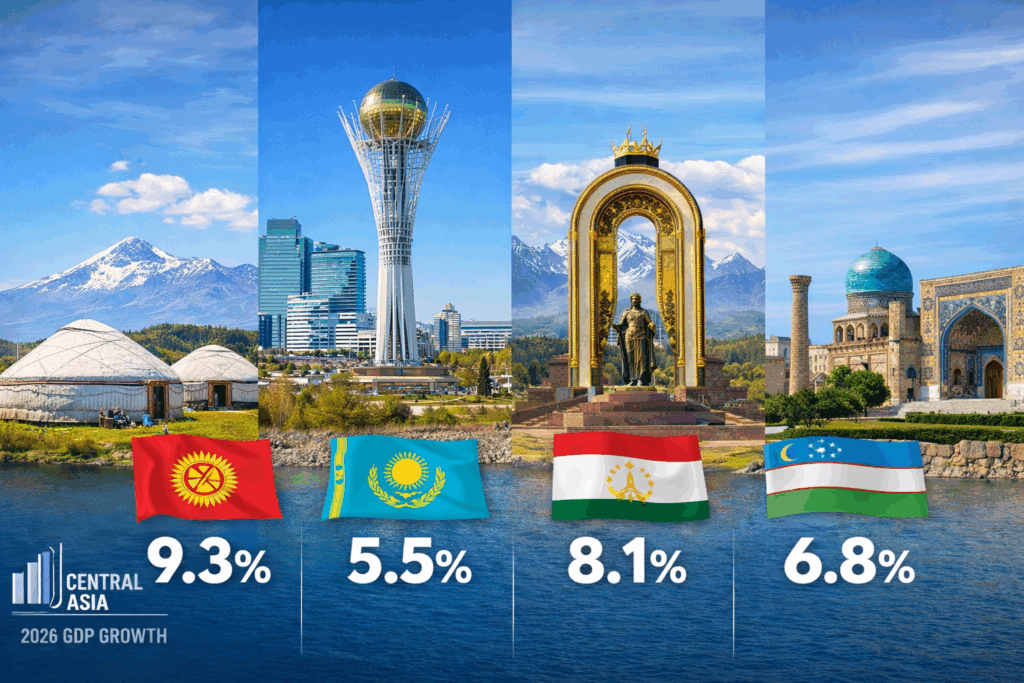
Under the government’s baseline scenario, real GDP is projected to grow by 5.3% in 2027, 5.5% in 2028, and 5.4% in 2029. Nominal GDP is expected to rise from KZT 199.3 trillion in 2027 to KZT 245 trillion in 2029, an increase of almost 23%.
Non-oil sectors are expected to provide the main impetus for expansion. Manufacturing output is forecast to grow by an average of 5.9% a year, substantially faster than the 2% projected for mining. Metallurgy, mechanical engineering, construction materials, chemicals, and food production are expected to make the largest contributions.
Oil exports and the broader mining sector will remain central to the economy and public finances, but the forecast assumes that manufacturing and other non-oil activities will account for a larger share of new output.
TCA reported in July that Kazakhstan’s economy expanded by 4.1% in the first half of 2026 despite an 8.4% decline in oil production. The non-oil economy grew by more than 5%, with manufacturing, construction, trade, and transport accounting for more than 80% of overall growth. Manufacturing output increased by 9.8%.
Agriculture is expected to expand by at least 5% annually. Construction is projected to remain among the fastest-growing sectors, increasing by 16% in 2027 and 17.3% in 2029. Deputy Prime Minister and Minister of National Economy Serik Zhumangarin said the expansion would be supported by transport and logistics, energy, and water projects, together with the modernization of housing, utilities, and social infrastructure.
The services sector is also expected to maintain strong momentum. Trade is forecast to expand by an average of 5.7% annually, information and communications by 9.2%, and transport and warehousing by 10.4%.
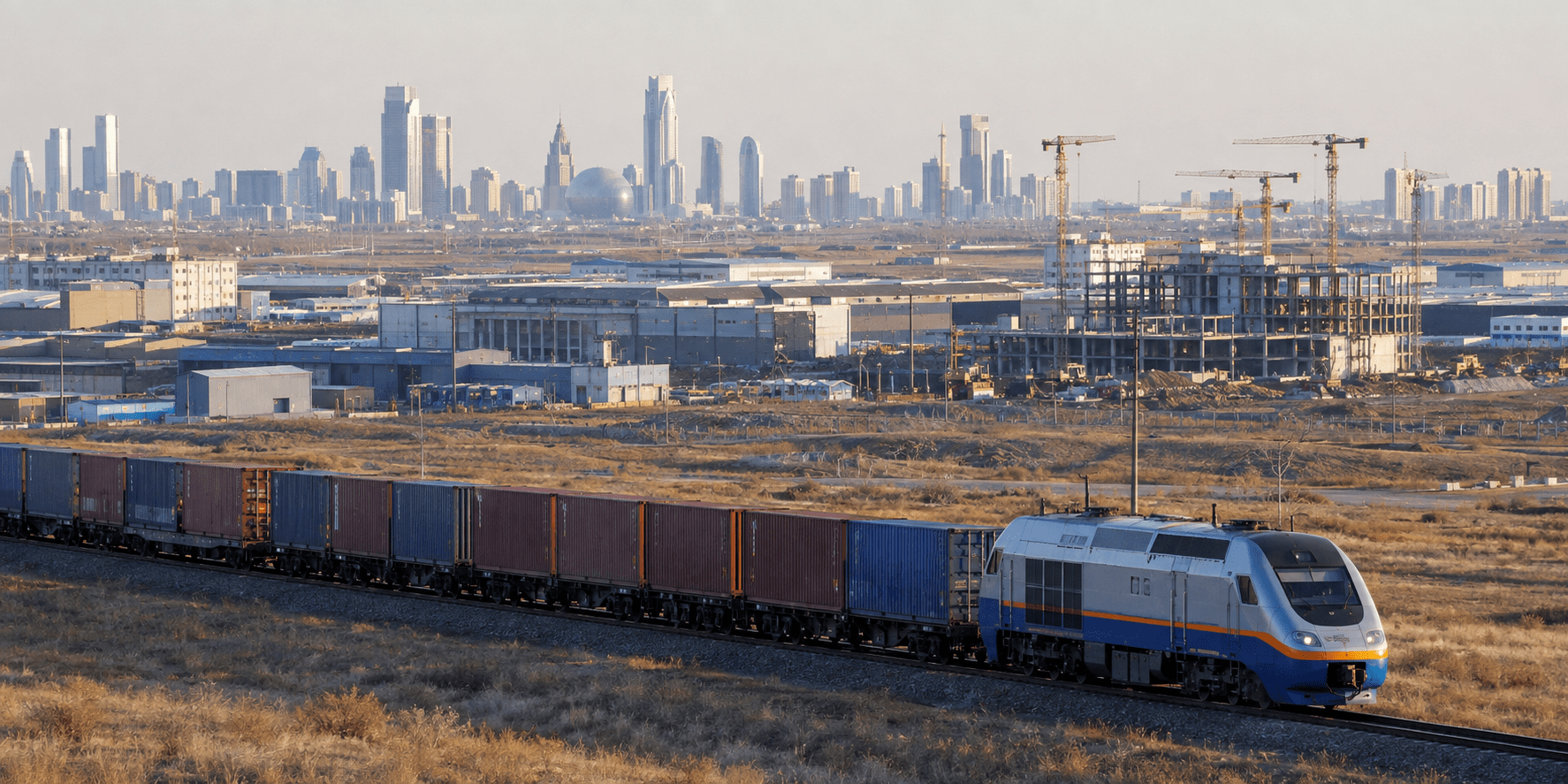
The transport forecast builds on rapid expansion along the Trans-Caspian International Transport Route, or Middle Corridor. Annual freight volumes through Kazakhstan have risen from 0.8 million to 4.5 million tons over seven years, while delivery times fell from approximately 28–32 days to 13–17 days. The route still carries substantially less cargo than established northern corridors, and participating countries continue to work on remaining bottlenecks.
Infrastructure spending is a central element of the draft budget, but Bektenov said it must be accompanied by stronger financial discipline. Under President Kassym-Jomart Tokayev’s instructions, accelerated construction of infrastructure and social facilities has been designated as a principal budget priority. Government bodies were told to meet the approved economic targets, while administrators of budget programs were directed to increase the return on every tenge spent.
The headline budget deficit is forecast to fall from 2.3% of GDP in 2027 to just 0.4% in 2029. However, the non-oil deficit, which measures the shortfall without oil revenue, will remain considerably larger. It is expected to decline from 5.3% to 2.5%, showing that Kazakhstan’s public finances will remain dependent on hydrocarbon income and the National Fund.
That dependence is visible in the proposed National Fund withdrawals. The government plans to withdraw KZT 4.4 trillion, approximately $9.6 billion at the current exchange rate, in 2027. Of this, KZT 2.4 trillion will support the general budget, while KZT 2 trillion is earmarked for critical infrastructure. Total withdrawals are scheduled to fall to approximately $8.5 billion in 2028 and $7.6 billion in 2029.
Despite those withdrawals, National Fund foreign-currency assets are forecast to rise from $65.2 billion in 2027 to $70.6 billion in 2029.
Inflation is projected at 7.5% to 9.5% in 2027, followed by a decline to 6% to 8% in 2028 and 2029. That would represent a moderation in price pressures, although inflation would remain high enough to affect household purchasing power, business costs, and financing conditions.
Kazakhstan is also expected to retain a positive merchandise trade balance, but only narrowly by the end of the period. Goods exports are projected to rise from $82.8 billion in 2027 to $88.5 billion in 2029, while imports increase from $80.5 billion to $88.4 billion. Based on the published rounded figures, the trade surplus would narrow from approximately $2.3 billion in 2027 to near balance in 2029.
The government’s forecast is more optimistic than the latest assessment from S&P Global Ratings. As TCA reported following S&P’s August upgrade of Kazakhstan to BBB, the agency expects economic growth to average 4%-4.5% in 2027–2029, which it says would still exceed growth in many of Kazakhstan’s commodity-exporting peers.
Reaching the government’s higher growth path will depend on infrastructure being delivered on schedule, new manufacturing investment translating into productive capacity, and fiscal consolidation proceeding without weakening the investment needed to sustain the non-oil economy.