Astana will host the 2028 Union of European Football Associations (UEFA) Super Cup, the first such match to be held in Kazakhstan or anywhere in Central Asia. To stage one of the major fixtures of the European club season, Astana Arena will have to replace its recently installed artificial turf with natural grass and undergo further upgrades.
UEFA’s Executive Committee, the governing body of European soccer, selected Astana at a meeting in Thessaloniki on September 15. The match will bring together the winners of the 2027/28 Champions League and Europa League.
The Super Cup is played as a single match between the holders of UEFA’s two leading men’s club trophies. In 2027, it will be staged at the Johan Cruijff Arena in Amsterdam. A year later, the trophy will be contested in Central Asia for the first time.
For Kazakhstan, the decision follows several years of work on hosting a major UEFA fixture. In the bidding process launched in 2025, the country sought to host the Conference League finals, the third tier of UEFA men’s club competition, in 2028 and 2029. Those finals ultimately went to Turin and Budapest, respectively, while UEFA separately awarded Astana the 2028 Super Cup. Kazakhstan Football Federation (KFF) General Secretary Scott Munn said the federation had been working on the project for several years.
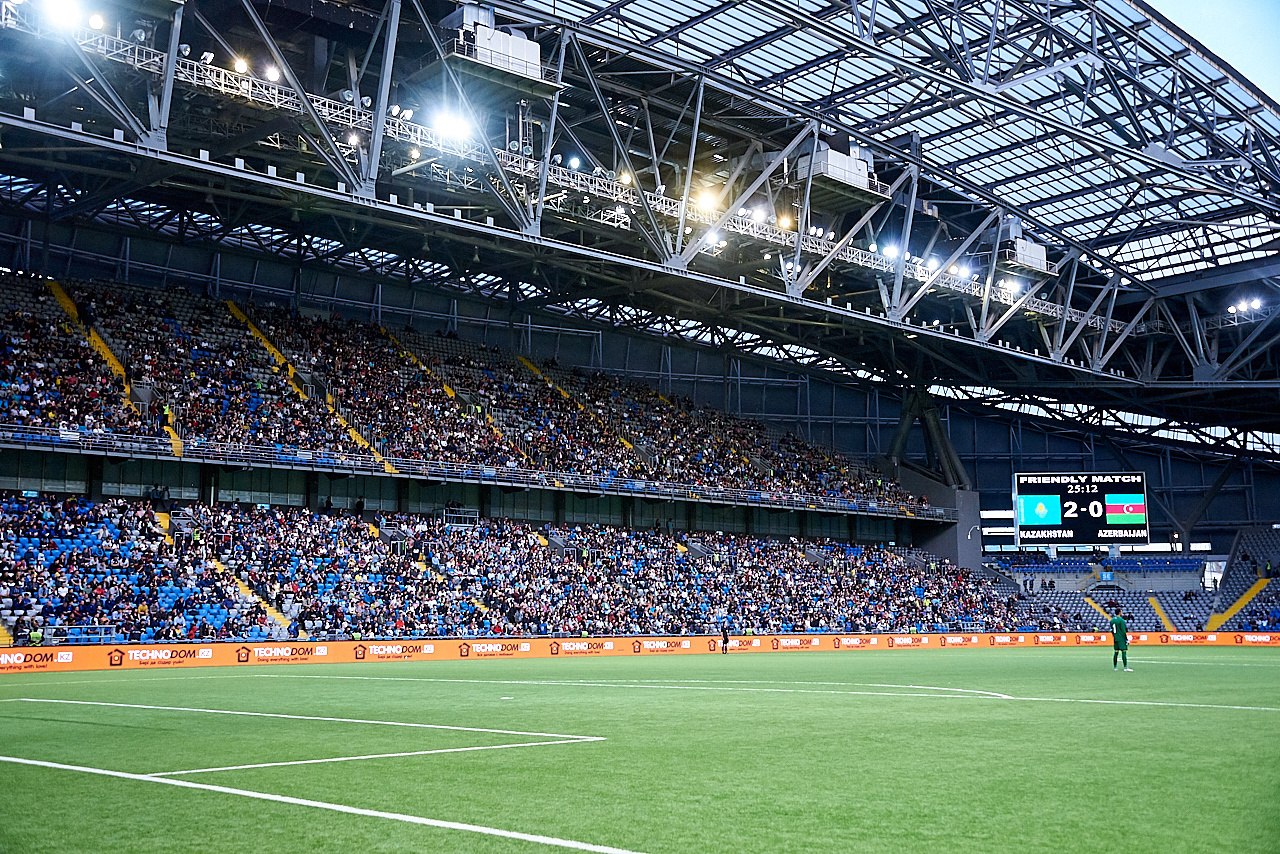
Astana Arena has a capacity of around 30,000 and holds UEFA Category 4 status, the organization’s highest stadium classification. Kazakhstan’s national team regularly plays there, and in the 2015/16 season FC Astana hosted its Champions League group-stage opponents at the stadium.
Kieran Maguire, a soccer finance expert and lecturer at the University of Liverpool Management School, sees Kazakhstan’s experience in hosting international matches as one of the strengths of its bid. UEFA’s familiarity with the stadium and the federation’s experience organizing European fixtures would reduce operational risks, but Maguire said the bid’s quality was ultimately decisive.
A major renovation of the stadium was completed only recently. The arena closed for repairs in 2024, with work covering the roof and its retractable mechanism, engineering and fire-safety systems, screens, media systems, and ticketing infrastructure. The old pitch was also replaced with new heated artificial turf, which received UEFA certification in December 2024.
Kazakh media reported that around KZT 15 billion, or about $28 million, was allocated for the renovation. In January 2025, the Astana City Maslikhat, the capital’s elected representative body, reported that the renovation had been completed in line with UEFA recommendations.
Ayan Alzhanov, head of the KFF’s International Relations Department, said UEFA specialists will conduct another inspection of the arena and determine what additional work is required.
“Astana Arena has UEFA Category 4 status. Our national team has played many official matches here, and Champions League games have been held here. So UEFA knows our stadium,” Alzhanov said.
The cost of preparing for the Super Cup has not yet been announced. It is also unclear whether the natural-grass pitch will remain after the match.
Another challenge is distance. Astana is considerably farther from Western Europe’s main soccer markets than most cities that have hosted the Super Cup in recent years. Simon Chadwick, a professor of sport business, expects strong interest and a full stadium, but sees the cost and duration of the journey as an obstacle for some international fans.
The KFF expects the match to attract international visitors and give Kazakhstan additional global exposure. Maguire cautioned against overestimating the direct financial return: UEFA receives the main commercial revenue from the Super Cup through broadcasting and sponsorship, while the KFF bears costs related to the stadium, security, and transportation.
“The effect will be short-term – rather like Eurovision,” Maguire said. “The city will be in the spotlight for a few days. What happens after that depends on whether it can capitalize on that interest.”
Kazakhstan is the only Central Asian country that belongs to UEFA. Following the collapse of the Soviet Union, Kazakhstan’s soccer federation initially joined the Asian Football Confederation (AFC), but left it in 2001 and was admitted to UEFA in April 2002. The region’s other four countries, Kyrgyzstan, Tajikistan, Turkmenistan, and Uzbekistan, compete in AFC tournaments.