PISA 2022 exposed a persistent divide between Kazakhstan’s urban and rural schools. Students in rural schools trailed their urban counterparts by 18 points in mathematical literacy and 26 points in science. The gaps had narrowed since 2018, but they remained substantial.
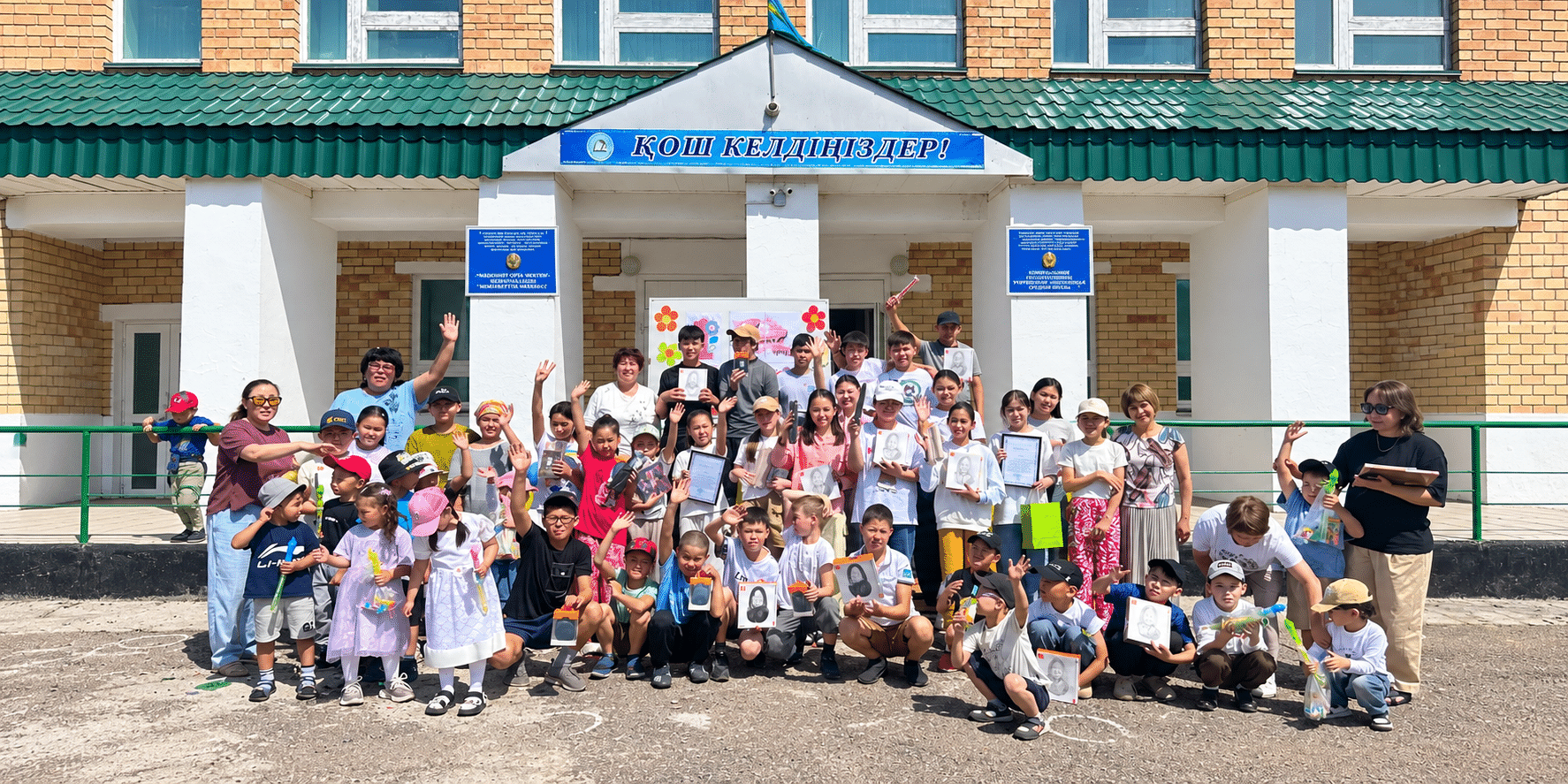
Kazakhstan is now betting that artificial intelligence can help narrow them further. On September 1, the government launched a pilot project in ten small rural schools in the Pavlodar and Kyzylorda regions. More than 50 fourth-grade students are taking part. The project is expected to expand in stages to about 2,600 small rural schools by July 2028.
The potential is considerable. Students in remote communities can gain access to stronger teaching, more varied educational material, and learning tools that respond to their individual needs. But AI will not close Kazakhstan’s rural education gap by itself. Its success will depend on something less glamorous: reliable infrastructure and teachers who are properly prepared to use it.
What AI Can Do, and What Distance Learning Does
President Kassym-Jomart Tokayev has argued that digital technology can help reduce differences in educational opportunity between cities and the regions. In his 2025 State of the Nation Address, he called for a small-school model based on distance learning and AI that would give rural students access to high-quality educational materials.
The distinction between those two elements is important. In the current Qazaq Digital Mektebi model, experienced teachers in Astana deliver live online lessons from a specially equipped studio, while local teachers remain in the classroom to support students. That is distance learning. The AI layer has a different role: it analyzes students’ responses, identifies gaps in their knowledge, and helps teachers determine who needs additional support.
This combination could be particularly valuable in small rural schools. Kazakhstan has about 2,600 such schools, and some classes have only five or six students. Recruiting an experienced specialist for every subject is difficult in many remote communities. Online teaching can widen access to expertise, while AI can help make that teaching more responsive to individual students.
Used well, AI can assess a student’s pace, identify areas of weakness, and adjust exercises to an appropriate level. That could help move schools away from a uniform approach in which every student receives the same material regardless of progress. It can also give local teachers more information about where additional attention is needed.
But this should not be confused with replacing teachers. The most promising feature of the pilot is precisely that it combines technology with human instruction. AI can process patterns in student performance, but teachers still have to interpret those signals, understand the child, and decide how to respond.
Infrastructure Comes Before Ambition
That model depends on infrastructure that cannot be taken for granted. Around 67% of Kazakhstan’s schools are in rural areas, and roughly half of those are classified as small-enrollment schools. Digital education therefore has to work across a large and geographically dispersed network.
Internet access has improved significantly, but connection quality remains uneven. In August 2025, Prime Minister Olzhas Bektenov said that 504 schools were still using connections below 16 Mbps. They were connected to the internet, but through slower technologies including ADSL, mobile LTE modems, and satellite links.
For ordinary administrative work, a weak connection may be inconvenient. For live lessons and interactive digital platforms, it can undermine the entire model. A rural classroom cannot benefit from an experienced teacher hundreds of kilometers away if the lesson repeatedly freezes or disconnects. AI-powered tools also require functioning computers and dependable connectivity if they are to become part of everyday teaching rather than occasional demonstrations.
The government recognizes this problem. Schools selected for the AI pilot were assessed for internet speeds, computer availability, staffing, and technical readiness before launch. Expanding the platform faster than the infrastructure that supports it would risk producing impressive national targets without consistent classroom results.
Improving connectivity is also expensive. When Kazakhstan expanded Starlink access to rural schools, telecommunications officials put the equipment cost at about 1.1 million tenge per school (about $2,500), with recurring service costs on top. In 2024, 1,485 rural schools were reported to be using the system. That gives some indication of the scale of investment required before advanced educational software can function reliably across the country.
The lesson is not that Kazakhstan should delay AI until every infrastructure problem has disappeared. It is that infrastructure spending and AI spending have to advance together. Otherwise, the schools most in need of new educational opportunities may also be the least able to use them.
Teachers Need More Than a Platform
The second constraint is teacher readiness. AI can provide useful information, but teachers need to understand what the system is doing and how its recommendations should influence a lesson. Without that knowledge, a sophisticated platform can become another administrative burden or a tool that is used only superficially.
The government has already begun training teachers involved in the rural-school pilot. From August 21 to 25, participating educators attended a five-day ALFA Kazakhstan Teacher Training Camp in Astana covering the AI platform and the project’s co-teaching model.
That is a useful start, but five days cannot be the end of professional development. Teachers will encounter problems only after they begin using the system with real students. They need continuing technical support, opportunities to compare experiences with colleagues, and practical guidance based on what happens in classrooms.
This is especially important because the technology itself will change. Teachers trained on one platform or set of tools in 2026 may face different systems a year later. Professional development therefore has to build confidence and judgment, not simply teach staff which buttons to press.
Kazakhstan’s rural-school pilot offers a credible way to test whether AI can improve access to education. The country is not starting from an abstract promise. The first classrooms are already using a hybrid model, and the government has set a timetable for expansion. That makes the next stage crucial: measuring whether students actually learn more, whether teachers find the tools useful, and whether weaker infrastructure limits results.
The urban-rural education gap will not disappear because schools acquire AI software. Technology can help only when students can connect to it and teachers know how to use it. Kazakhstan’s challenge is therefore broader than introducing artificial intelligence into rural classrooms. It is to build the infrastructure and professional capacity that allow the technology to deliver what has been promised.
If that foundation is built, geography need not determine the quality of education a child receives. If it is neglected, AI risks becoming another layer of technology placed on top of inequalities that remain unresolved.
The views expressed in this article are those of the author and do not necessarily reflect the official policy or position of the publication, its affiliates, or any other organizations mentioned.